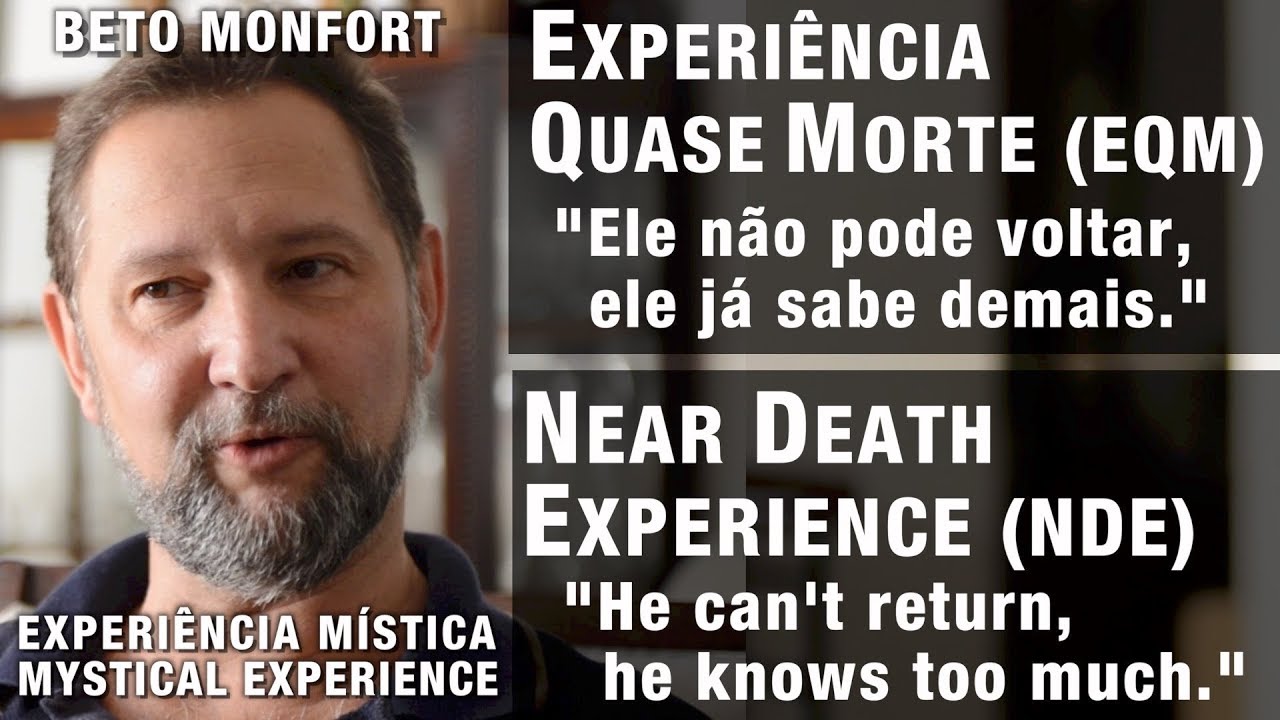
Beto Monfort's NDE: 'He Can't Return, He Already Knows Too Much'
During heart surgery, a man died and returned with memories of two operating rooms, one on Earth and one beyond
Beto Monfort was lying on an operating table, fully conscious, listening to the surgical team prepare his body for a chest-opening procedure. They were shaving him, talking about him in the past tense, treating him like a corpse. He could hear every word but couldn't move or speak. Then he made a decision: he would leave his body. And he did. What happened next involved two simultaneous surgeries, a room 200 kilometers away that he'd never entered, voices of the dead celebrating his arrival, and a confrontation with shadows that insisted he knew too much to return. When his heart refused to restart on the operating table, Beto found himself at a threshold, caught between dimensions, forced to choose.
The Pain That Wouldn't Stop
It started on October 31st, 2008, on what should have been a quiet weekend trip to the coast with family. Beto describes the moment everything changed: when he stepped out of the car at a rest stop on Bandeirantes Avenue, "it was like a movie ... where I distanced myself ... from my father-in-law, who was in front of me ... and he ... I saw him as if we were in a tunnel ... he began to distance himself from me ... and I couldn't move ... I lost my strength."
The chest pain came next. Lancinating. Unbearable. His right leg went completely numb, as if it belonged to someone else. "I could knock it," Beto recalls, "and it would be the same as if I were hitting this wood." He thought he was having a stroke. The trip was cancelled. They headed for the nearest hospital through São Paulo's Friday evening gridlock.
At the emergency room, the pain was so intense he couldn't stop screaming. Staff asked him to be quiet. After about twenty minutes, he felt an overwhelming urge to vomit. When he did, the pain suddenly stopped. Relief flooded through him. The hospital staff concluded he'd had a hysterical attack, nothing more than nerves. They sent him home.
But that night, when Beto tried to sleep, he "literally felt the flow of blood" in his body, "making noise ... making like this ... a breath ... a strong breath." He couldn't lie down. He spent the night in an armchair, exhausted and confused.
The Walk to Santa Catarina
Two days later, still feeling wrong, Beto walked his wife to work and then continued on foot to the 9 de Julho hospital. His health plan didn't cover emergency services there. So he walked nearly a kilometer to Santa Catarina Hospital, "one step after another," moving as slowly as he could manage.
At Santa Catarina, which Beto calls "my second home," they ran test after test. Every blood pressure reading came back different. One arm read 15 over 12, the other 18 over 11. The readings from his feet were different again. The medical team was baffled. They decided to do an endoesophageal ultrasound, which required sedation.
The exam revealed the truth: Beto had a type 1 aortic dissection. Instead of rupturing completely, which would have meant instant death, the wall of his aorta had torn lengthwise, creating a parallel channel for blood flow. "It opened a layer," Beto explains. "It opened it and instead of the blood going out it came back." A false lumen. A ticking time bomb.
The surgical team was called immediately. Beto was prepped for emergency open-heart surgery.
Two Operating Rooms
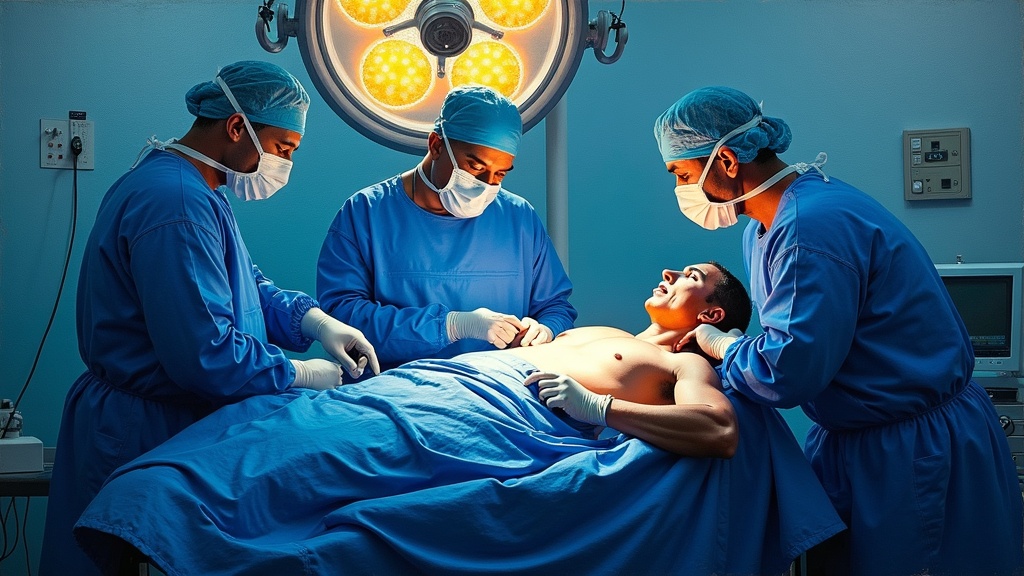
What happened next defies the normal order of medical procedure and conscious experience. Beto's anesthesia didn't work completely. Or rather, his body was anesthetized, but his mind remained conscious. He could hear everything. The surgical team was talking about him as if he were already dead, calling him "this body," shaving him, preparing for the chest opening. "I was listening," he remembers, "thinking ... 'guys, I'm alive.' 'I'm awake.' 'I can hear you talking.'"
He was terrified. How could he endure a chest-opening surgery fully conscious? "I kept imagining the pain," he says. Then he remembered: he'd taken a course in astral projection. He'd never successfully left his body before, but now, lying paralyzed on the operating table, he thought: "I will leave. I have this possibility ... I'll try to ... get out of here."
And he did.
When Beto left his body, he found himself in another place entirely. He was lying down, looking up at a medical team standing over him, but they weren't moving. There was a bright light focused on the table. He wondered why they were just standing there. "Aren't you going to start surgery?" he asked.
The response came telepathically: "Who says we're standing still? We're doing it. We are doing the surgery."
Beto was stunned. They weren't speaking aloud. One of them explained: "No, here you don't need to ... we are operating you here ... but with their hands down there."
Two operating rooms. Two surgical teams. One physical, one not. Both working simultaneously on the same body.
The Room by the Sea
At some point, Beto's memory breaks. He "slept" in that second surgery and began to wake up somewhere else entirely. He found himself in his father-in-law's beach house, in a specific room he knew well, looking at the wall. The house was in São Sebastião, on the coast, 200 kilometers from the hospital where his physical body lay open on the table.
He heard sounds: "noise of woods ... birds ... noise of water ... of river." People were talking behind him, excited. "He's waking up," they said. "Wow, he's waking up." There was a celebration starting.
The distress he'd felt during the operation was gone. "The feeling I had was total ... peace," Beto says. He felt balanced, connected to something larger. "It's like I were bonded with something bigger," he recalls. He had full knowledge of why he was there, what had happened, what was happening now.
Then he felt heat. Intense light, even with his eyes closed. "Very strong light ... a very strong heat ... like it was the sun heating me," but he knew the sun couldn't reach that room. He felt fullness. The voices behind him were jubilant.
He started to turn around, to look toward the light and the voices. A voice stopped him: "If you look over there ... if you go over there ... you won't come back."
The Choice
Beto hesitated. He heard familiar voices, two or three people he knew had died. They were excited. "Wow... how cool ... he is coming," they said. But something felt wrong to him. "This is not my time to go," he thought. "It's not right ... it's not my time."
He decided to return. He started to lie back down.
The voices were shocked: "No, I don't believe it ... he doesn't want to come ... he doesn't want to ... he doesn't want to come ... I can't believe ..." They were perplexed. Why would anyone choose to go back?
The warning voice spoke again: "If you return ... you won't have the life you had ... you will have pain ... you will have a constant pain ... you will have various difficulties ... It won't be like here."
"No, no," Beto insisted. "I need to go back, I need to go back." He closed his eyes. The voices began to fade, falling away behind him.
The Shadows That Knew Too Much
Then everything went dark.
Beto arrived in "a dark place ... distressing ... very distressing," where he saw only shadows. "I felt more ... the shadows," he says, "because it was very dark indeed ... and those shadows weren't good." He's not a religious person, but he knew: "that place ... to me was a ... bad thing."
The shadows didn't want to let him return. Beto argued with them. He insisted: "I'm not here because I want ... I didn't do anything ... I'm here for a mistake ... It's not fair for me to be where I am ... because I have a whole continuation to live."
Then one of the voices said something that stopped him: "He can't return because he already knows too much."
An impasse. How could he return if he'd seen what he'd seen? But then another voice spoke: "No, no problem ... he will forget."
This became an argument. The shadows debated. Beto thought about his memory, which had always been excellent. Would he really forget? Could he?
Finally, Beto surrendered. He spoke, not just in words but in a deeper way: "If I should return ... let it be the will of God. If it's God's desire ... I'll return. If it is not ... ok."
The moment he gave his surrender, everything changed. The oppressive darkness, the shadows, the heavy feeling, "all that dissolved," Beto says. He felt calm. He knew he would return, not because of his will or theirs, but because it was meant to be. "All that... fell apart like ... dust," he recalls.

The Heart That Wouldn't Start
When Beto woke up in his physical body, he was in the ICU, confused and disoriented. He had a bandage on his chest, a cannula coming out from below. "What am I doing here?" he wondered. He'd gone in for an exam. Now he'd been operated on. He didn't understand. He kept drifting in and out of consciousness.
He didn't know if he was alive or dead. "Or if I was in a parallel dimension," he adds. His perception was that he'd been in other dimensions and wasn't fully back yet.
His blood pressure kept spiking, which was dangerous given his arterial condition. The doctors noticed that when his wife was present, his pressure returned to normal. They gave her carte blanche to stay with him constantly. She "literally rode camp," remaining at his side. She was his anchor to this world.
Days later, when Beto was more stable, his mother-in-law pulled his wife aside. She confirmed something Beto had been insisting: he was right. He had died.
During the surgery, after they'd completed the repair and cooled his body to 17 degrees Celsius with ice, the surgical team tried to restart his heart. It wouldn't beat. They shocked it. Nothing. "The heart didn't start beating," Beto explains. He remained in that state until, somehow, he returned.
Later, Beto underwent MRIs to check if his brain had been damaged during the period his heart was stopped. It was then, he believes, during that lapse of time when they were trying to resuscitate him, that the experience in the beach house room occurred. That's when he left his body and returned.
The Son He Didn't Have Yet
There's a detail Beto almost forgot to mention. When he was at that threshold, arguing for his return, he said he needed to go back "for myself and for my wife ... for my wife and my son."
The voice responded: "You have no son."
"Not yet," Beto replied. "I'm going to have a son."
His wife wasn't pregnant. She got pregnant two years later. Their son was born in April 2010. When his wife asked if he thought it would be a girl, Beto answered: "Sure... it is a boy." He'd been told. He was aware.
The Veil Between Worlds
In the ICU and semi-intensive care, Beto kept seeing things no one else could see. He saw a patient leave the room next door, saying "Wow, it's my turn," and run out of the ICU. Immediately, the medical team rushed into that room. The person had died. What Beto had seen was the spirit leaving.
"I saw a lot of people that nobody else saw ... inside the ICU," he recalls. It made him extremely nervous. He felt like he was still partially in that other dimension, vulnerable, not fully present in this world. The feeling persisted for more than a month.
One day, already out of the ICU, Beto woke up demanding ice. "I need ice. I need a lot of ice." His family didn't understand. They brought him the ice drawer from the fridge. He threw ice inside his hospital gown, onto his body. "I need more ice ... much more ice." He insisted: "If I don't have ice, I'll die. I need ice ... I need to cool my body."
Later he learned that during the surgery, to perform the cardiopulmonary bypass, they'd cooled his body to 17 degrees Celsius using ice. He was unconscious during that procedure, yet somehow he had the memory.
He told his wife's cousin, a psychiatrist: "It's interesting that ... it's a Kafkanian experience. Literally ... I don't know if I'm ... a man thinking I'm dead ... or if I'm dead thinking I'm alive." Just like Kafka's character who wakes up as a cockroach, Beto had no idea what was real.
What Changed
Before the NDE, Beto had never experienced premonitions. After the experience, he had them almost daily for months. He'd never seen spirits before. Now he saw them regularly in the hospital. He'd never felt connected to something larger. Now he felt he'd been "bonded with something very complete" that made total sense.
"I had a connection to something bigger," he explains. Religions speak of God as omnipresent and omniscient. During the experience, Beto felt connected to that omniscience, to a knowledge that encompassed everything. "It is a feeling that you are part of a whole," he says.
When he returned, he felt extremely vulnerable. "The feeling was that I had been in a ... frequency... in a higher standard," he says, "and when I came back to this dimension ... this dimension would be intermediate." He felt like he'd been to a place of pure goodness and light, and returning to Earth meant he couldn't maintain that purity: "To be here... you have to be... it's not kind of mean... but it is a question of survival."
News, television, radio, anything negative caused him "repulsion," he says. He was hypersensitive to darkness in a way he'd never been before.
At first, he talked about the experience, but people judged him. So he stopped. He "consciously closed the door" on that part of himself, partly for his own health, partly because he needed to function in this world. He kept the experience to himself for years.
When asked if he's convinced that something survives death, Beto doesn't hesitate: "No doubt about that. Not at all... no doubt." Before the NDE, he had no such conviction.
The Skeleton of the Dinosaur
Beto Monfort doesn't claim to have all the answers. He says jokingly that he brings "only a piece of the dinosaur skeleton." There's much more to complete. He doesn't want to draw conclusions about whether this was a religious experience or a scientific one. He brings only experiences, and what people do with them is up to them.
But certain things he knows. He knows there are different dimensions. He tried to explain it using the mirror analogy: when you put one mirror in front of another, you get infinite repeated images, each slightly different from the last. That's how dimensions work, he thinks. Subtle changes between each one, but vast differences from the first to the infinite.
He knows that free will and determinism coexist. We can choose, but something larger already understands what we'll choose. "Both are part of the whole," he says.
He knows that "the power of attraction of the positive thinking is big". Whatever you think, you attract. He learned this not through words but through direct experience.
And he knows, without question, that consciousness survives death. He died. His heart stopped. He went somewhere else. And he came back.
What This Tells Us
Beto Monfort's account is remarkable for several reasons. The detail about being conscious during anesthesia while simultaneously experiencing an out-of-body state is consistent with other reports where NDErs describe dual awareness. The fact that he found himself in a specific, recognizable location 200 kilometers away (his father-in-law's beach house) adds a verifiable geographical element that's harder to dismiss as hallucination.
The two surgical teams, one physical and one not, working simultaneously on his body, echoes accounts from other experiencers who've described seeing helpers or guides assisting in their healing. The telepathic communication he experienced is one of the most commonly reported features of NDEs. Nearly every experiencer who encounters other beings describes communication that bypasses language entirely.
The threshold moment, where Beto was warned that looking toward the light meant he couldn't return, is a recurring pattern. Many NDErs describe a boundary, a point of no return, and the choice they faced there. What's striking in Beto's case is the argument that followed: the claim that he "knew too much" to return, countered by the assurance that he would forget. This suggests something profound about the nature of what we're allowed to bring back from these experiences.
The dark place Beto encountered after choosing to return, where shadows tried to prevent his departure, is less commonly reported but not unprecedented. Some experiencers describe passing through frightening or oppressive spaces on their way back to physical life. What resolved the impasse in Beto's case was surrender, the relinquishing of his own will in favor of something larger. The moment he did that, the shadows dissolved.
The physical evidence is compelling. His heart did stop. The medical team did struggle to restart it. He was clinically dead for a measurable period. During that time, he had experiences that were coherent, sequential, and memorable. He returned with information he shouldn't have had (the ice used to cool his body, the death of the patient next door) and predictions that later proved accurate (the sex of his son, who wasn't yet conceived).
What happened to Beto wasn't trauma. It was transformation. He didn't come back damaged. He came back knowing. Knowing that we are part of something whole. Knowing that consciousness doesn't end when the heart stops. Knowing that love and connection persist beyond the boundary of death.
The voice that said he knew too much was right. But the voice that said he would forget was also right. Beto admits that much of what he understood in that expanded state has faded. The fullness of that knowledge, the clarity of that connection, has dimmed. What remains is the memory of having known, and the unshakeable conviction that there is something on the other side.
He's brought back a piece of the skeleton. The rest of us are left to imagine the dinosaur.
You can learn more about [Beto Monfort](/experiencer and his journey since this profound experience.
Was this article helpful?