Zach's Collapse at 14: The Grandfather Who Told Him to Keep Going
A teenage cancer patient passed out in a parking lot and found himself in a tunnel of liquid love, where his grandfather delivered a message that would reshape his understanding of suffering
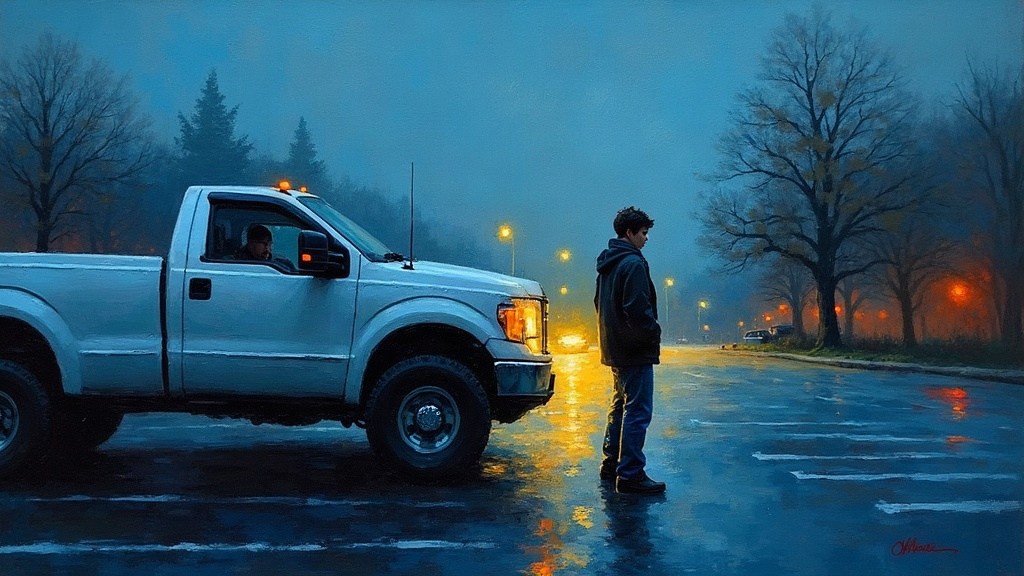
Zach was 14 and dying. Not dramatically, not all at once, but in the grinding, relentless way that leukemia kills: chemotherapy, collapsed vertebrae, pain that wouldn't quit. He'd gone in for a bracing procedure that morning, his father and brother beside him, when the black dots started swimming across his vision. He made it to his dad's truck 40 meters away, bent over his thighs, vision narrowing to a pinpoint. He looked up at his father across the parking lot and tried to say, "Dad, I'm going to pass out." He never finished the sentence. Everything went black. And then it went bright.

The Tunnel That Felt Like Home
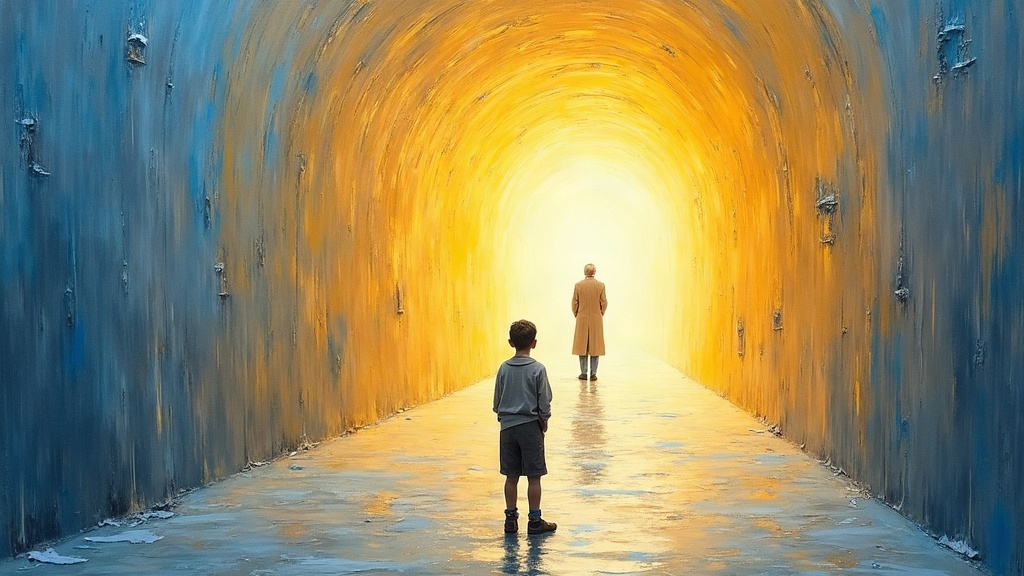
The transition was instant. "Immediately it was like going from black to bright luminescent white goldish silver," Zach recalls. Not a light at the end of a tunnel, but the tunnel itself made of light. "It was just this flowing white gold silvery color and it was like a felt like a tunnel," he says, though even that description falls short.
What strikes me about Zach's account is the texture he assigns to the light. It wasn't just bright. "The light was almost contained like a feeling of love and a feeling of peace and a feeling of joy," he explains. Then he goes further: "It was almost like the light was a fluid you know like a liquid a liquid liquid love that was moving around me and through me and it really wasn't that separate from me."
Liquid love. A fluid that flows through you and isn't separate from you. This isn't metaphor. This is a 14-year-old boy, ravaged by cancer and chemotherapy, trying to describe something his vocabulary wasn't built for. The light didn't illuminate him. It was him. "I was just enamored in that space," he says, and you can hear the longing in those words even now, decades later.
The Figure in the Long Coat
Then Zach looked forward. "I saw a man in what I now know to be a day coat but I always thought of it as a trench coat so a long trench coat down to his ankles," he describes. The figure stood about 20 meters away. Zach couldn't make out the face, but he didn't need to. "I immediately felt that that was my grandpa who had died seven years previously," he says. His father's father.
This is one of the most consistent patterns in near-death experiences: the recognition that precedes visual identification. Experiencers don't see a face and then realize who it is. They feel a presence and know, with absolute certainty, before their eyes can confirm it. It's a knowing that bypasses the usual channels of perception.
Zach and his grandfather "had an inaudible conversation you know like a telepathic communication," he explains. The message was short and direct. "I remember him saying that everything is going to be okay you just need to keep going," Zach recalls. He understood this to mean he wouldn't die from the leukemia, that he'd make it through, "but that I couldn't give up that I had to keep going."
More was said. Zach is certain of this. But "I just can't remember my mind can't grasp what was said I don't think," he admits. This, too, is common. Experiencers return with fragments, shards of a conversation that felt complete on the other side but won't fit back through the door of ordinary consciousness.
An Eternity in a Parking Lot
Time did something strange in that tunnel. "It really felt like I was in that space for an eternity it felt like I was probably there for a thousand years," Zach says. The experience was so peaceful, so right, that "it just seemed like that was where I belonged."
Then, without warning, he was pulled back. "All of a sudden kind of without warning I was just sucked back and it felt like I was being sucked through a tube," he describes. The return was as abrupt as the departure. One moment, an eternity in liquid love. The next, a 14-year-old body crumpled in a truck in a parking lot.
"All of a sudden I was in my body and I was hearing my dad's voice saying Zach Zach are you okay are you okay are you all right is everything okay," he recalls. A stranger's voice joined in: "Do you want me to call 911 is he okay do you want me to call 911." His father kept insisting he was fine.
But Zach couldn't move. "I couldn't move my body which was weird but I was able to say I can hear you I just can't move my body," he explains. It took a minute or two for sensation to return, "for my nerve endings and my body to start tingling again," before he could open his eyes and move.
His father had sprinted 40 meters across the parking lot and caught him before he hit the ground. A stranger had run across the street to help. Zach had been gone, and now he was back, but something fundamental had shifted.
The Channel That Opened
At 14, Zach didn't have a framework for what had happened. He was in the middle of cancer treatment, drowning in chemotherapy and medications. But "it opened something in my mind or it opened a channel for me that allowed me to hear more of a guidance I want to say like a spiritual guidance," he explains. "The voice of the Divine or you know Angels or whatever you want to call it lost loved ones."
This wasn't theoretical. Zach still had "another eight months of very intense chemotherapy" ahead of him. The treatment wasn't easing up. "It kept getting more and more difficult," he says. But now he could hear guidance. "In those moments of fear in those moments of worry and concern," he knew that "as long as I listened to that guidance and took action based upon that guidance that I was going to be okay."
It made the journey of being human "a bit more fun," he says, with what I imagine is a wry smile.
The Relapse and the Deepening
Two years later, at 16, Zach relapsed. Leukemia came back. He ended up in a children's hospital again, and this time he was old enough to see what was happening around him. "I was experiencing more children that were sick and you know from anywhere from the age of two all the way to 16 like I was and 17 and seeing their parents suffering and them suffering and their siblings suffering," he recalls.
This is where the real questions started. Not "Why me?" but "Why any of us?" Why do two-year-olds get cancer? Why do parents watch their children suffer? "That experience furthered my questioning as to why these things happen in life," Zach says. And "when I started asking those questions I started getting answers."
At 19, three years after his second bout with leukemia, Zach tried meditation for the first time. What happened next sounds like it belongs in a different story, but it's the same one. "I took a big breath in and I went and then I took another big breath in and I wasn't doing this on purpose it was just happening," he describes.
With each breath, he expanded. First to the size of his house. Then his city. Then his state. "I became the whole earth and then I exhaled and I became the whole galaxy and I exhaled and I became the whole universe," he says. When his breath normalized, "I was sitting there in the middle of the universe what it felt like and I could feel myself extend outward as everything and nothing at all."
He sat in that state until he heard a faint beeping. "I thought oh my gosh my body is still in my parents house," he recalls. He contracted back the same way he'd expanded, breath by breath, until he was back in his body. And again, "I couldn't move my body again I was numb for 10 minutes," just like in the parking lot five years earlier.
When sensation returned, Zach realized something crucial. "That experience really threw me on a like it validated that out of body near-death experience I had where I saw my grandpa," he says. More than that, "it really made me think okay I can almost consciously do this if I just let go if I let go and trust that everything's going to be okay my mind will expand and my body will expand."
He's described more of these experiences in other interviews, including visions of the future and encounters with beings, but this first conscious expansion was the turning point. It transformed him "from going being a religious person which I never really was to a very spiritual person which I didn't need the religious text things like that to help me understand."
The Gift and the Game
So what did Zach learn? What does a kid who nearly died at 14, relapsed at 16, and expanded into the universe at 19 come away believing?
"This life is quite a gift but in the end it is just a game it's a play it's momentary it doesn't it's not forever," he says. This isn't nihilism. It's perspective. The suffering is real, but it's not the whole story. "The suffering that we experience is necessary for our spiritual growth," Zach explains.
He's thought deeply about this. "Your suffering has made you stronger your suffering has made you understand right every time you were sick you wanted more wellness and you appreciated when you were well," he says. "Every time you were lonely and you had as it caused you to recognize how much you enjoy company with others good friends good family partnership."
Suffering, in Zach's view, is a guidepost. "All those things in life that seem to be so difficult and hard and overwhelming if you can find the gratitude in that they are showing you what you do want," he explains. "If this is the bad situation it's pointing the way what you do want like hey this is a bad situation but it's saying Eric go that way saying hey you know your desire your what you're wanting is that direction."
And here's where Zach's theology gets interesting. He's not a religious person, but he finds himself drawn to a particular teaching. "I like the quote by well it's in the Bible by Jesus and he says one final commandment I give to you and that is that you love each other as I have loved you," Zach says. Why? "Because in the end we're all going to that place that that beautiful tunnel of joy of love of peace we're all going to end up there regardless of who you think you are in this life."
This is the heart of it. "If that's the place you're going to go why not try to embody it while you're here," Zach asks. Not as a moral imperative handed down from on high, but as a practical question. If you're going to end up in liquid love eventually, why not practice now?
The Stream of Wellbeing
Zach has developed a specific model for how this works. "There is a stream of wellbeing a stream of goodness that an energy that flows in every human being," he believes. The reason we don't remain healthy, happy, and joyful is "because we are thinking thoughts that are not in alignment with that stream of wellbeing."
This isn't about positive thinking as a cure-all. Zach got leukemia twice. He knows suffering. But he also knows something else. "Each and every individual soul is good and that the human being in their mind and in their body can disconnect from that," he explains. "That is when we get illness and that is when we get poverty and that is when we get loneliness and negative emotion."
The way back to the stream is through stillness. "Every individual has that guidance within them but it requires stillness and silence to hear those words or that guidance," Zach says. Meditation, tai chi, qigong, yoga, running, anything "that helps us still the mind."
In that stillness, "that voice that stream of wellbeing" becomes audible again. Not as a voice in your ear necessarily, but as guidance. It might come through a conversation, a video, a book, or "something in their own ear saying hey you should do this you should do that."
Zach doesn't think anyone is completely disconnected from their guidance. "I don't think anyone is missing their guide," he says. But "many people can pull out their cord so they're just hanging out right there where all they have to do is kind of push that cord into the outlet." They're doing that "by virtue of their own thoughts their own words and their own actions."
The practice is simple but not easy. "When things are going bad you go all right this is going bad I'm experiencing it I'm going to allow myself to feel the emotions that are arising from it and then I'm going to thank it and say thank you for showing me the direction that I now want to focus," Zach explains. Not bypassing the pain, but using it as information.
What This Tells Us
Zach's story matters because it links two things we often keep separate: the transcendent experience and the grinding reality of suffering. He didn't have his NDE on a mountaintop during a vision quest. He had it in a parking lot while his spine was collapsing and his bone marrow was producing cancerous cells.
The timing is crucial. His grandfather told him to keep going right before eight more months of intensifying chemotherapy. The message wasn't "You're done suffering." It was "Keep going through the suffering." And somehow that was enough. It opened a channel that made the unbearable bearable.
This is one of the most profound patterns in NDE research: the experience doesn't remove suffering, but it recontextualizes it. Zach came back knowing that the suffering was temporary, that it had purpose, and that something indestructible in him would survive it. That knowing carried him through two rounds of leukemia and into a life where he could consciously access expanded states of consciousness.
The detail about his first meditation is particularly striking. The same inability to move his body, the same sense of being pulled back in, the same tingling return of sensation. It's as if the NDE at 14 carved a pathway that he learned to walk deliberately at 19. The involuntary became voluntary. The crisis became a practice.
And his theology of suffering, if we can call it that, is worth sitting with. Not that suffering is good, but that it's information. Not that we should seek it out, but that when it comes, we can ask what it's pointing toward. This isn't the prosperity gospel. This is a kid who got cancer twice saying that even that had something to teach him about what he wanted, who he was, and where he was going.
The grandfather's message keeps echoing: everything is going to be okay, you just need to keep going. It's almost embarrassingly simple. But Zach kept going. Through the chemo, through the relapse, through the questions about why children suffer, through the first terrifying expansion into universal consciousness, through decades of integrating what he learned in that parking lot. He kept going, and the promise held.
We're all going to that place, Zach says. That beautiful tunnel of joy and love and peace. All of us, regardless of who we think we are in this life. If that's true, and I believe it is, then Zach's question becomes the only question that matters: if that's where you're going, why not try to embody it while you're here?
Not because you have to. Not because some authority demands it. But because you've already been there, in that tunnel of liquid love, and you remember. Even if you don't remember remembering, some part of you knows. And that knowing, Zach discovered, is always available. You just have to get still enough to hear it.
The 14-year-old boy in the parking lot heard it. The 16-year-old in the hospital heard it. The 19-year-old expanding into the universe heard it. And now, decades later, he's trying to tell us what it said: keep going. Everything is going to be okay. You're already connected to the stream. You just have to stop pulling out the cord.
Zach has shared more details about his experiences in other interviews, including what his grandfather told him about the nature of heaven and additional insights about why God allows suffering. But the core message remains the same. We're eternal beings having a temporary human experience. The suffering is real, but it's not the truth. The truth is that tunnel of liquid love, and it's waiting for all of us. Not someday. Now. If we can just get still enough to feel it.
Was this article helpful?