Vinnie Todd Tolman: The Man Who Died, Met His Guide, and Learned Why We're Here
A toxic supplement triggered clinical death. What came next rewrote everything he thought he knew about existence.
Vinnie Todd Tolman locked the bathroom door, fell backward, and began to suffocate on his own vomit. Within minutes, he was dead. His body turned cold. Paramedics zipped him into a bag. But somewhere between the restaurant floor and the hospital, a rookie medic heard a voice twice insist this one's not dead, and everything changed. What Tolman experienced during those hours wasn't a dream or hallucination. It was an education. A guide named Drake, dressed in white with glistening pink skin, walked him through ten principles that govern existence itself. And when Tolman finally woke from a three-day coma, pulling tubes from his arms and signing discharge papers, he knew he'd been sent back for a reason. He had to die, he says now, to learn how to live.
The Supplement That Killed Two Friends
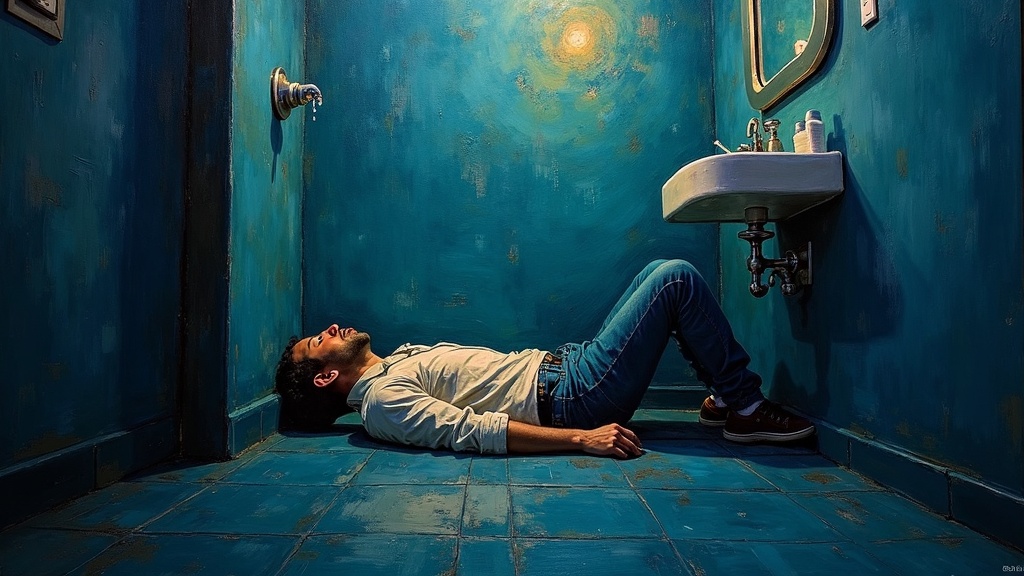
[He went into the bathroom, locked the door, and fell](/video/n7tDF2LX7EM?t=42" class="text-blue-600 dark:text-blue-400 hover:underline">Vinnie Todd Tolman. "I locked the door because it's a single-use bathroom," he recalls, "and I too kind of lost my balance, fell to the ground the same way my buddy did in that Booth, but as I did it I fell onto my back and when I fell onto my back and started to vomit it made me aspirate or suffocate."
That's where the story stops being about a bad supplement and starts being about what happens when you leave your body behind.
Watching His Own Death Like a Movie
The room spun. Tolman felt himself plunged into cool darkness, an electrical sensation that wasn't quite pain but wasn't comfort either. Then, almost instantly, a scene unfolded in front of him. It looked like a movie. A play. Something distant and not quite real.
"I was observing it but yet I was distant from it," he explains, "and I was definitely The Observer because where I was was here where I was and not down there."
He saw a body on the bathroom floor. A dead body. It didn't look like him. He didn't recognize it as his own. What he did recognize, strangely, were the thoughts of everyone in the restaurant. The manager's worry about the friend who'd just been taken away in an ambulance. The customers' idle concerns. The cook in the back. He could feel and hear all of it, a strange omniscience that made the whole thing feel even more like fiction.
A customer kept trying to open the locked bathroom door. Eventually, he told the manager someone might be in trouble. The manager knocked, opened the door, and found the body. They called 911 again. A second team arrived. They pronounced the body dead. They tried preliminary resuscitation. Nothing worked. The body was cold. They bagged it, zipped it up, strapped it to a gurney, and drove toward the medical examiner's office.
Tolman watched all of this happen. He still didn't know it was him.
The Rookie Medic Who Heard a Voice
As the ambulance pulled onto the main road, something shifted. A glow started to form around the rookie medic sitting in the back. It was his first week on the job. The glow appeared around his heart, a golden light that expanded as Tolman watched.
Then a force went over Tolman's left shoulder. He felt its velocity. He watched it hit the medic in the heart. And then he heard it, loud and clear: "This one's not dead."
The rookie medic looked around, startled. He didn't know where the voice came from. Neither did Tolman. But the light around the medic's heart kept growing, spreading from his waist to above his head, a golden glow that filled the back of the ambulance.
The voice came again, louder this time: "This one's not dead."
The medic unzipped the body bag. He felt around for a pulse, found nothing, then made contact with the bone inside the leg. Tolman felt a spark. "I felt an ignition or a spark, I felt a real strong spark of almost electricity or electrical spark between me and him, and I knew he felt it too."
That was enough. The rookie started resuscitation. He hooked up the defibrillator. The machine's alarm went off, and the two veteran medics in the front turned around, furious. "You're going to get fired," they told him. "This is illegal. This is a dead body. This is not an experiment."
The rookie didn't stop. First round of shocks: nothing. Second round: one single heartbeat, then flatline. Third round: a faint, steady heartbeat.
They were one block from a hospital. They turned the ambulance around, and a trauma team was waiting.
The Moment He Realized It Was His Body
As they transferred the body from the ambulance to the hospital gurney, it went into seizures. It flailed. Gross things came out of the mouth. The team strapped the legs first, then the right arm. When they strapped the left arm, Tolman felt it.
"I felt as if someone was strapping my left arm where I was sitting watching this all happen," he says. "I really felt someone was strapping my left arm and I looked down to see how someone could be strapping my left arm where I was sitting and what I saw was the left arm on the body itself."
He resisted. He broke the strap. They came back with a bigger one, a leg strap, and secured the arm again. That's when it hit him. "I knew instantly that what I had been witnessing this whole time was me."
The realization was terrifying. He'd been watching his own death for what felt like a long time, and he hadn't known. "I realized that I was an idiot," he admits. "How could I not know that I was watching my own death this whole time?"
Dark thoughts flooded in. Fear. Shame. He started to see negative things he'd done, negative influences he'd had in his life. He saw them not just from his own perspective but from inside the people he'd affected. He felt like he was drowning.
Then warmth poured over him. "This most beautiful, words literally can't describe this warmth that I felt, this pure unconditional love started to pour over me. It felt like warm water being poured over my back."
Drake: The Guide in White
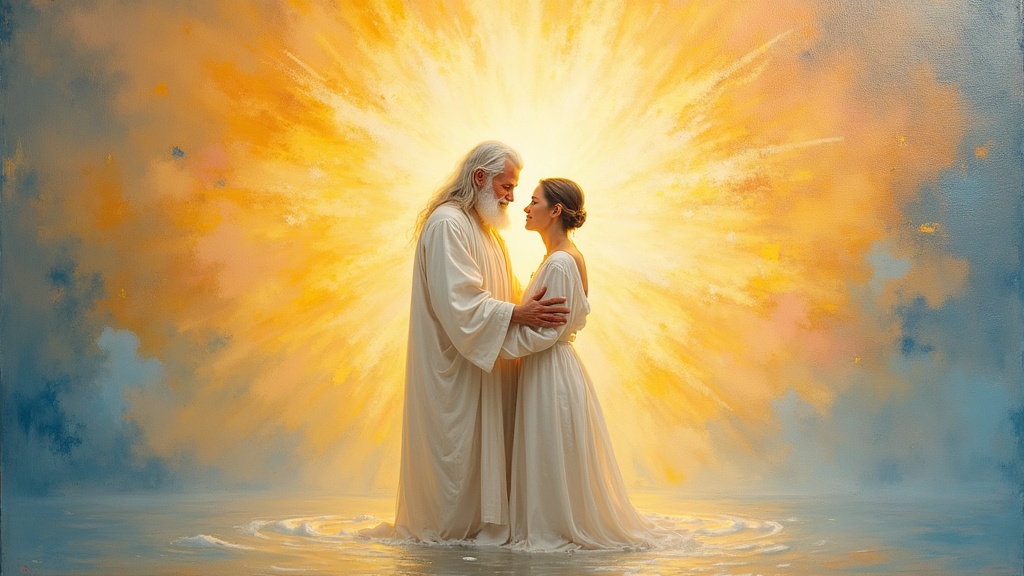
Tolman turned to see where the warmth was coming from. A man stood behind him, dressed entirely in white: a white suit, a white robe over his shoulders, a long white beard, longer white hair. His skin was extremely pink, glistening like sand in the sun. He exuded unconditional love, a love Tolman had never experienced, a love he knew he didn't deserve.
Tolman's first thought: This must be God.
He heard a chuckle, loving and gentle. "No son, I'm not God."
Tolman's second thought: Then you must be Jesus.
Another chuckle. The man explained: His name was Drake. He was Tolman's guide, there to help him go where he wanted to go. If Tolman wanted to return to his body, he could. Or he could go with Drake.
Tolman looked back at the chaos around his body in the hospital. It looked like hell, especially compared to the love radiating from Drake. "I want to go with you," he said.
Drake smiled. He was going to help Tolman see what's next in his existence. But this wasn't a typical journey from one point in the universe to another. They were traveling to a much higher frequency, a much higher form of energy. Tolman had to become something different to get there.
Drake began guiding him, lovingly educating him as they traveled. Tolman thought there must be a quick door into heaven, some shortcut his faith had prepared him for. Drake smiled and showed him there was so much more he didn't fully understand yet, even in his Christianity. He wasn't fully embodied to what he needed to know.
So Drake began working him through principles. Ten major principles, to be exact. It would take hours to go over each one in detail, but Tolman breaks them down like this:
The Ten Principles Drake Taught
1. Be Truly Authentic. Tolman had to learn to be himself no matter who he was around, not the different versions he allowed around certain friends, family, or coworkers. Drake helped him see the absolute beauty in authenticity. The most authentic people in life, Tolman realized, are the very young and the very old, because they don't care what others think.
2. Understand Why We're Here. The reason is simple: to learn. "That's it. We're here to learn to create to embody love and to use the power of love to create and to build relationships and Creations."
3. Love Everyone. Because we're here to learn how to love, love is the third principle. Unconditionally love all people, all creation, all beings, plants, trees, animals. Drake helped Tolman grasp how big the cosmos is, how life persists everywhere. "Life is everywhere in the universe," Tolman says, "everywhere in the universe."
4. Listen to Your Inner Voice. We have a built-in conscience, a direct connection with God through our Holy Temple, the space between our two temples (our head). The more we listen, the stronger the voice. The less we listen, the more it disappears.
5. Use Technology Responsibly. That inner voice can only be as strong as we allow it to be. If we're distracted by constant access to technology, we won't even recognize the inner voice. We must use it with limitation and control.
6. Release Prejudice. Tolman thought he was the least prejudiced person he knew. But he realized he had prejudice toward prejudiced people. He had to release his own judgments, even of those who judge others. All creation is divine, even those who make the mistake of putting others down from insecurity.
7. Exercise the Power of Creation. We're in the classroom. We can create. It begins with our thoughts, because our thoughts become our habits, our habits become our actions, our actions become our character and destiny. "If we can think it we can build it we can create it so control the thoughts choose what goes in your Holy Temple because there is where the beginning of creation starts."
8. Avoid Negative Influences. Negative influences are everywhere: technology, toxic environments, toxic relationships, jobs, schools. It's important to recognize when there's toxicity or negative energy around us and call on God to bring a barrier of protection.
9. Understand the Purpose of Evil. For there to be an up, there has to be a down. As long as we're constantly learning, even from our mistakes, we can turn our mistakes into blessings. There's absolute purpose in evil. Without evil, there's no good. Without good, there's no evil. There's a divine balance, and our choices, starting with our thoughts, determine which direction our energy goes.
10. Know That We Are All One. Every single one of us is a creation of the Creator. We're all one in God's body because we carry that spark, that golden light of God within us. All beings, all creations carry it. To harm any other creation is to harm God and ourselves.
Once Tolman fully embodied these principles, he started to see heaven.
Touching Down in Heaven
They touched down on a vast planet, a vast space. Tolman experienced the most beautiful trees, the most beautiful grass, a tremendous white light coming out of everything. He felt the presence of God so strongly there. God was showing up in everything.
"It was just a beautiful experience that I have a hard time explaining," he says, "because literally we don't have these colors we don't have these smells we don't have these sounds that I experienced there but yet I want the world to know what's there for all of us."
Drake came close. "Vinnie, this is going to be very hard but it's gonna be worth it," he said. He brought Tolman in for a hug.
But hugs are different there. You're not trapped in physical form. You're more energy than low-density carbon. As their two energetic bodies came together, their light combined and expanded. "The light of the two of us was four times brighter than the light of the single of the individual."
Tolman learned a powerful principle in that moment: When we come together in love, we become four times stronger than we could ever become on our own. And that's only if two come together. Imagine what happens when more do.
The Prayer That Forced Him Back
While Tolman was traveling, his body had been dead and revived and was now in a coma for three days. His brother was down on Earth, giving his body a special prayer. On the third night, the brother blessed that Tolman would be made whole, that he would be okay.
As he closed that prayer, the love his brother had for him forced Tolman back. "That prayer was stronger than even my agency and that love that he felt and that I felt for him it forced me back to my body and forced me into the hardest experience I've ever had in my life."
The hardest experience was coming back from Heaven. "Once you're there you don't want to come back to this and that's understandable for those who have been there."
Tolman woke up. He felt fine. He pulled all the tubes out of himself. He stayed for almost six full hours, signing paperwork, doing test after test after test. They wanted to test everything.
But the real test was what came next: trying to go back to a normal life. Working. Trying to find earthly happiness. He wasn't finding it in anything. He kept hearing Drake's voice: "This is going to be really hard but it's gonna be worth it."
Almost three months later, it did begin to become worth it. He met the love of his life, his Earth angel, Andrea. He could see Heaven's light coming from her eyes.
Living the Principles
Since then, Tolman has tried to embody those ten principles every single day. He's not perfect, not even close, but he continues to try. For many years, he's been sharing his experience. "My experience is not for everybody," he acknowledges, "but for those who hear it and it resonates with them it is for them."
He puts it plainly: "As sad as it is to say I had to die to learn how to live" because he wasn't living in a way that would bring him true happiness, true eternal happiness. Since he died, he's learned a completely different way of living. He's grateful for his experience because it makes him a better person.
His final message is direct: "You are a Divine Masterwork" and just like any divine masterwork, your value comes from your mistakes and your successes. That's what makes you the masterwork. "We are important to our creator," he says, sending love and extreme amounts of light and wishing for a strong divine connection with the Creator who loves us all.
Tolman has shared his story in multiple formats, including the powerful documentary Renaissance and in other detailed accounts that explore the ripple effects of his experience on his life and those around him.
What This Experience Reveals
Tolman's account is one of the most pedagogically structured near-death experiences in the modern record. Where many experiencers return with impressions, feelings, or fragmented insights, Tolman came back with a curriculum. Ten principles, taught by a guide who walked him through each one until he embodied it enough to keep moving. This isn't unusual in the broader literature (guides are common, life reviews are universal, lessons about love appear in nearly every account), but the clarity and specificity of Drake's teaching stands out.
What's equally striking is the rookie medic. This detail, the glowing heart, the voice that came twice, the medic's willingness to risk his career to follow a prompting he couldn't explain, is one of those moments that defies materialist explanation. If Tolman's consciousness was simply a byproduct of his dying brain, how did he accurately observe events happening in the ambulance while his body was in a bag? How did he perceive the medic's internal experience, the light around his heart, the voice that the medic himself heard?
These aren't rhetorical questions. They're the questions that make near-death research so compelling. Tolman's account includes veridical details (the rookie medic, the ambulance, the hospital one block away, the three-day coma, the brother's prayer) that can't be dismissed as hallucination or confabulation. He wasn't dreaming. He was somewhere else, observing, learning, being transformed.
The ten principles themselves aren't new. They echo the core teachings that appear across thousands of NDEs: love is primary, we're here to learn, authenticity matters, we're all connected. But the way Drake taught them, the way Tolman had to embody each one before moving to the next, suggests something profound about the structure of spiritual growth. It's not information. It's transformation. You can't skip steps. You can't fake understanding. You have to become it.
And then there's the hug. The moment when two energetic bodies come together and their combined light is four times brighter than either alone. This isn't metaphor. Tolman is describing something he experienced directly, something that suggests the mathematics of love operate on principles we don't yet understand. If two beings in love create exponential light, what happens when communities come together? What happens when humanity as a whole chooses love over fear?
Tolman's story is a reminder that death isn't the end. It's a doorway. And what's on the other side isn't judgment or oblivion. It's education. It's love. It's the continuation of a journey we've been on all along, whether we know it or not. The rookie medic heard a voice and followed it. Tolman's brother prayed and brought him back. These aren't accidents. They're evidence of a reality far more interconnected, far more intentional, far more loving than we've been taught to believe.
We are, as Tolman says, divine masterworks. Our value comes from everything we've been through, every mistake, every success, every moment we chose love over fear. And when we finally cross over, when we meet our own guide and begin our own journey through the principles, we'll understand what Tolman understood: we had to be here to learn how to live there. The classroom is hard. But it's worth it.
Was this article helpful?