Ryan McCully Saw an Ocean of Souls During Surgery and Returned With Proof
A spider bite sent him to the operating table. What happened next changed everything he thought he knew about death.
Ryan McCully sat straight up in the hospital bed, scaring two nurses who weren't expecting him to be conscious. He shouldn't have been awake at all. The sedatives coursing through his veins were supposed to keep him under for at least another hour. But Ryan had just made a choice on the other side, a deliberate decision to come back, and now he was forcing his body to work like someone trying to operate a machine with chopsticks. His eyes couldn't focus. The light was unbearable. So he closed them and saw the room anyway, saw the nurses moving around him, because he was still half out of his body and his soul's eyes worked just fine.
The Bite
Ryan doesn't remember much about the spider. What he remembers is the medical emergency that followed, the tests that ruled out everything else, the doctors telling him he was near death and needed surgery immediately. Of course he said yes. Save me. He remembers the meds, falling asleep, and then something he can't quite place in sequence. The next thing that comes to mind isn't the recovery room or the surgeon's face. It's the ocean.
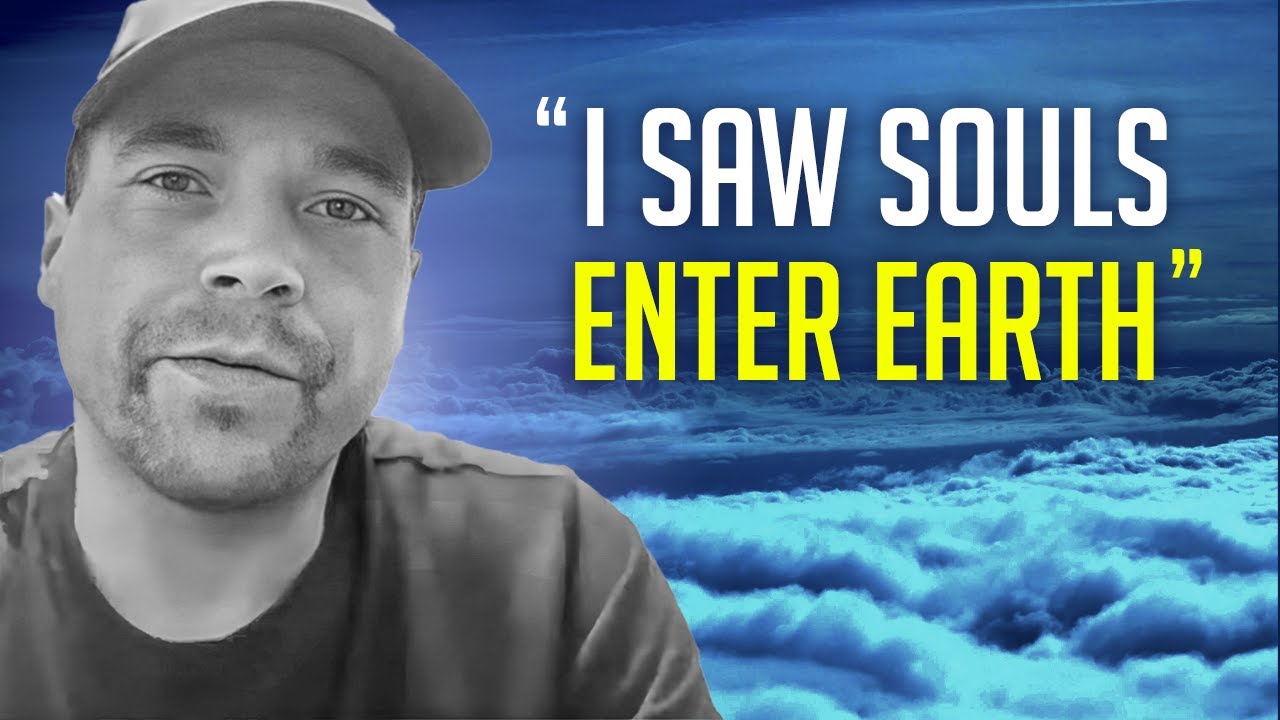
["I found myself in this other place," Ryan describes](/video/Vn2G7LwoFs0?t=36" class="text-blue-600 dark:text-blue-400 hover:underline">Ryan McCully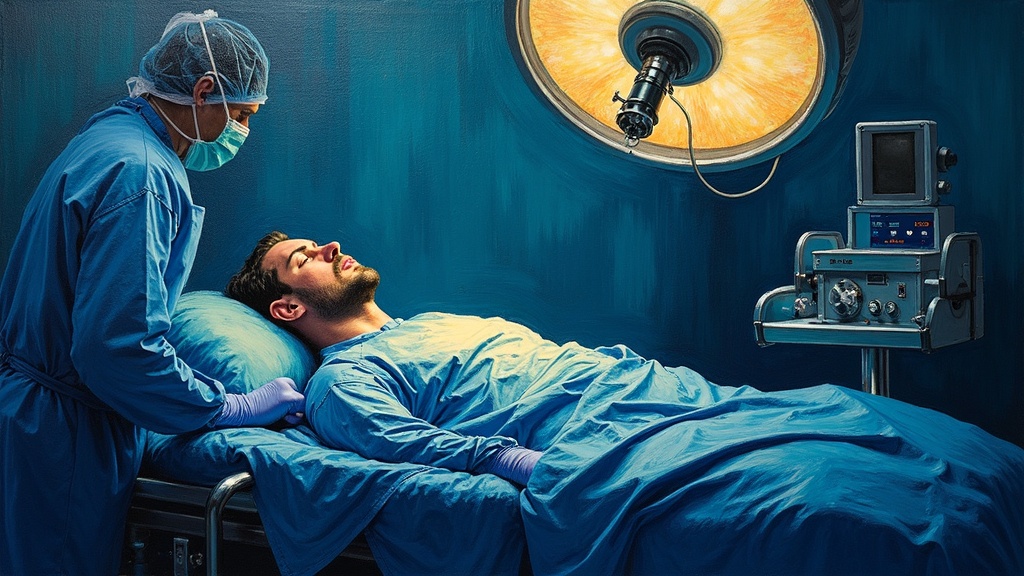
An Ocean of Souls
In front of him stretched an ocean. Not water. Souls. "I could see all the souls that had ever lived," he says, "and they were just like flowing in all directions and it just went further than I could ever see." It was a massive energy field, waving and flowing, but it was people. All of them. Every single one.
Many were coming and going to and from Earth, crossing what he calls the veil. There was purpose in the movement. "I could tell everyone had purpose, everyone was doing something very purposeful," Ryan says. He had a general understanding of everything, though he struggles to find words for it now. It was strange, he says, that he could see everyone so clearly.
Curiosity got the better of him. Could he focus on just one person? He peered off in a random direction and looked at a woman, probably in her late 50s, with wavy blonde hair. The moment he focused on her, she turned and looked right at him. "She just smiled and nodded and I just kind of smiled and nodded back," Ryan recalls. It was an acknowledgment between souls. She knew he was looking. She knew he was just there for the moment, observing. "It wasn't awkward at all," he says.
This moment captures something essential about NDEs that often gets lost in translation. The experiencer isn't a ghost haunting the afterlife or a tourist gawking at the scenery. They're recognized. They belong there, even if temporarily. The woman's smile wasn't surprise or intrusion. It was welcome.
Levels of Existence
Ryan could see that there were different levels to things, different places where people were coming and going from. One area seemed active, full of purposeful happenings. Then there was another place, "very bright," and "all I could feel from looking there was peace, calmness," he says. Beyond that was something he can't describe much at all.
But the peace he felt wasn't confined to that bright place. It "extended beyond me and beyond there and beyond here and beyond everything," Ryan explains. "It's just this knowing that everything is gonna be okay, everything is okay."
This is where Ryan's account moves from description to message. "What we experience on this side, pain, our sorrows and our losses, they are temporal and they're a much smaller part of the bigger picture that we can't see," he says. "In that bigger picture everything is as it should be, which is really hard for us to understand. It's really tough thing because we suffer a lot and we can't understand why any of that could or would ever be okay."
He's right. It is tough. Our suffering feels absolute. The loss of someone we love feels like a tearing of the fabric of reality itself. But Ryan saw something we can't see from here. "It's just beyond us in the moment here," he says, "but everything will be okay and everything is okay."
The Waiting Room
After some time on the other side, Ryan decided he wanted to see what was going on back on Earth. He found himself at the hospital, out of his body, and "the only thing there is to do there would be to go see what my family's doing in the waiting room," he says. So that's what he did.
He hung out with them. Listened to their conversations. His significant other at the time was talking with his aunt, and Ryan was "encouraging the conversation and talking like yeah that's a good idea like yeah you should listen to that." It's almost funny, the image of a disembodied soul offering commentary on a conversation between two living people in a hospital waiting room.
But Ryan was confident they could hear him on some level. "We're all souls inside, so when a soul is talking to another soul I'm pretty sure you hear it in your soul," he explains. He was "very confident when I was speaking to my family members who were in their bodies and conscious that a part of them could hear me and understand me and that what I'm saying to them is not in vain."
This gave him hope. If he could communicate with the living while out of his body, then "my past family members and people that I've cared for that passed away, they still see me, they still hear me, they still come and speak to me," Ryan says. "I definitely know that that does happen."
One of the bigger takeaways from the whole experience, he says, is "just knowing that we do go on and the people that we've lost they still exist, they absolutely do."
The Conversation He Couldn't Have Known
Ryan didn't remember the waiting room conversation right away. It came back to him later in a way that left both him and his ex-girlfriend stunned.
They were talking one day, and she was complaining about her mother using Bible verses to manipulate her, to make her feel guilty. Ryan told her, "Hold on a sec, you've already had this conversation, we don't have to go over this again." He said she'd been talking to his aunt about exactly this. He remembered his aunt's advice: "You should learn the Bible better than her if that's what she wants to do so you can fire back when she tries to manipulate you with that."
His ex just stared at him. "You can't know that, you cannot know that conversation, you weren't there," she said.
"Yeah I was, I was right there," Ryan insisted. He'd even been encouraging her, telling her it was good advice.
"Right then it was like boom, like a bell ring and everything clicked," Ryan says. He remembered the entire scene. The chairs, the TV location, the lighting in the room. It was kind of dark, he noted. His ex explained that they'd turned off the lights in one half of the waiting room because his aunt was complaining about it.
"It was a real moment, really impactful moment for both of us," Ryan says. For him, it was validation, a concrete memory clicking into place. For her, it was shocking proof. "She knew beyond any doubt that I definitely was out of my body and that my claims were true because there's no way I could have known that otherwise."
This is the kind of veridical evidence that makes NDEs so compelling to researchers. Ryan wasn't guessing or making lucky inferences. He recounted specific dialogue, specific advice, specific details about the room's lighting, all from a conversation that happened while his body was unconscious on an operating table.
The Choice to Return
At some point while on the other side, Ryan realized he wanted to stay. It was so good there, so peaceful. There was a lot of suffering and pain here, he thought. But then came "that notion, and I don't know if it was somebody speaking in my ear but it was definitely the understanding that I need to go back, I need to come back here."
So he did. Even though he felt like he had some kind of a choice, like if he really wanted to stay he could make that decision. But "in my heart I knew it wouldn't be the proper decision, not the best decision, like I needed to be here."
"I was a little disappointed about that, about having to come back," Ryan admits, "but it's like okay I know I gotta come back so I'm coming back." He saw his body. "Well it's time to let's go, get on with it, you know, it's time to get back in."
So he got back in. And made that body get up.

Sitting Up Too Soon
The result was Ryan sitting straight up in the hospital bed in the recovery room and scaring the nurses, because he wasn't even supposed to be awake yet. They were supposed to sit there and wait for a while for him to wake up naturally. The doctors later confirmed to his family that he was awake way too soon.
Trying to operate his body was bizarre. "It was really foreign," Ryan says. The description he came up with: "It was the equivalent of trying to instead of being hands-on with my body it was like trying to operate it with chopsticks because I'm still somewhat separated and I'm doing it kind of by proxy, making myself work."
He could barely see. Everything was so bright it was unbearable. He heard the nurses asking if he was okay. "Yeah well I can hear you but I can't see you, where are you, who are you," Ryan responded.
What was really strange, though, was that when he closed his eyes to rest them, he could actually see the room and the people in it because he was still half out of his body and half in his body. "It was easier for me to see with my soul's eyes in the room than it was with my physical eyes because I wasn't supposed to even be awake yet," he explains.
They rolled him out to the room where his family was waiting. He was trying to get his hands to work, his body feeling "so foreign" to him. But he was also still half out, still seeing things outside of his body and outside of that room even. "It's a very strange thing to try to explain," Ryan says.
Grandma's Message
Because Ryan was still partially out of his body, it was kind of maybe the last moment for deceased family members to say anything through him, because maybe he wouldn't remember later. His grandmother, who had passed a long time ago, showed up. She had a message for her daughter, Ryan's aunt, who was in the room.
"She told me to tell her that she didn't want her to be sad anymore for her mom," Ryan says. "She told me to tell her that she doesn't want her up at night crying for her anymore, that it's okay and she's okay and everything's all right and she doesn't have to do that. She wants to see her happy, not sad."
Ryan's aunt told him something that floored him. "No one ever knew that she stayed up and was up at night many times a week crying for her mom," he says. He'd never known that. "It was quite a revelation for me to know how much my aunt still hurt over that loss."
He was "really happy that I was able to give her a message from her mom about that and she was much more at peace afterwards." "It was quite evident to my aunt obviously that yes I was speaking with Grandma," Ryan notes.
He saw his other grandmother too, and a couple other people, though he doesn't remember every detail of those encounters. His family said he'd mentioned things from other family members, things they wanted to tell them, but he couldn't remember some of those things later.
The Body on Autopilot
What happened next is one of the strangest parts of Ryan's account. He was in his hospital bed, talking to his family, trying to operate his body, and "it's so taxing, it's taking so much effort that at some points I would just take a break and I would step out of my body, take a break from trying to operate it."
He could see himself in the bed. But his body was still talking. "Like my body is on autopilot, like it's still operating, it's still talking, I'm just not doing this really direct manual influence on it," Ryan explains. He was listening to what he was saying from outside. "It's the strangest thing. I heard myself talking and I'm like well I wonder what I'm talking about now because I was also looking at other things and I look back at myself and I'm still talking there and I'm like wonder what I'm talking about and I'd listen and I'm like yep yep yep I'm telling it like it is."
"I can't explain that, how that works exactly," Ryan admits, "but that definitely was part of the experience and it made perfect sense to me while I was out of my body." Now, thinking about it, "I'm like I don't know how in the world, like we go on autopilot, what is that? I mean I don't know."
This detail is fascinating because it suggests layers of consciousness we don't normally access. The body can function, can speak coherently, while the conscious awareness that we think of as "me" is somewhere else entirely. Ryan's experience hints that maybe the relationship between consciousness and the body is far more complex and loosely coupled than we assume.
Everything Is Going to Be Okay
"I can't even fully explain," Ryan says. "I have this peace now that I've retained a little bit of that understanding on the other side, the way that I felt and how everything is going to be all right and that it is okay and that this pain and sorrow and everything and how hard life is is just this really, you know, it's our short-sightedness that allows us to not be able to see past that but I've seen past it and I do know the truth."
"I find peace in that every day," he says. "When things get hard and they do, and things are going to get a lot harder too, it's life, but I'll always remember that everything's going to be okay, it's all going to be fine and then in some way I can't understand but that I can kind of remember it is okay."
Before the experience, Ryan had always believed there's more to life than what we can see. He'd always been "a spiritual person in that way," he says. "But to have that confirmation about it though, that's what has given me more peace and given me the ability to cope with whatever happens, just knowing that everything is going to be okay."
Then he says something important. "That's the problem with that statement is that no one will ever really understand the depth of how much I mean everything is going to be okay and that everything is okay." Even he struggles at times. "Things happen or lose somebody and I have to remind myself, I have to really try to remind myself of what I know."
But "that's kind of the effect that it's had on me and will have on me in the rest of my life is that I do know and that even though it may feel like I forget at times and I'm going through it like somebody who doesn't know," Ryan says, "the people I've lost still exist and I know they exist and when I lose someone I don't mourn them like I would have before with any uncertainty. I'm more sad about not seeing them here now but I don't mourn them as if they don't exist like I know they're there and I know that I'm going to be there too again."
"This really does affect me and has affected me in more ways than I can really exemplify," Ryan says. "It's this peace and understanding, it goes so deep down in my soul that it's so hard to explain but it sticks with me forever though and I'm a generally happier person, generally more hopeful person and way more well adjusted to whatever happens to me in life because I know about the other side and I know that everything's gonna be okay."
What Ryan's Experience Tells Us
Ryan's account is remarkable for several reasons. First, the veridical evidence. He recounted a specific conversation, complete with dialogue and environmental details, that occurred while his body was under anesthesia. His ex-girlfriend's reaction, her certainty that he couldn't have known about that conversation, is the kind of witness testimony that makes researchers sit up and pay attention. This wasn't a vague impression or a lucky guess. It was specific, detailed, and verifiable.
Second, the waiting room visit itself. Ryan describes hovering with his family, trying to encourage their conversation, confident that some part of them could hear him. This aligns with thousands of other NDE accounts where experiencers report visiting loved ones while out of body. The consistency across accounts is striking. People describe the same sense of being present but invisible, the same attempts to communicate, the same frustration when the living don't seem to notice them.
Third, his grandmother's message about his aunt crying at night. No one knew this. Ryan didn't know it. But his grandmother did, because apparently the dead aren't as far away as we think. They see us. They know what we're going through. And when they get a chance to send a message back, they do.
Fourth, the "ocean of souls" itself. This image appears in other NDE accounts, though not always described in exactly this way. Experiencers often report seeing vast numbers of souls, sometimes as points of light, sometimes as energy, sometimes as recognizable people. Ryan's description of souls flowing with purpose, coming and going from Earth, matches the broader pattern. The afterlife isn't static. It's active, purposeful, organized in ways we can barely glimpse.
Fifth, the choice to return. Ryan felt he could have stayed if he really wanted to, but he knew he needed to come back. This element appears in many NDEs. The experiencer is given a choice, or at least feels like they're given one, though often the choice is more like recognizing what needs to happen rather than a free selection from a menu. Ryan knew he had to return. He didn't want to, but he did it anyway.
Sixth, and perhaps most fascinating, the experience of being half in and half out of his body in the recovery room. Seeing with his soul's eyes because his physical eyes couldn't handle the light. Operating his body like a machine he wasn't quite connected to. And then, stepping out to take a break while his body continued talking on autopilot. This suggests that consciousness and the body are far more loosely coupled than materialist neuroscience assumes. If Ryan could step out and watch himself continue speaking coherently, then where exactly is the "self" that we think of as doing the speaking?
Ryan also describes multiple levels or dimensions in the afterlife. One area with a lot of purposeful activity. Another place that was very bright, radiating peace and calmness. And beyond that, something he can't describe. This layered structure appears in many NDE accounts and in mystical literature across cultures. The afterlife isn't one place. It's many places, or many states, organized in ways that seem to correspond to something like spiritual development or readiness.
But the most important thing Ryan brought back isn't the evidence or the descriptions. It's the knowing. "Everything is going to be okay." He says it over and over because it's the deepest truth he encountered. Not a platitude. Not a hope. A fact he saw from the other side. Our pain and sorrow are real, but they're temporary, a small part of a much bigger picture. In that bigger picture, everything is as it should be.
This is hard for us to accept. We suffer. We lose people we love. We watch the world tear itself apart. How can any of that be okay? Ryan admits he doesn't fully understand it himself, even after seeing it. "It's just beyond us in the moment here," he says. But he saw it. And he knows.
Ryan's experience, like thousands of others, suggests that consciousness doesn't end at death. We go on. The people we've lost still exist. They see us, they hear us, they're waiting for us. And when we get there, we'll understand why everything had to be the way it was. We'll see the bigger picture. And we'll know, just like Ryan knows now, that everything is okay.
That knowing, that peace, is what Ryan carries with him every day. It doesn't make life easy. Things still get hard. He still has to remind himself of what he saw. But he's a happier person now, more hopeful, better adjusted to whatever life throws at him. Because he's been to the other side. He's seen the ocean of souls. He's felt the peace that extends beyond everything. And he knows we're all going back there.
For those of us who haven't had an NDE, Ryan's account is a gift. It's a window into what awaits all of us. And it's a reminder that the people we've lost aren't really gone. They're just on the other side of the veil, flowing in that ocean of souls, doing purposeful things we can't quite see from here. And one day, we'll join them. And everything will make sense.
Was this article helpful?