Robin Landsong's Double Near-Death Experience in War-Torn Africa
An eight-year-old's journey through death, purpose, and the choice to return
The bullet grazed the top of her head and blew her off her feet. She was eight years old, playing alone by a creek in rural Rhodesia, thousands of miles from home. The rifle had become just a circle in her vision, that terrible moment of recognition before the trigger pulled. She started to die of blood loss on the red African earth, but what happened next would shatter every assumption about consciousness, identity, and what waits on the other side. Robin Landsong didn't just die once that day in 1977. She would cross over twice, meeting beings who would show her the golden threads connecting all life and a purpose so compelling it would pull her back from the edge of total unification with what she calls the great heart.

The Long Road to a Creek in Rhodesia
Robin Landsong's story doesn't start with her death. It starts with neglect, with adults who should have protected her but didn't, with a vulnerability that made her visible to predators. She was eight years old, living on the East Coast with parents who were neglectful and abusive, exposed to unsafe adults who recognized an unprotected child when they saw one.
One of those adults abducted her. This was 1977, post-Vietnam, and the man who took her was military. He drugged her and put her in a duffel bag, carrying her through customs as personal luggage. When she regained consciousness, she was in a small apartment on a military base, somewhere she couldn't identify.
The abuse was immediate and severe. He assaulted her and broke her ribs. A neighbor intervened, saving her from being killed outright, and she was hospitalized. But no one stopped him from simply walking in, claiming to be her father, and taking her again.
He drove her to a market, and that's when Robin first understood where she was. It was the first place she actually realized they were in Africa, because on the military base she didn't see that many people of color, but in the market it was mostly Black. Then he abandoned her there, handing her over to another man and driving away.
The feeling was impossibly mixed. On the one hand, she had just lost the worst, most dangerous enemy to her in the world. On the other hand, he was the only one who knew where she came from. She'd held onto a fantasy that he would eventually take her home. His abandonment meant that thread was cut.
The new man took her on an old bus that broke down. They were instructed to walk, but she had broken ribs, hadn't been fed, and couldn't keep up. So he abandoned her too, leaving an eight-year-old white girl alone in rural Rhodesia during the height of the Rhodesian War.
This detail matters. It was 1977 in Rhodesia, now Zimbabwe, at the height of the Rhodesian war, and there were three factions. One of the extremist groups used a specific tactic: kill white children so white farmers would leave and they could reclaim their land. For Robin to be abandoned in this rural area meant her survival was a matter of hours.
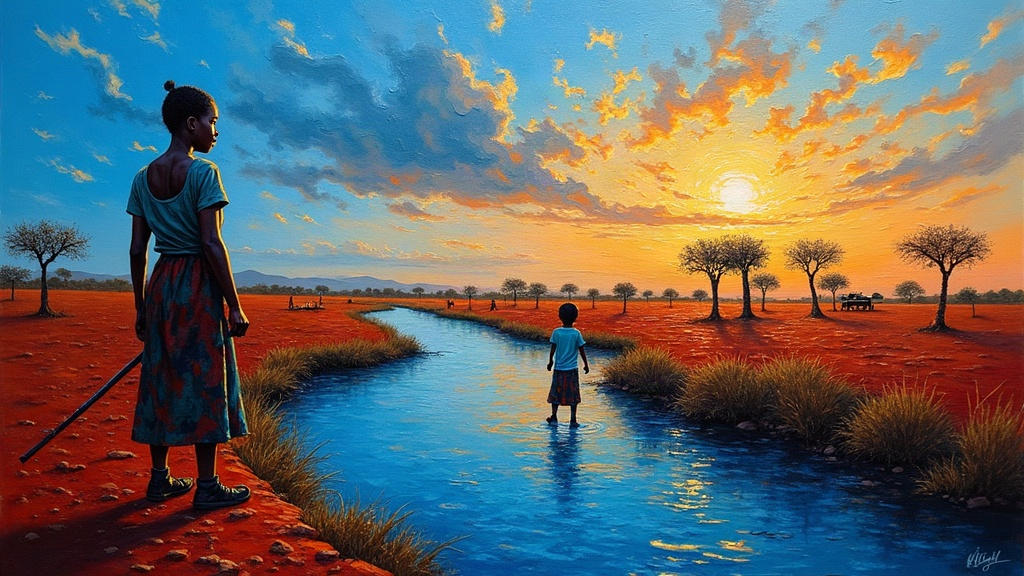
Middle-party soldiers found her and took her to a village near the South African border, presumably one they thought would be receptive to a white child. And against all odds, against all danger, the people took her in.
The Village That Chose Love Over Fear
What happened in that village is one of the most profound parts of Robin's story, even before her death.
She came from not having mothering. Her mother wasn't capable of that. But these African women, in the middle of a war where harboring a white child could get them accused of abduction, a very serious crime, chose to mother her anyway.
It's normal in many African cultures to mother a child that's not their biological child, to take their sister's child into their home and raise them as their own. But what was exceptional was that they did that for a white child during a war where it was very dangerous for them to have her. Robin understands now, after returning to Africa as an adult, just how much risk they took.
They brought her in with singing and ceremony. It really just filled her up. She was so hungry, so broken, just like a wounded animal. One of the women sang to her and held her, and Robin literally just collapsed in her arms and let her be her shelter, let her be her new mother.
For a child who had known only neglect and violence, this was restoration. This was what safety felt like. This was home.
And then, days later, she went to the creek to play.
The First Death: Sisters, a Cave, and a Being in a Field
She looked up and there was a soldier, and he pulled out his rifle. When the rifle became just a circle, she knew she was done for. He pulled the trigger and the bullet grazed the top of her head and blew her off her feet. She started to die of blood loss.
What happened when she first crossed over isn't what you'd expect from Christian iconography or Western near-death literature. She was greeted by two Black women, and they felt like her two big sisters, there to greet her and take care of her. They gestured to a really big glowing orb, like a sphere, and she knew she could go into it and be fully restored.
But she couldn't. She was so attached to the fact that she had just finally found family, and she really wanted to stay with them. That confusion, that pull between two homes, sent her backwards, away from the two sisters.
Then she went through a dark cave where she really had to purify her self-blame about being abused. This is where the work happened. The part of her that thought something was wrong with her, that's why adults abused her. Her guide helped her see that there was nothing wrong with her, that the abuse wasn't her fault.
They made it through the dark cave. She went to a field.
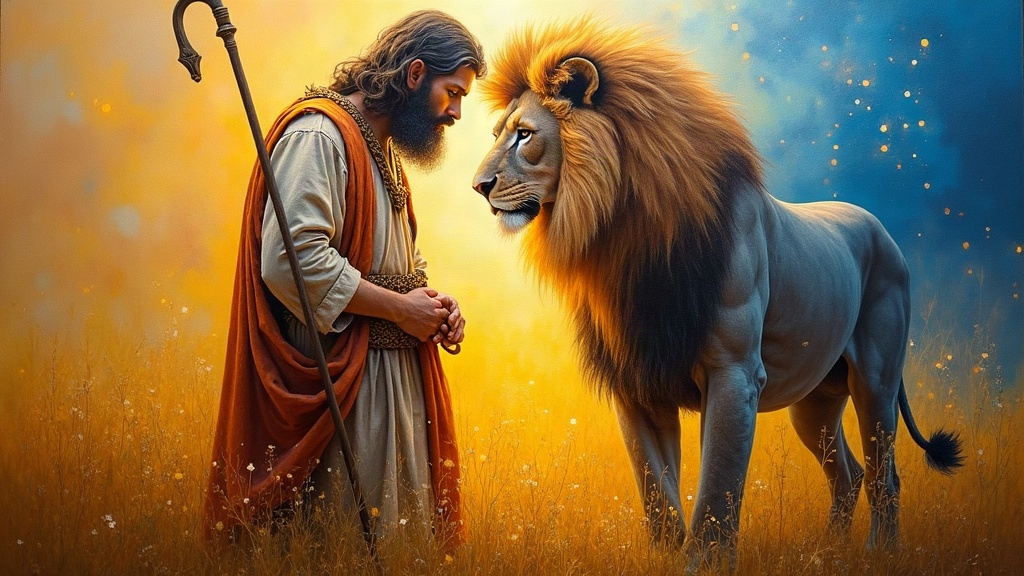
There she met a being. He had a beard and a robe with kind of long sleeves that was felted material, and he had a sheep herder staff. In his presence, she felt no disturbance, even though she was still longing to get back to her African family.
As she tried to figure out who he was, his face changed. His face changed to a lion, and she thought, 'I want to show this to Akhtar,' who was one of the men in the village, and then his face changed again. He was showing her something crucial: it's not the form that matters, it's the connection.
Then he leaned his forehead to hers, and she could see as he sees.
The Web of Golden Light
This is the moment that changed everything.
She could see that we're all connected by these living lines like golden spider ribs, and that in each of us there's a gem, sparkling gems. She saw this huge matrix of all these gems, these living lines of connection. We can strengthen those living lines with our focus and our love.
This wasn't metaphor. This wasn't poetry. This was direct perception of the actual structure of consciousness, the way beings are woven together across space and time and form. Every person a jewel. Every connection a living thread of light that responds to attention, to care, to love.
Then he brought his forehead back from hers, and her faith in him, her trust, was so absolute that she just leaned her whole being into his. They traveled together.
They came out above the scene where she had died. The African woman who was like a mother to her had found her body and was stopping the blood flow, and she was wailing. Robin wanted her to know: I'm okay, I'm loved and taken care of, I'm totally guided, I'm not in pain, and I'm just fine.
She went further into the tunnel. There were more beings that purified her, and she knew she was going home. Home felt to her like what she calls the great heart, the original place where she was sung into being, where she started as a sound sung by the great heart. She was going home to that place of origination.
But then she heard the song of her African mother.
The Song That Pulled Her Back
The song was so pure that she stopped to listen. And when she listened, it awakened her memory that she hadn't done her purpose, which was to also be part of the medicine singers like her African mother is.
She too was to sing people to help them remember themselves. That desire to live that purpose is what turned her around in the tunnel.
Think about what this means. She was moving toward total unification, toward the dissolution of all pain and separation, toward the source of all being. And she chose to turn away from that. Not because she was forced. Not because her time wasn't up. But because she remembered why she came here in the first place.
That desire to live that purpose is what turned her around the tunnel, and she turned away from going towards unification and total clarity and came back. As she started coming back, she thought, 'I'm not sure I made the right choice. I'm getting pain, I'm getting body sensation, and I'm remembering what's back there'.
But she'd already made her choice. It was like a river kind of moving her out.
She came back to her body, and her African mother was like this great protector. She felt so fragile. They took care of her for many days, and she was starting to recover, to get up a little bit.
And then the soldiers came back.
The Second Death: A Blue God and a Command to Live
The soldiers came back and attacked the village. Robin was in a hut with one of the other mothers. When the woman thought everything was done, she grabbed Robin and started to run, and Robin was on her hip.
But they were still there. The bullets came from the right side and hit her, and Robin was on her left side, so she was protected. The woman went down.
Robin, once she recovered from falling, thought she had to drag her with her, but the woman was yelling at her just to go. She'd never yelled at Robin before. Robin was totally torn. She was eight, very weak, not sure she could pull her, and the woman was yelling, giving her this command to go. So she followed the command.
She ran, and she could only make it so far. Her blood pressure was so low. She almost made it to the trees near the Limpopo River before she collapsed.
So she crossed over again. And this time, the experience was entirely different.
It was white and blank, and there was just a little horizon line, and there was a song being sung to her on that horizon line. The words were "you will live," and there was actually, just like Sesame Street, a blue bouncing ball. The song was being sung to the rhythm of "Three Blind Mice," which was a very positive memory for her, because one time when she was sick, the most loving thing her brother ever did was sit down and read her the whole set of 'Three Blind Mice'.
Then she was able to see through the veil, and she saw a man. His skin tone was a very blue, purple blue, very beautiful, and he was jeweled, and he had black hair that was up in a bun on the top of his head. He was kind of feminine and masculine at the same time, but really intensely powerful.
This wasn't the gentle embrace of the being in the field. It wasn't soft and loving like the experience she had with the man in the field where she just felt completely embraced. It was intense.
She felt like he had the power to make a mountain with his hand and destroy the mountain too with his hand, and she knew he was telling her she was going to live because he chose it as part of a greater cycle. If he wanted her destroyed and made into a new form, that would be also, but he was choosing for her to live because there was some reason that was going to help in some big cycle that she couldn't possibly understand.
His message: destruction makes available the ingredients for new creation. We must break things apart, just like a mountain is made and then it comes down with erosion to make the beach, and you can't have the beach without the mountain being worn down.
When she came back out of that experience, he was still with her, and he commanded her to move forward, because she just wanted to give up. She'd lost everyone she loved. She felt absolutely horrible. She saw no way she was going to make it, because she'd lost the people who took care of her.
But he commanded her to move forward to the nearest well. Literally, she crawled for the whole rest of the evening until it was dark towards this well, because he commanded her to move every inch forward.
The next day, she was found by a woman from another village, who washed her off, muddled her up, and took her back to her homestead. When people saw that she had a wounded white child, they said, 'Don't bother with her, it's too dangerous'.
The woman's response: "She's a living human being. I'm not going to throw her away."
Jesus and Shiva: When Forms Don't Matter
Robin Landsong wasn't raised Christian. She certainly wasn't exposed to anything Hindu. She was an East Coast white girl in Africa, not India. And yet, looking back with the perspective of research and hindsight, she wonders: was that man in the field Jesus? And did she meet Shiva?
How did that happen? The question haunts her account, but the answer is already there in what the being in the field showed her: it's not the form that matters. It's the connection.
When people argue that near-death experiences are culturally conditioned, that you see what you expect to see, Robin's account is a problem for that theory. She had no framework for Jesus. She had no framework for Shiva. She was eight years old, traumatized, abandoned, dying in rural Africa. And she met them both.
What if the beings on the other side present themselves in forms that will be recognizable later, when the experiencer has the context to understand what they saw? What if consciousness is so fluid, so responsive, that it can appear as a bearded shepherd, a lion, a blue-skinned god of creation and destruction, depending on what the moment requires?
The being in the field showed her: the form doesn't matter. What matters is the living connection, the golden threads, the gems of consciousness that we all are. What matters is the love that strengthens those threads.
Shiva's message was different but complementary: you're going to live because it serves a cycle you can't comprehend. Destruction and creation are one process. The mountain becomes the beach. The child who should have died becomes the woman who sings people back to themselves.
The Aftermath: A Life Shaped by Two Deaths
Robin survived. She made it out of Africa. The details of that extraction aren't in this account, but she made it home to the United States, carrying two near-death experiences and a purpose she couldn't yet fully understand.
She's spent decades since then doing exactly what she was shown: singing people back to themselves. She's become a healer, a teacher, someone who helps others remember the golden web of connection that links all beings. She's collected and studied thousands of near-death accounts, looking for patterns, looking for confirmation of what she saw.
In other interviews, she's shared more details about her healing work and the techniques she uses to help people access their own inner knowing. Her message is consistent: we are not alone, we are not separate, and there is a purpose woven into even the most incomprehensible suffering.
The woman who saved her at the well, who refused to throw away a living human being even when it was dangerous, embodied the same truth the beings showed her: every life is a gem in the web. Every connection matters. Love is the force that strengthens the golden threads.
What This Tells Us About Consciousness and What Comes Next
Robin Landsong's account is one of the most complex and layered near-death experiences in the contemporary literature. It challenges easy categorization. It resists simple interpretation. And that's exactly why it matters.
First, the multiplicity of beings. She didn't meet one guide. She met two Black women who felt like sisters. A being who appeared as a shepherd and a lion. A powerful blue-skinned figure of creation and destruction. Each encounter served a different function: welcome, purification, revelation, command. This suggests that the other side isn't a single uniform experience but a landscape with different regions, different guides, different purposes.
Second, the vision of interconnection. The golden threads linking all beings, the gems of consciousness in each person, the way love strengthens those connections—this is one of the clearest descriptions of the actual structure of consciousness that I've encountered. It matches what other experiencers describe when they talk about seeing the unity of all things, but Robin's account is unusually specific and visual.
Third, the choice to return. She was moving toward total unification, toward the dissolution of all pain, and she chose to turn back because she remembered her purpose. This is profound. It suggests that we don't just have purposes assigned to us from outside. We carry them with us, woven into the fabric of who we are, and when we remember them, they can pull us back from the edge of infinity itself.
Fourth, the cultural fluidity of the beings. An East Coast girl meets Jesus and Shiva in Africa. The forms don't match her background or location, and yet they're exactly what she needed. This suggests that consciousness on the other side is far more responsive and adaptive than our rigid categories allow for.
Finally, the African women who saved her, again and again. They weren't part of the near-death experience. They were part of life. And yet their love, their willingness to risk everything for a wounded child, is as much a part of this story as the beings of light. They embodied the truth of the golden web in physical form. They showed her that the other side isn't separate from this side. The love is the same.
Robin's story tells us that consciousness survives death, that we are connected in ways most of us can't perceive, that purpose is real and can call us back from the edge of eternity, and that love—whether it comes from a being of light or a woman at a well who refuses to throw away a living human being—is the force that holds everything together.
She was eight years old, and she saw the structure of reality. She came back to sing us the song that will help us remember. And decades later, she's still doing exactly that.
Was this article helpful?