Ray Katan's Near-Death Experience: The Atheist Who Returned a Believer
A gas leak ended his life at 20, revealing a light that changed everything he thought he knew about consciousness and what comes after
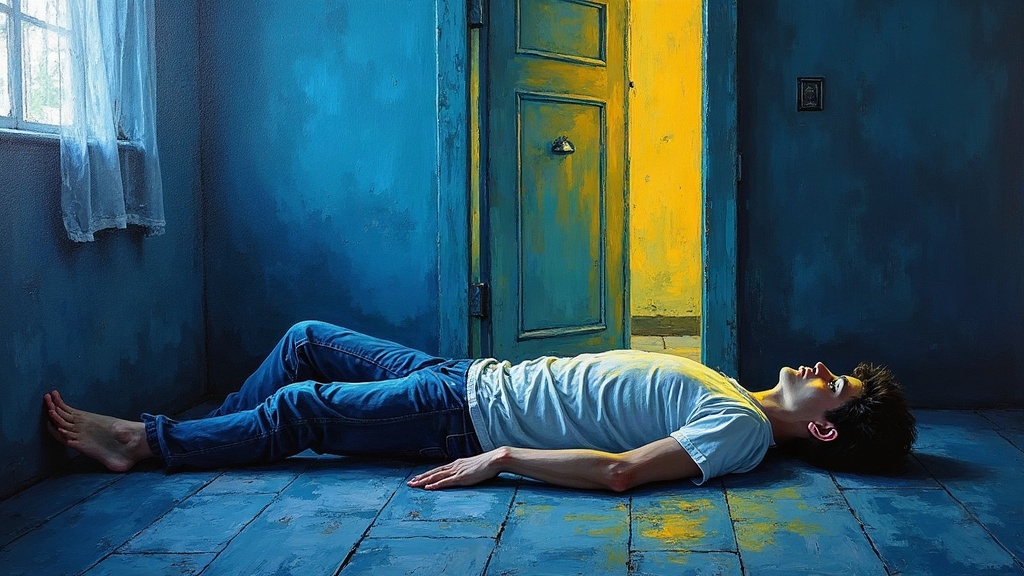
Ray Katan hit the floor face first and felt nothing. Not the impact, not the hardwood against his skin, nothing at all. That's when he understood: the body sprawled beneath him was dead, and he was floating above it in a neutral corner of the room, watching. The colors were more vivid than anything he'd seen in his 20 years. He felt no fear, only an overwhelming sense of relief. Then, from the adjacent corner, a huge white cone-shaped light appeared, shining only on him, not on the lifeless form below. A voice came from within the light, gentle and reassuring. He was apprehensive, but the being told him it was okay to come closer. He did. And everything he'd believed about the nature of existence dissolved in that moment.

The Morning Everything Changed
Ray Katan didn't have a particularly happy childhood. He describes it as filled with trauma, fighting in his home, things he wanted to avoid if he could. At 20, he was still living with his parents in a house where his bedroom sat on the second floor, directly above the kitchen. The kitchen had a gas stove.
One night while Ray slept, gas began leaking from that stove. It rose through the house, seeping into his bedroom, filling his lungs with every breath. When morning came and he tried to get out of bed, he noticed he could not move a good portion of his body. His legs were so heavy he couldn't move them. His head was so heavy he couldn't lift it off the pillow.
By the second or third attempt, he knew if he didn't get out of that bed, he was going to die. He knew something was very seriously wrong, he just didn't know what it was yet. He managed to pull himself to the very edge of the bed. Then he tumbled out and hit the floor face first.
The second he hit the floor, he knew he hit it but felt no pain at all. He thought this was strange. The reason, he would soon understand, was that the body was dead, and he was no longer in it.
Floating Above a Lifeless Form
He was floating above his body, in a neutral corner of the room, looking down on his lifeless form. This didn't frighten him right away. In fact, it didn't frighten him at all. It felt euphoric. It felt like relief. It felt amazing, actually. The colors were more vivid. Everything he was seeing was just more vibrant and alive, even though he was looking at his dead body.
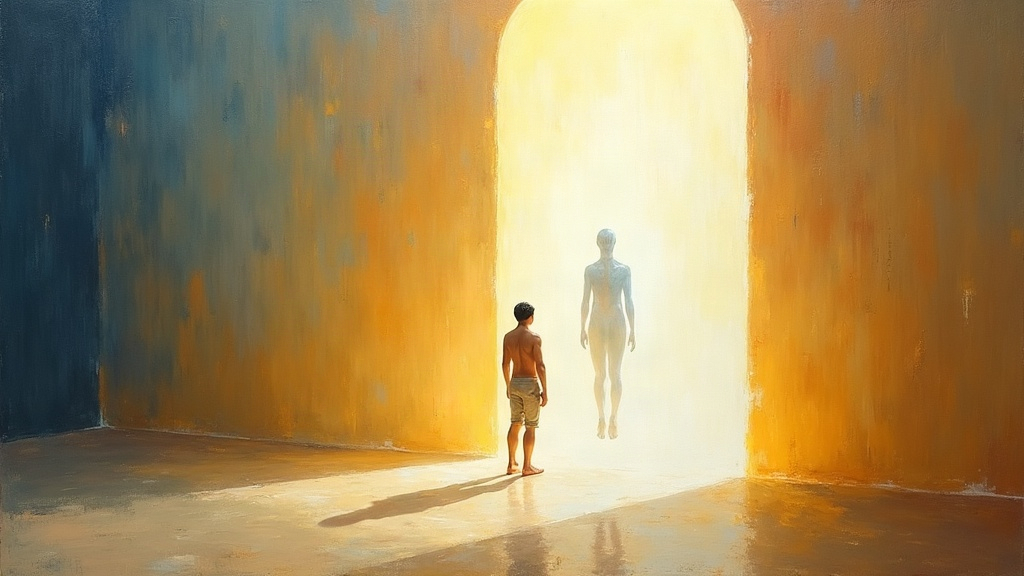
Then, from the adjacent corner of the room, a light appeared. It was a huge white cone-shaped light, like a spotlight, shining only on him, not on his dead body but on his living energy that was floating above it.
As he began to move toward the light, he felt apprehensive. There was a being at the end of the light. He can't tell you who it was. He doesn't know if it was male or female. But the being said, "It's okay, Ray. You can come into the light. It's okay." He felt comfortable then. He proceeded to go further into the light.
The further he got, the more the euphoria increased. The feelings, he says, he wishes there was a word that could summarize them, but euphoric is the best word he can possibly think of. It was the most amazing feeling he'd ever felt in his entire life.
He wanted to continue into the light, to cross over to the other side. But in that moment, he looked down at himself again.
The Father Who Never Hugged Him
Ray and his father really didn't have a great relationship, to say the least. He doesn't even remember how many times his father hugged him, but maybe less than five. And one of them was when he was dead.
He wanted that. He wanted that relationship with his father. He wanted it to be that way. He thought if he went back, it would be. He started to ask the being if he could go back. He was asking by saying, "I can't leave him that way." It was almost like he was negotiating to go back.
The next thing he knew, when he woke up, he was back in his body. He wasn't in that room anymore. He was on the living room floor, and the paramedics were working on him diligently with all their tools and equipment. They were talking to one another: "We have to get the truck, we have to get the truck," meaning they had to get him to the hospital right away.
They told him, "You're not good. You don't realize it, but you are not good, and you have to come to the hospital."
Ray asked them, "But did you see the light? Did you hear the voice? Wasn't that awesome?" Now they were looking at him like he was crazy or insane.
He stepped into the afterlife an atheist and returned a believer. He's here to tell us that the NDE is very, very real.
The Years of Self-Destruction
Ray continued to live his life in a manner that was very self-destructive. Here he was, 20 years old, and he didn't fear death. He proceeded to put himself into some very precarious situations where he could die. He worked for criminals. He was in an environment where people would shoot at each other.
In one instance, he was hiding under the bar of a place during a shooting. The being told him how to get out of the bar. It said, "Side door, side door, side door." Ray said no, he couldn't go out the side door because the shooter was going to see him. The being said again, "Side door, side door, side door."
Ray thought, what have I got to lose? He went to the side door, managed to get out, then ran down another long corridor and out another side door that led to his car. He never, ever parked in that spot with the exception of that day. He doesn't know what made him park on that side of the building. Normally he would have parked all the way on the other side and probably not have made it.
That in itself was very strange, but what was really strange was this being guiding him out of the situation. This happens very often throughout his life, he says. That's not the only occasion.
The Ocean That Nearly Took Him
When he was younger, he was swimming in the ocean and got pulled out to sea by the undertow. He was very far out, trying to swim back in, but he couldn't. He would try to swim and the undertow would keep pushing him back. The lifeguard wasn't looking at him. He was facing the other way. Ray was trying to get anyone's attention because he thought he was going to drown. In fact, he knew he was. No one was looking at him. Everyone else was already out of the water.
That's what he did. He would never have known to do this. He was very young. He swam on an angle and made it to shore. It took him a very long time, but he was very calm. When you panic, that's when you die, because you panic and you don't know what to do and you start breathing water. He was very relaxed. The being made him very calm, just told him what to do, and he did it and got to shore.
That's when he had to start coming to terms with the fact that there is something else. What it is, he didn't really know just yet, not until he met his second wife. But he did know that there is more to life after life.
God as Something Different
Ray has spent the years since his NDE trying to make sense of what he experienced. He's noticed something about people who are very religious when they have an NDE: they sort of see it in the way that they were taught, what is supposed to be this and what is supposed to be that according to religion. Listen, they may be right, he says. But from his perspective, combining what he's learned from science and the NDE, he looks for things outside the box now.
He wouldn't say that God doesn't exist, but he would say that God is something different than the way religion is describing it. He would say that God is more of a collective consciousness, like Carl Jung described it, and that we are all connected to that entity.
Even Jesus, who Ray believes walked the Earth and was an amazing human being, told us God is within you and you are a part of God. What he's saying is that exact fact: that we are a part of that entity and that entity is a part of us.
What Jesus never said was that he was the only son of God. In fact, he said we were all sons of God. If we're all a part of the entity, then we and the entity, if you wish to call it God or the universe or the collective, choose your word, we're all a part of it. And if we're all a part of it, we're all equal. There isn't one person that's above another person. We're all connected to that energetic entity and we're all creators of the universe collectively.
That just makes more sense to Ray than one singular higher power making decisions on behalf of everyone. Because if that were the case, we could do away with a lot of the terrible things that are happening. The reason we don't is because we're collective consciousness. Some people are bad people and they are a part of that collective consciousness. Until more people are good and less are bad, and the balance, the tipping point, starts to go the other way, that entity doesn't know which way to go because it's made up of us.
The Sun and the Energy We Choose
Ray heard an analogy from Eckhart Tolle that helped him understand why people do what they do if we all come from one entity. Tolle was asked why there is evil in the world if we all come from a place of love. He explained it this way:
Imagine that the sun is God or the universal collective, that oneness, that love that we're all coming from. The sun makes sure that everything on planet Earth continues to live by sending it energy. That energy comes to the Earth and it's turned into living things and it keeps living things alive. However, when that energy enters another being, what that being chooses to do with that energy, you can't blame the sun for it.
We are all creators. We are all part of the creation of this universe. We are all one with God. We are all one with the collective. We're individuals in the sense that we accept this energy, it creates who we are and what we are, but then what we do with it is entirely up to us.
Why We Choose the Hard Life
If it's true that we get to choose the type of life we're going to live, why would someone take one that's so challenging versus someone that would take one that's very easy?
The difference is the person who takes the difficult one can become enlightened. The one who takes the easy one cannot and will not, not in that lifetime. It takes the trauma. It takes the negative things to happen to a person in order for them to be able to rise above them.
Ray's best days were his worst days. Those were the days that he shined. Those were the days that he showed his character. Those were the days that he proved that he can be a better person. Those are the days that we can really measure a person by.
If everything came easy to him and everything was simplified and easy, he wouldn't be here today. You would have no interest in speaking with him. It's because of the transformation that he made, and others wish to make that transformation. Many people have experienced trauma, many have experienced these horrific things. Mind you, it's not always that you do the horrific things. They could be done to you. Either way, you are involved in this traumatic experience, and we need to rise above that. The way to do it is to experience it, become stronger, and move one step closer to enlightenment.
The Buddha Who Left the Palace
Ray points to the Buddha as an example. He was a prince. He could have anything he wanted delivered right to him. His father, the king, said never leave the compound, never go beyond the walls, because outside there it is terrible.
So he went beyond the walls. He left his parents, his wife and child, even, to try to achieve suffering for all people. The way he needed to do it, the way he knew he had to do it, was to suffer. He left with no money, no clothes, no food, no water, nothing. No one knew who he was because no one had ever seen his face. No one knew he was a prince. So he was a homeless man for many, many, many years and endured that type of suffering and eventually became enlightened.
Ray does not believe that ever would have happened had the Buddha stayed in his father's compound. And he also wouldn't have been able to teach people what he taught us.
What Happens to the Worst of Us
The way Ray understands it, even the worst of the worst people, when they return, are shown their lives and are shown what they did right and wrong. He does not think there is a good place and a bad place. He doesn't think there's a heaven and hell. He thinks that when you cross over, you see the things that you have done wrong and you become all-knowing and you understand why you did those things.
This is a radical idea, but it's one that shows up again and again in NDE accounts. The life review is not about punishment. It's about understanding. It's about seeing yourself and your choices from a perspective of complete clarity and compassion. Even the worst among us, Ray suggests, will be given that chance to understand.
What This Tells Us About Consciousness
Ray's story is one of the clearest examples we have of consciousness operating independently of the physical brain. His body was dead. Gas poisoning had shut down his biological systems. Yet he was more alive, more aware, more vividly conscious than he'd ever been. The colors were brighter. His perception was sharper. He felt euphoria, relief, and a sense of being fully himself in a way he'd never experienced in his physical form.
This is not an isolated case. Thousands of near-death experiencers describe the same phenomenon: heightened consciousness at the moment when the brain should be producing nothing at all. No neural activity, no oxygen, no capacity for hallucination or dream. Yet the experiencer is there, watching, feeling, thinking, making decisions.
Ray negotiated with the being to return. He made a choice. That choice was honored. He woke up back in his body, on the living room floor, surrounded by paramedics who had no idea what he'd just been through.
The fact that he could make that choice, that he could communicate with a being of light and have his request granted, suggests something profound about the nature of consciousness and agency. We are not passive observers of our lives. We are active participants, even in the moment of death, even in the space between worlds.
The Being Who Keeps Guiding Him
What's equally striking about Ray's account is what happened after he returned. The being didn't leave him. It stayed with him, guiding him out of dangerous situations, telling him to take the side door during a shooting, telling him to swim sideways when he was drowning. This is not a one-time mystical experience. This is an ongoing relationship with something or someone on the other side.
Ray doesn't claim to know exactly who or what this being is. He doesn't assign it a religious label. He just knows it's there, and it's been there for him again and again when he needed it most. This pattern shows up in many NDE accounts. The experiencer returns with a sense of being accompanied, being watched over, being guided by a presence that loves them unconditionally.
For Ray, this presence has been the difference between life and death multiple times. It's also been the force that's pushed him toward growth, toward understanding, toward becoming the person he's meant to be. He didn't want to grow. He was self-destructive. He put himself in harm's way because he didn't fear death. But the being kept steering him, kept pulling him back, kept giving him chances to learn and evolve.
The Collective Consciousness
Ray's understanding of God as a collective consciousness is one of the most important insights to come out of his experience. It resolves the problem of evil. It explains why bad things happen to good people. It honors human agency while also affirming our connection to something infinite and loving.
If we are all part of the collective, if we are all individuated expressions of the same source energy, then what happens in the world is the result of all of us, not the will of a distant deity. The balance tips based on how many of us choose love, compassion, growth, and enlightenment versus how many of us choose fear, hatred, violence, and selfishness.
This doesn't mean God is powerless. It means God is us. We are the hands and feet and voices of the divine. We are the creators. What we do with the energy we're given matters. It shapes the world. It shapes the collective consciousness itself.
This is both terrifying and liberating. It means we have more responsibility than we thought. It also means we have more power. We are not victims of fate. We are co-creators of reality.
Why the Hard Path Leads to Light
Ray's reflection on why we choose difficult lives is one of the most compassionate and challenging ideas in the NDE literature. If we really do choose our lives before we're born, if we really do select the circumstances and challenges we'll face, then suffering is not random. It's purposeful. It's the curriculum.
This doesn't mean suffering is good. It means suffering can be transformative if we let it be. Ray's worst days were his best days because those were the days he had to dig deep, to show his character, to prove he could rise above his circumstances. Those were the days he became more than he was.
The easy life produces nothing. The hard life produces enlightenment. The Buddha knew this. He left the palace. He became homeless. He suffered. And through that suffering, he learned what he needed to teach the world.
Ray's childhood was filled with trauma. His young adulthood was filled with self-destruction and danger. But those experiences, as painful as they were, are what make his story worth telling. They're what give him the authority to say: I've been to the bottom, I've been to the other side, and I'm here to tell you it's going to be okay. More than okay. It's going to be beautiful.
What Ray Wants You to Know
Ray stepped into the afterlife an atheist. He returned a believer. Not a believer in the dogma of any particular religion, but a believer in the reality of consciousness beyond the body, in the presence of a guiding intelligence that loves us unconditionally, in the possibility of transformation and growth and enlightenment.
He's telling his story because he wants you to know that death is not the end. It's not something to fear. It's a transition, a doorway, a return to a state of being that is more real, more vivid, more euphoric than anything we experience here.
He also wants you to know that your struggles matter. Your pain is not meaningless. It's the very thing that can make you stronger, wiser, more compassionate. The hard life is the path to enlightenment. The easy life is a dead end.
And finally, he wants you to know that we are all connected. We are all part of the same collective consciousness. What you do with your energy, with your life, with your choices, affects all of us. You are a creator. You are a son or daughter of the divine. You are equal to every other person on this planet, no matter what religion or culture or circumstance tells you otherwise.
Ray's story is a gift. It's a reminder that we are more than these bodies, more than these struggles, more than the limitations we've been taught to accept. We are eternal. We are loved. We are here to learn and grow and become the best versions of ourselves.
And when we're done, when this life is over, we'll step into that light, and we'll feel that euphoria again, and we'll understand why it all had to happen the way it did.
For more of Ray's insights, you can watch his other interviews where he discusses how he tried for years to deny what he saw and what he learned about having it completely backward.
Was this article helpful?