Randy Schiefer's COVID Near-Death Experience: A Message from Beyond
A retired homicide detective's 31-day coma journey to a golden city and back with proof of the afterlife
Randy Schiefer was intubated and dying in a Florida hospital, every organ shutting down from COVID-19, when his bodyless consciousness woke up in a dark tunnel. The 67-year-old retired Air Force investigator and homicide detective had spent his career demanding physical evidence for everything. Blood. Fingerprints. Hair fibers. Facts you could hold in your hand. Now he was moving through darkness toward a light he couldn't explain, feeling a peace he'd never known, heading somewhere his forensic training hadn't prepared him for. He had no idea that when he woke up six weeks later, he'd carry back a message from a dead veteran for a stranger named Madison, a woman he'd never met, at a salon he'd never been to, with details he couldn't possibly know.
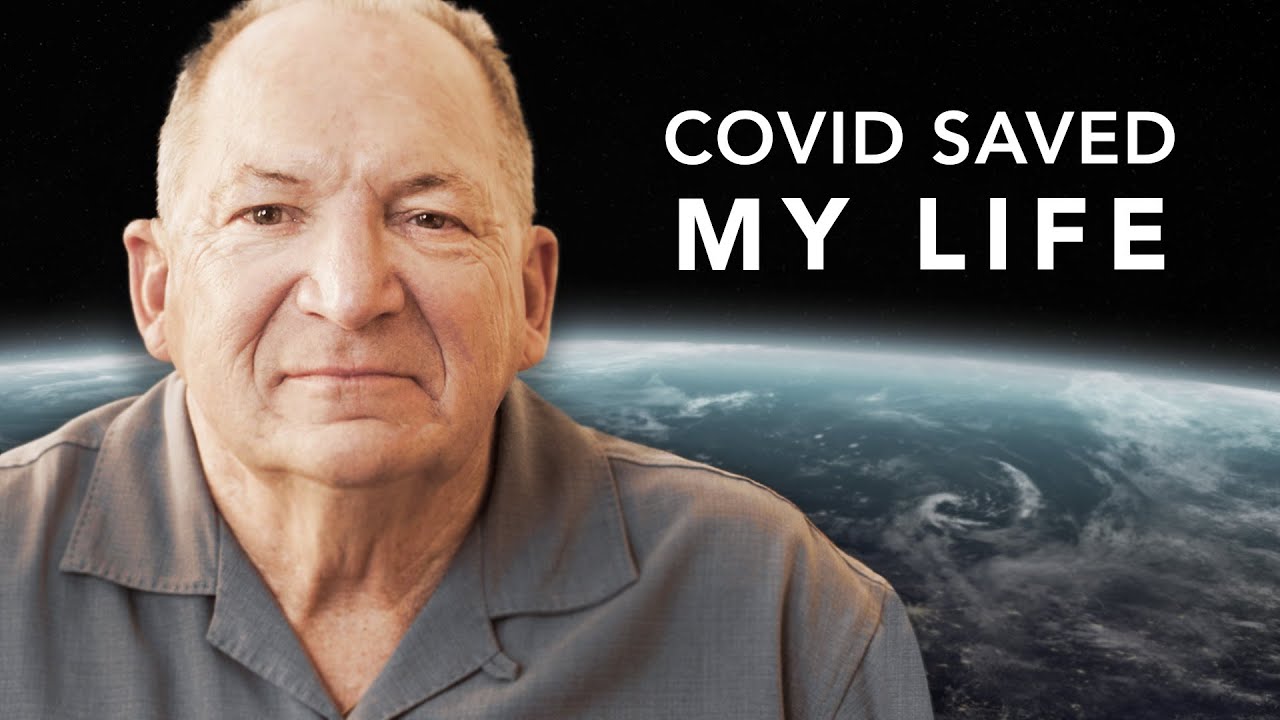
Randy grew up in South Florida in the late 1950s and '60s, surfing nearly every day, riding his bicycle through empty streets, going deep-sea fishing with his father. "My dad and I were, we had a very close relationship," he recalls. That closeness shattered when Randy was 15, on a family vacation in New Jersey. At 3:30 in the morning, his mother started screaming that his father was having a heart attack. Randy ran through hotel hallways pounding on doors, desperate for help, running back and forth between his dying father and the phone. The ambulance came too late. "That had a very lasting effect on me," Randy says, "and it was that time that I just said you know God abandoned me, he took my father, why would he ever do that".
From that moment forward, God became what Randy calls "a very distant figure in our lives, you know, very rarely talked about if at all". He went to college for law enforcement, following in his father's footsteps as an auxiliary policeman. Then two buddies convinced him to tag along to an Air Force recruiting station. Six months later, he was in uniform. He spent seven years in England doing security police work, then moved to Washington, D.C., for presidential security during the Reagan years. A friend mentioned a new program at George Washington University called forensic science. "It's about investigating death and investigating crimes," the friend explained. Randy was hooked.
In 1983, he graduated with a master's degree in forensic science. "I became fascinated with death and all aspects of it," he says. The Air Force Office of Special Investigations recruited him as a special agent and sent him to Germany, where he investigated homicides, suicides, child deaths, any case requiring forensic expertise. After 20 years and 30 days in the Air Force, he retired and became a training instructor at the Ohio Peace Officers Training Academy, teaching fingerprints, blood evidence, hairs, fibers, the whole forensic toolkit. The Attorney General appointed him deputy director. When a new administration came in, his political appointment ended. He retired to Florida.
The Virus That Changed Everything
In late 2019, the world met COVID-19. By early 2020, no one knew how to fight it. Randy was 67 when he and his daughter went to work on her rental property one afternoon. "We both said suddenly that we felt very tired and worn out," Randy remembers. They figured they'd worked enough for the day. By the time they got home, they were exhausted. His wife was making dinner, the house normally filled with the smell of pasta sauce, but "neither one of us could smell it," Randy says. They figured it was the flu.
Over the next few days, Randy got worse. Lost his taste, his smell, ran a low-grade fever, developed a cough. His oldest daughter, a nurse, stopped by to check on him. "She walked in and she said dad you don't look good," Randy recalls, "and I said no I'm fine I just don't feel good I'm fine, she goes no I think you need to go to the emergency room". She drove him to the hospital. Because of COVID restrictions, family couldn't come inside. "She yells out to me, she says Dad I'll wait in the car for you, she said I love you, call me when you're ready, I'll come pick you up," Randy says. He turned around and told her he loved her, he'd see her in a little bit. "That was the last family member I saw for 6 weeks," he says.
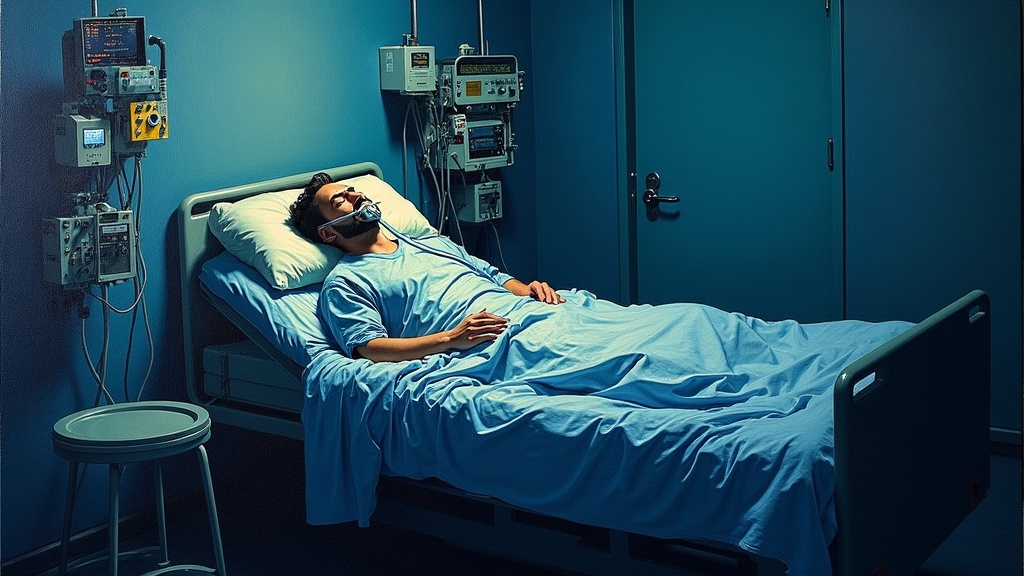
They put him in isolation. The test came back positive. Within a day, his kidneys failed and he went on dialysis. His left ventricle enlarged and stopped pumping properly. He was bleeding internally. His liver enlarged. "Every organ was in major failure," Randy explains. His breathing got so bad they did an emergency intubation. He was intubated for 31 days and put into a coma. The doctors told his daughter Lisa, the nurse who became the family's medical advocate, that he wasn't going to make it. He was going to die.
But Lisa wasn't about to lose her father. She called a girlfriend from nursing school whose father was an infectious disease doctor. He told her to get convalescent plasma for Randy, a treatment still in its infancy. The hospital said they'd consider it in 2-3 months, but "she said my dad will be dead in a day or two," Randy recounts. After meetings with hospital administrators, they agreed: if the family could find plasma, they'd administer it.
Randy's middle daughter took to social media with help from his youngest daughter, the nurse. "They developed a post basically saying my dad is sick, he's in the hospital with covid, he needs your help," Randy says. They got two pages of volunteers willing to travel to Florida to donate plasma to a person they'd never met. Miraculously, they found a match 30 minutes away in Pensacola: a young pastor at a church who became Randy's donor.
On Easter morning, Randy's lungs cleared enough that he started breathing on his own again. His heart returned to normal size. Within three days, his kidneys returned to full function. His liver reduced, he quit throwing blood clots, he quit bleeding internally. The forensic investigator who'd spent his career demanding physical evidence was about to receive proof of something he'd never believed in.
The Dark Tunnel and the Golden Room
When Randy came out of the coma, he knew something had happened. When his daughter Lisa came in and told him how sick he'd been, "I said well Lisa, I said I wasn't here," Randy recalls, "and she said what do you mean Dad you weren't here, I said I, I traveled". Lisa told him it was just a dream. "I said no, I said I had dreams, I know I have dreams and I can tell you those dreams, and I said I had hallucinations and I can tell you the hallucinations as well," Randy explains, "I said I have this other area that something happened to me, I was in here".
At the time, Randy had never heard of near-death experiences. He had no framework for what he was trying to describe. "I said Lisa I was in like a dark airplane fuselage," he told her, "and I remember my consciousness, no body, I was bodyless, it was just my conscious woke up and I was in this dark tunnel and I was moving through the tunnel very slowly."
"I knew I had died," Randy says. "I remember telling me okay you, you're dead, you died, but where are we going." The tunnel was warm. "So loving and felt such an incredible peace and calm that I'd had never ever experienced before," he describes. The tunnel was encased with bright light. He has no idea how long he traveled through it, but when he came out, "I was in a beautiful golden room and it had a mezzanine and I remember standing on that mezzanine".
He couldn't see anyone, but he felt a presence next to him. He stood there taking in the beauty: "very high tall ribbed vaulted ceilings, beautiful gold inlaid in all the vaults, huge beautiful chandeliers hanging from the ceiling and the bright light radiating in through the windows and you could feel the warmth and the love and I was just so inspired by this room," Randy describes.
A spirit in human form approached, stopping a few feet away. "I said what a beautiful room, I said this room is just absolutely stunning," Randy recalls. The spirit replied, "yes it's one of our most popular areas". Then: "but you have to leave, you don't belong here". The spirit pointed to massive, beautiful oak doors with elaborate carvings. They opened the doors and Randy went out.
The Golden City and the Lost Feeling
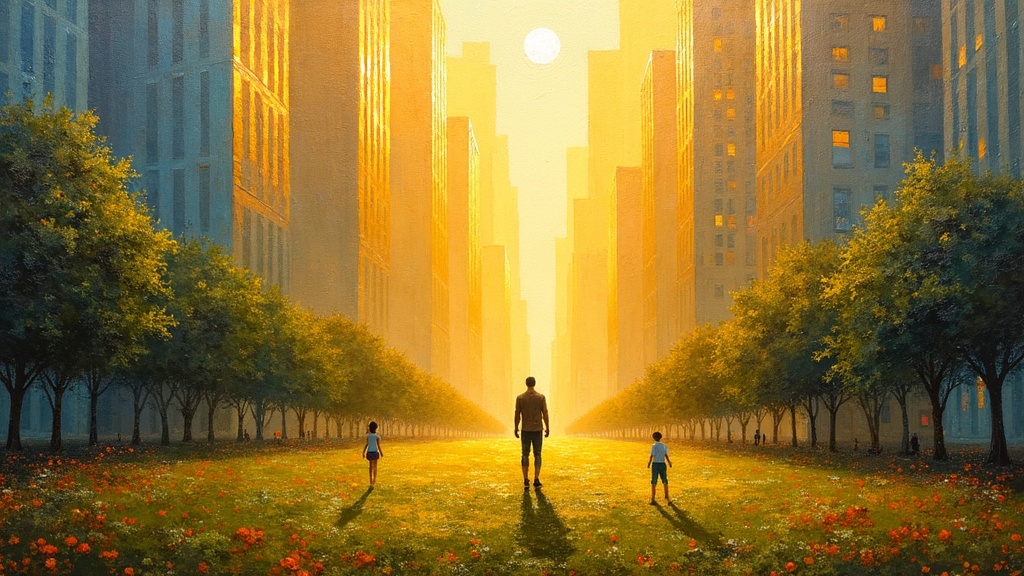
"I was in a beautiful golden City, stunningly beautiful, big skyrise golden buildings with opaque Windows as far as you could see up in the sky," Randy describes. He traveled the streets. He passed parks that were "absolutely stunning, such a brilliant green and beautiful flowers and trees and there were some children playing in the Parks". He kept moving through the city.
Suddenly, he felt lost. He didn't know his way back. "I sat down on like a sidewalk type of a thing and I was sitting there and I remember commotion, movement around me, but nobody was stopping to help," Randy says. "And I was crying out help me, I'm lost, someone please help me, and I felt cold and an anxious and scared."
He looked over his right shoulder and saw "this big beautiful staircase going up into the sky," he recalls. "I said if I can get to that staircase maybe somebody will find me." His consciousness moved toward the staircase. Then he heard a voice: "there's Randy". He turned around. "There was a man with long white hair with a white beard dressed in a beautiful right white robe and he's the one that grabbed me off the steps," Randy says. He went back into his dark sedated world.
But his consciousness woke again. This time he was "moving down a dirt pathway outlined in beautiful flowers and trees and there was a river that ran beside the pathway," Randy describes. He was admiring the beauty when "this little boy comes out and he was very animated, follow me, follow me, follow me, he was crying out". Randy followed him into a beautiful room. The boy said "you wait here".
Randy's consciousness moved over to the river he'd seen before. "I could see this River Meandering off into the distance and I was sitting there just thinking to myself such a calm picture, you know, and so peaceful," he says. The little boy came back. "He said to me, I'm sorry, says you have to leave," Randy recalls. "And I said I don't want to leave, I said I feel so much peace and love and I said I feel some, I feel home." The boy replied, "no I'm sorry, your room isn't ready, you have to leave". Randy was back in his dark sedated world.
The Void and the Veteran's Message
Then Randy's consciousness woke in a void. "Nothing around, no trees, no buildings, nothing, but there orbs of light that were passing by," he describes. He felt his guide's presence again. The guide indicated "we needed, I needed to follow him, we needed to go into the void," Randy says. They started moving. Off in the distance, a little light came on, getting brighter as they moved closer.
"I suddenly saw my mother-in-law and she was sitting there very regally, very straight and very proper, you know, and she was probably in her late 20s maybe early 30s in appearance, but I knew it was her," Randy says. She glanced at him, then glanced away. "I was yelling at her, Dolores it's me, it's Randy, it's Randy, I'm here, I'm here Dolores, but you wouldn't acknowledge me," he recalls. His spirit guide said they had to move on. As they went deeper into the void, "back in the distance I saw her light slowly dimming and dimming and dimming until it just disappeared".
Another light appeared, getting brighter as they moved forward. "I saw my dad, my mother and my sister and they were standing there and their light started to slowly go out," Randy says. Then, to his right, "this orb of light caught my attention and it was coming up to me very very quickly and it stopped right in front of me," he describes.
"For a brief brief second it materialized into a human face," Randy says. The face said to him: "tell Madison at the salon her grandfather's okay". The spirit moved over to a white porch and "showed me the making of red white and blue ribbons and American flags," Randy recalls. "And I knew instantly he was a veteran, I just knew it, I just felt it." Right after showing him the flags, Randy's spirit guide told him "I have to go". He returned to his dark sedated world.
Finding Madison
When Randy woke from the coma and was eventually released from the hospital, he told his family what he'd experienced. His daughter asked, "well Dad, who's Madison?" Randy recalls. "I said I don't know, I don't know a Madison, I don't know anybody named Madison." She asked who the man was. "I said I don't have a clue, I don't know who he was," Randy says. "Well how are you going to find Madison? I said I don't know."
But Randy knew one thing: "a veteran gave a fellow veteran a message and I have a responsibility to find her".
A week or so after getting home, Randy wanted a haircut. He was rummaging through a junk drawer and "I found a business card to a local barber shop," he says. He asked his wife and daughter to call and see if they were open. A few minutes later, his daughter came back interrogating him: "where did I get the card, how long had I had the card, where did I find the card, where did I get the card, all these questions," Randy recalls. "I said Lisa, I said what are you talking about, just call and make me an appointment."
"She said Dad I think we found your Madison," Randy says. "And she handed me the card and on the card clear as day was written m Madison Logan." He told her to make an appointment with Madison.
At the barber shop, "this little girl comes up and she goes hi I'm Madison, she goes I think you're my next appointment," Randy describes. They sat down in her chair. His daughter explained how sick he'd been. After a few minutes, Randy asked if he could ask some personal questions. "I said are both your grandfathers still living and she goes no, she said the one grandfather that I was closest with passed away less than a year ago," Randy recalls. He asked if he was a veteran. "Oh yeah he's a veteran, she said he served in the Army and talked about Vietnam," Madison replied.
Randy figured he had the right girl. "I said Madison, I think your grandfather came to me and he has a message for you," he told her. She looked at him strangely. "I said Madison, your grandfather came and he said tell Madison at the salon that he's okay," Randy says. "And of course she's crying, I'm crying, my daughter's crying."
After they composed themselves, Randy continued. "I said Madison, I said your grandfather father moved onto a white porch, is that significant?" he asked. Madison replied, "that was his house in Iowa, she said it had a white porch and he loved sitting on the white porch and he used to sit there after he retired and just see everybody go by and talk to him, he loves sitting on his white porch".
"And I said Madison, I said he showed himself making red white and blue ribbons and American flags, is that somehow important to you?" Randy asked. Madison stepped back and looked at him like he was an alien, tears flowing down her cheeks. "She said every Veterans Day her whole family would go down to the American Legion to support him and they would make red white and blue ribbons and American flags to their veterans Graves," Randy says.
Madison later called Randy and said her grandmother wanted to talk to him. He called her and told her the story. The grandmother, Cathy, told him "the man that told you that, his name was John, John was a veteran and that he served in the Army proudly and was in a major battle in Vietnam and received medals and he was a very proud veteran," Randy recounts. "And John died of a massive heart attack in his house by himself, which parallels my father's death as well."
Cathy asked if he'd seen John's face. "I said just briefly, it IED briefly, can you describe it, and I said it was a thin face, dark hair, I said maybe a mustache, I'm not sure," Randy recalls. "She says let me send you a picture." When the picture arrived, Randy called her back. "I said Cathy, that's who I saw," he told her.
Cathy shared that she felt tremendous guilt and loss over John's death. "I think this is John's way to let his family know that don't stress, Don't grieve, I'm okay," Randy says.
The Man Who Changed
"Co was a terrible terrible disease that took millions and millions of lives," Randy reflects. "Co saved my life." He has "such peace and calmness now in my life and it has totally changed me as a person".
As a criminal investigator, Randy had "a pretty intense personality, very much a type A aggressive personality," he explains. "But you know you kind of need that as a homicide detective because people are going to lie to you, they're going to deceive you, they're going to hide things and you've got to find them." But that wasn't who he was as a person.
"After my near-death experience I want to get to know people, respect their differences, I trust people more," Randy says. "I have a much deeper relationship with my wife and my children now than I ever had." Family and God come first now. Before, "it was work work work work work," he admits. "In a lot of ways you know I I've missed out with that type of Personality cuz you know dance recital or a band concert or a birthday, um I put my job first."
"My family needed me," Randy says. "Like my father wasn't in my life and missed out on so much, I am so blessed to be in their life and to experience their journey and to experience my grandchildren Journey." He and his kids now have "some very deep conversations about heaven and the afterlife and the meaning of you know of what, why are we here, you know, what is our intentions here". And he doesn't "sweat the little things anymore".
"So God puts me in people's lives who need that hope and understanding, uh and support that their loved one is okay, that they are safe and that you're going to see them again," Randy says. "You know I saw my mother-in-law who her and I did not have a good relationship, um but she was there, my mom, my dad, my sister, I saw them all."
The Evidence a Forensic Investigator Needed
For Randy, the transformation is rooted in something concrete. "You got to remember my world up to this point revolved around physical evidence," he explains. "I had to have the blood, the hair, the fiber, the fingerprint to convict someone." When he went to church, "it was meaningless because nothing they said gave me my physical evidence that I needed to know that the afterlife was real". His feeling at that time: "when you turn off the light switch that's the end of it, you're gone".
He wants people who've lost loved ones to know something: "my dad isn't getting to experience that or my grandmother isn't here to see this, yes they are, yes they are, they're watching," Randy insists. "They see what's going on, they know and they pass their love on back to you in just the slightest of little ways." He sees it every day: "just a twinkle in somebody's eye or a crooked little smile that reminds me of my dad or my mom or someone".
"Every day I'm just in wonderment of why me, what did I do in my life to Warrant this blessing," Randy wonders. "I didn't do anything, I was just a normal guy, had no relationship with God, so why did he chose me and give me this experience to share with others?" His answer: "I don't know but why not me, why not".
Coming Together
Randy recently saw a presentation that stuck with him. "If you look at your hand we have five individual fingers and individually they operate separate, so think of that as your life, you know you're operating separately from others," he explains. "See how powerful we are when we all can come together in peace and Harmony and love and live our life that way and I think that's what God wants us to do, he wants us to come together and love one another."
"There's no reason to bicker and fight and carry grudges and that is all man-made, that internalizes so much stress and energy that is really unnecessary because we're all here just to learn, learn to love, learn to get along and experience This Magnificent Journey that God has allowed us to experience," Randy says. "I really think that that's what God wants us to do, have us live our lives in peace and harmony with one another and come together as a unity and how powerful we are when we all respect one another and love one another."
Randy Schiefer has shared his experience in multiple interviews, including detailed accounts on NDE Radio and the Love Covered Life Podcast, where he discusses how his COVID near-death experiences resolved his PTSD and brought him face to face with family members who had passed.
What This Experience Reveals
Randy's account sits at the intersection of two profound human experiences: the near-death phenomenon and the delivery of verifiable information from the deceased. The Madison encounter is what researchers call an evidential case, one where the experiencer returns with specific, verifiable details they couldn't have known through normal means. Randy had never met Madison, never been to that salon, had no knowledge of her grandfather John or his white porch in Iowa or the Veterans Day tradition of making ribbons and flags. The business card sat in a junk drawer, forgotten. Yet every detail checked out.
This kind of evidential NDE pushes beyond the subjective realm of personal transformation (though Randy's transformation is profound) into something that demands explanation. How did a dying man in a coma receive a message from a deceased veteran for a stranger he'd never met, complete with specific biographical details? The forensic investigator in Randy knows what this means. He spent his career following evidence chains, establishing facts, building cases that would hold up in court. This is his case now, and the evidence points somewhere his younger self never would have looked.
The detail about seeing his mother-in-law Dolores at a younger age (late 20s or early 30s) is one of the most commonly reported features of NDE reunions with the deceased. Experiencers consistently describe seeing their loved ones in their prime, healthy and whole, regardless of how they looked at death. Randy's mother-in-law, with whom he didn't have a good relationship in life, appeared but wouldn't acknowledge him. This too fits a pattern: NDEs sometimes include encounters with deceased individuals who seem preoccupied or distant, as if existing in their own realm or state.
The progression of Randy's journey follows a classic NDE structure: the tunnel (warm, loving, peaceful), the threshold moment (the golden room where he's told he doesn't belong), the otherworldly environment (the golden city with its parks and children), the encounter with deceased loved ones (his parents, sister, mother-in-law), and the return. But the addition of the veteran's message elevates this from a personal experience to a shared one. Madison and her grandmother Cathy received confirmation that John is okay, that he remembers them, that love persists beyond death.
Randy's transformation from aggressive, work-obsessed investigator to peaceful, family-focused man mirrors what we see across thousands of NDE accounts. The experience doesn't just change beliefs, it changes priorities. What matters shifts. The small things fall away. Relationships become primary. God, once distant or absent, becomes close and real. For Randy, who'd abandoned God at 15 when his father died, this reconnection healed a 52-year wound.
The fact that Randy's healing came through COVID, a disease that killed millions, carries its own weight. He says COVID saved his life, and he means it spiritually. Without the virus, without the coma, without the 31 days on a ventilator while his organs failed, he wouldn't have received what he needed most: proof. Not faith, not hope, but direct experience. The forensic investigator got his evidence. The son who lost his father got his father back, at least in glimpse. The man who didn't believe in an afterlife now knows there is one, and he's telling anyone who'll listen.
This is what makes Randy's story so compelling. It's not just another NDE. It's a detective's case file on the afterlife, complete with verifiable facts, witness testimony (Madison and Cathy), and physical evidence (the business card). Randy followed the evidence where it led, and it led him to a golden city, a veteran's message, and a peace he'd never known. For a man who spent his career investigating death, he finally got to experience what lies beyond it. And what he found wasn't darkness or nothing. It was light, love, and a message from a fellow veteran: tell her grandfather's okay.
We're all going to that golden city eventually. Randy's just one of the few who got a preview and came back to tell us about it. The evidence is in. The case is closed. There's something on the other side, and it's more beautiful than we can imagine.
Was this article helpful?