Randy Kay's Four Near-Death Experiences: A Detective's Evidence for the Afterlife
A skeptical homicide detective spent four weeks in a coma and brought back a message that would change everything
Randy Kay spent 30 years investigating death. As a criminal homicide detective with a master's degree in forensic science, he built his career on evidence, proof, and hard facts. He was also terrified of his own death. The thought of his existence simply ending would send him into panic attacks. He didn't believe in an afterlife. He thought death was like flipping a light switch, everything goes dark, and that's it. Then in March 2020, at age 67, COVID-19 put him in a coma for four weeks. During that time, he died four separate times. What he brought back wasn't just a story. It was evidence. The kind of evidence that would convince even an old crusty criminal investigator that something extraordinary waits on the other side.
The Crisis
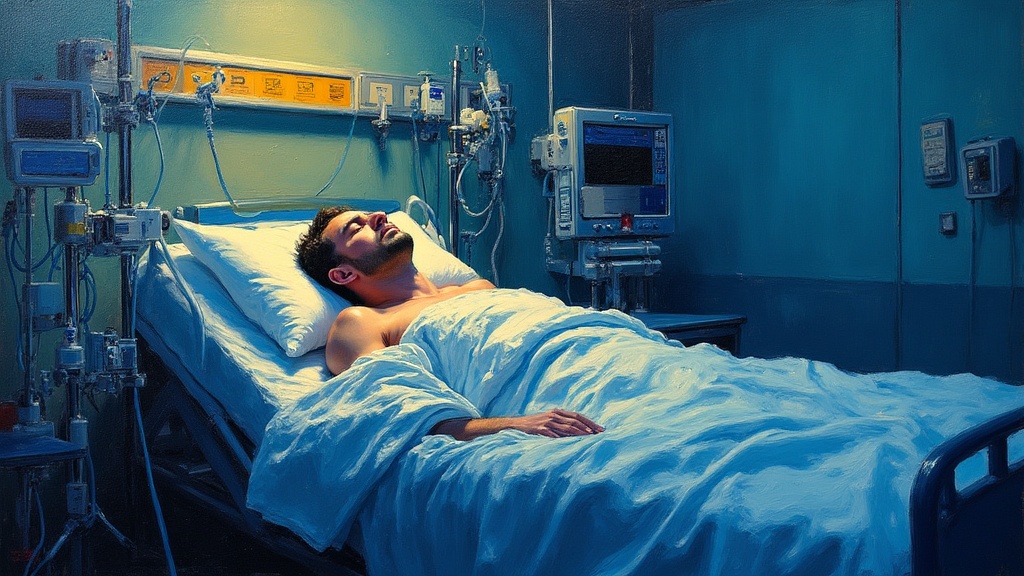
Randy doesn't know where he caught it. He was living just outside Pensacola, Florida, when he got sick in March 2020. Within hours, his condition deteriorated so rapidly that he was hospitalized. After just 24 hours in the hospital, he was placed on a ventilator. Twenty-four hours after that, he maxed out the ventilator and went into acute respiratory failure.
They put him on a helicopter and flew him to a larger hospital in Pensacola. There, surgeons placed him on an ECMO machine, a total heart-lung bypass system. His kidneys failed, and he went on dialysis. His liver enlarged and began throwing blood clots throughout his body. Every major organ was affected. At one point, the doctors called his family and told them he had about a three percent chance of living. They should prepare for his probable demise.
Randy entered the hospital on March 26, 2020. He didn't leave until May 9, 2020. Six weeks in the hospital. Four weeks in a coma. And during those four weeks, something happened that would shatter everything Randy thought he knew about death.
The First Passage: The Tunnel
Randy remembers being in a tunnel, a black tunnel. He wasn't traveling fast, but he was moving through it. The tunnel was wrapped with light. The light didn't permeate into the tunnel and brighten the inside, but he could tell it was very bright on the outside.
He felt relaxed. At peace. And he knew. "I knew I died. I remember saying to myself, okay, you know, you're dead, but where are we going," Randy recalls.
This is the man who spent three decades investigating homicides. The man who couldn't talk about his own death without having a panic attack. And here he was, moving through a tunnel, consciously aware that he had died, and feeling calm.
The Golden Building
The next thing Randy knew, he woke up inside a beautiful building. He was standing on a mezzanine, looking down into a room that took his breath away. It was gold. There were three big arches on each side of the room, arched in gold inlay. Beautiful stained glass windows sat above the arches. Big chandeliers hung from the ceiling. Water features.
A man walked over to him. Olive-complected, dark hair, dark beard, wearing a brown robe. He almost floated over. Randy told him how beautiful the room was. "I said what is this room, what is this room, and he goes, oh, it's what are more one of our most favorite places. He said it gets the most visitors," Randy remembers.
Then the man said something Randy didn't expect. "But you don't belong here. You have to leave."
The man pointed to a set of oak doors. Beautiful, big, magnificent oak doors, all hand carved. Randy passed through them. He sensed somebody was with him, guiding him, though he couldn't see who.
The Golden City
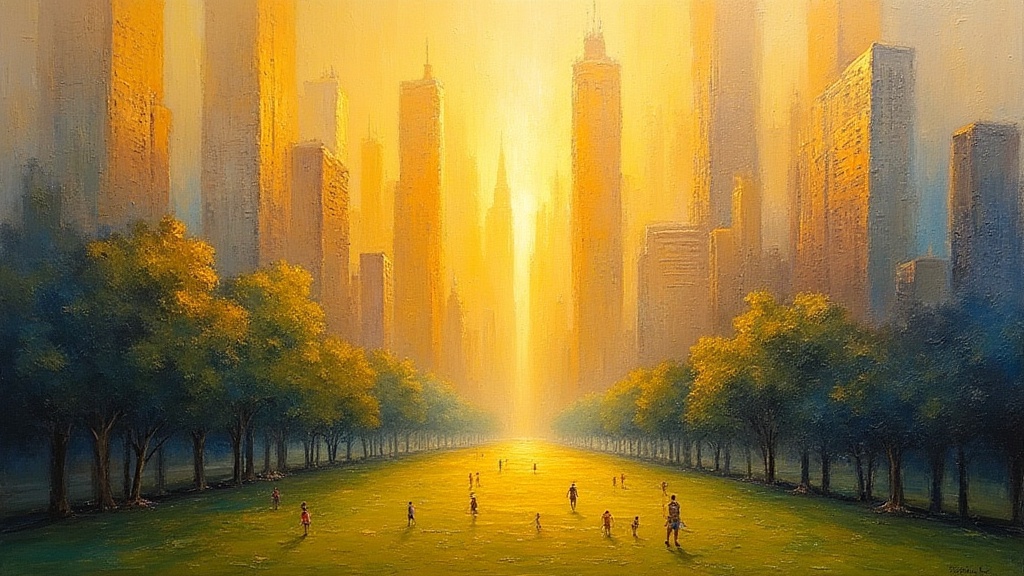
They moved down a set of steps into a beautiful city. An absolutely magnificent golden city. The buildings rose as high as Randy could see into the sky, all gold. The windows were like opaque. The streets had no cars or buses, just this opaque, clear material.
"It was just absolutely stunning," Randy says. He moved through the streets, passing parks. Beautiful, perfectly maintained parks. The grass was so green. Randy had traveled to the highlands of Scotland and Ireland and seen some magnificent beautiful green grass, but nothing compared to what he saw there. There were children off in a park playing, way in the back.
Then Randy got lost.
He became very scared. He didn't know his way back. He sat down on a curb, and he got very anxious, very scared. He was crying. It got very cold because he couldn't find his way back. He could sense people moving back and forth, but he couldn't see them. He was screaming out, "Please help, help me."
Suddenly, he looked over his shoulder. He saw a beautiful white staircase going up into the clouds, as far as he could see. He thought if he could make it to that staircase, maybe somebody would find him. He crawled up the staircase. He has no idea how high he got.
Then he heard somebody yell his name. "There he is, there's Randy, get him," someone shouted. It felt like somebody grabbed him by the scruff of his neck and whisked him off those stairs. When he was pulled off, everything around him went black. He was back in his dark, sedated world.
The Pathway and the Boy
Randy's consciousness came to light again. This time, he was moving down a pathway, a beautiful dirt pathway. On the sides were beautiful flowers and beautiful trees. Off in the distance, he could see beautiful meadows of grass as far as he could see. A stream or river ran through the meadow.
He was taking in the beauty. And again, he knew he died. "I consciously said to myself, you're dead, you know, but what's happening," Randy recalls.
Suddenly, a little boy appeared from nowhere. Maybe 10 years old. Long dark hair like a bowl haircut with bangs. No shirt on. Three-quarter length little shorts. Barefoot. Olive skin. He was animated, very animated. He was waving his arms. "Follow me, follow me."
The boy took Randy down the pathway further. They entered another room. Big picture windows. Beautiful leather seats around the room. The boy told Randy to wait there, that he would be back.
Randy walked over to one of the picture windows. That river he'd seen in the meadow ran underneath this building. There were people, human figures, in the water. Not frantically playing, but over on the sides, on the banks of the river. It looked like they were just enjoying the river and the day, maybe sitting and talking. Magnificent beautiful flowers covered the whole area. Red, green, orange, blue flowers.
Randy has no clue how long he waited. The little boy came back. "I'm sorry, you have to leave," he said.
"No, I don't want to leave," Randy told him. "I said I feel so at peace and so calm and comforting. I said I feel so loved. I said I don't want to leave," Randy remembers.
The boy said, "I'm sorry, your room isn't ready. You have to leave."
With that, Randy was back in his dark, sedated world.
The Void and the Veteran
Randy's consciousness came awake another time. He felt like he was at the end of that tunnel again, but he came out into a void, a very dark void. It wasn't pitch black, but it was a deep gray. Almost like dusk, late dusk, where you could just barely make out figures.
Orbs of light were passing by him. One orb of light came up and telepathically told him to follow. Randy knew he was supposed to follow him. The orb took him deeper into the void.
As they moved, something began to happen. Like standing on a completely dark black stage in a theater, and then suddenly a little light comes on over in the corner. It gets brighter and brighter. Suddenly, Randy's deceased mother-in-law appeared that same way. That little light started to come on, got brighter and brighter, and there she was.
She was sitting. Randy recognized her immediately. "I started to call out to her, Dolores, Dolores, it's Randy, I'm here, I'm here," Randy says. She was sitting very regally, straight and tall and proud. Her right arm was resting on an armchair. Her other arm was resting on some type of counter. She was dressed in a beautiful white gown with a white sash around her waist. Her hair was pulled up into a bun. She wore a beautiful white ribbon around the top of her head.
She looked over at Randy only briefly. He was yelling and screaming at her. Then she looked away. She wouldn't acknowledge him.
Randy's guide told him they needed to move further, deeper into the void. As they started to go deeper, Randy could sense, in that 360-degree awareness you have in heaven, that way back behind him, her light was slowly dimming and slowly going off until she just disappeared.
A young man came running by them very quickly. It was Randy's deceased brother-in-law, probably a teenager, very young. Randy knew it in an instant.
They kept moving into the void. Suddenly, way in the back, way in the distance, a light started to come on again. Randy knew in a second that it was his mom, his dad, and his deceased sister standing there.
"I started yelling at them, Mom, Dad, Gina, it's me, Randy, I'm here, I'm here," Randy says. They looked at him. They were some distance away, so it was hard to see. But Randy got the sense they were looking at him. Then they all looked away.
They didn't want him to pass further. Randy definitely felt there was some type of barrier in front of him, moving along with them as they moved into the void. They didn't want him to pass. His kids told him later it was the veil, the veil of death.
Randy wasn't a religious person. He didn't have any religious background. He was baptized Lutheran, became a Catholic so his girls could attend Catholic school, but he was a doubter, a skeptic. He wasn't sure if any of this even existed.
As the light started to go off over his parents, way behind Randy in the distance, off to his right, an orb of light caught his attention. It was moving very, very quickly. This orb of light came up to Randy very fast and stopped right in front of him.
Randy was in the Air Force for 20 years. He's a veteran. And the word "veteran" just was repeating itself over and over and over again. "Veteran, veteran, veteran, veteran," Randy recalls.
The image stopped. Its face materialized just for a brief second. And he said to Randy, "Tell Madison at the salon her grandfather's okay".
The orb moved over onto a white porch. There was somebody with him, some type of light figure. He started making red, white, and blue ribbons and American flags.
Very shortly after that, Randy's guide told him, "You have to leave. You have to go back."
Randy was gone. Everything went black. He was back.
The Search for Madison
When Randy came out of his coma, he told his daughter everything. When he finally got released from the hospital, he had to learn to walk again. He was in a wheelchair. It was probably about eight to twelve weeks before he'd had a haircut. He was looking pretty shaggy.
He wanted to get his hair cut, but COVID was going on. His wife and children had filled him in on what he'd missed for six weeks, all the shutdowns, everybody having to stay home.
Randy started to root around in the dresser behind him. He couldn't even tell you what he was looking for. But he came across a business card to a local barber shop. He'd been there a couple of times. He wasn't a regular client, but he'd been there a few times.
He took the card out to his wife. "Could you call down, see if they're open, and see how they're handling haircuts with COVID?"
A few minutes later, Randy's daughter came into his bedroom. She's a nurse, and she'd moved home to take care of him. She started questioning him. Where did he get the card? How long had he had the card? Where did he find the card? Randy kept telling her he didn't know. He was looking in his dresser and it was there.
"She said, Dad, I think we found your Madison," Randy recalls.
What are you talking about?
She handed him the card. Clearly printed, just like a business card, on the card was Madison Logan. Randy had never seen it before.
"Get me an appointment with Madison," he said.
The Message Delivered
After a few minutes, a little girl walked up. "Hi, I'm Madison. Are you Randy?"
"Yeah."
"Okay, you're my next customer."
They went back. Randy was sitting in her chair. She was cutting his hair.
"Madison, can I ask you some personal questions?" Randy said.
"Yeah, sure."
"Are both your grandfathers still living?"
"No. The one grandfather that I was closest with died less than a year ago," she said. This was May 2020. He had died in June 2019. He was the one she was closest with.
"Was he a veteran?"
"Yeah. He served in the Army. He went to Vietnam. He used to talk about it quite a bit," Madison said.
"Did he live here in the local area?"
"No, no. My whole family is from Iowa. My family lives in Iowa now," she said.
Iowa is about 1,900 miles north of Pensacola. Randy had never been to Iowa.
"Has he ever visited this area?" Randy was trying to figure out if he'd seen this man before. Maybe he ran into him. Maybe he said something to him.
"No, he never had an opportunity to visit the area before he passed away," Madison said.
Randy felt like he had the right girl.
"Madison, I think your grandfather came to me," Randy said. His daughter had explained to Madison how sick Randy was, but she didn't mention anything about the near-death experiences.
"I think your grandfather came to me, and he has a message for you," Randy said.
He repeated the message. "Tell Madison at the salon her grandfather's okay."
After they all composed themselves, they were all crying. People in the barbershop were looking at them like, don't go to that girl, she'll make you cry.
Randy finally told her, "Madison, your grandfather moved on to a white porch. Is that somehow significant to you?"
"Well, he was making red, white, and blue American flags and ribbons. Is that somehow significant?" Randy asked.
Madison looked at Randy like he had a third eye. She stepped back. After a few seconds, she composed herself.
The Evidence
Randy didn't know this man. He didn't know who he was. He didn't know where he lived. His name was John.
"John not only gave me information about how I could find Madison by presenting me with that card, but he also gave me information that only the family would know," Randy says. "I didn't know the man. I didn't know the family. Never met him before."
This is what makes Randy's experience so extraordinary. He spent 30 years as a criminal homicide detective. His master's degree is in forensic science. "If you want to talk about science, you know," Randy says. He was a type A personality. He needed evidence to prove a case in court.
The business card appearing in his dresser. The name Madison printed on it. The details about John's white porch in Iowa. The red, white, and blue ribbons and flags made every Veterans Day at the American Legion. These weren't vague platitudes. They were specific, verifiable details that Randy had no way of knowing.
For a man who spent his career building cases on evidence, this was the case that mattered most.
The Transformation
Randy has changed. Even his family and friends have said how much he has changed as a person. He's much more open. He's much more caring as an individual. He's much more laid back, a much calmer person than he was before. Most accepting. More loving.
He used to go into panic attacks thinking about his own death. His existence would just end. That's what he believed. It was just like turning off a light switch, and everything goes dark, and that's the end of it.
Randy has also shared another perspective on his experience, describing aspects of what he witnessed that were more challenging. His journey wasn't just about the beautiful golden city and the peaceful meadows. It was also about confronting the full spectrum of what exists beyond this life.
What This Tells Us
Randy's four experiences during his COVID coma give us something rare in near-death research: multiple, sequential journeys into the same territory by the same person. Each time his consciousness returned to that other realm, he saw something different. The golden building. The golden city. The pathway with the little boy. The void with his deceased relatives.
This pattern suggests the afterlife isn't a single location or state. It's vast, varied, containing multitudes. Some experiencers describe it as having different levels or dimensions. Randy's repeated journeys support that understanding.
The detail about getting lost in the golden city is particularly striking. Many NDErs describe feeling completely at peace, with no fear or anxiety. But Randy felt scared when he couldn't find his way back. He sat on a curb and cried. This moment of vulnerability, of being lost even in heaven, is rarely reported. It suggests that even on the other side, we retain something of our earthly emotions and reactions, at least initially.
The white staircase going up into the clouds appears in many NDE accounts. It's often described as a boundary, a point of no return. When Randy was pulled off those stairs, when someone shouted "There he is, there's Randy, get him," it suggests there are beings on the other side actively monitoring who crosses certain thresholds. Randy wasn't meant to go further. Not yet.
The little boy telling Randy "your room isn't ready" is one of the most intriguing details. It implies a level of preparation, of things being arranged for us on the other side. We aren't just floating in some ethereal void. There are rooms. There are places being prepared. This echoes what many spiritual traditions teach, that we have a home waiting for us.
The void experience, where Randy encountered his deceased relatives, shows us something about the barriers between the living and the dead. His mother-in-law, Dolores, looked at him only briefly and then looked away. His parents and sister did the same. They didn't want him to pass further. There was a veil, and they were protecting it. This suggests that our deceased loved ones are aware of us, watching over us, but there are boundaries they honor. They don't want us crossing over before our time.
And then there's John, the veteran from Iowa. This is where Randy's experience moves from personal revelation to verifiable evidence. The message for Madison. The white porch. The red, white, and blue ribbons and flags. These details weren't symbolic or metaphorical. They were specific, concrete facts about a man Randy had never met, from a place Randy had never been, for a granddaughter Randy didn't know existed.
This kind of evidential NDE is exactly what researchers like Dr. Bruce Greyson, Dr. Pim van Lommel, and Dr. Sam Parnia have been documenting for decades. Randy's case joins a growing body of accounts where experiencers bring back information they had no normal way of knowing. It's not proof in the scientific sense, we can't replicate it in a laboratory, but it's evidence. The kind of evidence that convinced a 30-year criminal investigator that consciousness continues after death.
What Randy brought back isn't just comfort for the grieving or hope for the fearful, though it's certainly both of those things. It's a challenge to the materialist worldview that dominates modern science and culture. If Randy's consciousness was simply a product of his brain, and his brain was failing catastrophically during those four weeks in a coma, how did he access information about a man in Iowa he'd never met? How did the business card appear in his dresser at exactly the right time?
The most parsimonious explanation is the one Randy now accepts: consciousness is not produced by the brain. It exists independently. The brain is a receiver, not a generator. And when the brain shuts down, consciousness continues. It goes somewhere. It experiences things. And sometimes, it brings back messages.
Randy says, "God wants us to love one another, you know, and that's what I brought back."
That's the core teaching of nearly every NDE. Not fire and brimstone. Not judgment and condemnation. Love. We're here to learn to love one another. That's the curriculum. That's the whole point.
Randy spent 30 years investigating death. Now he knows what comes after. And what comes after is not darkness. It's not nothing. It's a golden city with parks where children play. It's a pathway with flowers and a river. It's a room being prepared. It's our loved ones waiting, watching, protecting the veil until it's our time to cross.
It's a white porch in Iowa where a veteran sits making red, white, and blue ribbons, wanting his granddaughter to know he's okay.
Randy was a skeptic. He needed evidence. God gave it to him. And through Randy, God is giving it to us.
The light switch doesn't turn off. It turns on. And what it illuminates is more beautiful than anything we can imagine here.
Was this article helpful?