Professor Brinson's Near-Death Experience: A Journey Beyond the Physical Universe
A college professor's heart attack became a gateway to discovering consciousness exists beyond the body, guided by a spiritual teacher through realms of light and music
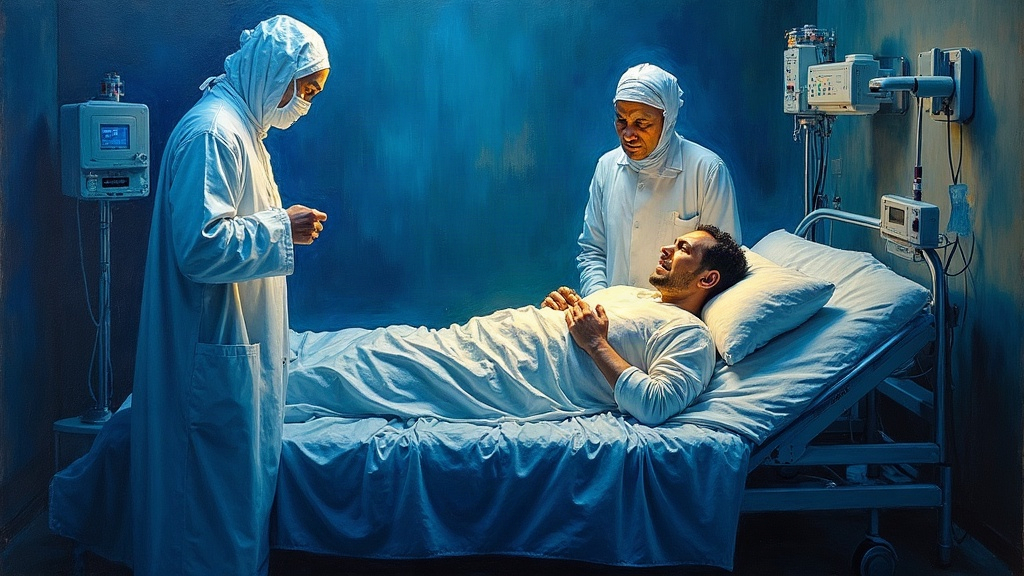
Professor Brinson lay in a hospital bed, his heart stopped, medical staff working frantically to revive him. But he wasn't unconscious. He was more awake than he'd ever been in his life, watching the scene from outside his body like a ghost in that movie with Patrick Swayze and Demi Moore. His spiritual teacher stood beside him in a body of light, invisible to the doctors. They had work to do. They were about to travel through billions of galaxies, enter a tunnel of light, and cross into worlds where everything glows with its own radiance and produces music that reveals the presence of God.
The Illusion of Death
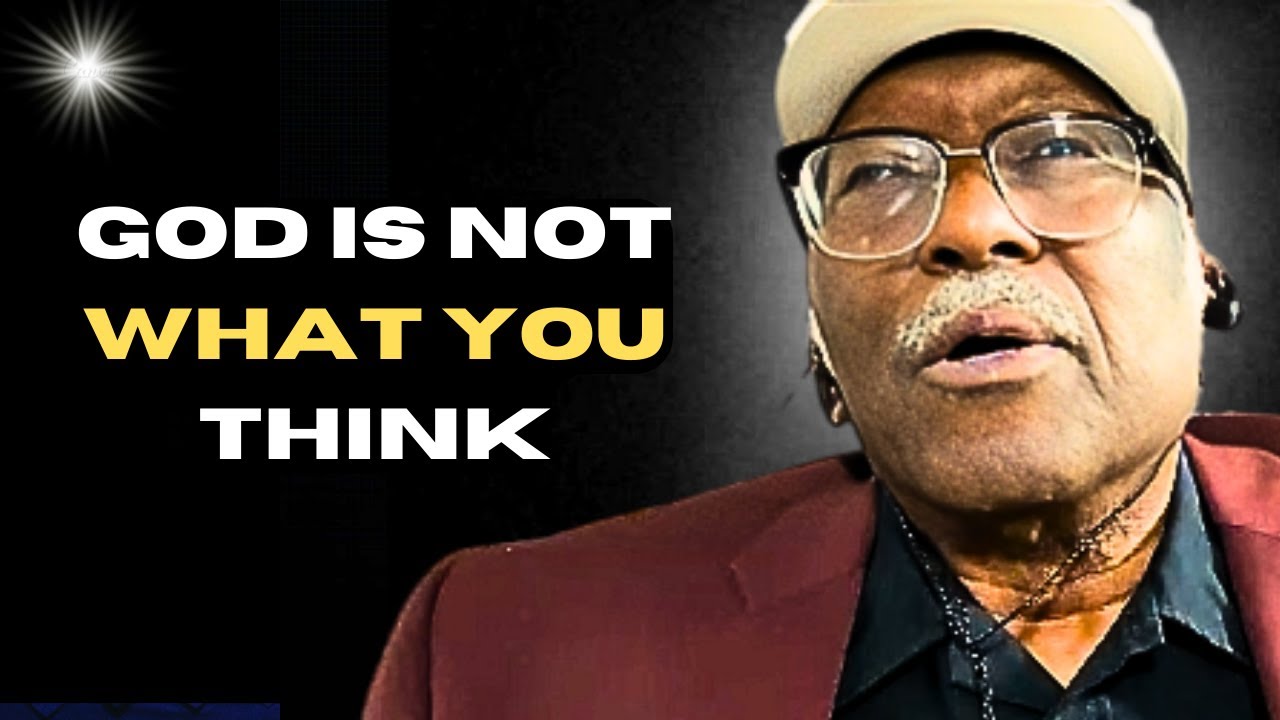
Professor Brinson wants you to know something right from the start: he didn't suffer from what doctors call a heart attack. His teacher created that illusion so he could leave his body. The medical staff saw a cardiac arrest, a patient flatlining, a crisis demanding immediate intervention. They had no idea Brinson was standing right there beside them, fully conscious, watching them work. They couldn't see his spiritual teacher either, the being who had come to guide him through what would become the most important journey of his life.
"I went into the astral world, met my teacher," Brinson describes, his voice carrying the quiet confidence of someone who has seen beyond the veil and returned with knowledge that changed everything. "Prior to going into that world, while I was in the hospital, laying in the body of a ghost, in that movie Ghost with Patrick Swayze and Demi Moore and Whoopi Goldberg."
The comparison to the movie Ghost isn't just a pop culture reference. It's the closest analogy Brinson can find for what it felt like to be fully conscious, fully himself, yet completely invisible to the people trying to save his physical body. He was there, but not there. Present, but in a different state of being entirely.
Before the Journey
Professor Brinson came to this experience as an educated man, someone who valued knowledge and intellectual rigor. He'd been a vegetarian for decades, living what most would consider a healthy lifestyle. He taught, he researched, he engaged with the world through the lens of reason and evidence. But he also had something many academics don't discuss openly: a spiritual teacher, someone he'd been learning from, someone who would prove to be his guide when the moment came to cross the threshold between worlds.
When his heart stopped in that hospital, it wasn't random chance. It wasn't the inevitable result of diet or genetics or lifestyle choices. Brinson is clear about this: "My teacher created that illusion so I left the body." The heart attack was a doorway, deliberately opened, so he could experience what lies beyond the physical realm while still having the option to return.
Traveling Through Galaxies
As they traveled, Brinson had a simple desire: he wanted to see the Sun. Not the sun as we see it from Earth, filtered through atmosphere, a bright disk in the sky. He wanted to see it directly, to travel to it, to understand it in a way no physical body could survive. And so they went.
"I traveled throughout all of the galaxies in the physical universe," Brinson recalls, "billions and billions of stars and moons and asteroids, so many planets." This wasn't a metaphorical journey or a symbolic vision. In his description, it was actual travel, consciousness moving through space at speeds that make light seem slow. He saw the vastness of physical creation from a perspective that revealed just how small our corner of it really is.
But the physical universe, for all its incomprehensible scale, was just the beginning. It was the kindergarten, as he would later explain. The real education was about to start.
Entering the Astral World
After traversing the galaxies, they went into a tunnel and entered what Brinson calls "the first stage, the elementary school, which we call the astral world." And here's where his description becomes almost overwhelming in its beauty and strangeness.
"Everything is brilliantly lit up, everything is lit up," he explains. "It has its own light. Like in this world you need a light bulb or some outside light in order to see. He says seeing, you can see because your body is lit up, everything is lit up, you don't need a light."
Every object, every being, every blade of grass radiates its own illumination. There are no shadows in the astral world, no darkness, because light isn't something that falls on objects from an external source. It emanates from within them. And that light, Brinson discovered, is just one aspect of a deeper reality.
"Everything has a music," he continues, "but the people in that world normally don't know that that music is God." The music comes from everywhere: from the trees, from the leaves, from the very atmosphere itself. It's like that scene in The Sound of Music, he says, where Julie Andrews walks through a beautiful garden and sings that the hills are alive with music. "That is real there," Brinson insists.
The people in the astral world are intelligent, beautiful, and youthful. There are no dumb people, no ugly people. Everyone can control their appearance to some extent, choosing to look about 30 years old, with no need for Botox or plastic surgery. They live for 3,000 to 4,000 years or more, and their memory of that entire span creates their identity, just as our memory of 30 or 40 or 50 years creates our sense of who we are in this world.
Animals exist there too, but they don't kill each other. Birds, all kinds of species, each with their own type of life. Even the trees have souls, a certain kind of intelligence. "The leaves got a certain kind of intelligence," Brinson describes, "they almost like life."
He wanted to stay. Who wouldn't? But his teacher said, "Let's leave this place." There were higher worlds to see, deeper truths to understand. The astral plane, for all its perfection, was still a realm of heavens and hells, still a place where souls could get trapped thinking they'd reached the ultimate destination.
The President and the Angels
In the astral world, Brinson wanted to see the president, the being who governs that realm just as presidents govern nations in the physical world. His teacher told him something fascinating: that president has power, administrators you could call angels who help facilitate his work. These angels are controlled by karma, and the president controls the karma of everybody in the physical world and some of the karma in the astral world.
This is where Brinson's account touches on something profound about the structure of reality. We're not just talking about a pleasant afterlife where good people go. We're talking about a complex, organized system of realms, each with its own laws, its own administrators, its own relationship to the fundamental force that Brinson calls karma: the law of cause and effect that governs all action and consequence.
The Causal World and Akashic Records
As they crossed the astral world and entered the next stage, the causal world, Brinson encountered something that sounds like science fiction but which he describes with the matter-of-fact tone of someone reporting what he saw: the akashic records.
"That's where all of the akashic records are kept of everybody," he explains, "all of the species, every life form that has ever existed and will exist in time and space is in the akashic records." It's a complete record of everything, a cosmic library or database where you can review not just your own past lives but the entire history of creation.
And more than that: "You can see some of your future too in the akashic records," Brinson says. Your future isn't written in stone, it's an anticipation based on the karma you've accumulated, but it can be changed by what he calls a perfect living master, a spiritually advanced being who can intervene in the karmic process if you love them enough.
Later in his account, Brinson returns to this idea of the akashic records with more detail. In the middle portion of the astral plane, he says, everything is recorded on what he calls "a spiritual DVD." You can view it for yourself. You can review your past lives with perfect clarity. And depending on how much you can concentrate your attention, you can travel forward in time as well, viewing possible futures based on current karmic trajectories.
"Time is like a vehicle in which we can travel upon," Brinson describes, "and in the causal plane you can travel backwards and forward in time and view everybody's destiny and history if you wish." The Lord, he says, has created a beautiful system where you cannot doubt anything when you see it laid out before you. "You look at the movie, you say wow, wow, he's created a beautiful movie, nothing is real, it's just a film."

Beyond Language
Here's where Brinson's experience becomes almost impossible to convey in words. As you cross the causal world, he explains, there's no language anymore. Language is reproduced in the mind, we use words which are nothing but sounds to communicate. Birds chirp, snakes hiss, crickets make their sounds, all using their own forms of language to communicate with their species.
But God has his own sound, and when you hear his sound it takes you out of the body and takes you higher up. "God is a spiritual vibratory sound in every word, in every region," Brinson says. In the mental world, the causal plane, we communicate by direct perception. Knowledge transfers from one being to another without words, without language as we understand it.
And once you cross the mind entirely, "there's no language, everything is love, joy, happiness," Brinson describes. "The soul doesn't have a language. If you can say it has a language, it's a language of love."
He quotes the Bible here, Matthew 6:22: "If thy eye be singled, thy whole body shall be full of light," light referring to knowledge. The singularization of attention, focusing completely on a spiritually advanced human being in the physical world, becomes the key to higher consciousness.
The Shortcut: Love Over Meditation
As time went on, Brinson's teacher revealed something that changed his understanding of spiritual practice. Meditation, the teacher said, is the long cut. It's difficult. There's a shortcut, and the shortcut is simple: spend time in the company of the master.
"The more you can spend time around the master," the teacher explained, "the more you have an opportunity to win his love, and he can take his love, which is God's love, and put it in your consciousness. And he can pour so much in your consciousness that you don't care about anything else. You won't care about your mother, you won't care about your father, you won't care about your wife, your kids, or nothing. All you care about is your master and you just want to be in his presence."
This isn't about abandoning your family or your responsibilities. It's about the transformative power of love when it's directed toward a being who embodies divine consciousness. Brinson compares it to what we all seek in this world: someone who loves us for ourselves, not for our money or power or knowledge. We want that unconditional love, and the only human beings who come close to offering it are babies, who have no agenda, no manipulation, just pure dependence and trust.
"As you become a baby and lose your free will," Brinson explains, "because a baby doesn't have too much free will, it can't walk, it can't talk, it has to be picked up, it has to be fed." The mother gives the baby everything because of love. And the Lord will do the same for you if you can approach with that same trust and dependence.
The Question of Karma
After his near-death experience, Brinson has spent years teaching about karma, that fundamental law of cause and effect that governs existence across all planes. When asked whether cancer or heart attacks are caused by lifestyle or karma, his answer is unequivocal: "Karma plays a major role in everything that we do, including the money that we make, children that we going to have, how long we going to live, where we going to go to school. Even the hair on your head are numbered by karma. Everything is karma in this physical world and in the astral and the causal."
Every human being is born with cancer cells, he explains. Whether they develop depends on karma from previous lives. You can eat plants your whole life and still get cancer because you're paying for something you did in a past existence. The immune system's strength, how long you live, what diseases you face—all of it traces back to the law of cause and effect operating across multiple lifetimes.
But here's where it gets interesting. When someone accidentally kills another person, with no intention or malice, they don't create karma. They were just an instrument in the process. The person who died had karma that required that death at that time in that way. The driver who hit them, if it was truly an accident with no intent, played a role but created no new karmic debt.
Intention matters. "You have intention when you think and you plan to do something," Brinson says. "That's when you can pay the price." Mindless action, following orders without thinking, accidents without intent—these don't create karma. But the moment you engage your mind, make a decision, plan an action, you're creating future consequences that will have to be resolved.
The Return and the Mission
When Brinson returned to his body, he came back changed. The fear of death was gone. "Are you afraid of waking up from a dream at night?" he asks. "That's how I feel about death. Death is nothing but the waking up from this physical body which is a dream state. We're dreaming now in the astral plane and therefore creating this world in this body."
He became a teacher, sharing what he learned. He set up a website (i-k.org) and a phone line (833-351-6222) where people can reach him with questions. He promises to call everyone back, even if he gets hundreds of requests. "It's easier for me to just get on the phone rather than give my secretary some notes and they have to type it," he explains with characteristic practicality.
His message is both simple and profound. We are not these bodies. Consciousness doesn't end at death. The physical universe, vast as it is, would be like a quarter placed in the Pacific Ocean compared to the astral plane. And the astral plane is just one level. There are higher worlds beyond it, realms where language dissolves into direct perception, where love becomes the only reality that matters.
But you don't have to wait until death to discover this. Christ said it: "There are some standing before me today who shall not experience death until they see the kingdom of God." The kingdom of God is seeable while alive. That's what meditation is: the simulation of dying while alive, pretending you're dead so you can be free, like the parakeet in the cage who played dead to escape and fly.
What This Reveals
Professor Brinson's account stands out for its systematic description of multiple planes of existence, each with its own characteristics, laws, and inhabitants. This isn't a brief glimpse of light and deceased relatives. It's a detailed map of consciousness beyond the body, guided by a teacher who could navigate these realms with precision.
The emphasis on a living spiritual teacher as the key to progress is less common in Western near-death accounts but appears frequently in Eastern spiritual traditions. Brinson bridges these worlds, using Biblical references to validate experiences that sound more like Vedantic philosophy or Tibetan Buddhism than typical Christian theology.
What makes his account particularly compelling is the specificity. The astral world isn't just "beautiful"—it's a place where everything glows with its own light, where music emanates from objects, where lifespans stretch to 4,000 years. The causal plane isn't just "higher"—it's where akashic records exist, where time becomes navigable, where language dissolves into direct perception.
And the message about karma provides a framework for understanding why suffering exists, why good people face tragedy, why life seems unfair. If we've lived thousands of lives, accumulating consequences from each one, then what happens to us now makes sense as part of a larger pattern of cause and effect stretching across time.
Brinson's experience suggests that death is not an ending but a graduation to a more advanced classroom. The physical world is kindergarten. The astral plane is elementary school. The causal world is high school. And beyond that are college and postgraduate levels, each one bringing us closer to our original home, to the source from which we came.
For those of us still in kindergarten, still trapped in bodies that age and fail, still subject to the illusion that this physical existence is all there is, Brinson's account offers both comfort and challenge. Comfort that consciousness continues, that we are eternal beings temporarily wearing these forms. Challenge that we have work to do, that meditation and love and seeking are required if we want to progress beyond the endless cycle of birth and death.
The soul is looking for freedom, Brinson says. We are not used to being trapped, enclosed in houses whether physical, astral, or causal. These are garments we're wearing, clothing we can remove. Every entity wants to be free. And the path to freedom, according to someone who has traveled beyond the body and returned, is clear: find a living teacher, love them with everything you have, and let that love carry you home.
Was this article helpful?