Peter Panagore Froze to Death on a Mountain and Met Infinite Love
A college student's fatal hypothermia on a Canadian ice climb became a journey into the heart of the divine
Peter Panagore was hanging from a rope on a frozen cliff face in the Canadian Rockies, his body shutting down cell by cell, when the tunnel vision closed to black. He expected unconsciousness. What he got instead was the most awake he'd ever been. The darkness expanded into a vast space where he could somehow see, and far in the distance, a pinprick of light appeared. It rushed toward him faster than the speed of light, carrying a message that arrived not in words but as pure data downloaded directly into his mind: I'm taking you. He tried to resist. His willpower was nothing compared to the immensity of what was coming for him.
The Boy Who Left Home
Peter Panagore grew up in Malden, Massachusetts, just outside Boston, in a close Greek family. His father was an architect, his mother a former nurse. They had five kids, a neighborhood full of cousins, Greek dances, food, community. Peter describes it as "a really great family" that felt whole and connected. Then his older sister Andrea, the one he called his beloved sister, ran away from home when Peter was 14. He came home from school one day, a freshman in high school, and found a note on the kitchen table. She was gone.
His father searched for months. The family "slipped into turmoil overnight," Peter says. The warmth drained out. The Greek dances stopped. The cousins scattered. His parents, who had been "super loving," fractured under the weight of the loss. Peter doesn't say much more about those years, but you can hear the before and after in his voice when he talks about it. There was the family that existed before the note, and the wreckage that came after.
So when Peter got the chance, he left too. He tried to drop out of school. His parents talked him into the National Student Exchange Program instead, which is how he ended up at Montana State University in Bozeman in the spring of 1980. He joined the National Ski Patrol. He joined the outdoor club. He climbed mountains and went backcountry skiing. He was 21 years old and as far from Massachusetts as he could get.
The Climb That Went Wrong
In March, Peter saw a flyer on the bulletin board outside the outing club. Some guy named Tim was looking for a partner for an eight-day backcountry ski trip and a one-day ice climb in British Columbia and Alberta. Peter called him. They met and discovered they had complementary skills. Peter was a first responder on ski patrol. Tim was a certified ice climber. Both had done winter camping. Peter says they "learned to trust each other immediately" after surviving a near-disaster on their very first night in the snow caves.
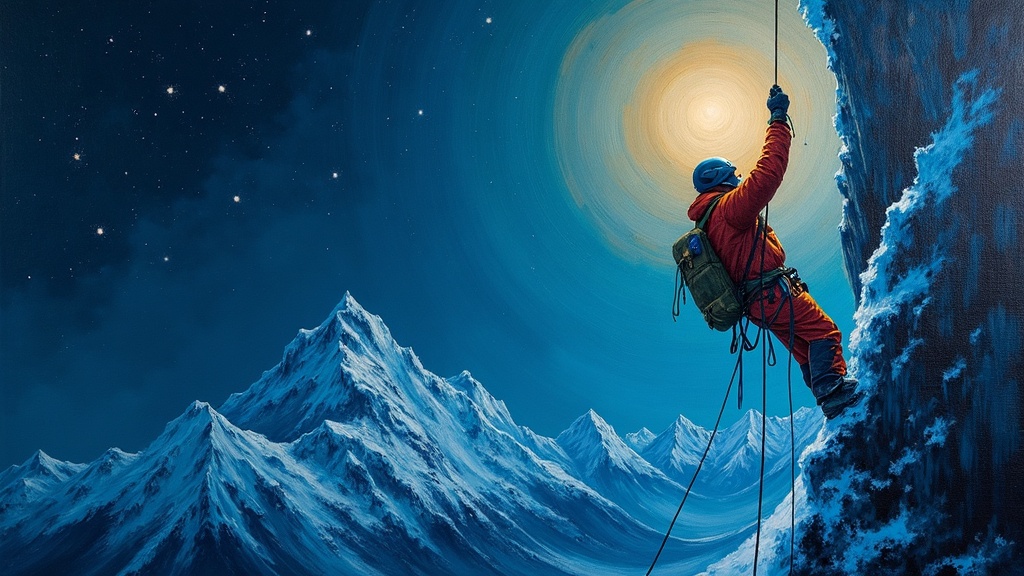
The backcountry skiing went fine. Then came the ice climb. Peter had never climbed ice before. He'd done rock climbing and mountaineering, but ice was different. He borrowed gear, rigged himself up with 1960s leather ski boots that wouldn't flex, wool clothing, crampons, and an ice axe. The problem was, you're supposed to use two ice axes. Peter only had one axe and a hammer. The axe you can plant and let go, resting your arm. The hammer you have to grip constantly. "You can never let go," Peter explains. "You always have to hold on to it. You can't relax."
His forearms burned out faster than everyone else's. The climb took longer than it should have. By the time they reached the top, "the sun was already setting," Peter says. Many of the other climbing teams were already descending, an hour or two ahead. Peter and Tim were alone on the mountain as darkness came.
This was March in the Canadian Rockies, on the Icefields Parkway. "It's seriously cold. It's serious wilderness. It's very dangerous," Peter says. They knew that going in. What they didn't know was that they'd be spending the night exposed on the rock face. No one brings overnight gear on a day climb. "That was a fatal mistake," Peter says.
The Long Descent Into Cold
The temperature "dropped 30 degrees" when the sun set, maybe more. Peter's jaw started chattering like a cartoon character. His hands shook. His body twitched. Hypothermia set in within minutes. He knew from his ski patrol training exactly how much time they had before they succumbed. If they stayed where they were, they were going to die. But they were 500 or 600 feet up in the dark, on ice and rock.
Tim hauled up the rope and it became a tangled mess. (This is what happens when hypothermia starts affecting your brain. You make mistakes.) They tied the rope around their waists and began a traverse across a narrow ledge with a 500-foot drop. Every step drained their energy. They had no food left, no water. Speaking was difficult when your jaw won't stop clattering.
They made it to the first rappel point, a small tree sticking out of the mountain. You're supposed to wrap nylon webbing around the tree, thread the climbing rope through it, and pull the rope free from the bottom. But the webbing cost money and they didn't want to lose it, so they wrapped the rope directly around the tree instead. Peter says they "decided against reason" to do this. They rappelled down, bouncing off the rock face until they hit an overhang of empty space. When they reached the bottom and tried to pull the rope free, it was stuck.
Tim re-ascended the rope with Peter belaying him from below. Somewhere up in the darkness, Tim shouted, "I'm falling," and dropped into the deep snow. Somehow his boot caught the rope and jerked it free. They rejoiced. They could move on.
The next traverse took them off the snow and ice, onto bare rock. They reached two iron pins with carabiners, a training spot for climbers. This was the last rappel. One pitch to go. Peter tied one end of the rope to his harness and tossed the other end out to the side, intending to pull it down. But as he pulled, the line "laid across this corner and somewhere up around the corner it jammed in some kind of V." He couldn't pull it any further. He couldn't snap it. The rope was stuck around an edge. They couldn't reascend. They couldn't go back up.
"Now we're really seriously stuck," Peter says. "And hypothermia continues to advance."
The Peace That Came Before Death
All night, Peter's terror had been rising. But simultaneous to the fear, there was another part of him driving down inside, touching into what he calls "my original mammalian mind of survival." When he realized no amount of willpower was going to save him, something shifted. "Instead of the fear rising to overtake me, I became calm and peaceful," he says. "I became accepting of my circumstance."
He remembered a line from the movie Little Big Man, where the old wise man of the tribe says every day, "Today is a good day to die." Peter thought to himself, "Tonight's a good night to die."
He looked up at the stars. Millions of them, every color, different sizes and brightnesses. The snow reflecting off the mountains. The river down below. "It was so beautiful," Peter says. He knew there was no escape. The peace settled inside him despite the sadness. He was sad because his parents had lost his sister, and now they were going to lose him too. "But there was nothing I could do about it," he says.
Then he got hot. Hypothermic people often get hot near the end and strip off their clothes. Peter unzipped his coat. Tim yelled at him to zip it back up. Peter told him to fuck off. He was hot.
He kept pulling on the rope. He started falling asleep, but not like drifting off into a pillow. "It was like a curtain would go down. Boom. The curtain goes down, I'm asleep," Peter says. Then his helmeted head would smack the rock and jar him awake. He'd pull himself back up and yank on the rope again. This happened over and over.
The last time, after he fell asleep and stood back up, tunnel vision set in. A big black circle closed around his vision "like a stage set with a spotlight coming down to black." He looked around at the mountains, the river, the sky. The circle closed. He thought, "Oh, I'm blacking out again." But this time was different.
"When it went to black, I didn't fall asleep," Peter says. "I was awake."
The Darkness That Could See
He was confused. The mountain was gone. How did he still have consciousness? He felt like his eyes were open, but all he saw was darkness. Then the darkness got bigger. This is the part that's hard to explain, Peter says. It was pitch dark, but he could see in the dark.
Way far in the distance, "like the furthest star that I could see," a pinprick of light appeared. It rushed toward him, "traveling an immense distance faster than the speed of light." As it came, it communicated with him telepathically. No words. Just a download of information. The data was simple: "I'm taking you."
It came "with all power, it came with all knowledge, it came with all might," Peter says. He thought, "Oh no you're not. I don't understand what's going on here, but I'm not going anywhere." He dug down deep to summon his willpower. "But whatever willpower I had was zero compared to the immensity of the power of this entity."
A portal opened. Peter describes it "like a door opens, but I could describe it as a waterfall appears." It was made of light itself, a flow, and on its surface was all starlight, all sparkle, colors he'd never seen before. "It's the most compelling thing I'd ever witnessed," he says. "It's seductive." All his will vanished. All his self-understanding vanished. "All I wanted was it."
The Hell of His Own Making
Peter often tells the story in a sequence that makes sense chronologically, but that's not how it happened. "It was all together," he says.
The first thing that happened was a hell of his own making. He experienced "all of the pain that I caused in my life," from the interior view and personal experience of every single person he hurt, in chronological sequence. "I was in every one of them," he says. He was inside them, experiencing the pain he'd given them, and simultaneously outside them as the person he'd been, with all his reasons and emotional reactions for causing that pain.
"I felt this shame of the pain that I was causing," Peter says, "not just to the people but to the Divine self, because of this immense love and purity that I was simultaneously perceiving from the unlimited Creator."
There was a voice speaking to him the whole time, without language, all around him and inside him. "I know you. I've always known you. Everything about you is known to me," the voice said. "I wasn't being judged," Peter says. "I was simply being shown myself."
"No matter what I did, I was beloved."
The Vision of All Humanity
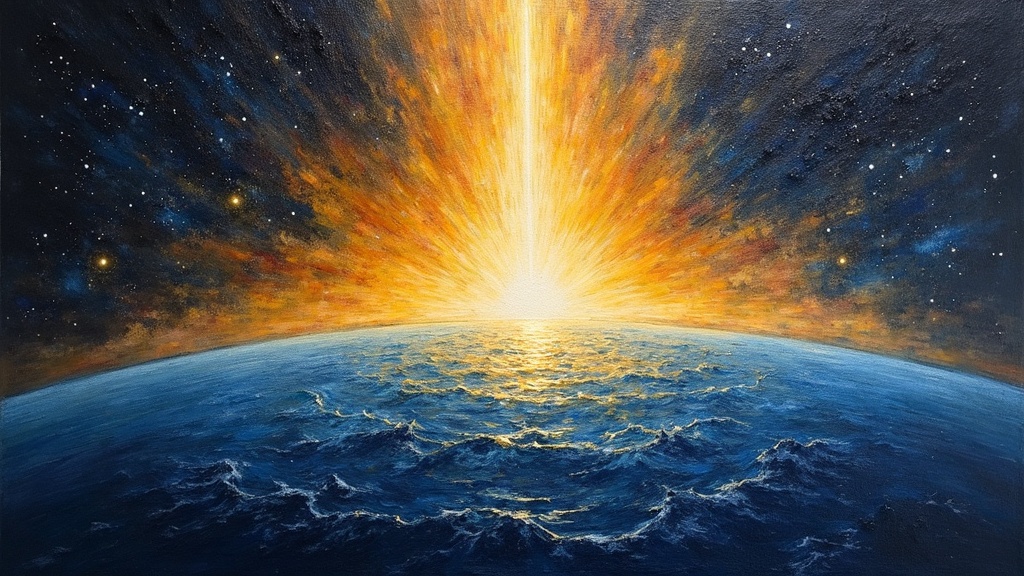
He got bigger and bigger in this unitive state of oneness. He was carried across a vast distance to an edge, and his consciousness was "poked outside of this field of heaven." He could see all of the universe. All the galaxies. Beyond the universe, he could see the origin of the universe, and above and below it, "all these other universes."
Then his vision shifted. He saw all of humanity. "I see the Earth like a hologram and 7 billion people on it," Peter says. The message came: "They are all my beloved. Every single one of them."
"The amount of love that I love you with, this universe upon universe of love and creation and life that I give to you, is the same that I have for every single person," the voice said. Peter saw inside every single person. Not like in a dream or a vision. "I see them as real human beings living their lives," he says. Half the world was sleeping. People making love. People being tortured. Wars. Babies being born. People bored. Art. Everything. Everybody doing everything.
Inside every single person, he saw "a golden light, and this golden light is gold itself. It is the purity of their divine original self." It was in every person. But they couldn't see it inside each other. "Everything is covered with this thick foam that extends up above the atmosphere, and it's so dense that no one can see the light inside anyone else," Peter says.
All of the love of all of the multiverses was for everybody. All the planets, all the galaxies. "Everything is particularly beloved," Peter says.
When he understood this, "this inflow of love came to me. There was this beauty, joy, understanding, knowledge, bliss, paradise, awe, adoration, wholeness, light," and it expanded inside him until he inflated like a balloon. "I'm inside in this space of infinite comfort. I am the most comfortable I'd ever been in my life," he says.
The Choice to Return
Then the expanse contracted down. He remembered his human life. He could see "the suffering of my parents," accumulated over all the years since his sister disappeared, showing in their faces. He could see the suffering they would endure if he died.
"Do I have to go?" Peter asked.
"Why?" the voice said.
In that moment, he was swept across heaven. He took on more substance as he traveled, becoming denser. A "light being" came with him, carrying him. In front of him appeared a million entry doors, all of them leading back to his body. But they were also lives to choose.
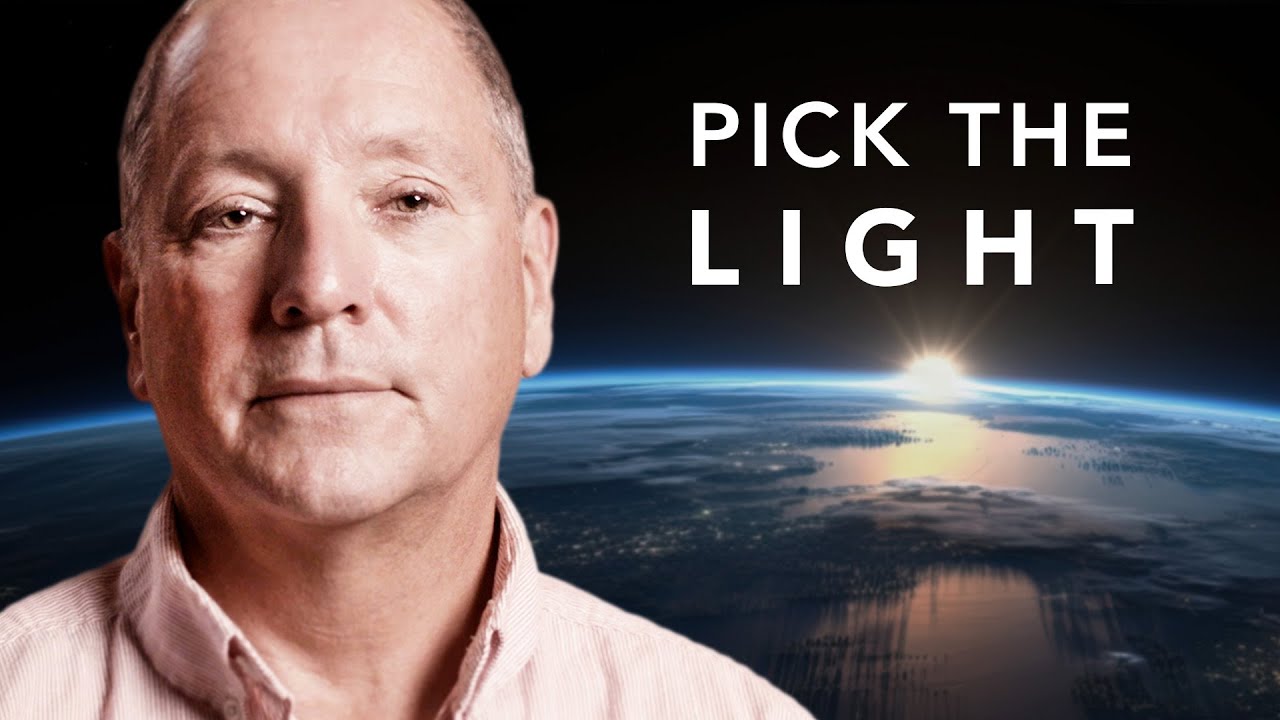
"Choose," the Divine voice said, showing him all the possibilities. "Pick me. Pick the light."
Peter thought, "I want a little autonomy. I want creativity. I want some freedom in my life." So he didn't pick the full light. He picked just outside of it. That was his door.
He sped down a tunnel, rematerializing. He became "smaller and smaller and more compact and more crushed and tinier and tinier until I am uncomfortably compacted inside this Divine being that then like an ice screw stabs me into this body and screws me in right into myself."
"I have this experience of being like a genie in a bottle," Peter says. "Like huge, immense power, teeny tiny living space." Entering the body was entering into suffering. "I had no pain in heaven. There was only healing and wholeness and oneness and beauty and bliss. Pain wasn't forgotten. It didn't exist."
Now he was trapped in this container. "I'm awake in this container, like what is this? Where was I? What's going on?" His brain came back online. He began to think. He began to hear.
Tim was screaming. Peter opened his eyes. Tim was bending down, crying, shouting, "You were dead! You were dead! If you died I was going to die!" He pulled Peter up.
Peter was somehow witnessing all of this from outside himself. "I was somehow above it. I was looking down through my body into this world," he says. "I was two places at once."
Tim said, "Pull the rope."
Peter pulled the rope. It came free.
The Long Silence
They descended. They treated themselves for hypothermia in the tent with a stove, heating water slowly, drinking warm water, then warmer water, then hot water. Warm food, then warmer food, then hot food. They brought their temperatures back up around dawn.
They climbed into the car and turned on the heater. Peter couldn't tell Tim what had happened to him. "I was afraid he wasn't going to believe me," Peter says. "I didn't have any words to say it in the first place. I don't even understand what happened to me."
So he said nothing. "I began my long silence," Peter says. "And from that point on, I was a different person."
They drove south that morning. There was a beautiful sunrise, silos and fields, colors and clouds, gorgeous Canadian countryside. To Peter, it was "ugliness and darkness." He could see light behind it, but it was trapped away from him. "It was like living in a two-dimensional space, like black and white, like a cartoon that flickered from the early '20s," he says. The sounds were terrible. There was space between every frame. All of it was not pure light, because of "the mere materiality of its thingness compared to no-thing, beauty, purity, love of ultimate infinity."
"The comparison of my experience was: what did I do? Why am I here now? I'm stuck inside this thing," Peter says. Because he saw himself relative to the size of the universe, he knew his own "insignificance. So why be here?"
He couldn't possibly live the same life he lived before. "All that I was left with was this longing desire, this light inside myself that says, 'This is me. Seek me,'" Peter says. It was small compared to what he'd had. So he decided to pursue it. But to do that, he had to change the course of his life.
The Life That Followed
Peter had to learn how to dive inside himself. He had to learn the ancient wisdom that came before him. In his world, that meant Emerson and Thoreau and Blake and Coleridge and Wordsworth, and a smattering of the Upanishads and earlier Eastern writings. He "chose my life of pursuit simultaneous with my life of silence," he says.
He practiced meditation. He practiced Kriya Yoga. "The more I got out of the way in my own interior life, the greater the light became inside of me," Peter says. "The easier it was to live through the light in the world to the light."
But he also prayed every day: "Today is a good day to die. Today is my day. Take me home. I don't want to be here. I'm not needed here."
Then he came to understand something. "My living in the world has impact," Peter says. His journey to seek what he lost makes a radiance inside him that lets him see the light inside the world more clearly. The more he sees the light inside the world, the more he sees it inside other human beings. "The more I know that they are like me," he says.
"And that's a hallmark of a mystical experience: when your course changes toward love."
Peter knows how hard life can be. Everybody loses. Everybody suffers. But one of the benefits of living an interior life, especially when you're at the edge of despair and all you want to do is go home, is that "there's a place of strength there: your continual original self."
"The greatest strength that I have is knowing I'm going to die," Peter says, "knowing who I am, where I came from, and knowing where I'm going. This gives me this superpower to stay here, because I know the ending of the story."
"The story ends for everyone with goodness."
What This Experience Reveals
Peter Panagore's account is one of the most detailed and articulate near-death experiences in the contemporary literature. It contains nearly every major element that researchers have cataloged over 50 years of study: the tunnel, the light, the life review, the encounter with a presence of infinite love, the vision of cosmic unity, the choice to return, and the profound transformation that follows.
But what makes Peter's story particularly significant is the way he describes the life review. This wasn't judgment. It was education. He experienced the pain he caused others from their perspective, feeling what they felt, while simultaneously understanding his own reasons for causing that pain. The voice that accompanied him didn't condemn. It simply said, "I know you. Everything about you is known to me. You are beloved." This is the pattern we see again and again in NDEs: the afterlife is not about punishment. It's about understanding, healing, and love.
The vision Peter describes, of seeing a golden light inside every person on Earth, covered by a thick foam that prevents us from seeing each other's true nature, is a perfect metaphor for the human condition. We are all divine beings who have forgotten what we are. We walk past each other every day, unable to see the light inside. The suffering of the world, Peter suggests, comes from this forgetting.
What Peter brought back from his NDE wasn't a religious doctrine or a set of rules. It was a direct knowing that consciousness is not produced by the body, that we are eternal, and that the love waiting for us on the other side is beyond anything we can imagine here. He spent years in silence, unable to speak about what happened, because the experience was too vast for language. But he also spent those years learning to access that light inside himself through meditation and inner practice.
Peter's story is a reminder that the other side is not a place we go to escape suffering. It's a place we return to after we've learned what we came here to learn. The fact that he was given a choice, that he could pick which life to live, suggests something profound about the nature of existence: we are not victims of fate. We are participants in our own becoming. And the curriculum, as Peter discovered, is always love.
You can learn more about [Peter Panagore](/experiencer and explore his other interviews, including his discussions of why he no longer has faith in the traditional sense after his NDE and how he was shown the origin of the universe. His journey from frozen death on a mountain to a life dedicated to seeking the light inside is one of the most compelling transformations in the NDE community.
Was this article helpful?