Peter Cummings: The Neuropathologist Who Drowned and Discovered Peace
A forensic pathologist who spent his career cutting brains found consciousness outside his body at the bottom of a Costa Rican river
Peter Cummings was trapped at the bottom of a river, his lungs screaming for air, when a thought arrived with startling clarity: You're drowning. This is it. This is the end. And then, instead of panic, something else. Shouldn't I be more upset about this? This is actually very calming. He'd performed thousands of autopsies, cut thousands of brains as a neuropathologist, and he knew what the textbooks said about drowning. It was supposed to be peaceful. What he didn't expect was what came next: time stopping, a light that wasn't quite light, and the sudden knowledge that his family would be fine without him. For a man who'd built his career on the certainty that consciousness dies with the brain, the next eight minutes would change everything.
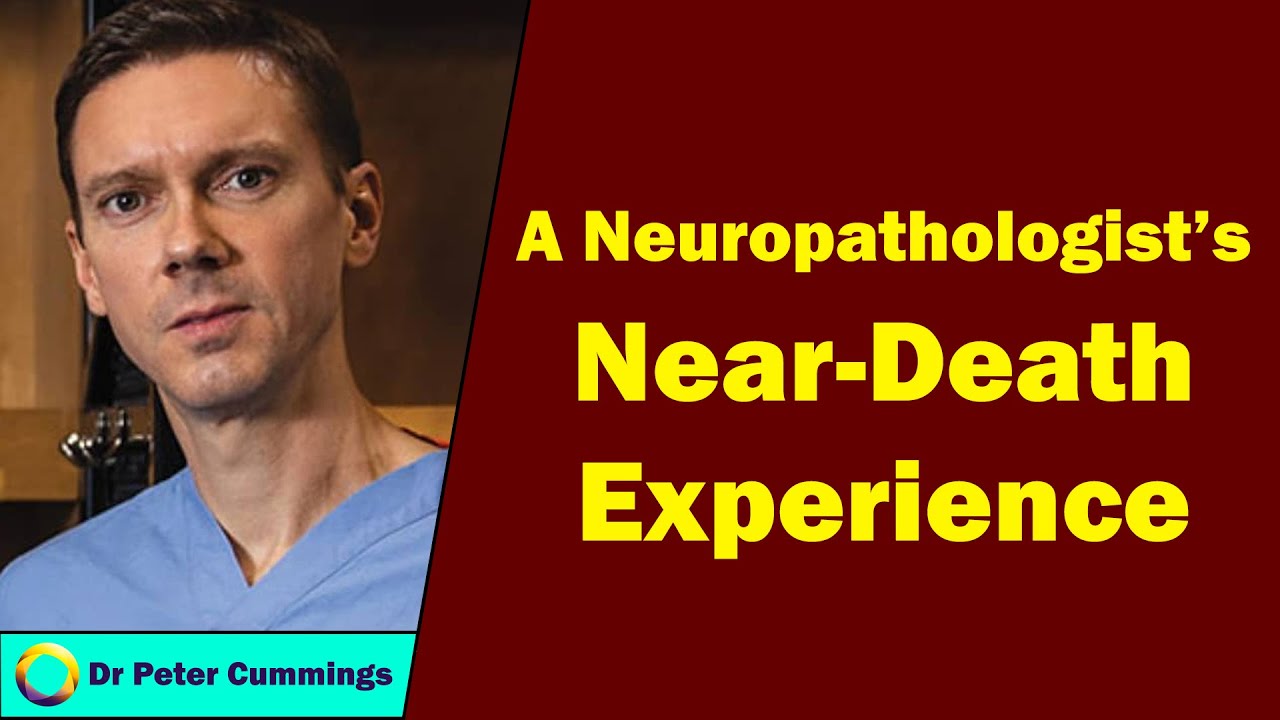
The Man Who Cut Brains for a Living
Peter Cummings wasn't looking for spiritual transformation in 2017. He was looking for tenure, publications, teaching awards. He was a forensic pathologist and neuropathologist, a professor of anatomy and neurobiology at a major medical school in Boston. He'd conducted thousands of autopsies, investigated thousands of deaths, cut thousands of brains. His career was taking off in that intoxicating upswing phase where everything you touch seems to work.
He describes himself as the kind of person medical school attracts: overachievers, a little bit type A, competitive not necessarily with the world around you but certainly hyper-competitive with yourself. You take failure as a personal insult and it motivates you to become greater at what you do. That was his operating system. Work, work, work, work.
Philosophically, he was an atheist. Not a casual one. A hardcore atheist, he says, and his work reinforced it daily. He could cut a brain and lay it out for you and ask: Where's consciousness? Where is the soul? There's no proof for it in this brain. Everything we think about as consciousness, as the dying brain, can be very easily explained through hypoxia, the chemical reactions that happen as the brain begins to die. Which do happen, he's careful to note. He knew the science cold.
These weren't questions that occupied his mind. He was more concerned with getting publications on his CV and finishing a book he'd just written with a colleague. They were about to start a big book tour. The book had raised some eyebrows at his institution, and he'd had to fight for his academic freedom of speech. Heavy academic nonsense that, at the time, was really enjoyable. You live for that kind of stuff in that world.
Then his wife's 50th birthday arrived, and they went to Costa Rica.
Ten Days of Survivor
Peter and his wife had been together 26 years. They had what he calls some significant differences. He thought the trip was going to be a resort vacation, sitting on a beach, sipping umbrella drinks and surfing. It was really ten days of Survivor, which is really her speed. She loves to be out in nature, conquering, surviving. That's not me, he says. I like to be comfortable.
But there they were, on a white water rafting trip, and Peter was terrified. He grew up in Maine, always around lakes and water, and he was terrified of water. He hated being around it. He'd always felt like he was going to drown. He always found excuses to not be in the water.
There's another detail he mentions, something he never connected until afterward. As a kid, when he got bored in school, he would hold his breath and watch the second hand on the clock. See how long he could hold his breath, then try to beat that record. That's how he spent most of elementary and middle school. And he always thought: Someday I'm gonna need this. Someday I'm gonna need this.
Fast forward 30, 40 years, and he's on one of the most technically difficult rivers in the world, with their ten-year-old son, which he notes is probably not great parenting. But his son had a great time.
At the Bottom of the River
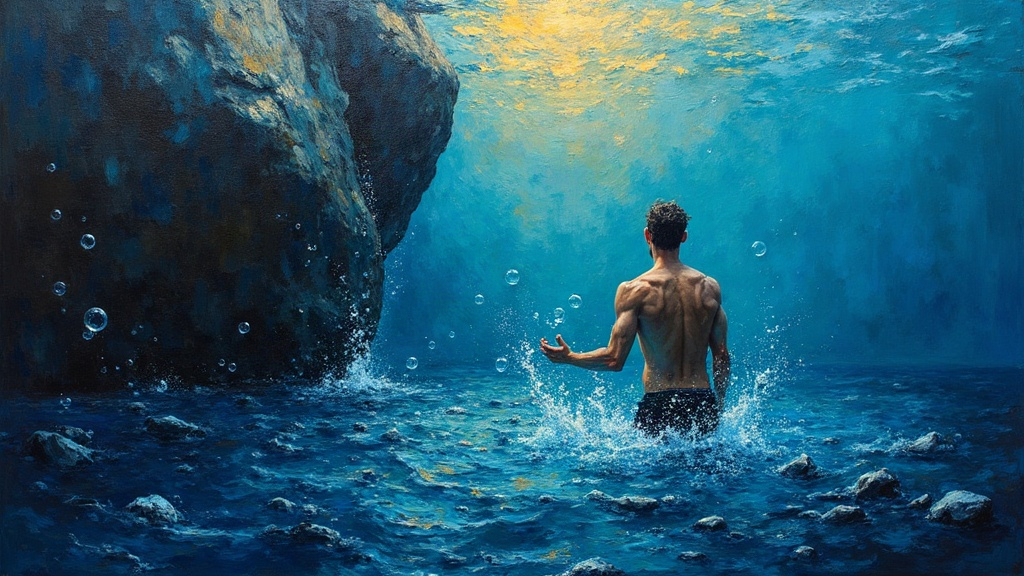
The raft flipped, and Peter went under. He didn't panic. He did all the things you're supposed to do: put his feet up, come through the rapid. This is kind of fun, he thought. Bouncing around these big waves.
Then he got pulled under. Caught in a hydraulic. He couldn't get out. He was stuck at the bottom of the river, came up, came down several times. And then there was a point where he knew.
I was drowning and I knew it, he says. And I thought to myself very clearly, I remember thinking: you're drowning. This is it. This is the end. And I was thinking, shouldn't I be more upset about this? This is actually very calming.
He thought about the autopsies he'd done on people who had drowned. And I thought, well, this is a lot what you read about in books. This is supposed to be a very peaceful way to die. And then I remember thinking, well, what the heck is taking so long?
He was underwater. And then everything changed.
When Time Stopped
Everything stopped. He was next to this huge boulder, under the water. All the bubbles had stopped. Everything stopped. He moved his hand through the bubbles and they all just sort of moved around his hand in this very kind of weird way.
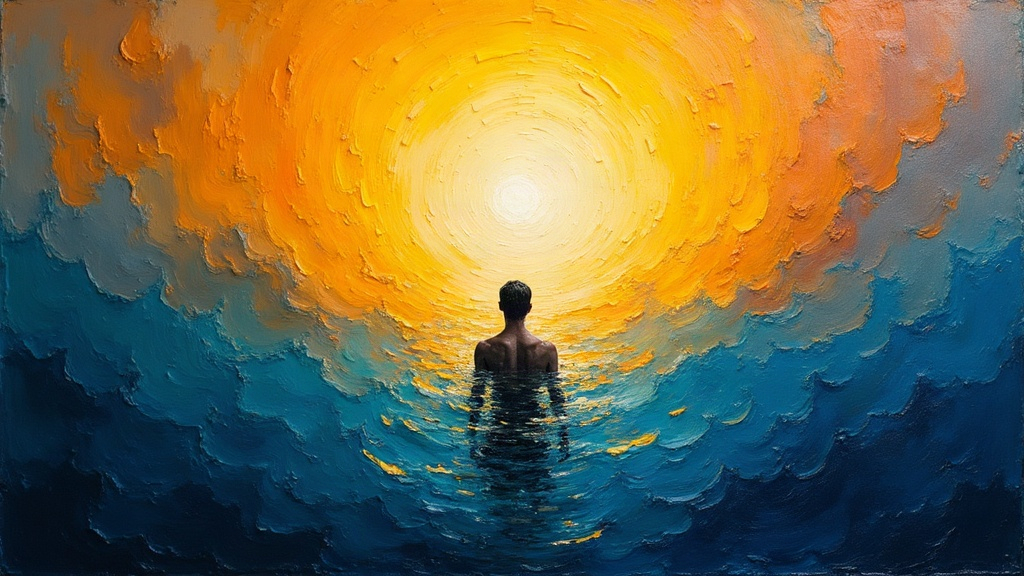
And then there was this bright light.
He tells it sequentially, but he thinks it all happened simultaneously. The human brain processes it sequentially. He describes it the way we hear these things described, like a sunset or sunrise, but it wasn't like that. These are the only words I have in English language to explain something that's outside of normal human experience. I don't have the words for these.
What happened next is one of the most striking features of his account. He was able to see everything around him, 360 degrees. And he qualifies: I say I see it, but more of experiencing it more than seeing it.
He knew his wife had been pulled out. He knew it was a yellow kayak. He knew it was the guy down the river. He knew his son was in the other boat. He knew the boat behind him was coming to get him.
And then something else. He knew a family member was going through a very difficult personal crisis that he didn't know about. But in that moment, underwater, dying, he knew. And he knew it was going to be okay.
The Voice and the Love
All of this was happening while he was in what he calls this light situation. And then this incredible, overwhelming feeling of love. A voice. They're gonna be okay.
He gets emotional telling this part. Not because it's upsetting, he says, but because I'm in that moment of that beauty. It was just so beyond experience.
He knew his family was going to be okay, and the voice said: They don't need you. They're going to be okay. That was a moment where he just thought: This is amazing. And the voice kept repeating: They're gonna be okay. They don't need you. You're done. Good job.
But there was another voice. A voice in the back of his head was shouting: You're just hypoxic. You're just hypoxic. Hold your breath. You have to beat your record. You have to beat your record.
And then the light vanished. There was a giant sucking sound, and he slammed up against the rock and popped out of the water.
The Return
When he came up, the boat behind him was almost to him, but he couldn't see anything. His vision was like a View-Master, those old View-Masters. I could see, and it was gone. See, and it was gone. He couldn't see motion.
They were through the rapid. The water slowed. The guide put the paddle out. Peter remembers reaching up and being in moments of blackout, thinking: If I don't grab this paddle, I am done. That's the last thing he remembers.
The next thing he knew, he was in the boat, unable to breathe. They were in the middle of the rainforest, 28 miles of river their only exit. He immediately slipped into emergency medicine mode: ABCs, airway, breathing, circulation. He was the only doctor for hours.
He was worried about water in his lungs, which can cause intense inflammatory reactions in the next 24 to 48 hours, something called near drowning. But he felt okay. What he realized had happened was a laryngeal spasm, a dry drowning. The water hits, irritates your voice box, it closes off, and it's a reflex. There's nothing you can do about it.
He remembers being in the boat, trying to breathe, thinking: That's really great, Cummings. You survived, you got in the boat, you died in the boat. That's typical. Knowing it was a reflex, he tried to calm himself down. Eventually, he was able to get little breaths in.
They continued down the river like nothing had really happened. He didn't think much of it the rest of the day. He had his son, his family. He was trying not to be freaked out.
Eight Minutes Without a Heartbeat
That night, back where they were staying, Peter looked at his Apple Watch. He's a health freak, obsessed with his heart rate, sleeping heart rate, resting heart rate. He has a constant awareness of his heart rate.
He had eight minutes of unrecorded heart rate during that time period. He's careful with the caveat: it's an electronic device. It takes the heart rate at intervals. But at least in those eight minutes, he had a period of time where he had no registered heart rate.
It never happened before on that watch. It never happened after that on that watch. It didn't happen the rest of the time they were on the river.
At that point, he started to think: Something happened.
The Blue Morpho
The next day, they were paddling down the river. Peter was a little freaked out by being in the river at this point. His son says: Look at that butterfly on the boat. Peter looked over. It was this huge blue butterfly. I said, Finn, that's not a butterfly, that's a bird. He's like, no, it's a butterfly. It was so big.
It was a blue morpho. Peter didn't know anything about this butterfly until way later, a couple years later. But it followed them the entire 28 miles down the river. Everybody saw it the whole way.
The next day, they were rappelling down some waterfalls. Not beside them. In them. This is his Survivor vacation. They're rappelling down 150-foot waterfalls, and there's the blue morpho by his son the whole way. They called it the angel, Gran, because Peter's mom had died a number of years before.
The Aftermath: When Time Broke
Peter was on vacation. He didn't have much on his mind. But when they came back, he started to notice something was wrong.
He was having a lot of problems with time, judging time, estimating time. You know how you're doing something, you get lost in it, and you forget how much time you spent? That was every moment of his day.
It wasn't so much a problem on vacation. But when he went back to work, when he had a really heavy lecture schedule, labs, places he had to be, trains he had to catch, it became a really big problem. He was late for things. He would forget. He'd be on his way to teach a class and run into somebody in the hall and start talking, and 30 minutes would go by.
He started to notice these time things happening. He realized something was different.
He became very uncomfortable with his career pursuit. Those things weren't important to him anymore. He'd written a couple of bad horror novels, but he says I was the best character I ever created, because I was this piece of paper, and I couldn't identify with that anymore. Those things weren't important.
He was in this intense Boston malignant academic environment, and it made him physically ill. He couldn't be there anymore.
They ended up moving to Maine, where they're from, living in the woods, having a great life. But the after-effects were very difficult. He didn't have a way to deal with it.
Writing His Way Through
What he did was write. He ended up writing a book, he doesn't know if it'll ever see the light of day, about consciousness and the mind, particularly about time. Because he doesn't think what happened to him was anything extraordinary, supernatural. He thinks he had a hypoxic brain injury, something called dyschronometria. He has difficulty with time. He has many ways to cope with it now. It doesn't affect his life.
But that was the catalyst for him to figure out what happened. He was doing his own death investigation of his own consequences. And that action led him to an incredible world of research he had no idea existed.
Jeffrey Long's book was incredible. But the thing that was most important for him, in terms of turning the corner, was Elaine Stout's paper: Six Challenges Faced by Near-Death Experiencers. That was probably the most profound thing I've ever read in my life.
Every single challenge resonated. Seventy-five percent of people who experience an NDE have a very hard time integrating this into their lives. Peter knew nothing about these experiences other than what he'd seen in movies. He thought everybody came back and it was beautiful and we loved God and you quoted scriptures and everybody was happy. It was the opposite for him.
He had a really hard time reconciling that. The Stout paper made him feel very good about where he was. He's a newbie, he says. It's only been three, three and a half years post-experience. He's still trying to figure this all out. He's no great expert or pontiff on it. He's still struggling.
The Gift of Living Now
But what it really taught him, what having this issue with being able to separate from time allowed him to understand, is this: We put great importance on the past and on the future. We focus so much on those two things. But the value is here, right now.
Getting out of those boundaries of time allowed him to put the importance where the value is. Where he is right now. The people he's with right now.
The gift of death is teaching the ability to let go. And to be alive. What's the point of music? The point of music is to listen. What's the point of life? The point of life is to live.
That really helped him come to grips with who he is as a husband, a father, a human, his place on the planet.
What He Wishes He Could Tell the Families
As physicians, Peter says, we try to practice this thing called evidence-based medicine. We need data and proof to treat patients so they can get the best care possible. And through that, we really pathologize death. We sterilize it. We try to prevent it. We medicalize it. We shun it. We shield ourselves from it.
Funerals happen very quickly after death. It's very fast. No one sees the body, and you go very quickly back into life. We're not experiencing death. We've made it so sterile and kept it behind this curtain that we don't get a chance to really experience and celebrate the transformation that is happening.
As a forensic pathologist, Peter knocked on doors to tell people their loved ones were dead. He brought people down into the morgue to identify bodies. He sat with families in very horrible circumstances. And the number one question he was always asked: Did they suffer?
As a physician, you always say no, of course not, this was sudden, we try to comfort them. But I always felt like a liar, because I don't know.
Right now, I know. And I wish I could talk to those people again and say: Look, this is a beautiful thing. Even under these horrible circumstances, the horrible circumstance is a second. The process after that is in front of us, and there's nothing to worry about.
No amount of worry will transform your future. No amount of grief is going to fix your past. You just have to be where you are right now. And just love that.
That's kind of where he is with it now.
What This Story Tells Us
Peter Cummings's account sits in a particular category of NDE testimony that carries unusual weight: the scientist who didn't believe, the expert on death who had never considered what might lie beyond it. His experience didn't come with religious imagery or tunnel visions or life reviews in the classic sense. It came with something rarer and, in some ways, more unsettling: direct knowing.
The 360-degree awareness he describes, the simultaneous knowledge of events happening at a distance (his wife being pulled out, his son in another boat, a family member's hidden crisis), these aren't metaphors. They're reported features in a significant percentage of NDEs, particularly those that occur during cardiac arrest or drowning. The experiencer doesn't see these things the way we see with eyes. They know them, the way you know your own name.
What makes Peter's story particularly valuable is his willingness to sit with the contradiction. He's a neuropathologist. He knows what hypoxia does to a dying brain. He can describe the cascade of neurochemical events that occur during oxygen deprivation. And yet he also knows what he experienced was not a hallucination born of a failing brain, because the information he received (about his family member's crisis, about events happening simultaneously along the river) was accurate. Verifiable. Real.
The eight minutes without a recorded heartbeat is a detail that deserves attention. Apple Watches aren't medical-grade devices, but they're consistent. The fact that this gap occurred once, during those specific minutes, and never before or after, suggests something more than a technical glitch. It suggests Peter was, by at least one measure, clinically dead.
And what he found in that death wasn't darkness or nothingness or the slow fade of consciousness into oblivion. He found love. Overwhelming, undeniable, more real than anything he'd experienced in his physical body. He found a voice telling him his family would be fine, that he'd done well, that he was complete.
The aftermath, the dyschronometria, the inability to care about the career he'd spent decades building, these aren't symptoms of brain damage. They're symptoms of perspective shift. When you've experienced timelessness, when you've felt the boundaries of past and future dissolve, returning to a world obsessed with deadlines and tenure and publications feels absurd. Not wrong. Just small.
Peter's struggle to integrate his experience mirrors what Elaine Stout documented in her research: most near-death experiencers don't return to a hero's welcome. They return to a world that has no framework for what they've seen, no language for what they've felt, and often no patience for their attempts to explain it. Seventy-five percent struggle. Many feel isolated, misunderstood, alienated from the very people they love most.
But here's what Peter learned, and what his story offers to the rest of us: the point of life is to live. Not to achieve, not to accumulate, not to prove. To be here, now, with the people in front of you, in the only moment that actually exists.
Death isn't the end of consciousness. It's the end of time. And when time stops, what remains is love. That's not a comforting platitude. That's what Peter Cummings, a hardcore atheist who spent his career cutting brains, found at the bottom of a river in Costa Rica. And he's spending the rest of his life learning how to bring that knowledge back into a world that desperately needs it.
Was this article helpful?