Norma Edwards Died, Reviewed Six Past Lives, and Came Back with a Message
A 1960s medical crisis took her to the other side, where she discovered she'd been both slave and master
Norma Edwards collapsed in a London elevator in the early 1960s, pregnant with a dead fetus, her body shutting down. Within hours, she found herself floating above an operating table, watching doctors shock her flatlined body with paddles. She tried to tell them she felt no pain, that the surgery wasn't necessary, but no one could hear her. So she left. She moved through a dark tunnel toward a light so brilliant she feared it would blind her. Instead, it embraced her. What happened next would answer questions she'd been asking since she was nine years old, questions that had embarrassed her pastors and silenced her mother.
The Collapse
Norma Edwards wasn't feeling well. For a month, she'd been in and out of work, and doctors couldn't figure out what was wrong. She didn't have the usual signs of pregnancy. But it was Monday morning, time to return to her job in the city of London, so she left her baby son with his babysitter and made her way to work.
By four o'clock that afternoon, the pain had become unbearable. "I am experiencing excruciating pain," Norma recalls. She looked at the clock. They were scheduled to leave at five. "It occurred to me that the pains I was experiencing felt like labor pain," she says. She asked to be released early.
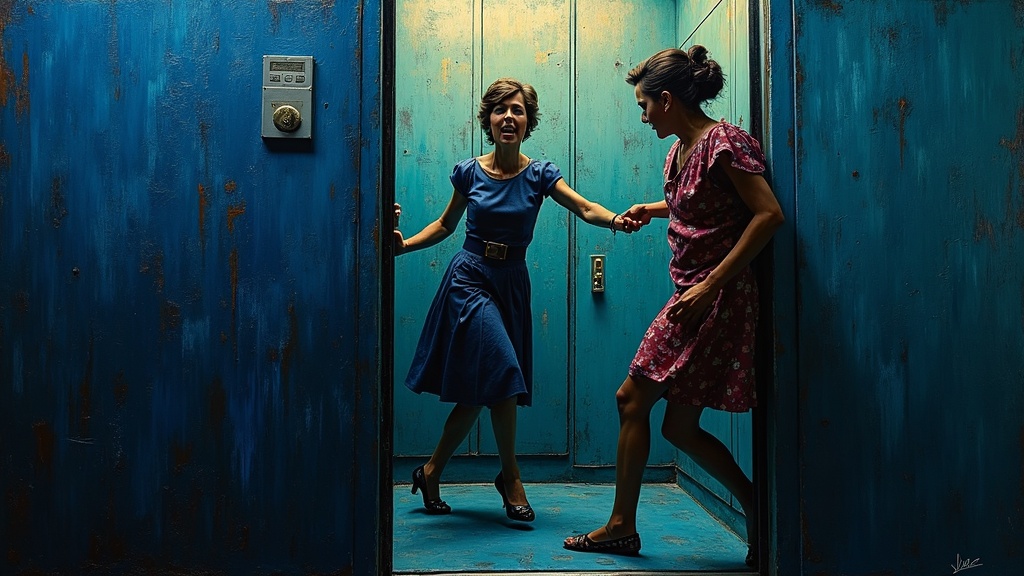
She stepped into the elevator. There was one other person inside, a young Hindu woman named Selena. Norma didn't know her. In those days, elevators stopped with a jerk. When this one did, "it seemed like all hell broke loose and the pain intensified and I collapsed."
Selena got busy. She attracted help, hailed a cab. The hospital was just a few blocks down the road. Somewhere in the cab, Norma came back to semi-consciousness. Selena asked her name. "My name is Norma," she said, and then she went back under.
They got her to the emergency room. The cab driver, in his haste to help, drove away with Norma's handbag still in his cab. He returned it the next day, but in the meantime, the hospital faced a dilemma: they had an unconscious patient, and all anyone knew was her first name. Selena knew nothing else about her. God bless her, she took a picture of Norma in her unconscious state and gave it to the police, who set out to trace where she lived and find her family.
Norma came back to semi-consciousness for a moment. She was on a trolley. Two doctors were wheeling her into the operating room. One of them explained "that I have a dead fetus inside of me and they needed to do surgery to remove it," Norma says. Then she went back under.
On the Ceiling
The next thing she knew, the pain was gone. She was at perfect peace. The only problem: "I'm on the ceiling and I'm looking down at my body on an operating table."
"You talk about confused," she says. "I am thoroughly confused how could I be in two places at the same time." She was on the ceiling, looking down, and the pain was completely gone. She watched the nurses moving back and forth, handing equipment to the doctors. "I'm like almost freaked out on on me on the ceiling," she says.
Then it dawned on her: since she was no longer in pain, "it might be a good idea to let the team know that the pain is gone and there's no need for this operation."
But how do you get off a ceiling? As soon as she asked the question, she found herself on the ground, at face level with the doctors. "I'm trying the the doctors I'm saying hello can you see me I am here I cannot explain what is happening here," Norma recalls. She moved from one doctor to the other. They didn't seem to see her. She moved between the nurses, who were scurrying back and forth. "I'm trying to say hello hello this is me um I'm okay there's no need for the emergency surgery," she says.
Nobody could see or hear her.
She found herself back on the ceiling. She looked at the monitors. She had friends who were nurses. She understood what flatline meant. "Now I'm really really confused how could I be Flatline supposedly there but I have all my senses," she says.
The doctors picked up the paddles. She could see "the outline of electricity around those battles" (she means paddles, but the word comes out differently in her telling, a small human imperfection that makes the moment more real). She was thinking very clearly, very deeply. "The thought in my head was I'm not dead I don't understand what's going on here but if they apply that amount of electricity to my body they were probably accidentally kill me," she recalls. "So is there a way I can get out of here before that happens?"
With that thought, she found herself moving through the ceiling.
The Tunnel and the Light
She was in a very, very dark tunnel. The strange thing was, "I was not afraid I am still at peace I feel very light in my body," Norma says. She was moving extremely fast through this dark tunnel. They came around a corner (she says "we," though she doesn't specify who or what is with her, a common feature of NDE accounts where the experiencer senses a presence or guide). At the end of the tunnel was "this amazing velocity of life it was like a kaleidoscope of color and it kind of faded into white light."
As she approached, the kaleidoscope of color faded into crystal clear white. The moment she was about to enter the light, a thought entered her head: "this light is so bright the Brilliance of the light was so bright that I felt that it would probably burn my eyes and render me blind." She really had that little fear, that if she survived all this, it would probably blind her.
As soon as she entered the light, "I felt a phenomenal welcome I felt like I was embraced by the Light I felt like I had become like," Norma says. Having become light, "I could feel the energy of love a phenomenal level of love that seemed to surround me and fold me and I had kind of like woven into and become one with this love."
"It really is an experience that that words cannot describe words are totally inadequate to describe the extreme feeling of love," she says. "It's your enveloped in love and and this beautiful light that seems to make everything not only brilliant but even the thoughts very brilliant."
This is one of the most consistent features of near-death experiences: the inadequacy of language to capture what happened. Experiencers return with a vocabulary problem. How do you describe a love that has no conditions, no limits, no human analogue? How do you explain light that doesn't just illuminate but embraces, that you don't just see but become? Norma does what most experiencers do: she tries, and she tells you the trying isn't enough.
The Life Review
Her next thought was: how do I get around here? As soon as she had that thought, she found herself traveling. She came to a point where she was facing what looked like a large television screen. In the 1960s, "television screens were very small," she notes, so this was striking.
The screen lit up. It was divided into three sections. The section on the left had "a heading that says the life that I had created the second column was the way I had lived the 26 years and the third column at that point was blank."
The screen began to scroll. "Now I can see what it is that I planned and in the middle column now I am I'm looking at and revising how I have lived this object that I sent for myself," Norma says. The third column, as it scrolled, revealed a repeating phrase: objectives not accomplished.
She moved out of childhood into her teenage years. Again, she could see "the objectives that I had set in my plan and what it is that I should have accomplished during those years." And again: objectives not accomplished.
"Believe it or not I don't feel judgmental there's nobody judging what I'm reviewing," Norma says. But she was amused, and a little baffled. "I'm thinking I lived for 26 years how could I not have known what it is that I had said for myself," she recalls. It seemed she'd lived the complete opposite of what was contained in her life objectives. "I'm standing there and I'm thinking wow that was kind of sort of wasted Western life," she says.
This is a crucial detail. The life review in NDEs is not about punishment. It's about clarity. Norma wasn't being judged by some external force. She was seeing, with perfect clarity, the gap between what she intended and what she did. The tone isn't shame. It's more like, "Oh. I see now."
The review answered some questions she'd had about life on Earth. She was a child who had many questions. She was raised "in a Christian tradition deeply deeply centered in the Christian religion," and she had many questions about biblical texts. Now, looking at the way she lived her life, she discovered that "while I believed a lot of what was thought to me it did not seem to have transferred into my knowing."
One piece of scripture had bothered her since she was nine years old. Christ said, "I came so that you can have life and have it more abundantly." She asked every pastor she encountered: what did that mean? He himself died on a cross, and people have been dying ever since, so what did that mean? She even asked one pastor "whether it meant that Christ was perhaps telling us a lie."
Her mother drew her aside. Very carefully, she said Norma was not to even look in the pastor's direction while they were in church. She wasn't allowed "to ask any questions because my questions was beginning to embarrass the pastor from whom I was seeking answered." So Norma started to write her questions down.
Now, on the other side, that burning question took her somewhere else.
Six Lifetimes
She was drawn to an even bigger screen. The screen began to scroll very slowly. "I'm now reviewing six previous lifetimes," Norma says.
The very first one was in the very, very dark ages, when Earth was very dark and human beings walked around with torches. She saw herself in that lifetime. There was tribal war. The village where she lived was losing. They had deep concerns that if the women and children died in the war, they'd be hard-pressed to rise again. So they gathered as many little boats as they had, put the women and children in them, and pushed the boats out to sea with what little food they had, hoping they'd be preserved.
"The boat that I was in I had 23 other women and it sang and we all drunk," Norma says (she means "sank" and "drowned," but again, the slight verbal stumble makes it more human, more real). This left her, she says, with a fear of war and a fear of drowning.
The next life she saw, she was a male. She was a warrior. It seemed pretty good.
The third lifetime she encountered, "I was present when um I saw myself in the cross as a spectator screaming crucify him," Norma recalls. This, she says, wrapped a lot of guilt around her soul and spirit.
The lifetime that really stood out: she saw herself along with her parents as slaves in the United States, picking cotton. "As a child I could hear the Hooves of the horse and I can also hear the crack of the whip as it hit the backs of those slaves who were not producing or working as swiftly as they could," she says. She experienced tremendous fear, knowing that when the master got to her, she couldn't keep up with the others, and she'd feel the whip on her back.
Then the screen moved. "Believe it or not I was the white slave owner on a horse carrying the Whip and doing exactly to the slaves that which I was so very much afraid of," Norma says.
This baffled her. "I had never been introduced to reincarnation that was not part of my religious of bringing," she says. How could she be, at one point in time, a Black slave girl, and at another point in history, the white slave master?
The scrolling came to an end. She stood there, baffled, wondering how to get around in this environment. As soon as she asked the question, she was moving again, very swiftly.
The River
She was taken to a river. When she was a child in church, they sang a little chorus: "Yes we will Gather By The River beautiful the beautiful River gather with the Saints of the river that flows from the throne." Now here she was.
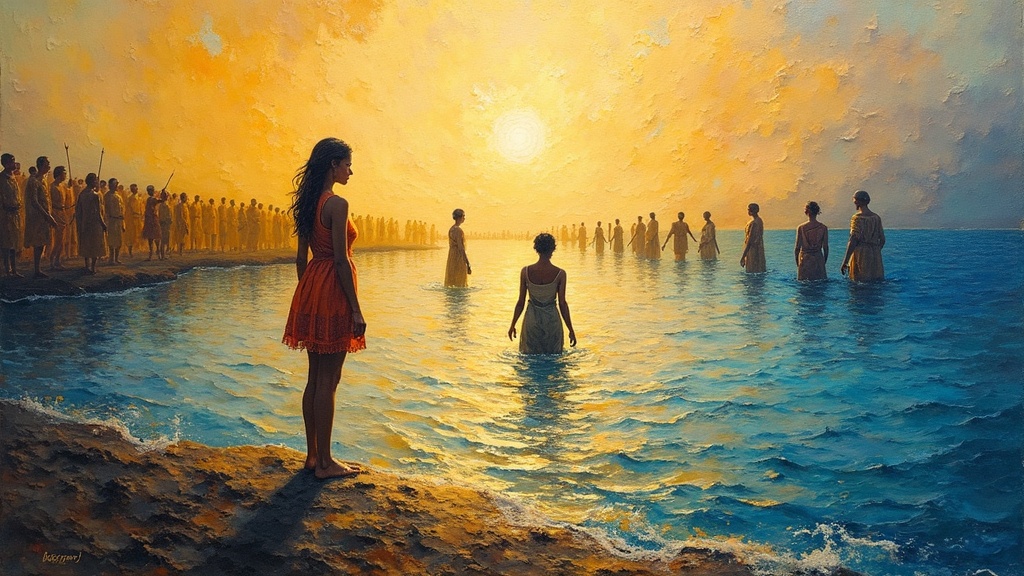
It was not a very wide river. On the other side "they were hundreds of cities and they were all beaming phenomenal love," Norma says. "Oh my goodness I just felt enveloped in love and and feeling this love in my heart and in my spirit and in my soul," she recalls. She recognized these were all ancestors. Among them were people she could recognize because they'd died in her lifetime.
Her aunt, who'd raised her along with her mother, stepped forward into the river and began to wade toward her. Norma stepped forward on the other side to wade toward her. "Again this phenomenal amount of love I knew that my aunt loved me but I had no idea that her love was so funny," she says (she likely means "profound," but the transcript captures what she said, and the meaning is clear).
Just as they were about to embrace, her aunt stepped back a few paces. "She says I am so sorry but you cannot cross," Norma recalls. "Why?" Norma asked. "She says because they're sending you back with a message," her aunt replied.
Norma protested. "I said but wait a minute there are millions of people back there surely they could find somebody back there and give them the message," she says. Her aunt said no. They would like for Norma to return with the message.
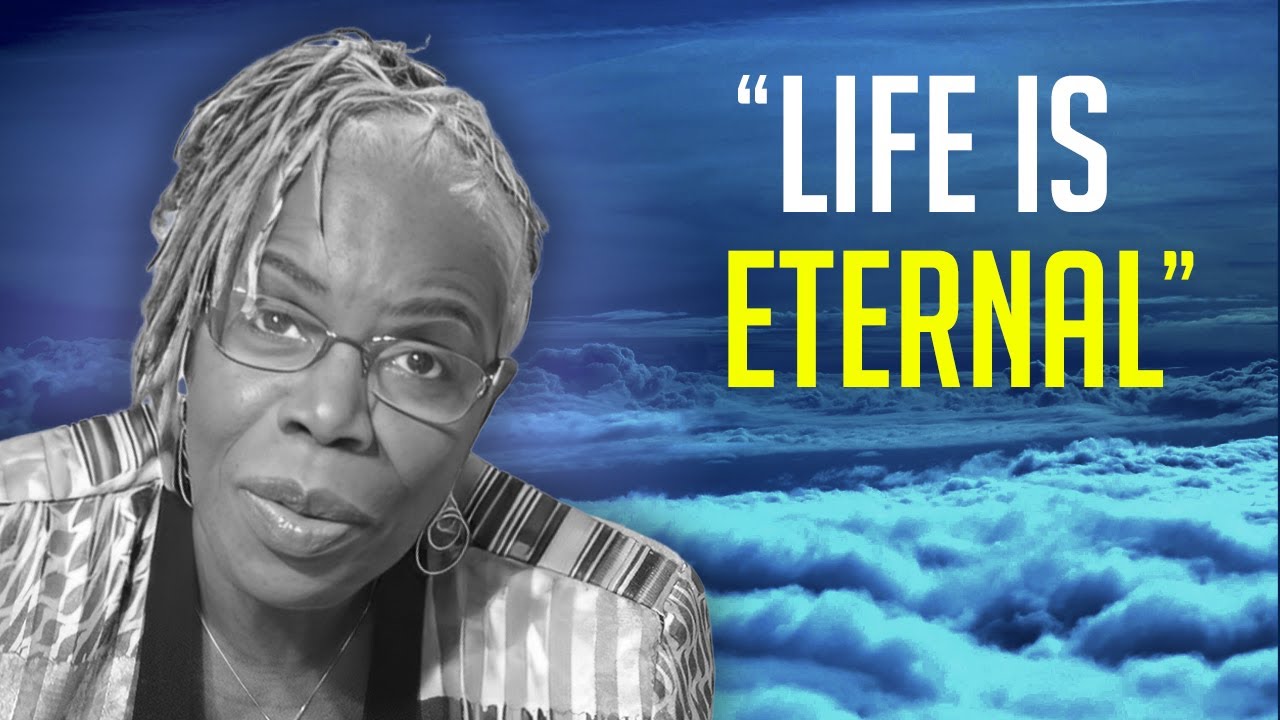
The message was: "there is more to life than meets the eye life is and that word is was stressed life is eternal."
The next thing Norma knew, "I am falling falling falling very very rapidly and crashed into my body," she says. Even though she was still under anesthesia, "I felt the extra excruciating pain on my journey back in my body against my will."
The Return
She came back conscious. She was in pain. "I am definitely not a happy girl," Norma says. She was in a room. There were nurses sitting at a table, talking. They both belonged to the same church. One of them had gone to church that Sunday, the other was on duty. The one who went to church was summarizing the sermon, which had a lot to do with preparing yourself so you don't enter into hell.
"I am lying in this bed and I am outraged why would a person be preaching about hell," Norma says. But she couldn't say anything because she had tubes in her throat. She couldn't explain what she was feeling. "I'm beginning to realize I've come back with some different belief systems," she says.
The nurses turned on a radio. Classical music played softly. Norma lay there, hearing the music, and then she realized something: "coming out of this radio I can see the color of the notes."
"We talk about confused I am hearing music I'm listening to music I grew up with a lot of classical music in in my household but now I can see the color of the notes," Norma says. She was recognizing that "every note has a color every color is aligned to a number," and she was watching this interaction of rhythm, color, and numbers. "I'm absolutely fascinating because it is creating a pattern and guess what the pattern is flowing into these two individuals who are sitting there working very easily with their hands," she says.
Two other medical professionals came along and stopped to talk to the nurses. Norma noticed they were also absorbing "this phenomenal complexity of of light of color of Rhythm and of numbers."
This is synesthesia, the blending of senses, a phenomenon reported by many NDErs after their return. But it's more than that. Norma was seeing the underlying structure of reality, the way sound and color and number weave together, the way they affect people without their knowing. She'd come back with new eyes.
"So my journey began with very very heightened senses," Norma says.
The Aftermath
For the next three years, "all I wanted to do was to return return to the other side where there was this phenomenal levels of love and phenomenal levels of light," Norma says.
This is the grief of return. She'd been home. She'd been embraced by a love that has no earthly equivalent. And now she was back in a body that hurt, in a world that preached about hell, in a life where she'd apparently failed to accomplish her objectives. Of course she wanted to go back.
But she didn't. She stayed. And over time, she did a tremendous amount of spiritual work. "It led me to a purpose-driven life I asked a question what is my purpose," Norma says. That led her to become ordained, to become a chaplain in prisons. She "worked for 27 years providing chaplain services as well as therapeutic services to prisoners who were getting ready to re-enter the community."
It took work. It took time. But she found her way.
Norma has told her story multiple times over the years. In another interview, she elaborates on the pre-birth plan she saw during her life review. In yet another, she discusses the shock of realizing she'd completely failed to accomplish what she'd set out to do. She's also shared her experience on NDE Radio and with Hawaiian IANDS, where she discusses how the experience changed her life and ministry.
What This Means
Norma's experience is one of the most detailed life reviews on record. The three-column structure (life as planned, life as lived, objectives not accomplished) is unusual in its specificity, but the core pattern is common: experiencers see their lives from a perspective of total clarity, often with a sense of how their actions affected others, and they do so without external judgment. The judgment, if it exists, comes from within, from seeing the gap between who they were and who they could have been.
The past-life review is rarer, but not unique. A number of experiencers report seeing previous incarnations, often in rapid succession, often with thematic connections (Norma's fear of drowning in one life, her fear of the whip in another, her wielding of the whip in a third). The slave-to-master progression is particularly striking. It suggests a kind of cosmic empathy training: you experience both sides of an atrocity, not as punishment, but as education. How else would you learn what it's like to be on the receiving end of cruelty unless you'd been there? How else would you understand the damage you can do unless you'd felt it yourself?
This isn't karma in the punitive sense. It's karma as curriculum.
The message Norma was sent back with is the message of nearly every NDE: life is eternal. Consciousness does not end. We are more than these bodies. The love on the other side is real, and it's waiting for all of us. "What have I learned from my near their experienced and their life is eternal love is all we need and that reincarnation is very real and that we we keep coming back until we learn our lessons and that uh love is the key to the joy and happiness that we as Humanity seem to seek out," Norma says.
She came back with heightened senses, seeing colors in music, patterns in light. She came back knowing that the sermon about hell was wrong. She came back with a mission: to tell people there's more to life than meets the eye.
And she's been doing that for more than 60 years now.
The question she asked as a nine-year-old, the one that embarrassed her pastor, has been answered. Christ said he came so we could have life more abundantly. Norma now knows what that means. It means life doesn't end. It means the love on the other side is so abundant, so overwhelming, that it makes earthly love look like a shadow. It means we're eternal beings, learning lessons, coming back until we get it right.
It means the light is real. And it's waiting.
Was this article helpful?