Natalie Sudman's NDE: Choosing Her Injuries With Laughter
An archaeologist dies in an Iraqi roadside bombing and discovers she planned the whole thing, injuries included
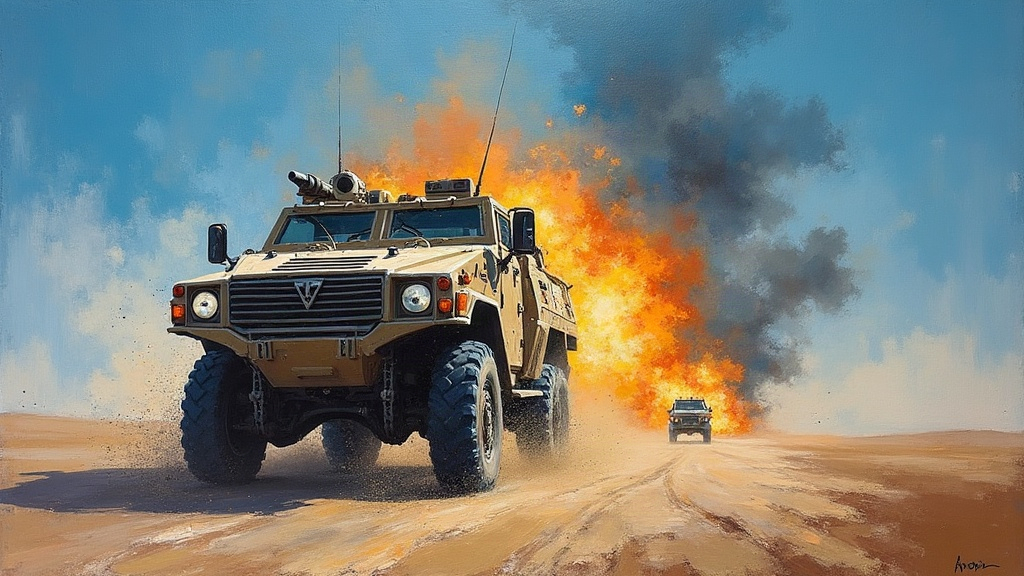
Natalie Sudman was half asleep in the back of an armored vehicle, arm resting on the armrest, eyes closed after a long day visiting water treatment plants and road projects in Iraq. Then an improvised explosive device detonated under her truck. She wasn't in the vehicle anymore. She was standing on a stage, surrounded by thousands of beings made of light, downloading information about human culture directly into their consciousness. She knew exactly where she was. She knew exactly what she was doing. And when those beings suggested she might want to go back into her body, she laughed and said no. Until they made one small suggestion. Then she said yes.
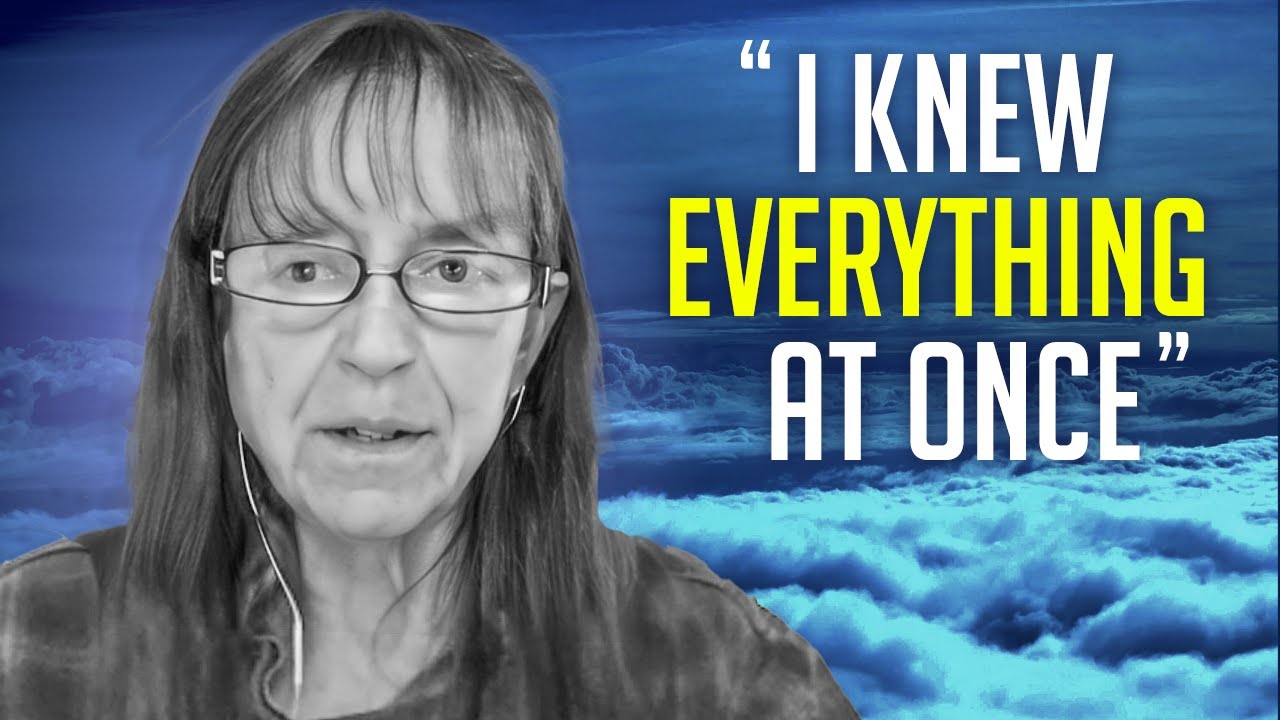
Natalie Sudman didn't go to Iraq looking for enlightenment. She went looking for work. After years as an archaeologist in the American Southwest, she wanted something different, something overseas. When Hurricane Katrina hit, she joined volunteer crews doing cleanup work in Mississippi and Louisiana. That's where she met people who offered her a job on reconstruction projects in Iraq. She deployed in 2006 as a construction representative for the U.S. Army Corps of Engineers, later becoming a project manager.
She spent 16 months there. Long days visiting construction sites, water treatment plants, road projects. The work was exactly what she'd been looking for. On this particular day in early 2007, she was traveling in a convoy of up-armored vehicles with three colleagues. One colleague sat with her in her vehicle, two more rode in the truck behind them. A gun truck brought up the rear.
It was the end of a long day. Natalie was tired. She had her arm on the armrest, eyes closed, drifting. Then she was somewhere else.
Standing on a Stage of Light
"I was there and then I was not," Natalie says. "I was standing on kind of a little stage with thousands of beings arrayed all around me and I knew exactly where I was. I knew exactly what I was doing. I was downloading information to all these beings."
She wasn't confused. She wasn't disoriented. She was working. The information transfer happened conceptually, not in words. "It really was conceptual and the information was complete," she explains. She was transmitting data about cultures, about the way cultures function as energy flows, about the information contained in those flows and how they interact with each other. All the way down to individual human interactions between people from different backgrounds.
She stood there in her uniform. She had a form that looked exactly as she did in physical life. The beings around her appeared human, made of light. Later, when she played with the memory, she could change their faces into monsters or animals, which told her something important: her memory of them as human was an overlay, something her consciousness imposed to make the experience manageable. "I think that if they showed up as insects or something I would be very distracted and maybe not relate to them in the same way," she notes.
But there were other parts of the experience where she tried the same trick and couldn't change anything. Those memories, she says, are accurate. They're true.
She was familiar with these beings. Not as people she'd known in physical life, but as consciousnesses she'd interacted with before, maybe in the past, maybe in the future, outside of time. When she focused on any individual being, she recognized their energy signature. They had different interests, different roles. They weren't embedded in physical reality the way we are, but they existed within what Natalie calls an extended reality, a larger framework that contains our physical world as a subset.
She doesn't think most of the information she was transmitting would make sense to the human mind or matter to human experience. But it mattered to them. And at some point during this download, she told them she wasn't going back into her body. She wasn't interested.
They accepted that. But they made a suggestion. "Well what if you did this?" She doesn't say what the suggestion was. But her response was immediate: "Oh okay well if I'm going to do that yeah I'll go back."
She was easily convinced.
The Velvety Black Space
Then she blinked. That's the word she uses: blinked. She didn't move through space. She didn't travel through a tunnel. One moment she was on the stage, the next moment she was somewhere else entirely.
She calls this the deep rest environment. It was a velvety black space, infinite, warm, deeply relaxing. She didn't have a form anymore. She was an organization of energy. Two beings were with her, working on her like mechanics, tinkering with the organization of her energy, fixing things, tuning.
When they finished, they disappeared.
She started what might be called a life review, though not the kind other experiencers describe. She wasn't reliving every moment or feeling every emotion of people she'd interacted with. She was looking for something specific: places where unexpected things resulted from her actions, choices, decisions. That interested her. And she was looking for fun.
Not fun in the sense of parties or margaritas on the beach. Fun meaning deeply engaging work, the kind that uses the skills and interests she loves to use. "Making art is not always easy, writing is not always easy, but it's always fun for me because it's engaging and I like the process and I like the work."
When she finished the review, she went into deep rest. She describes it as going so deeply inside herself that she turned inside out. If you go deeply enough inside, she says, you become stillness. You become infinity. The same infinite space she was floating in was also available inside herself.
She doesn't know how long she was there. There was no time. There was no space. But when she came out, she blinked again.
Choosing Injuries With an Old Friend
She was in what she calls the healing environment. She could see the blown-up truck down on the desert. She could see all four people in it: the driver, the guard, her colleague, herself. She could perceive the whole scene as solid matter, the way we normally see things. And she could also perceive it as organizations of energy.
She was with two other beings. One was an old friend. Not a friend from physical life, but someone she knew very well on a spirit level, on a non-physical level. The other being felt like an observer, maybe learning from watching them.
And then she and her friend started doing something remarkable. They were waving their hands and setting different injuries in her body. Playing around with injuries. Trying them on. The intention was to decide which injuries would set her up best for what she'd agreed to do.
From that perspective, there was no fear. No preoccupation with pain or discomfort. "A human lifetime is not very long," Natalie explains, "and sometimes difficult situations can serve valuable ends." She compares it to watching a movie. If you believe the actors are really killed, you'll have a very different experience than if you know it's a movie, that when it's over everyone stands up and walks away. "Everyone's fine, no one is really hurt."
When that understanding is front and center, the choice of injuries isn't a dire choice. They were laughing a lot. They would wave a hand and put shrapnel into her brain, then fall down laughing, seeing an instant holographic totality of the rest of her life and the struggles that would present. They would sever her right arm and fall down laughing, watching the instant totality of her life trying to navigate the world with one arm.
"Obviously these things are not funny now," she says. "But from that perspective they were very very amusing."
Eventually they decided on the injuries. She set them. Then she blinked again, back to the large gathering of thousands, to discuss in more detail what she'd agreed to do.
She won't talk about what she agreed to do. Partly because it's hers, it doesn't matter to anyone else. Partly because our culture puts everything into hierarchies: this thing is more important than that thing, what I'm doing is more valuable than what you're doing, what that homeless person is doing is less valuable than what that business owner is doing.
But from the perspective of the non-physical, none of that is true. "Whatever I'm doing is valuable, the end. Whatever you're doing is valuable, the end." When comparison is absent, judgment is also absent.
She discussed her agreement with the thousands at what she calls the managerial level. Then she blinked again. She was standing next to the truck down on the desert. Everything was suspended. She was in between time. Eight or nine other beings were with her. They discussed what she'd agreed to do from a different perspective, much closer to human experience. "Like discussing it from the level of the person pounding the nails," she says. Practical issues.
When they finished, she blinked, heard a pop, and was back in the truck.
Back in the Truck, No Fear
The truck was still rolling. The engine was dead but they were coasting. The driver turned the wheel. They rolled off the side of the road onto the desert. The truck stopped.
Natalie still had her eyes closed. She knew an IED had gone off under their truck. She knew it wasn't minor. This was serious. "I just thought well just gonna have to open my eyes and deal with it."
She opened her eyes. Made sure no one was bleeding out. Tried to get a gun from the guard in case it was a coordinated assault. The gun was stuck behind his leg. She tried to get the med kit. Also stuck. Within a few minutes the other trucks in the convoy arrived. They were medevaced to their base, then to the in-country surgery center in Balad, then flown through Landstuhl back to Walter Reed Army Medical Center.
She remembered parts of the experience when she first opened her eyes. Actually, when she was sitting there with her eyes still closed. She knew she'd been somewhere. The feelings from that place were vivid. There was no fear as she sat there thinking about opening her eyes. No fear after she opened them.
She couldn't use her right arm. Didn't look at it, just knew it didn't work. Couldn't see out of one eye. She held her hand over it and waited for the team. She looked out the window wondering if she'd be able to see out of that eye again. "I really want to be able to see out of this eye," she thought.
Then another thought: "What if I can't see out of this eye, I can see other worlds more clearly?" She got really excited about that.
She attributes this to the same perspective she had in the healing environment when she was trying on injuries. There was simply no fear. She wasn't afraid of what the rest of her life would look like. Wasn't afraid of pain or rehab. She wasn't filling in the blanks of the future. She was in the single moment, wondering about things.
"I've never had one eye before, I wonder what this will be like," she thought. It was something new. She had lots of those moments over the next month as an inpatient at Walter Reed, and over the next couple years as an outpatient.
Injuries as Chosen Opportunities
The experience informed the way she thought about her injuries. Knowing she was the one who chose them changed how she approached them. If they were injuries she chose, there's no one to blame, no one to be angry with.
She trusted that even if she couldn't always remember why she chose these particular injuries, they had value. "I think I remember a fraction of what I intended to do coming back here," she says, "and I think I remember only a fraction of the value of these particular injuries or the use of these particular injuries."
But it doesn't matter whether she can remember. She remembers that they do have value, that there's a larger reason. Trusting that in herself makes these injuries simply another experience available to her, an opportunity available in this lifetime.
She's written about her experience in detail in her book and spoken about it in multiple interviews over the years. She's also explored how living can be more fun when approached from the perspective she gained on the other side, and discussed how she planned details of her life before birth.
What This Tells Us
Natalie's account sits in a category of NDE reports that challenge our most basic assumptions about consciousness, choice, and the purpose of suffering. She didn't just observe her injuries being set. She participated. She chose them. With laughter.
This isn't unique to her experience. Across thousands of NDE accounts, experiencers consistently report that from the perspective of expanded consciousness, physical life looks different. Shorter. More purposeful. Less catastrophic. The analogy Natalie uses, about actors in a movie who all stand up and walk away when it's over, appears in various forms across the literature. The playwright metaphor. The school metaphor. The game metaphor.
What makes Natalie's account particularly striking is the specificity of the injury-selection process and the emotional tone. She wasn't resigned to her injuries. She wasn't grimly accepting necessary suffering. She was playful. Curious. Engaged in creative problem-solving with a friend. The laughter wasn't denial or dissociation. It was genuine amusement arising from a perspective where physical limitation is temporary and serves larger purposes.
The structure of her experience also follows a pattern seen in other complex NDEs: multiple environments, each serving a different function. The stage where she downloaded information. The velvety black space of deep rest and life review. The healing environment where injuries were chosen. The suspended moment next to the truck where practical details were discussed. Then the return. Each environment had its own quality, its own purpose, its own inhabitants.
Her description of beings as having energy signatures she recognized, rather than being people she knew from physical life, points to something the NDE literature consistently suggests: our relationships extend far beyond the boundaries of a single lifetime. We're part of communities, collaborations, ongoing projects that span what we think of as death.
The fact that she initially refused to return, then changed her mind based on one suggestion, raises questions about the nature of choice in these experiences. Many experiencers report being given a choice about returning. Some feel they must return for their children or to complete unfinished work. Some, like Natalie, negotiate. The suggestion that convinced her remains private, but the ease with which she was convinced, her own words "I was easily convinced," suggests the suggestion aligned with something she cared about deeply.
Her post-NDE perspective, the absence of fear, the curiosity about what it would be like to see other worlds more clearly if she lost sight in one eye, these aren't personality traits she cultivated through practice. They're direct downloads from the experience itself. The perspective stuck. It stayed with her through a month as an inpatient, through years of outpatient care, through the daily reality of living with injuries she watched herself choose.
This is what makes NDE research so compelling. We're not talking about philosophy or belief systems. We're talking about people who went somewhere, saw something, came back different. Natalie didn't decide to adopt a more positive attitude about suffering. She came back carrying a perspective from a place where suffering looks different because consciousness is understood to be eternal and physical life is understood to be temporary.
The implications are staggering. If consciousness chooses its incarnation parameters, if injuries and challenges are selected in advance for purposes we only partially remember, if communities of non-physical beings are actively involved in supporting and coordinating human experience, then every assumption we make about victimhood, tragedy, and the randomness of suffering needs to be reconsidered.
Natalie won't tell us what she agreed to do when she came back. She won't participate in the hierarchy-building that would inevitably follow. But she's told us something more important: whatever you're doing is valuable, the end. Whatever challenges you're facing, you chose them. Maybe not consciously. Maybe not in a way you can remember. But from a perspective larger than the one you're currently using, they serve purposes you trust.
That's not a platitude. That's a report from someone who was there, who saw it, who chose her own injuries with laughter and came back to live with them. She's not asking you to believe her. She's offering you her experience. What you do with it is up to you.
Was this article helpful?