Mia Bella Brikey's NDE: The Cliff Between Two Worlds
A ten-year-old girl in cardiac arrest sat on the edge of a cliff for what felt like forever, choosing whether to stay or go
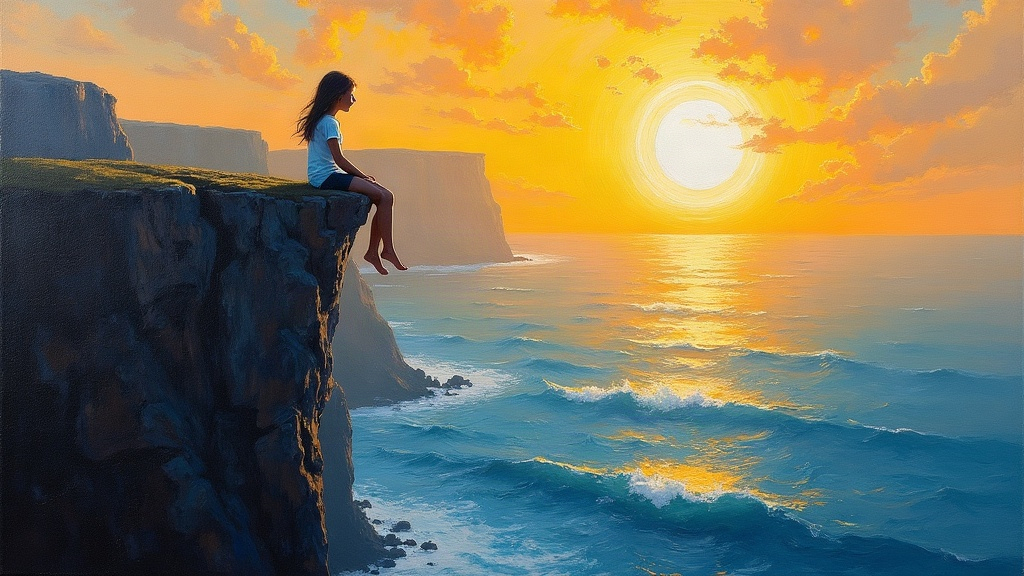
She sat on the edge of a cliff with her feet hanging over nothing, watching a living orb of light pulse against an endless ocean. Beings below called to her, promising they would catch her if she jumped. But there was no rush. Time didn't exist here. She could sit as long as she wanted. And so she did, for what felt like forever, while 65 minutes of CPR pounded into her ten-year-old chest and her parents stood outside the ICU room, watching a stranger's fists compress their daughter's heart again and again and again.
The Months Before
Mia Bella Brikey grew up in Sugarhouse, a small community in the heart of Salt Lake City, Utah. Just her, her brother, and her parents. Small community was, as she puts it, "pretty much like the definition of my childhood."
When she was around ten years old, something shifted. She started "just being like kind of sick all the time." For months, doctors couldn't figure it out. First they said salmonella. Then some random virus. The doctors, Mia remembers, "couldn't be specific."
By May 25th, she was on the bathroom floor, throwing up every three minutes. Her parents decided to take her to InstaCare. The plan was simple: get some fluids, go home. She'd been told for months it was just a flu. "We were like well okay I need some fluids I should be better right," Mia recalls.
But when they tried to place an IV, they couldn't. Nine times they poked her. Nine times they failed. She was so dehydrated her veins had collapsed. They sent her to the ER, where a specialized IV team got the line in on the first try and "immediately started just flooding my body with fluids."
Mia's father was a doctor. He was close friends with some of the ER nurses. When he walked in, he told them his daughter was severely dehydrated, that's all. They listened. They believed him. And that belief, Mia says, "ultimately it ended up setting me back a little bit" because the real problem wasn't dehydration at all.
The Heart That Wouldn't Beat
As the fluids poured in, Mia got worse. Not better. Worse.
The nurses listened to her heart and heard chaos. It wasn't beating normally. It was "completely out of control it was just beating randomly." They pulled up an echocardiogram and saw the truth: her heart was "barely barely beating at all it was barely pushing blood it was bad."
The doctors decided on a procedure. They would put her under, thread a wire up her carotid artery, and shock her heart with electricity to try to restore a normal rhythm. From Mia's perspective, she "had no idea the Panic that everyone else was experiencing." But outside her room, nurses were pulling her father aside, telling him to get his wife there immediately. This wasn't small. The nurses, Mia learned later, "didn't really know how to tell my parents that I was like on death's doormat basically."
They completed the procedure. The shock gave her heart "a little bit more Force to the beat" but nothing close to normal. The doctors didn't feel comfortable removing the breathing tube. They admitted her to the ICU, kept her intubated, and waited.
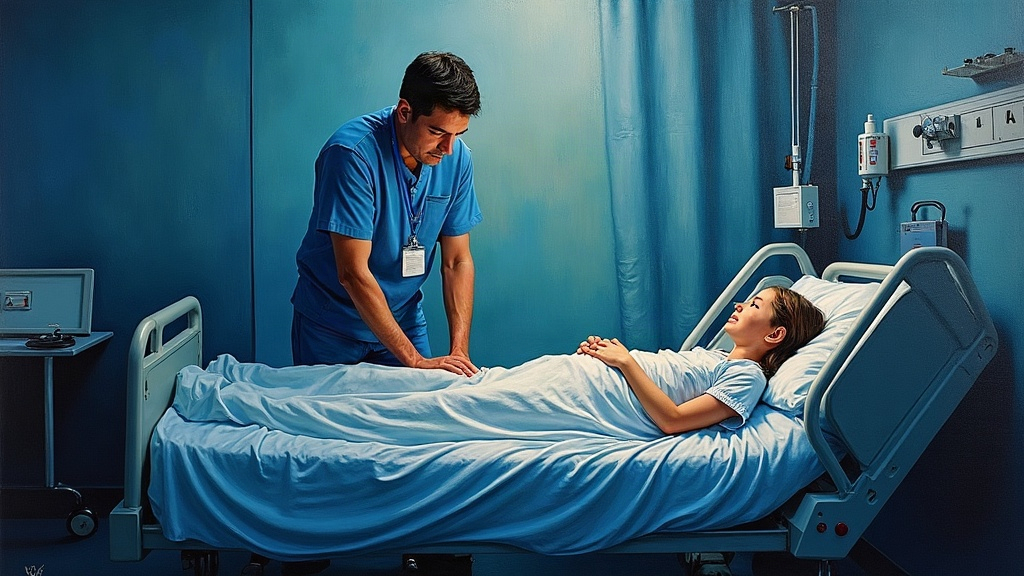
Four hours later, a code was called. Mia's parents looked up and saw a nurse standing in the doorway, crying. The nurse made eye contact with Mia's father and said, "you need to come right now."
What her father saw when he arrived was "this big man like pounding into his little girl's chest." His instinct was to protect her, to stop it. But his brain knew better. So he started jumping up and down in place, telling the nurses, "don't touch me I won't get in the way but don't touch me." His wife was crying. Strangers were compressing his daughter's chest.
They performed CPR on Mia for 65 minutes. Sixty-five minutes of manual chest compressions on a ten-year-old girl whose heart had stopped and refused to start again. Even after they got her onto ECMO, a machine that oxygenates blood outside the body, "they didn't know if I was brain dead or not because I was not responding."
The doctors couldn't understand it. Her heart had stopped. But otherwise, "I was perfectly healthy like they couldn't understand why my heart had stopped and refused to start again they didn't understand."
The only option, they said, was a heart transplant. And because of the trauma her body had taken during the arrest, she needed it fast. By the end of the week and a half, or they would have to take her off life support. They told her parents, "we can try and put her on another life support but we don't want to try because we know it's not going to work and we know she's not strong enough."
The Test
Before Mia could even be placed on the transplant list, she had to be assessed. To qualify for the United Network for Organ Sharing list, you must be "considered a viable recipient" with positive chances of surviving and thriving after surgery. If your odds are too low, "they won't even put you on the list because frankly they don't want to waste organs."
The person who came to assess Mia asked her to open her eyes and squeeze their hand. She didn't. She failed other tests too. She was still under heavy medication, in a medically induced coma. But "I wasn't responding enough," Mia says. The assessor marked her as an unviable candidate and walked toward the door.
Mia's father ran after him. "Wait please just wait," he said. The man turned around. Mia's father leaned over his daughter's bed and yelled in her ear: "Mia this is your father you need to open your eyes right now."
He yelled it. Forceful. Desperate.
And Mia's father says "I opened my eyes I looked at him and I squeezed his hands and then immediately went back to sleep."
He watched the assessor cross out what he'd written, write something new, and leave. An hour and a half later, Mia's parents were told she'd qualified for the list.
There's a term for what happened in that moment. Divine timing. Mia uses it herself when describing "the deciding moment when someone was going to decide whether or not I was brain dead and capable." If her father hadn't caught that man in the doorway, if she hadn't opened her eyes for those few seconds, the story ends there.
The Cliff
Somewhere during the 65 minutes of CPR, or in the days that followed while she lay on life support waiting for a heart, Mia went somewhere else.
"I was in limbo," she says. "I was sitting on the edge of a cliff the entire time."
She can't tell you where the cliff was. It wasn't anywhere on Earth. But it was beautiful. Tall, like the Cliffs of Moher. She had her feet "hanging over the edge of the cliff like my feet were suspended in dead air midair but I was sitting on the ground."
She sat there for what felt like ages. But time, she says, "did not exist in this plane." She wasn't concerned about it. It wasn't even a concept. "It was not even something to think about it was just the experience was just ever existing."
She felt calm. More than calm. She felt "so calm and I think even to this day unconsciously my soul my spirit and my body tries to get back to that feeling often." It was, she says, "a state of just pure wholeness."
When she sat on that cliff, she was herself. But she was also "the exact same as everything else that was surrounding me." Not just made of the same atoms. Something deeper. "I was at the same playing field as the grass that I was sitting on and the air that I was breathing it was all one we were all one." A connection. "True peace."
She watched what she could only describe as a sunset. But it wasn't a sunset like we know. "What I was watching was a living breathing ball of energy that was the most beautiful thing I've ever seen." Bright white light, but colorful. Not blinding, but "the brightest thing I've ever seen." It didn't have a face. It was "a literal orb of pulsing breathing living energy."
Below the cliff was an ocean. No land. Just open water. And at the bottom of the cliff, there were beings. They were waiting for her, but not in an expectant way. They were just there. Mia wishes she could describe what they looked like, but "they didn't even have bodies like they were spirits."
They told her that if she wanted to jump off the cliff, they would catch her. She would be safe. She wouldn't be hurt. "There was a big emphasis on like if you choose to come with us you will be a okay like you will be okay," Mia recalls. But there was equal emphasis on something else: "don't come until you feel ready and we will wait here and we will not rush you and we will be here as long as we need to be here."
They told her that if she came with them, they'd take her to the orb. And Mia remembers thinking, "thanks like yeah I'll get there eventually I'm just like chilling right here for now I'm just gonna like push staying up here a little bit longer because I'm enjoying being up here too."
She was enjoying it. Sitting on the edge of a cliff between life and death, and she was enjoying it.
The Shed
Behind her, on the cliff, there was an open field. Grass, flowers, some trees. Foresty vibes, she says. And in that field, there was a shed.
Mia went inside. She remembers "not liking it in there and so that's why I didn't go back in." It wasn't scary looking. But "it definitely didn't really it didn't feel like it fit like this heavenly landscape that I was in." It was, she says, "like brutal reminder of humanity sitting in this like field of Heaven."
There was an energy around the shed. It "felt humanity and like the energy that comes with being a human and having a physical body and being physically stuck to certain places." The actual energy of being human. That's what the shed held.
Inside, the walls were covered with etchings. Names. Thousands of them. It was sad, Mia says, but not heartbreaking. More like "a heavy Melancholy energy that's like there and it's significant and it's something that you need to recognize because you know there's some feelings of loss that were hanging in there." Real feelings. "The feelings that come with being human you know being human is brutal," she says.
She left quickly. Spent the rest of her time on the edge of the cliff. "That's where I sat for the whole literally the entire my entire experience of being there which what which did feel like forever."
The Witch
When Mia eventually told her father about the cliff, about sitting by the ocean, about the beings and the orb and the shed, his reaction changed everything. It "sort of like solidified my like confidence in my story," she says.
He told her about something that happened while she was still on life support, when they weren't sure if she was brain dead. A woman came to visit. A friend of her parents. Mia describes her as "a very powerful witch and energy reader and she's a psychic witch."
The woman sat at the foot of Mia's hospital bed and held the bottoms of her feet. When she walked back out, she told Mia's parents that their daughter "was on another like plane that I was in another plane that like my brain was okay she was like I was still there that the daughter you know is still there but she's in another plane she's in another world and she's hanging out by a body of water."
The woman said Mia felt really calm. But "she doesn't know whether or not she wants to stay or leave and she needs some like confidence she needs some affirmation she needs to hear that you guys want her to stay."
To Mia, "that one clarification from her really was what made me feel so confident in my story."
After the woman left, Mia's parents stepped it up. They'd been at her bedside the whole time, but now they "really stepped it up and they were like well we can't even start to even entertain the idea of her not being okay like we need to tell her she's okay." They started telling her how much they needed her. That she needed to fight.
And Mia remembers thinking, from her place on the cliff, "I don't really know like I don't know if I want to stay I don't know if I want to go I like having the option to choose and I'm gonna like wait on that."
She doesn't remember how it ended. The cliff, the ocean, the beings. She doesn't remember the moment she chose to come back, or if she even consciously chose at all. The memory just stops.
The Return
What Mia does remember is the in-between. The confusion of being in a coma. "I remember thinking I was a baby in a baby's cradle at one point my brain trying to place my body in space and figure out what was going on." She could hear everything around her but couldn't open her eyes. She remembers "literally yelling at myself to open my eyes but not being able to open my eyes." She remembers "crying and screaming and being so confused and very upset."
When she finally opened her eyes, she learned she'd had a heart transplant. That her life was "complete different and change forever."
The transplant was only the beginning. Her lungs collapsed twice. Her kidneys failed. She had to "relearn how to walk I had to relearn how to talk and swallow and drink liquids eat food I had to relearn how to write."
For a long time, she had a "why me" attitude. She couldn't understand "how what happened to me happened to me."
But then she started re-remembering her NDE. And "things kind of became okay."
She wishes she could go back. "To just go back and feel that feeling one more time would be the meaning of life it felt like the meaning of life." But she can't. The best she can do is live. And try to "live through love and acceptance."
Because that, she says, is "the only way to get as close to that feeling as I can." When she lives through love, when she looks at "every experience and every situation with love I look at every person with love you know trying to understand all sides of every situation of every person," something shifts. She starts to "see changes in the way that you just experience and think about life."
What the Cliff Tells Us
Mia's account sits at the intersection of two of the most commonly reported elements in near-death experiences: the boundary and the life review location. The cliff she describes, with the choice to jump or stay, mirrors what researchers call the "point of no return" that appears in thousands of NDEs. Experiencers often describe a border, a river, a door, a line in the sand. A place where they're told, implicitly or explicitly, that crossing means not coming back.
What makes Mia's story unusual is the extended duration. She didn't approach the boundary and immediately return. She sat there. For what felt like forever. And the beings below didn't pressure her. They gave her the rarest gift: time to choose.
The shed is harder to categorize, but it resonates with accounts of life review spaces, places where experiencers confront the weight of earthly existence. The thousands of names etched into the walls, the heavy melancholy energy, the feeling of human loss. Mia describes it as "the actual energy of being a human" distilled into a single structure. She went in once, didn't like it, and spent the rest of her time on the cliff.
That choice tells us something. She was drawn to the peace, the oneness, the pulsing orb of light. Not to the reminder of human suffering. And who can blame her? At ten years old, after months of being sick, after 65 minutes of CPR, after her heart stopping and refusing to restart, she found a place where time didn't exist and she was one with everything. Of course she wanted to stay.
The psychic's validation is striking. Independent corroboration of NDE content is rare, but when it happens, it's powerful. This woman, holding Mia's feet while she lay on life support, described a girl sitting by water, calm, unsure whether to stay or go. She described Mia's internal state without Mia saying a word. Because Mia couldn't say a word. She was in a coma.
Mia's experience suggests what so many NDEs suggest: that consciousness isn't trapped in the skull. That it can go somewhere else, see things, make choices, exist in a state of wholeness and peace, while the body lies broken in a hospital bed. Her brain was potentially damaged from the cardiac arrest. The doctors didn't know if she was brain dead. And yet she was sitting on a cliff, watching an orb of living light, talking to beings who promised to catch her if she jumped.
She came back. She chose to come back, or her parents' voices pulled her back, or the timing simply wasn't right. However it happened, she returned to a body that had to relearn everything. Walking, talking, swallowing, writing. The basics of being human.
But she brought something back with her. A memory of what it feels like to be whole. To be one with everything. To exist in a state of pure peace. She can't return to the cliff, but she can try to live in a way that echoes it. Through love. Through acceptance. Through trying to understand all sides of every person and situation.
That's not a bad prescription for a life. Especially a life that was given back after 65 minutes of someone else's fists keeping your heart beating. Mia sat on the edge of the cliff and chose to stay. And now she's here, telling us what she saw. What she felt. What waits on the other side of the jump.
We should listen.
Was this article helpful?