Mary Jo Rapini's Near-Death Experience: The Question God Asked
A therapist dies during brain surgery and discovers that love, not achievement, is what matters most
Mary Jo Rapini was lying in the surgical ICU when she saw it: a small circle of light in the upper right corner of her hospital room. She'd spent years working in hospitals as a nurse and therapist. She knew every light, every machine, every sound. This was different. The light was soft, luminescent, almost alive. As she stared at it, thinking how unimpressive it looked, she suddenly found herself moving into it, upright, able to see in all directions at once, including behind her where her body still lay on the bed. Her husband Ron sat beside that body, head in his hands, crying over a surgical consent form. But Mary Jo didn't care about any of that anymore. She was going somewhere else.
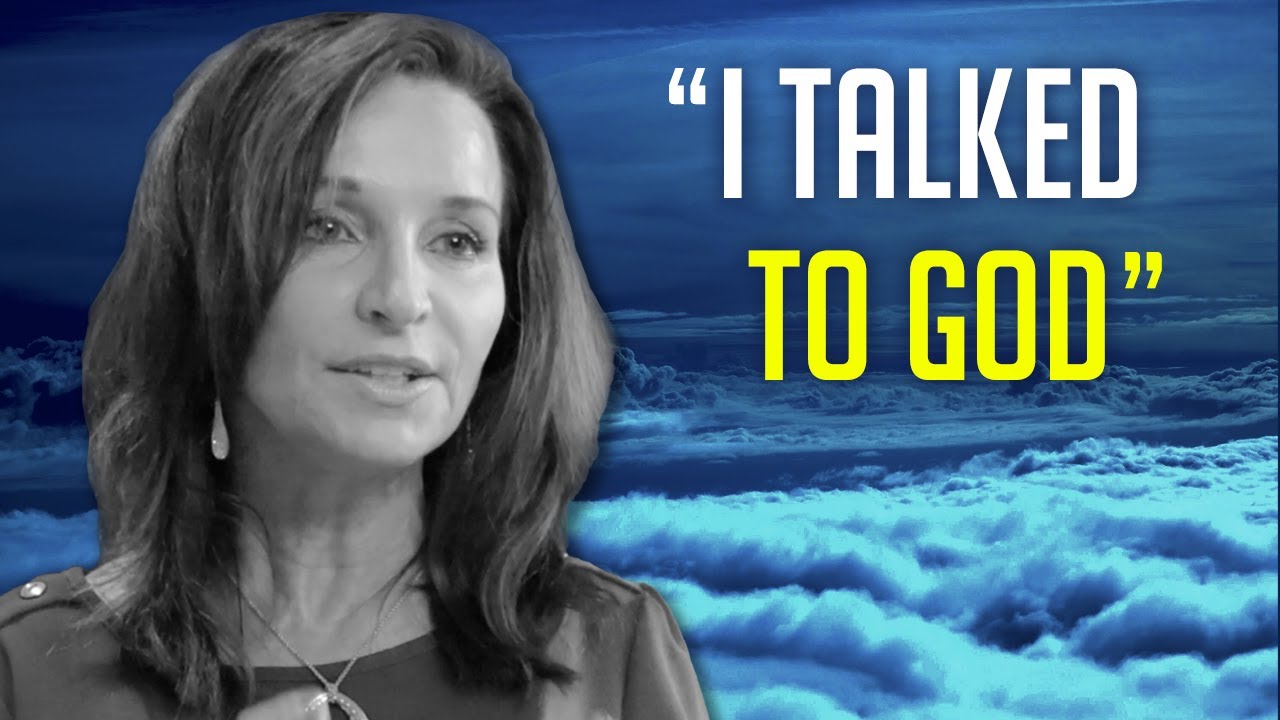
The Therapist Who Lost Her Faith
Before the aneurysm, She ended up taking a position as [the head of a psycho-oncology unit at Texas Tech University Medical Center](/video/cNjtypYeJ9E?t=87" class="text-blue-600 dark:text-blue-400 hover:underline">Mary Jo Rapini. Head was a generous term. "I was the only one that was doing that," she recalls. An oncologist had hired her through the back door to run support groups for cancer patients struggling with intimacy issues, with bodies that no longer felt like their own after brutal treatments.
She found her calling with cancer patients, but the work extracted a spiritual cost. She worked with children on the pediatric floor. She "saw a lot of terrible things, kids getting cancer, you know, painful treatments and struggling," and it "just started deteriorating how I felt about a god, a loving God especially," she explains. By the time of her near-death experience, she felt "quite estranged" from any sense of divine presence. She was carrying that estrangement in her heart, a quiet bitterness about a world where children suffered and died while she held their parents' hands.

Holy Saturday at the Gym
On April 19th, a Saturday morning, Mary Jo went to Gold's Gym. It was Holy Saturday in the Catholic tradition she'd been raised in, the day before Easter. She had a big brunch planned at her house the next day. Her mind was full of logistics and preparations.
She was working on a chest press machine, determined to push herself. She'd been thinking, "I can lift twice my body weight with my legs, I should be able to do that with my arms," so she'd been dedicating herself to building upper body strength. That morning she loaded 98 pounds onto the machine. She weighed 107.
The first push was brutal. "I went oh my God like that's really heavy and you know I don't know if I can do another one," she remembers. But she decided to do one more rep. As she pushed, "I felt a sharp jabbing pain in the back of my neck, it felt like I had been stabbed or something," she says.
She got off the machine, disoriented. The pain was overwhelming. Her background as a nurse kicked in immediately. She started "going through my whole nervous system like something in my neck something in my cerebral fluid something in my spine something's not right I can't walk well," she recalls. She stumbled to the water fountain. When she pushed down the lever, "this whole right side started jerking like convulsing and I had no control and I was profusely sweating," she describes.
She'd recently been diagnosed with high blood pressure and had taken her medication that morning. She wondered if that was connected. She lay down on the gym floor. A fellow gym-goer who knew her came over. "Hey muscle woman what's the matter," he said. She told him, "if you can go get help because I think I need an ambulance, I hurt myself," she recounts. Her face had gone white.
The Ambulance Prayer
The ambulance ride to the hospital was agony. The pain in her head was so severe that she told God, "I can't handle this, I need your help and I don't care if I live, I've had a good life and if it's your will that I'd be gone then I want you to know I am grateful," she remembers. Every bump in the road sent lightning through her skull.
She'd heard her cancer patients talk about this moment, the moment of complete surrender. They'd told her that when they submitted to God, they "suddenly got a feeling that it was in his hands, a true letting go if you will," she says. She'd always thought that kind of surrender was the bravest thing anyone could say. Now it was happening to her.
"As I let go of controlling my condition, it seemed that my condition flowed in a way that I wouldn't never be responsible for," she explains. Something fundamental shifted in that ambulance. The trajectory of her illness changed in ways she still can't fully explain.
At the hospital, scans revealed catastrophic bleeding in her brain. An aneurysm had ruptured. Her head was "full of blood" and they didn't know if she'd survive the night. All the neurosurgeons in Lubbock were at a conference in Santa Fe that weekend. Only one retired surgeon remained, a friend of her husband's. He told Ron the options were grim: stabilize her and watch her possibly die within 24 hours, or fly her to Dallas where specialists might take the case.
Mary Jo and Ron had made a pact years earlier: if one of them faced a catastrophic illness, they wouldn't leave each other alone. She'd "watched a lot of people die alone and it's terrible," she says. She believed "when you were dying you should have another human who loved you or can love you until God takes your hand, they've got your hands and they're holding them," she explains. But the medical jet to Dallas couldn't accommodate Ron's weight without compromising cabin pressurization. They decided to stay in Lubbock.
The Impossible Calm
Throughout those first critical days, Mary Jo experienced something that still puzzles her. Despite being in and out of consciousness, despite the severity of her condition, she was "extremely relaxed". This was remarkable because, as she puts it, "I'm not a relaxed person, I'm very hyper, very anxious in my real life, well I used to be," she notes.
She made it through Easter Sunday. Her husband sent updates to family and friends. Mary Jo had been supposed to host that Easter brunch at her house, and even from her hospital bed, she was adamant that Ron and their kids should host it anyway. Looking back, she says, "only now do I say how ridiculous it was but I really thought that I may die and if I did I wanted them to have other people," she reflects.
What strikes her most about that time is her emotional state about possibly dying. "The fact that I might die, it was not sad to me, it was not heartbreaking either, it was almost like I wasn't elated, it's just that I was so totally in God's will at that moment," she explains. Something had fundamentally changed in that ambulance when she surrendered.
Blood was draining from her ears and nose. The surgeons had inserted a drain tube in her forehead to relieve the pressure. She never saw herself, but she could tell from her children's faces when they visited that she looked terrible. Monday came and went. She was stable but not improving. Then, early Tuesday morning around 2 AM, nurses rushed into her room. Her oxygen saturation levels were dropping. She was moved back to the surgical ICU. The neurosurgeons had been called back early from Santa Fe.
The Light in the Corner
The surgeons decided they had to operate immediately. They'd located the aneurysm and believed she was becoming septic. They couldn't coil the aneurysm through her groin because it had already burst. They'd have to open her skull.
That's when Mary Jo saw it: "a white light and it was in the upper right hand corner of my room," she describes. She'd worked in hospitals most of her professional life, first as a nurse, then as a therapist. She'd "been in ICUs, I had been in surgeries as a nurse, I mean I had worked in the hospital a good portion of my life and this light was not like anything else I had ever seen," she says.
The light was "a bit ethereal, it was a kind of a different color, it was a luminescent but it also was soft," she recalls. As she looked at it, she thought it might be a tunnel. It had "that round the corrugated side almost as if it would be an encapsulated tunnel," she notes. Her first reaction was unimpressed. It looked so small.
Then, suddenly, "I am moving into it," she says. The movement was strange. "You're not lying down flat, you're kind of upright," she explains. And her vision had changed completely. "Your eyes work in a way that I know this sounds strange and even corny but your eyes can see behind you," she describes.
She could "see and sense that my body, the shell, was on the bed," she recalls. What astonished her most was that "I believe my Consciousness which is very important to me was with me, I think it was part of my soul because I was able to see what people were wearing," she explains. She could see Ron. "He had his head in his hands, he was crying and he was looking at this document, it was a surgical consent," she remembers with precise detail.
Then she left that scene behind. "All of a sudden I left that, I didn't care about it, I was so focused on what I was seeing," she says.

The Room Without Walls
She "came to this luminescent like a light pinkish room and I got the sense that there were no walls, it was just Mass, it was an opening if you will," she describes. She wasn't alone. "It felt like there were other people," she sensed, though she couldn't see them in any conventional way.
She keeps returning to the word "felt" because "it doesn't make sense but you sort of see, you see with your senses too, everything is with you as one," she explains. This is one of the most difficult aspects of the experience to convey: perception wasn't divided into sight, sound, touch, knowing. It was unified, immediate, complete.
And then came the overwhelming recognition. "I felt like I knew that place, like I have felt that place before, I had been there," she says. Not a memory, exactly, but a bone-deep familiarity, like coming home to a place you'd somehow forgotten you knew.
"All of a sudden I didn't see the exact action how it happened, God was holding me," she recalls. And then came the words: "It's not your time," she heard.
Her reaction surprised even her. "I was so disappointed because I wanted, I wanted to be there with him," she admits. This woman who'd felt estranged from God, who'd watched children die of cancer and questioned divine love, suddenly wanted nothing more than to stay in that presence.
The Love That Isn't Human
The love she felt there defied every category she knew. It was "very different from what I ever expected, the love was not human," she explains. She struggles for an analogy. "Comparing it like to human love would be plastic like a credit card whereas this was really deep," she says. Human love, even at its best, is a pale imitation.
When God told her she couldn't stay, she asked, "but why not?" What happened next still makes her cringe. She "started telling God all of my accolades, I gave free Cancer Care, I would come up at night when people were dying, I would pray for people, I tried to be a good mother, I tried to be a good wife, I had been a good worker, every positive thing I could think about myself," she recounts. Looking back, she calls it "just so awful and now or arrogant or whatever," she says.
God listened to her list of achievements. Then came the question that would reshape her entire understanding of what matters. "Let me ask you one thing, have you ever loved anyone the way you've been loved here?" God asked.
Her answer was immediate and defensive. "I said no that's impossible, I am a human just to remind God of my humanness," she recalls. She was making excuses, pointing to her limitations, her mortality, the constraints of being embodied in a world of pain and struggle.
Then came "the sensation of a closer hold from God," she remembers. And three words: "You can do better," God said.
"I don't remember leaving that space," she says. The next thing she knew, she was waking "to Ron like shaking me because he felt like I was unconscious," she recalls. He was saying they had to make the decision together about the surgery. "They have to open your brain and they have to clip this vessel and you might never be the same, you might not be able to run Mary or even walk," he told her. Running was her life. She'd been doing 50- and 100-mile ultramarathons. Ron warned her that her personality might change completely.
Mary Jo's response was absolute. "I said it's okay, I'm not gonna die anyway," she told him. Ron tried to reassure her, saying if she prayed and stayed close to God, she'd probably be okay. She replied, "I just talked to God and it's not my time," she remembers saying.
The Depression of Return
"I woke up after the surgery and I was upset, I was depressed, in fact I was depressed that I was back here for several months after," she admits. This is one of the least discussed aspects of near-death experiences: the profound grief that can come with being sent back. She'd touched something infinite, been held by a love that made human love look like plastic, and now she was back in a body that hurt, in a world that seemed small and harsh by comparison.
The experience left her with a burden she carries every day. "I live with this incredible memory or whatever's been branded on me and I asked myself am I doing enough, am I standing up for God's goodness, am I being conscientious with what he gave me, am I loving others the way he told me to practice loving more," she explains. The answer, she says, is always the same: "I'm trying but it's very difficult," she admits.
But something fundamental did change. "I think I'm a better therapist and I think I'm a better therapist because I judge less," she says. The woman who'd spent years helping people through their darkest moments had been shown that "compassion is the most important gift you give each other," she explains.
She's let go of the need to be right. "Just get out of this mindset of who's right and who's wrong, I mean we're all connected and we're all going back there, all of us," she says. Her certainty is absolute: "There is a God and he is our source, he is my source, I believe he's yours too but you have to get there on your own," she states.
What moves her most now is the personal nature of divine connection. "I believe he knows each and every one of us, he connects to us in a way that we can't possibly understand, we're very limited with our minds, with our brains, with our bodies here," she explains.
The experience "left me with a deep sense of compassion and just see abundance, I can't look at anything without thinking what can I do, how can I help," she says. The therapist who'd lost her faith watching children die has found something deeper than faith: direct knowledge that we're not alone, that love is real and infinite, and that we're all going home to a place we've somehow always known.
What This Experience Reveals
Mary Jo's account carries several elements that appear consistently across thousands of near-death experiences. The ability to see in all directions simultaneously, to perceive her body from outside it while retaining full consciousness, mirrors what countless other experiencers describe. This isn't hallucination or oxygen deprivation. People who've never heard of NDEs, from cultures around the world, report this same 360-degree awareness, this same sense that consciousness is not confined to the brain.
The recognition she felt in that luminescent space, that sense of having been there before, is one of the most profound and recurring features of NDEs. It suggests that what we think of as life might actually be a temporary sojourn away from our true home. We're not going somewhere foreign when we die. We're returning.
But what makes Mary Jo's experience particularly significant is God's question: "Have you ever loved anyone the way you've been loved here?" This cuts through every religious framework, every system of moral accounting, every list of good deeds and achievements. God didn't ask about her accomplishments. God asked about her capacity to love.
And then, crucially, God didn't condemn her inability. God said, "You can do better." Not as judgment, but as invitation. As possibility. The message wasn't that she'd failed, but that she was capable of more than she knew. That we all are.
This aligns with a pattern we see across thousands of NDEs: the life review is not about punishment or reward. It's about understanding. It's about seeing ourselves and our choices from the perspective of unconditional love, and recognizing where we fell short not of some external standard, but of our own potential for connection and compassion.
Mary Jo's post-NDE depression is also significant. Many experiencers struggle profoundly with being sent back. They've touched something so beautiful, so complete, that returning to ordinary life feels like exile. This isn't ingratitude or mental illness. It's a rational response to having experienced a dimension of reality that makes our daily concerns seem trivial by comparison. The fact that she eventually found her way to gratitude and purpose, that she now sees abundance everywhere and constantly asks how she can help, suggests that the integration of an NDE is a long process, one that can take years or even decades.
What her experience ultimately reveals is something both humbling and hopeful: we're here to learn how to love. Not to accumulate achievements, not to be right, not to win arguments or prove our worth. We're here to practice loving each other the way we're loved on the other side. And when we fail, which we will, we're not condemned. We're simply invited to try again, to do better, to remember that we're all connected and we're all going home to a love that makes everything we've known look like a pale imitation.
That's not theology. That's testimony from someone who's been there and come back to tell us what matters most.
Was this article helpful?