A Preacher's Daughter Dies at 21: What She Found on the Other Side
Mary Helen Hensley's near-death experience shattered everything her Baptist upbringing taught her about what happens when we die
Mary Helen Hensley was wearing bright red Bermuda shorts and a Santa Claus t-shirt, a jingle bell around her neck, when she sat at the traffic light on Highway 17 in Charleston, South Carolina. She was 21 years old, a recent college graduate on her way to a Christmas party. The light turned green. She pulled into the intersection. And in the seconds before a car traveling at 70 miles per hour T-boned her Toyota Corolla, she knew with absolute certainty that she was about to die. What she felt in that moment wasn't panic or fear. It was something closer to recognition, like coming across an old friend. Oh, she thought. Okay. Here we go. It's time to go. Everything her father had preached from the pulpit, everything she'd learned in Sunday school about death and judgment and the afterlife, was about to be proven spectacularly, beautifully wrong.
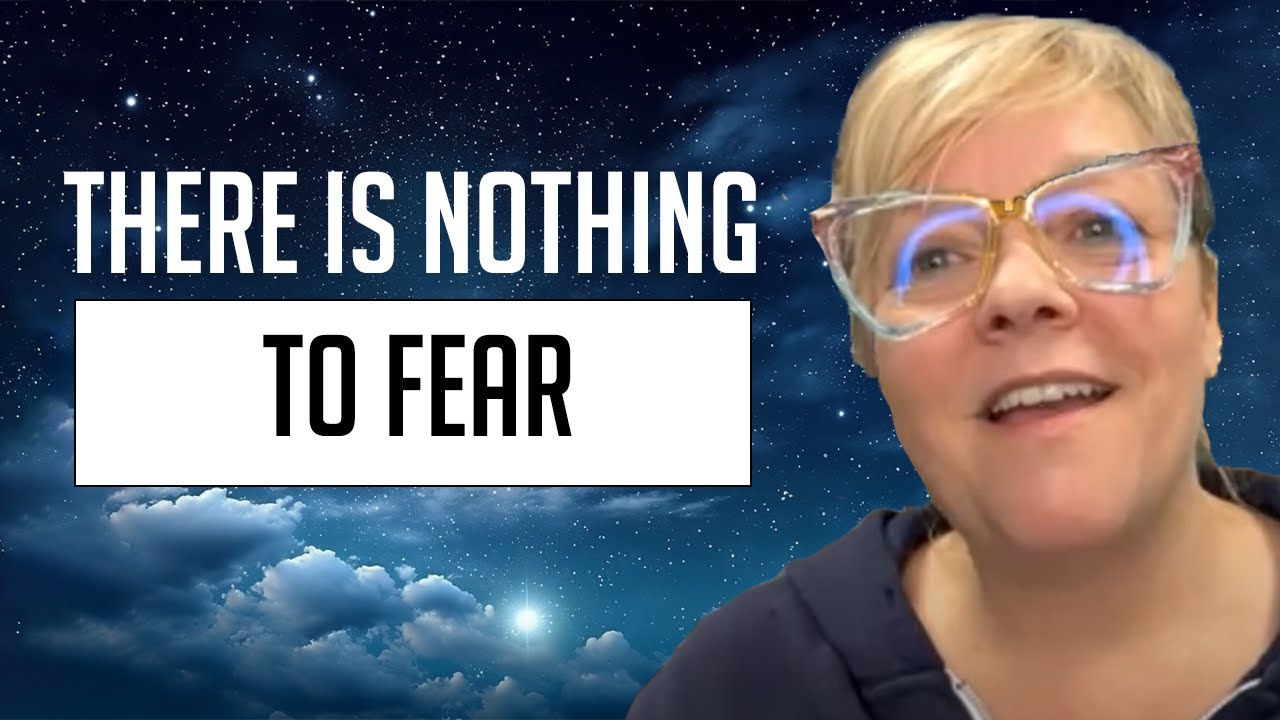
The Moment Before Impact
Mary Helen describes December 14, 1991, as the day she approached "the metaphysical and metaphorical Crossroads" of her life. She was sitting at a large intersection, waiting for her light to turn green so she could cross multiple lanes of traffic and hang a left toward the party. She'd just graduated from college. She was starting a new life in her boyfriend's hometown. She had no idea that in the next few minutes, she would die.
When the light changed and she began crossing the intersection, she made it across the first lane, then the second. In the third lane, she looked up and saw a car barreling toward her with no intention of stopping. Police would later estimate the vehicle was traveling at 70 to 75 miles per hour. The impact would be what they call a T-bone, the kind where the other car hits directly into the driver's side and wraps the struck vehicle around itself.
What happened next, Mary Helen says, was the most fascinating part. In the moment she realized she was about to be hit, she had "this overwhelming knowing that I was getting ready to die and there was absolutely no Panic there was no fear it was just like oh okay here we go it's time to go."
There was a sound. Years later, living in Ireland and playing traditional Irish music, she would find the only comparison she could make: the drone of uilleann pipes, the Irish bagpipes that fill with air at the elbow. That drone, she realized, was "the frequency that was keeping me Tethered to the Earth plane keeping me Tethered to the physical experience."
As the sound played, everything slowed to a crawl. The cars were moving at what looked like a snail's pace. She had "all the Time in the World to decide okay how are you gonna play this kid." It was as if she was directing the scene of her own death.

The Choice
She weighed her options. She could "stay inside the body experience that impact and then go or I could leave the body and then the impact takes place and I don't have to feel anything." Option B, she decided, sounded much more exciting.
The moment she made that choice, she says, is when she fully realized: "oh I'm not this body." The real "I am" made a decision, and it was separate from the meat suit she'd been traveling around in. Once the decision was made, time sped back up. The car came barreling in. And Mary Helen was already up and out, watching from above.
She got to witness her own death. She saw the car smash into the side of her Toyota, saw her head go through the driver's side window (the moment her neck broke), saw the seat fold up underneath her, saw glass everywhere, sticking into her tan legs in those Bermuda shorts. From that bird's eye view, she looked like a little puppet, just hanging there, caught by the seat belt, her neck laying completely over in a way that looked wrong because it was broken.
But she didn't care.
Like Peeling Off Dirty Clothes
To help people understand what it felt like, Mary Helen offers this comparison: Imagine you've been outside working in the lawn, mowing grass, playing sports, getting hot and sweaty and sticky and gross. You come in the back door, peel off those dirty clothes, throw them down by the washing machine, and go have the best shower ever. While you're in that shower, the very last thing you're thinking about is those clothes down by the washing machine.
"That's what it's like leaving the body at least it wasn't my experience," she says. "I wasn't pining away I wasn't going oh my God I'm only 21. It just wasn't like that I just was like oh okay well this round is done and here I am and I'm in this space and I'm going oh okay I recognize this this feels familiar."
From her vantage point above the wreckage, something else caught her attention. A girl she'd gone to college with, actually her suite mate, had been a couple of cars behind her at the intersection. Charleston is a big city. The coincidence that this particular person would witness Mary Helen's death was striking. But what was more striking was what Mary Helen experienced next.
She got to watch her friend recognize the car, recognize Mary Helen, realize she was dead, and watch her react. "It was wild guys," she says. "I got to actually feel I could just feel all of the emotions and you know there's this part of you that's just what you're just soaking it in and experiencing you're like I'm okay you know I'm okay relax everything's okay."
She watched a man in uniform come to the passenger side of the car, reach across through the blown-out window, and turn off the ignition so the engine wouldn't explode. The moment he turned the key, that drone sound changed. It began to speed up, transforming into what she can only describe as "the music of the spheres, the Symphony of the Stars."
No Tunnel, Just There
She's never heard anything like it since. "It was the most beautiful Symphony have you ever had a piece of music that you absolutely love and it just sends you to another place okay we'll picture that on steroids times a billion." It was energy and frequency coursing through everything she was.
This is where many people who have near-death experiences talk about going through a tunnel. Mary Helen didn't have that experience at all. "I didn't have that experience at all I'm not gonna lie to you and tell you that I did because I didn't it was like I was here one second and then I was here so if this tunnel happened I missed it it was so fast or it was so not necessary for my experience or whatever it just didn't happen there I was here one second and I was here in the next."
In this new space, lifted up by that music into a totally different frequency, she realized she had form, she knew who she was, but she didn't have a body. How do you describe that? "I guess it's like a you know somebody loses an arm and they've got the Phantom arm it's like oh Mary Helen just lost the body there she was freshly dead and I could still feel myself my presence my outline my form and I could certainly remember who I'd just been."
But here's the part that changed everything. At lightning speed, she could remember everybody else she'd been. For a preacher's daughter from the South, this was not something they ever taught in Sunday school. This was brand new. This was what she still lies awake at night thinking about at age 54. It was "incredible I'm so incredibly grateful for that moment that experience of of recognition of oh yeah oh this is who I really am."
There was no pining, no "oh my gosh I didn't get to do this or I didn't." In that moment she remembered: "I can do any of that one anytime I want to in any form."
Two Old Men Step Out of the Atmosphere
She sat in that space and basked until the atmosphere, which was palpable, which she could touch and mold and shape, began to shift. Two beings stepped out of it. They took shape and form.
As a kid, Mary Helen had always loved old people. She loved the old men at the nursing home, used to go sit with them and sing with them. Looking back, she thinks she really liked watching the death process. She'd never been afraid of death. She loved watching what she calls the fireworks, that magnificent colorful display that happens in the six to twelve months before someone dies. It's not like a dimmer switch, she says. It's the opposite. It's radiant.
So when she entered this glorious space of recognition, of coming home to her true self, of course she was going to conjure old men, because she loved them. That was security for her. That was wisdom. She'd always respected them, loved their life experiences, loved to be told their stories.
Did they have to appear like that? No. And who were they? It took her a little while to remember. You know that feeling when someone's name is on the tip of your tongue, when you see a patient in your office for 20 years but then run into them in aisle nine at the grocery store and suddenly can't place them? It was that sensation.
She looked at these men thinking, "I know who you are," and they just waited. Finally the light bulb went on. These were her guides, her Guardians. Yes, we have them. And again, not something she learned in Sunday school. These weren't Angels, there were no wings. They looked solid, physical. They were these men, and she felt safe.
What struck her as interesting was that she wasn't greeted by family members. Being raised in a Christian household, she wasn't greeted by Jesus. It just wasn't like that. These guides sat and waited for her to recognize them, and when she did, they celebrated this glorious homecoming. She realized these beings, in whatever form they'd taken, had been with her since day dot. You're never, ever, even at your very lowest moment, alone.
The Life Review That Changed Everything
What happened next was the life review. "Talk about a game changer y'all." This was the complete opposite of anything she'd been taught to believe or learned growing up. When she talks about it now, at age 54, she gets chills. "I could myself when I tell a story it was just so incredible."
She looked around, wondering: where's the judge? Where's God? She'd been taught growing up that there would be some kind of reckoning. Her father wasn't a Holy Roller, he was more of a sports-oriented preacher, everybody loved his sermons because they were always sports-related. But there was always a reverence for the idea that you need to do certain things in order to get to heaven.
In this moment, she's looking around and all of a sudden there's all this activity happening around her in 360 degrees. She's looking and realizing: there's no one judging. It's just her and the two beings. They're not judging.
Her concept of the space-time continuum imploded.
She grabbed an image out of thought: Mary Helen at eight years old, falling off her bicycle. She'd just gotten a new BMX with a banana seat, gold and green, fabulous. She had a kid on the back who shouldn't have been there. They were coming down a hill when a dog came out of nowhere, right into the bike, and they flipped. The girl broke her arm. Mary Helen was road-burned from head to toe. Her parents and the girl's parents had gone out to dinner, so they had to come back to this scene.
In the life review, Mary Helen could remember and feel and see her father, who was always her big fan and cheerleader but also very stern. In the state the two girls were in, with the other child needing to go to the hospital, she could feel "this first ping" when her dad kind of sold her out in that moment because he was so embarrassed. It wasn't "hey are you okay," it was "oh my gosh we are so sorry that she's done this she shouldn't have been out."
There was that first sting, that feeling. But then, in that moment in the review, she could feel his feeling behind it. She could see why he'd done that. It was instantaneous.
She moved forward to getting her first bulldog, Otto von Bismarck, at age 11. She could feel that moment, feel that pride, how much it meant to her to have that dog. Her dad was their football coach, they were the Martinsville Bulldogs, and now she had a real live authentic bulldog. She was a proud mother.
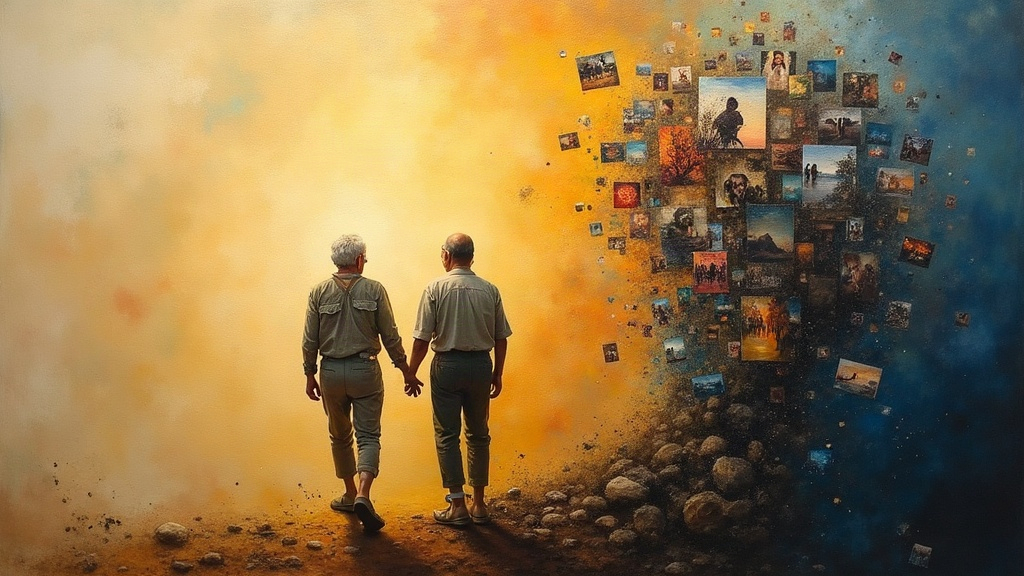
The Kitchen Table Talk
She went back to when she was four years old. Her parents sat her down for the kitchen table talk. Her dad literally couldn't stand it anymore. When her mom had been pregnant with Mary Helen, she'd had the German Measles. In the late 1960s, there were no ultrasounds. They were told things weren't going to go well, especially since this was in the first trimester.
What does a preacher do? He prays about it. One night, while her dad was on his knees praying, two beings appeared in front of him, beings he called "Celestial," which Mary Helen finds interesting because you'd expect a man of the Bible to say "angel." He couldn't say angel. It's not that he didn't say angel, he couldn't, because that's not the image in which they presented themselves. He described what sounded more like some kind of inter-dimensional being.
Four years later, her father couldn't take it anymore. He'd been told about these Celestial beings, and Mary Helen had come in as a girl (they didn't know beforehand), and there were no complications from the German Measles. He was rapidly starting to believe. But he was waiting for the other shoe to drop because these beings had said she'd have some unusual abilities.
At age four, Mary Helen got called into the kitchen table talk. Her father, this huge man with a big booming voice, a big American football player, sat down and asked: "Do you know the difference between alive and dead?"
She was four. She was like, "Um."
If she'd had that conversation in 2023, it would be so easy to describe. It would be like talking to somebody on FaceTime or a Zoom call. You know there's a real person, a real life flesh and blood human being occupying a body on the other side of the camera, wherever they are. How easy would that have been for four-year-old Mary Helen to explain?
She would always talk about her best friend, and her best friend was her grandfather, Dr. Garland Clark, her mom's dad. He was a surgeon, and Mary Helen had such a fascination at an early age with medicine, not traditional medicine but the Mind Body Spirit aspect of how a human body functions.
Mary Helen asked what "dead" meant. To her, Judge was real, just the same as she knows we're real watching on the other side of the screen. Judge was real to her in whatever way he was able to project himself and show up for little four-year-old Mary Helen. But imagine back then in 1973 where her dad was trying to filter this through his experience as a southern baptist Minister. Her mom was just 100% behind it because it was her father.
Feeling Everyone's Impact
In the life review, rather than just feeling or waiting for herself to screw up (and there were a lot of those), Mary Helen was watching and getting to feel the impact of things she did and said and things that were about her and how they unfolded in other people's lives. "I was like oh oh this is what the Life review is about okay."
But what was crazy was because it was all happening simultaneously. When she went back into her body, she literally had to reinvent everything she knew to be true. You can't even imagine. You have this idea that time is linear, that time marches forward. "I'm like oh um time is concurrent there are multiple timelines that are happening simultaneously and so yes you can travel in time and yes you can be in different places at the same time."
She's had the distinct privilege (and it is a privilege, though it's a little messed up sometimes, she won't lie) to come back in here and recognize that this is all happening simultaneously and that those eight billion plus fractals of the source energy that are here walking around as different people on planet Earth, we're all just fractals of the same hole. We're having different experiences and we're supposed to.
This crazy uproar where we're trying to make everybody exactly the same, trying to make everybody Fair, trying to make everybody nice, that's not what this place is built on. It's built on a dichotomy of dark and light. "Well I don't like that it makes me uncomfortable incarnate somewhere else next time." She hates to tell us, but it is perfectly perfect the way that this place is set up.
The Biggest Takeaway
People have gotten so busy trying to change the schoolhouse. Let's save the environment, let's do this, let's say that's wrong, that's not good, that's bad, that's in my religion. People are so busy trying to change everything that they don't realize that all of these challenges, all of these beautiful boxes to learn and grow and expand from, they were set up for you to change within them.
If she could give you one thing about being dead and coming back into this beautiful world we live in: stop trying to change everybody into your way of thinking. Stop trying to change everybody into having experiences that make you feel more comfortable. That's not their job. Would you expect people to be kind and decent, for people to be nice? Yeah. But we know by many years of being here on this planet that that's not the normal, or else everyone would be like that.
What we're here for is for our own growth, for our own learning, for our own understanding. We've watched the last three years of absolute chaos and craziness. We've watched people become divided, that separation and finger pointing. All of a sudden the very loving people were extraordinarily judgmental towards people who thought differently than they did. Guess what? It was meant to be an opportunity for you to show up.
Anytime you feel a little bit uncomfortable or things aren't going your way, it's not about you changing that scenario as much as it's about you showing up and not letting yourself down. You're being given opportunities every single day with every person who crosses your path, whether it's a spouse, a business partner, a child, a parent, a best friend. Every single day is offering opportunities.
You are what you love, what you love is what you give your attention to. You already are that which you seek. You're not trying to seek out your own Divinity you walked away from that in order to get in here and get dirty and to get be out in the trenches and to learn what it feels to be hurt and to hurt and to be part of that great Global mass of of fractals that actually still come from the same hole.
So it's really true: you hurt somebody else, you're not hurting them, you're hurting you. No one can harm who you really are.
Her Father's Death
Years later, when Mary Helen's father was going through his own death experience, he hadn't been able to speak for months. He was shuffling around the room in the nursing home. Very late one night, with Mary Helen and her mom sitting there, he shuffled over to the bed and got in and laid down, something he'd never do. The minister who spent his entire life preaching about heaven and its glories was terrified to die in those moments. Mary Helen found that strange.
He climbed into the bed and next thing he was giggling like a child, reaching up for the ceiling. Clear as day, he looked at Mary Helen's mom and said, "I can see it I can see it." Mom and daughter looked at each other. Is he dying? Mary Helen said no, the fireworks aren't there, he's having an experience.
She asked, "Dad what can you see?" He said, "I can see the land beyond the river sugar and it's more beautiful than anything you ever wrote about."
Mary Helen said yes.
Then he suddenly got like a deer in headlights and stopped and said, "Mama's there." Mary Helen's mom was still looking at her. Mary Helen said he's not dying just yet. He said, "She looks so young."
Then came the most profound moment Mary Helen thinks she's ever had in her life besides being dead. Her father reached up his hand. The most difficult relationship he'd ever had in his life was with his own father. At the time her dad was growing up, her grandfather had had a drinking problem, he had a lot of issues.
Her father had fretted and stressed his entire adult life that his father, her grandfather, did not get to go to heaven based on the criteria that her father understood was necessary for one to enter Heaven. My grandfather didn't get to go.
Her father's tears were pouring down his face. Mary Helen and her mom were just stunned. Dad turned around and looked at Mary Helen's mom and said, "Helen, I've had it wrong all along. Everybody's welcome here you can't mess this thing up."
What This Tells Us
Mary Helen Hensley's experience is one of the most articulate and theologically challenging accounts in the modern NDE literature. What makes it remarkable isn't just the classic elements (the out-of-body observation, the guides, the life review), it's how completely her experience contradicted the religious framework she'd been raised in. She wasn't primed to see guides instead of Jesus. She wasn't expecting past life memories. She certainly wasn't taught that time is concurrent or that we're all fractals of the same source.
This is what researchers call the "authenticity marker" in NDE accounts. When the experience violates the experiencer's expectations and belief system, when it forces them to rebuild their entire worldview from scratch, we're watching something genuine unfold. Mary Helen came back and had to reinvent everything she knew to be true. That's not the hallmark of a dying brain producing comforting hallucinations. That's the hallmark of someone who saw something real.
The life review she describes is particularly significant. This isn't the judgmental accounting she was taught to expect. There's no judge, no God with a ledger. Instead, she experiences the impact of her actions by feeling what others felt. She sees her father's embarrassment when she broke her friend's arm and understands his motivation in that instant. This is the life review pattern we see again and again: not punishment, but understanding. Not condemnation, but compassion.
What she learned about the nature of reality is equally profound. Time isn't linear, it's concurrent. Multiple timelines happen simultaneously. You can be in different places at the same time. This maps directly onto what quantum physics suggests about the nature of time and consciousness, but Mary Helen wasn't a physicist. She was a 21-year-old recent college graduate who had to come back and make sense of what she'd seen.
Her message about the purpose of physical life is one of the most practical takeaways from any NDE account I've encountered. We're not here to change the schoolhouse. We're here to change within it. The challenges, the darkness, the difficulty, these aren't bugs in the system. They're features. We chose to come here to experience contrast, to learn what it feels like to be hurt and to hurt, to grow through friction.
This doesn't mean we shouldn't work to reduce suffering or create a better world. It means we shouldn't confuse the curriculum with the classroom. The point isn't to make everything comfortable and easy. The point is to show up, to not let ourselves down, to recognize the opportunities for growth that every difficult person and situation offers us.
And then there's her father's deathbed vision. The minister who preached about heaven his entire life, who was terrified to die, who spent decades convinced his own father hadn't made it to heaven because of his drinking and his failings, saw his father waiting for him and realized: "I've had it wrong all along. Everybody's welcome here you can't mess this thing up."
That's the message that keeps coming through in these accounts. There is no hell. There is no damnation. There is no cosmic scorekeeper tallying your sins. There is only love, learning, and the recognition that we are all fractals of the same infinite source, having different experiences, growing in different ways, and we're all going home.
Mary Helen Hensley is now a chiropractor and metaphysician living in Ireland. She's written 10 books. She plays traditional Irish music. She helps people understand what she learned on the other side: that we are eternal beings, that we chose to be here, that every challenge is an opportunity, and that the only thing we're really here to change is ourselves.
She's told this story thousands of times, and she still gets chills. Because no matter how many times she tells it, she can't quite capture how incredible we are, how incredible this experience is, how we came here for all of it: the guts, the glory, the fabulous, the painful, the heartbreaking, the terrifying, the joyful bliss that one can only achieve in human form.
Get out there, she says. Take some risks. Go have some fun. Because you're not going to mess this thing up. You really aren't.
You can hear Mary Helen tell her story in more detail in her IANDS presentation and explore her insights about why souls come to Earth in this interview with the Love Covered Life Podcast.
Was this article helpful?