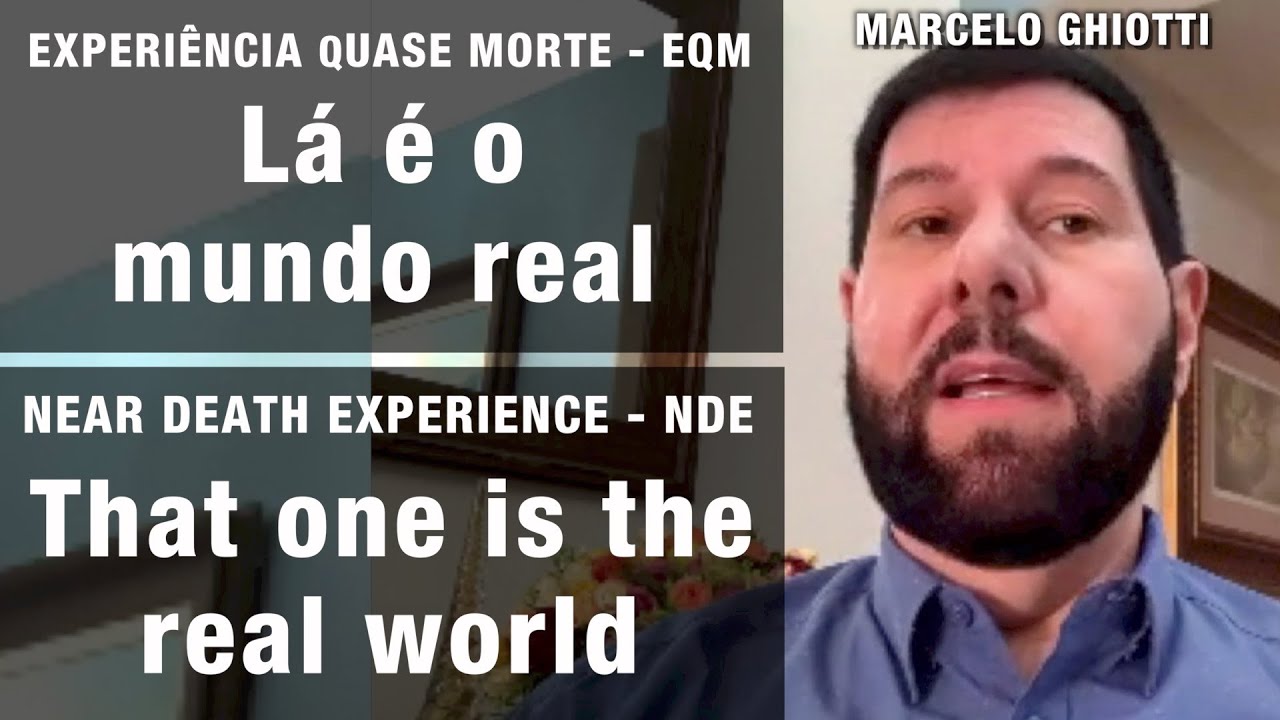
Marcelo's Near-Death Experience: 'That One Is the Real World'
A pulmonary embolism sent him to a place where pain vanished, life replayed, and death revealed itself not as an ending but as a passage home
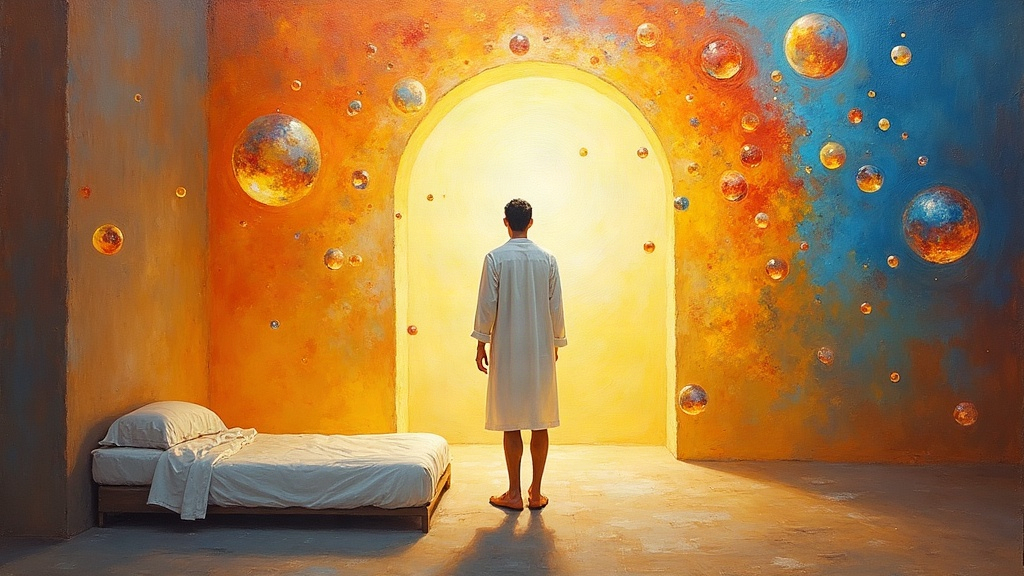
Marcelo touched his belly, then his back, searching for the surgical incision. Nothing. No bandage, no scar, no pain. The blue hospital gown had become white. The walls around him glowed with light. He stood before an empty bed in a room with no doors, and for the first time in his 35 years, a single thought crystallized with absolute clarity: I think I died. What he didn't know yet was that nine and a half minutes had passed in the hospital room behind him, where doctors fought to restart his heart. What he did know, with a certainty that would reshape the rest of his life, was that the world he'd just entered felt more real than anything he'd ever known.
The Stone That Changed Everything
Kidney stones had plagued Marcelo since he was 15. He'd dealt with them before, broken them up with lasers, managed the pain. But in March 2008, when an ultrasound revealed a 2-centimeter stone lodged in his right kidney, his doctor suggested something different. "The doctor then suggested me going through a surgical procedure," Marcelo recalls. "He told me the following, that due to the size of the stone, if I were going to break with a laser, do the lithotripsy as I had done many years before, I would need to do it in two or three sessions, due to the size of the stone. [On the other hand] the surgery is extremely simple. We remove the stone, in 2, 3 days you are fine, and you are free of that calculation at once."
Marcelo had plans that weekend. He was supposed to be a best man at a wedding. When he mentioned this to his doctor, the response was reassuring: "Be calm, the surgery is very simple, you will be medicated, on Saturday you can go to the wedding normally," the doctor told him.
The surgery took place on March 18, 2008, in the late afternoon. By the next morning, Marcelo had been moved to a regular hospital room. But something was wrong.
The Pain Before the Peace
"I was in a lot of pain, a lot of pain, on my right side, where the surgery had been done," Marcelo remembers. "I had a lot of pain in my belly too. I was feeling very heavy, a general malaise." Around 7:30 that morning, while a nurse was medicating him, he fainted. It was brief, seconds really, but it frightened him. He'd never fainted before in his life.
When his doctor visited around 9:30 a.m., Marcelo tried to express how unwell he felt. The doctor dismissed his concerns. "Marcelo, stay calm, that was because you passed out and you are impressed," the doctor said. "And the fainting usually is due to the general anesthesia you took, but your surgery was a success. We removed the stone, we recorded the surgery. I'll give you the DVD for you to watch later. Don't worry, that's because you are impressed with what happened."
The doctor removed the drain from Marcelo's kidney, had the nurse remove the catheter, and promised to return after lunch to discharge him. Marcelo asked if he was sure about the discharge. "Are you sure that I am okay to be discharged after lunch? Because I felt really bad, Edson, very bad," he would later tell his interviewer.
The doctor joked about the wedding and left.
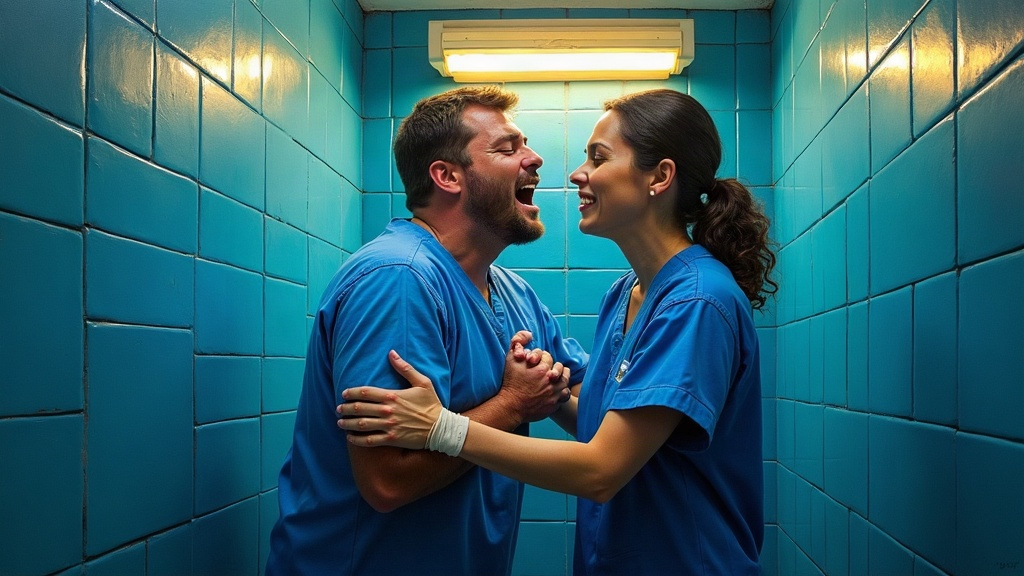
A few minutes later, Marcelo needed to use the bathroom. The nurse helped him up, steadied him as he walked. After urinating, Marcelo grabbed her arm tightly and said, "I'm dying, I'm dying," then blacked out.
At that moment, his lungs were being choked by a massive pulmonary embolism. His heart stopped. And Marcelo found himself somewhere else entirely.
The Room of Light
"At that moment, Edson, I found myself standing, apparently in what would be a room," Marcelo describes. "The walls, they were light. There was no door in this room, there was no bathroom door. They were just walls of light. And behind me, I was standing in front of my bed, but it wasn't the hospital bed, wasn't that bed I was lying on, the one where I was in the hospital room. It was a normal bed, like a bed in a normal residence. And the bed was empty."
He looked around. Touched his body. "I touched my belly, I touched my kidney, the right side where I had the surgery. I was not feeling anything anymore. I had no more pain. I was no longer feeling that malaise that I was feeling in the room," he says. His clothes had changed too. The blue hospital gown was gone, replaced by a white tunic.
"And for the first time, I thought, 'I think I died,'" Marcelo recalls. He touched his belly again, his back, searching for the surgical incision. Nothing. "I touched my back, I didn't feel the place where I had been cut to do the surgery, and I had the feeling that I really had died."
The Life Review
What happened next defies our ordinary understanding of time and memory. On Marcelo's left side, something began to form. "I realized that on my left side, below, it started to spin, something that was like a globe, you know, it was like a ball, a globe, with lots of lights, it was very colorful, and it started to rotate and started to increase in volume, started to increase in size, it got bigger," he describes.
Then this globe dissolved into several smaller globes, forming a circle that passed in front of his face. "As it passed in front of my face, I started to see my life, my life started to pass before me there. I saw myself from my birth until the moment of the embolism there in that hospital room," Marcelo says.
But this wasn't a passive viewing. "The interesting thing, it was as if each stage of my life, for example, my birth, the phase when I was a child, teenager, with my family, friends, trips, anyway, it was as if I relived all that again. It was like I was experiencing it all again," he explains.
Time itself seemed to bend. Back in the hospital, doctors would later tell him he was clinically dead for almost ten minutes. But in that place, "there it was like I had spent a lot of time, reliving my whole life," Marcelo recalls. He saw himself being born, though he has no conscious memory of his birth. He saw his childhood, moments he'd forgotten. He saw a friend named André, greeting him one Saturday morning, then the devastating news that night that André had died in a car accident at 18.
"What I felt there, when I relived each situation, I had the same feelings," Marcelo explains. "So I had feeling of joy, I had feeling of sadness, of frustration, of guilt. Those feelings, as this film of my life was passing, Carlos, I had all those feelings according to the situation."
But here's what's remarkable: when the review ended, all those emotions vanished. "When it was over, these feelings, which were actually very intense, and they were many, they disappeared completely. That feeling of tranquility and peace came back," he says. It was the same peace he'd felt when he first arrived in that room of light.
The Tunnel and the Song
After the life review ended, the globes of light disappeared. "Then I realized that in front of me, on the front wall of that room, a tunnel had opened. It had a very big hole, it was very big, it was all dark," Marcelo describes.
From somewhere beyond the darkness came music. "I heard a song, I heard a very beautiful song, very beautiful. It was a harmony that brought me a lot of peace, a lot of tranquility," he recalls. At the far end of the tunnel, he could see what looked like an open window. The music was coming from there.
The song wasn't in Portuguese or any language he recognized. "It was not sung in any known language, it was as if it was a spiritual language," Marcelo says. His first thought was that it must be a children's choir. But then, "inside me, in my heart, in my spirit, I can't say precisely where, but I know that inside me I heard a voice that spoke like this: 'They are not children singing, they are angels singing,'" he explains.
He stood there, listening to that melody, looking into the darkness. "And I, at that moment I thought, 'Well, I died, I'm dead, and now, what do I do?'" Marcelo recalls.
Then came an inner command, a voice that seemed to rise from within him: he had to cross the tunnel. He had to reach that window on the other side.
At the Border
Marcelo moved closer to the tunnel's entrance. The music continued, uninterrupted. But peering into that darkness, he felt something he hadn't felt since arriving in this place: fear.
"It was the first time, in that situation, at the NDE, that I felt scared, that I felt insecure," Marcelo admits. "Because I thought, 'If I jump, if I enter this tunnel, what if I don't get to the other side?' I thought, 'What if I fall into that darkness?'"
But the inner voice persisted. You have to cross it.
So Marcelo backed up, preparing to take a running start. "I moved away a little in order to do this, thinking of the impulse, taking a certain distance to make possible the impulse to jump. I figured like this, that if I jumped, I might get to the other side," he explains.
Then something stopped him.
"When I was doing that, I saw a hand, very big, giant, it was slowly approaching my belly, and this hand began to close. It closed, hugged me. I could see that it had a white flap, very large," Marcelo recalls. He didn't have time to look back to see who the hand belonged to.
The Return to Pain
The transition was instant. One moment, standing at the edge of a dark tunnel in a room of light, wrapped in profound peace. The next, surrounded by doctors and nurses, drowning in pain.
"I heard some screaming, 'He came back, he came back, he came back,'" Marcelo remembers. "And at that moment there in the room, I felt a lot of pain. It is as if my heart had burst. My chest was in a terrible pain, very strong, and I was agonizing for breathing."
They'd put oxygen in his nose, but he struggled to breathe. A doctor leaned over him. "Can you hear me? Can you understand?" Marcelo nodded.
"Did I have a heart attack?" he managed to ask.
"Marcelo, your lungs had a heart attack," the doctor told him. "You had a severe pulmonary embolism, very serious. Most part of your lungs are compromised. Because of the embolism you had a cardio-respiratory arrest. We were able to revive you, but your condition is still very serious, it is very critical. We are now going to take you to the ICU, but we need the contact of your family or friends."
"Will I survive?" Marcelo asked.
"Marcelo, we will do our best. Your condition is very serious. Whatever we can do, we will do, but your situation is very critical," the doctor replied.
Marcelo spent more than 30 days in the hospital. After discharge, he spent almost eight months doing lung physiotherapy twice a day, taking anticoagulants, getting blood tests two or three times a week. It was a difficult year. But he survived.
And he came back changed.
The Confirmation
Months later, Marcelo took his first trip after the embolism. He went to visit his brother in Jundiaí, near São Paulo. His friend Flávia came along because it was the first time he'd be driving since the incident.
They attended an event with a large crowd. Marcelo was there with his brother, sister-in-law, nephew, and Flávia. Then something extraordinary happened.
"Suddenly a man came from the middle of that event, of that crowd, came towards us, and he came to me and said, 'Look, I have a word for you,'" Marcelo recalls. "I was surprised, and I said, 'Okay, you can say it.' And he said, 'Look, so says the Lord. Your life was gone. You were in the Shadow of Death Valley. But I want you to know that I've been with you there all along. I manifested myself to you there as The Great I Am. I brought you back to life because I have so much to do in you and through you. So says The Great I Am.'"
Everyone there, Marcelo's brother, sister-in-law, nephew, and friend, started crying. The man turned and left without another word, disappearing back into the crowd.
Flávia, who was there, later confirmed the encounter in a separate interview. "Out of nowhere, a man showed up coming from the crowd. He came towards Marcelo, looking directly at Marcelo. He didn't even look around. He came directly looking at Marcelo," she recalls. "And when he got close to Marcelo, he looked at him and said, 'You have risen from death. And God has a very big purpose for you.' That was impressive because he didn't know what had happened to Marcelo. Just us from the family knew it."
For Marcelo, this encounter removed any lingering doubt. "That, for me, was more of a confirmation that I really didn't have a dream, that it really was a real experience," he says.
What Changed
When asked how the experience changed him, Marcelo is clear. "What changed, and that was drastic, it was very strong, it was the way I see life, or rather, actually, correcting, actually it was the way I see death," he explains.
Before the NDE, death was an abstraction. He was in his mid-30s, financially stable, with a good job and opportunities stretching before him. "I never thought, I never thought about the issue of death," he admits.
Now? "It's not that life has lost its charm or that life has lost its beauty. No, I love to live. I try to take care of myself as much as possible. I like the good things the world has to offer, which are wonderful things," Marcelo says. "But I don't have anymore that illusion. For me the real world is the one where I've been. That over there is the real world. Here, for me, it is a transition, it is a passage. Here it is an illusory world."
Death became real to him, immediate, no longer something that happens to other people or in some distant future. "If I take a trip, or I schedule a trip, just as an example, I don't have that illusion that, 'Look, I'm planning a trip, for example, for three months from now.' I'm not anymore absolutely sure that in three months I'll be traveling," he explains.
His interviewer asks him directly: did he lose his fear of death? "Correct, perfect, exactly," Marcelo responds.
But it goes deeper than that. "It's as if, inside of me, there remained a conviction after this NDE that I am a spirit in essence. I have a soul, and I occupy a body, a matter, because I need that matter for me to get around, for me to live in this world. But my essence is spiritual," he says. "Where I have been, yes, it is reality. Here, no. Here is not real."
The Quality of Peace
Throughout the interview, Marcelo keeps returning to one thing: the peace he felt in that place. When asked what convinced him it wasn't a dream, he points to this. "It was very real. That experience was very real, very different from a dream," he says. "Not to the point that I can touch myself, that I see the colors, that I feel my body, that I hear that song so clearly."
His interviewer presses him: how could a place where he didn't understand the language, where he couldn't see who was guiding him, feel more real than this world where he has a kidney scar and a stomach that sometimes aches?
"I think it's because of the feeling of peace, the feeling of fullness," Marcelo responds. "You know, it doesn't compare to any feeling here. I knew I was there, but I knew that I had just undergone surgery. I didn't know about the embolism, but I knew, I knew that a short time before I had a lot of pain in the belly, pain in the kidney. And there, suddenly, I didn't feel anything anymore. So, although I didn't understand that melody, although I didn't know that place, it's as if that place was the one where I really belonged to. As if that place was inherent to me. You know, it is an inner identification I feel. It is not a physical identification or simply rational. I think this is it. I think it is the feeling of fullness, of peace. You know, it's that feeling that you're complete."
He adds: "It was wonderful for me. It was an indescribable beauty, it was an indescribable sensation," and later, "Not even in the best moments of my life here, or on the best trips I have ever taken, I felt that feeling of peace, or that joy or that fullness. It is not the same thing."
The Dimensions of the Experience
Several aspects of Marcelo's account align with broader patterns we see across thousands of NDEs, while others offer unique details that expand our understanding.
The life review he experienced is one of the most commonly reported features of NDEs, but what makes Marcelo's account particularly valuable is his description of actually re-experiencing the emotions of each moment. This wasn't a detached viewing of his past. He felt the joy of greeting his friend André that Saturday morning, then the crushing grief of learning André had died that night. He lived through guilt, frustration, sadness, and happiness all over again. Yet when the review ended, all those emotions dissolved, replaced by the profound peace that characterized the rest of his experience.
This suggests something important about the life review: it isn't judgment imposed from outside. It's a compassionate re-experiencing that allows us to understand the full emotional weight of our choices and relationships. And crucially, that understanding doesn't come with condemnation. The peace returns.
Marcelo's description of time is also significant. He was clinically dead for approximately nine and a half minutes. Doctors warned his family that he might have brain damage from oxygen deprivation. But in that place, time worked differently. "Chronologically, it was almost ten minutes, let's say ten minutes. But there, in that experience, it was not our time. It was a very extensive time for me," Marcelo explains. "For example, just that experience of reliving my life, from my birth until that moment of the embolism, I believe that if it were in natural times it would have passed hours or days. So it is certainly not like our time. It's not."
This temporal distortion appears in NDE after NDE. Whatever consciousness is, it doesn't seem bound by the linear time we experience in physical reality.
The tunnel itself is fascinating. Unlike many experiencers who describe being drawn through the tunnel toward light, Marcelo stood at its entrance, preparing to cross, when he was pulled back. He never reached the other side. This suggests a boundary, a point of no return. The hand that pulled him back, the voice that had been guiding him, these indicate a presence, perhaps multiple presences, involved in the decision of whether someone stays or returns.
Marcelo's inability to identify this presence is common. Many experiencers describe being guided by beings they can't fully see or recognize. But they feel accompanied, welcomed, loved. "I had a sense of peace that was not just individual peace. It really wasn't," Marcelo says when asked if he felt connected to something larger. "There was something collective there, yes, for sure."
The Changed Body
One detail that deserves attention: when Marcelo touched his back in that place, searching for the surgical incision, "it was smooth, there was no scar. It was very interesting, there was no scar," he recalls. "It was another body. It was another body. There was no scar, there was no cut, there was nothing. But I could feel [this other body]."
This matches what many experiencers report: a body that feels physical, that can be touched and felt, but that isn't limited by the damage or age of the physical body. People who've been in wheelchairs find themselves walking. The elderly appear younger. Surgical wounds vanish. Whatever form consciousness takes when freed from the physical body, it seems to be a perfected or idealized version of our physical form.
Yet Marcelo could touch it, feel it, just as he could feel his physical body. "I touched, I put my hand on the kidney region, on the right side where the surgery had been done. I ran my hand to see if there was a cut or bandage. I did touch it. I felt my body there," he explains. When asked if it felt the same as touching his body now, he responds: "Exactly, like I'm feeling it now, exactly."
This suggests that whatever consciousness is, it has substance, form, sensory experience. It's not a vague, ethereal nothing. It's real, perhaps more real than the physical.
The Message That Remains
Toward the end of the interview, Marcelo is asked what message he would share with those who haven't had this kind of experience. His answer is clear.
"What remains as a reflection, which for me was like a lesson, is precisely the finitude of our time here, and that really everything here is ephemeral, you know," he says. "People, today more than ever, they care a lot about 'having.' I think the main thing in our life is 'being.' Is to be the difference in people's lives, no matter the status, the financial position. What matters, mainly, is to be the difference in people's lives. That's the biggest message that I think this experience brought to me."
Marcelo's values shifted fundamentally. Material success, financial stability, the things he'd worked for and achieved, they didn't disappear in importance, but they moved to the background. What moved to the foreground was connection, service, being present for others, living with the awareness that this physical life is temporary.
And death? "For me the real world is the one where I've been. That over there is the real world," Marcelo says with quiet conviction. Not as someone trying to convince others, but as someone reporting what he knows from direct experience.
What This Tells Us
Marcelo's account offers several insights that appear across the broader NDE literature but are articulated here with particular clarity.
First, consciousness doesn't end when the heart stops. Marcelo was clinically dead for nearly ten minutes. His brain was deprived of oxygen long enough that doctors warned of potential permanent damage. Yet during that time, he was having the most vivid, detailed, emotionally rich experience of his life. He was seeing, hearing, feeling, thinking, making decisions. His consciousness wasn't just present. It was heightened.
Second, the life review isn't punishment. It's education. Marcelo re-experienced his entire life, including moments of guilt and pain, but the overall context was one of peace and acceptance. The review ended, the difficult emotions dissolved, and the peace returned. This suggests that whatever awaits us involves understanding and compassion, not condemnation.
Third, there's a boundary. Marcelo stood at the entrance to that tunnel, preparing to cross, when he was pulled back. He never reached the window at the far end where the music originated. Many experiencers describe similar moments, being told they have to return, that it's not their time. This implies that the transition from physical to non-physical existence involves choice, guidance, perhaps negotiation. We're not alone in this process.
Fourth, the experience is more real than ordinary reality. This is what Marcelo emphasizes most strongly. Not that the experience was dreamlike or symbolic or metaphorical. It was real. The physical world, by comparison, feels like the dream, the temporary illusion. "Where I have been, yes, it is reality. Here, no. Here is not real," he says.
This inversion, this sense that we've been living in the shadow and briefly glimpsed the substance, appears in account after account. It's not that experiencers stop valuing physical life. Marcelo is clear that he loves living, that he appreciates the good things this world offers. But he no longer mistakes the temporary for the permanent, the classroom for home.
Finally, the confirmation he received months later, the stranger who approached him in a crowd and spoke of his death and return, adds an intriguing dimension. Whether you interpret this as a divine message, a psychic perception, or something else entirely, it points to the possibility that these experiences don't exist in isolation. They ripple outward, touching others, creating connections we can't fully explain but can't easily dismiss.
The Real World
In the end, what Marcelo offers us is not proof, but testimony. He can't make anyone believe what he experienced. He can only describe it as clearly and honestly as possible and let others draw their own conclusions.
But his testimony aligns with thousands of others. The peace. The life review filled with compassion rather than judgment. The sense of being guided, accompanied, loved. The tunnel or passage. The boundary. The return. The conviction that consciousness continues. The loss of fear around death. The shift in values toward connection and service.
These patterns appear too consistently, across too many cultures, ages, circumstances, and personalities to dismiss as hallucination or brain chemistry alone. Something is happening in these moments when the heart stops and consciousness should, by materialist accounts, simply cease.
Marcelo touched his belly in a room of light and found no scar. He stood before an empty bed in a place with no doors and felt more at home than he'd ever felt in his physical body. He heard angels sing in a language he couldn't understand but that spoke directly to his heart. He prepared to cross a dark tunnel toward a window of light and music, and a giant hand gently pulled him back.
Nine and a half minutes. That's how long his heart was stopped. But in that time, he lived through his entire life again, stood at the threshold of another world, and came back knowing with absolute certainty that death is not an ending but a passage home.
"For me the real world is the one where I've been," Marcelo says. "That over there is the real world."
And if he's right, if the thousands of people who've had similar experiences are right, then we're all living in the shadow of something far more beautiful, far more real, far more loving than we can imagine from this side of the boundary.
The tunnel waits. The music plays. The hand is ready to guide us when our time comes. And on the other side, peace.
Was this article helpful?