Louisa Peck's Near-Death Experience: From Atheist to Believer
A hardcore atheist overdosed in a Manhattan nightclub and met something she'd spent years trying to disprove
Louisa Peck was 22 years old, dancing at the Peppermint Lounge in Manhattan, when she snorted what she thought was cocaine. Within seconds, she felt a punch that sent her rocketing straight up through the ceiling and out over the city. She'd been an atheist her entire life, the daughter of an academic who equated freedom from the church with intellectual freedom itself. She'd written papers in college trying to disprove the existence of God. And now, as her heart stopped on a nightclub floor, she was leaving her body with a feeling she describes as enormous relief.

The Atheist's Daughter
Louisa Peck she explains. "For him Academia and freedom from the church were the same thing." It was a performance-oriented home where love came with conditions. "We didn't get love just for being us," Louisa recalls. "We had to do well, perform, make them proud."
She excelled academically and gravitated toward philosophy, where she found a new arena for proving her father's worldview correct. She remembers reading Descartes and tearing apart his ontological argument. "I just remember getting so into that paper to just like I'm going to prove he's wrong, there's no God, that's ridiculous," she says. She was drawn to modernism because she felt people were "finally waking up from the dream of this Anglican church and finally like facing the darkness, facing this indifferent cold Universe which was really all there was and no point to life."
But beneath the intellectual confidence was profound loneliness. Louisa changed schools repeatedly and by tenth grade had learned to make what she calls "camouflage friends, friends so that you're not sitting all by yourself." Senior year, she discovered alcohol. "I just started finding out where parties were and going and getting wasted and all of a sudden people liked me and I liked me better when I was drunk," she says. She describes her social life as a performance, "a very nervous actress just like what should I do now how am I acting how do I how am I coming off how's my performance and um it was such a weird way to live but it was the only thing I knew."
The Night at the Peppermint Lounge
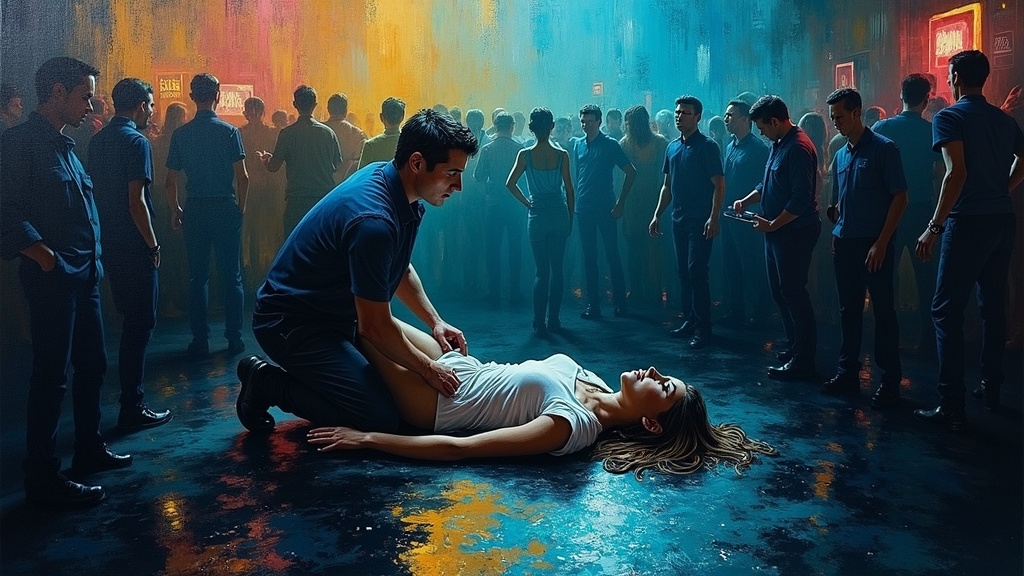
By 1982, Louisa had graduated and moved to New York City. She was living what she thought was the dream: Studio 54, the nightlife, the parties. Except she kept having panic attacks, so she stayed drunk enough to keep them at bay. One night, she called a friend who was a dealer and asked him to bring cocaine to Manhattan. They did lines at her apartment, then took a cab to the Peppermint Lounge.
"I was feeling really really good, dancing, having fun," Louisa remembers. But then they ran out of cocaine. She describes her mindset at the time: "My life I was always trying to be cool enough, feel cool enough that I would feel okay. The next party you're going to finally feel cool, no this next drink you're going to finally feel okay, no you just need this this is to of pot and that's the moment when everything is going to change for you." She felt she was "just right on the cusp of that, I was almost at the point where I would be cool and feel feel okay and now we're out of coke."
Someone pointed them to a dealer in the club, "really kind of Cy scrawny guy in a beige leisure suit." They bought a gram. Her friend, the experienced dealer, tried it first and said it was worthless. But Louisa thought maybe it was just weak cocaine. "I thought well it numbed our gums it's it's maybe it's just bad cocaine and if I do the whole pile um I'll get a little bit high," she explains. So she snorted the entire pile.
What she didn't know was that she'd just ingested pure lidocaine, a topical anesthetic sometimes used to cut cocaine but lethal in high doses. On her way to the bathroom, she started seeing "this interference of um when you're going to faint there's like these little red Speckles" and thought it was a cool side effect. By the time she was in the bathroom stall, she could barely see and couldn't catch her breath. "I really did not know I was dying," she says. "I was upset that there was no air and I was upset about this side effect but it never occurred to me that wasn't cocaine."
She found her date and told him there was no air. He took her to the bar. The bartender gave her water. She took a sip and then, "bam."
Rocketing Out of Manhattan
"I thought that I had collapsed and hit my chin on the bar cuz I SW I felt this blow but no it was like popey had punched me and I was just shooting us straight up in the air," Louisa describes. What she felt first was relief. "There was so much relief to because I was no longer oxygen star D. I don't remember breathing or anything but I had a sense of like now there's all the air I could want."
Then she realized she was leaving. "I was rocketing out from Manhattan and I had this huge sense of relief that I was leaving behind not just that nightclub and that kind of whatever bad situation had been happening there but that whole nonsense of being Louisa. I was just so done with that effort."
She found herself in "a perfect Clear Blue Sky" with the ocean beneath her. She decided to do a back dive, arching backward toward the water below. "I thought isn't it like con cuz I'm like 300 ft up isn't that like concrete when you hit it you know but I didn't have any fear I was just like we'll see," she says. She dove straight down, saw the surface from below with bubbles rising past her, and then suddenly she was at the surface.
The House of Her Ancestors
Louisa looked and saw a mesa with "this old weather worn house" on top. "I thought that house has to do with me and I got to get there," she recalls. The next moment, she was at the doorway, hovering above the threshold. "I was just a subjective point of awareness and I didn't have a body," she says.
When she crossed the threshold, "then I knew this is the house of my ancestors and they have all come this way through this house." She could feel them around her, grandparents and generations beyond, especially her grandfather who had died before she was born. "They were all really excited to meet me really happy that I was crossing over ready to greet me but I couldn't see them I could just feel them," she explains.
This was startling to her. "I didn't even hardly know who any of my ancestors were in my regular life and you know people who are interested in genealogy orever I was like who cares about that," she admits. "But here I was just honored to be following in their footsteps and with this feeling that we go through this house and I had a sense of we and it was all of the people who are connected to me."
She knew there should be an armchair facing a picture window with an ocean view, but it wasn't there. "I just had a sense of like that that's no fair where where is the chair," she remembers thinking. As soon as she wanted to see the view, "something grabbed me by the sternum, sternum that I didn't have but a sense of you know where your heart is whether you have a body or not it grabbed me by there he pulled me across the floor and and we went up to the window sill and over the window sill."
Flying Toward the Sun
Suddenly the ocean was in front of her and the sun was setting directly ahead, "making a path that comes toward me and I zoom over that path." She was flying with an overwhelming sense of forward motion that felt "delicious," she says.
But then her skeptical mind kicked in. "Wait a second, perfect ideal surroundings unbelievable Beauty fabulous sensation Am I Dreaming, people dream they're flying is is this real," she wondered. Then something answered her. "A voice answered me and it was very kind of deep and clear and powerful and it said more real than anything back there," Louisa recalls. "And I Knew by back there it meant in the Louisa business and I also had not expected anyone to answer me you wonder something you certainly don't expect an answer."
The voice's response struck her as true. "I also had to kind of think in answer to that voice that's true this is more real than anything back there," she says.
The sun grew larger as she approached. "I began to even be able to see some of the patterns on the sun and I thought uh am I going to vaporize you know I'm I'm getting so close but again with no fear," she describes. Instead of vaporizing, she passed through and "I was in the light."
Cradled in Love
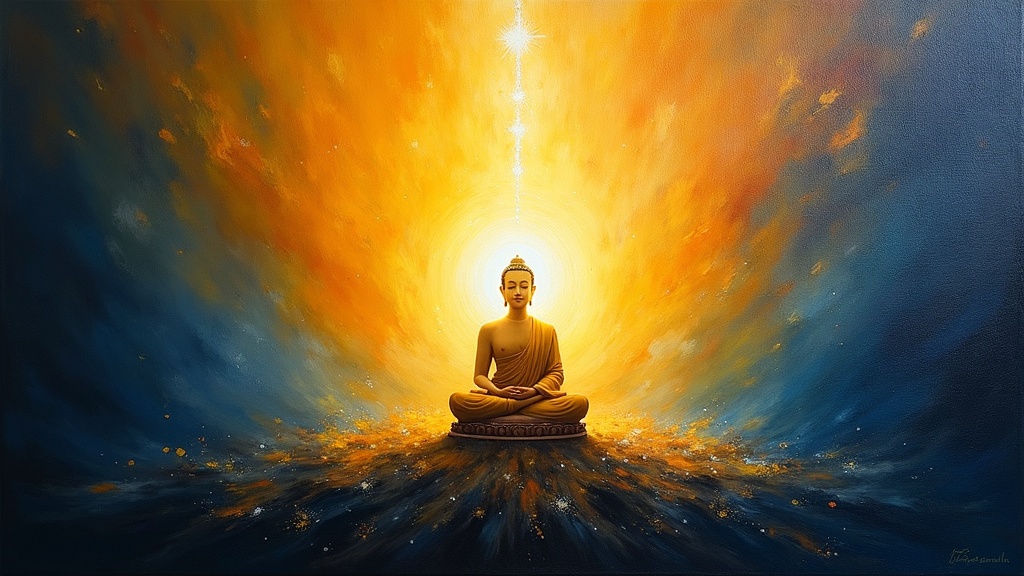
The light was everywhere. "I felt that it was so brilliant that all you could see was light but I could also feel that it was in me somehow it was light from the inside as well as from the outside warmth from the inside," Louisa says. "And then I began to understand that it was love."
"I felt this sense of finally, finally," she recalls. "Because all my life had been jump for the cookie try try try and maybe you'll get a little Crum of love you know and here I was just completely engulfed by love completely saturated with love." She became aware that she was being cradled like an infant by a being. "In my mind's eye the being was sitting on the ground sort of in the way that Buddha figures sit but holding me and just pouring you are so loved you are so loved," she describes.
What struck her most was the specificity of the love. "The thing that was most is that it was you are so loved not like here's the love show we do for everybody when they come into the light more like I know you better than you even know yourself and I adore you," she explains. "And that feeling I just I had everything I could possibly want and I just wanted to stay there forever."
The Return
But then the being spoke again. "You can't stay, you're not done," it said, and everything went to blackness. Louisa was baffled. "What do you mean I can't stay, what do you mean I'm not done," she thought. "So I screamed no with like everything in me no and I had to thought like if you remember being a little kid and thinking like I'm going to just throw the biggest tantrum and I'm going to just like show them that they can't do this that's how I felt. I wanted to kick I remember thinking I wish I could kick them in The Shins but then it just went to BL instantly so I had no recourse."
In the blackness, she felt herself dropping. "That's the first time I felt scared. I it to drop felt frightening and I didn't know how far I would was going to drop or what was going to happen," she says. She began seeing stick figures like chalk drawings, and one got closer. "Somehow his circular head filled in like a dinner plate and he's going how many fingers what is your name," she recalls. "Then I gradually realized he's talking to me and then I remembered the world."
The stick figure was the bartender. The crowd around her was real. She'd come back to life after about three minutes of cardiac arrest. "It was the hugest bummer," she says. "I remembered I am back in the meat puppet everything is manual now everything is back to this stupid memory I have of how things worked it was more like you got to be kidding I'm not going back to this song and dance no way."
She was lying in a pool of sweat. The bartender had been doing CPR the entire time. Her date later told her that she'd turned gray and looked like a corpse, that he'd actually told the bartender "she's gone just just cover her up give it up she's gone," but the bartender kept going.
When the bartender came over to talk to them outside, he said, "You know you were gone a long time we kind of thought you weren't coming back." Louisa's response, at 22 years old, was to think: "Ew he's like got to be 30 that's so gross. I'm so embarrassed so I'm just going to go like yeah hey yeah that's great that's what I did." She was smoking cigarettes, trying to be cool.
Years later, the weight of what happened hit her. "I just realized he had given me everything that I have, all the experience I've had, my son," she reflects. "I was only 22 I mean I hadn't done anything and he gave me my life back and I was too busy being cool to acknowledge what had happened."
When she realized an ambulance was coming, her only thought was that her parents would find out she'd done cocaine. She begged her date not to make her go to the hospital. "So he just grabbed my hand and we just ran to the nearest taxi right there and we jumped in and I remember him saying drive just drive," she says.
The Hallucination Hypothesis
The next morning, Louisa woke up bruised all over, her sternum sore from CPR, the back of her head lumpy from seizing on the floor. She told her roommate what happened. Her roommate asked if the parent figure holding her was God. "I knew it was but I just couldn't go there," Louisa admits.
She thought: "If this is true and if I went somewhere and that was pretty close to God filling me with love and I remember people people saying God is love and stuff like that that means the church people are right and that means I'll have to go to church." She had an image of herself "going to church holding the Bible talking with other kind of dowy goody goody girls when like Studio 54 and Columbus AV and all these things are right there and I've got my high heels and my minis skirts no I'm going this way I'm not going to turn into some good goody goody Christian girl."
"I could not undo who I was," she says. "It really had more to do with this is me this is what I believe and if I acknowledge this is real I have to start over from scratch and I'm just not going to do that."
So she told people about it as if it were "a very cool hallucination" and tried not to think about it. But "none of the memories were fading," she says. "If I thought about it I could go back to flying over the ocean and him saying more real than anything back there and I could feel it again."
She constructed a materialist explanation: maybe as her brain was starved of oxygen, it went down to one little signal at the end. "That little spark of a signal seemed really big it was just love is what's the last spark to go out in the brain and I must have experienced that so it was just a brain phenomenon and I can put this aside and go on living the way I've been living."
For years, nothing weird happened and the story remained just a story.
The Second Warning
But Louisa's alcoholism got worse. She left a teaching job, telling herself it interfered with her writing, but really "it got in the way of my drinking." She bought a log cabin in rural Washington and worked as a barista, partying with college kids even though she was 34. "I had not grown up. I had no new uh game plan for my life," she says.
One night she went to a party and got so drunk they took her keys. But she found them and drove home "completely shitfaced." She came to a place where the road narrowed over railroad tracks. "For me it was just like kind of a sea of I don't know how many reflective signs. I just thought you know I don't care what happens 80 M an hour and I just shoot for the middle and I made it through," she recalls.
When she got out of her car at home, holding herself up with the door, she looked at the starry night and thought, "Man and I am such a badass when I drive drunk." Right after that thought, "something seemed to shoot from the stars and through me and out my feet like lightning and it was an knowing and it said this is the last time I can help you and you do know right from wrong."
Even drunk, she couldn't shake it off. "It had had this intoning of Truth somewhere in my core and that resonance just wouldn't stop," she says. "So I still went drinking. I still went and I just kept hearing you do know right from wrong and that's the last time I would help you, someone's been helping me all this time which I didn't know but I sort of knew."
It took another month, but on January 29th, 1995, Louisa went to her first AA meeting. She hasn't had a drink since.
A Different Person
"I am a completely different person now than I was at the time when I had the nde which is 40 years ago," Louisa reflects. "So part of it is aging but I actually think if I had aged with no Direction I'd be a bar Haag somewhere and then a lot of it is AA because I learned a lot from listening to the old-timers and so on and just being in meetings but there's also this component of knowing, knowing not thinking that God is real."
Her understanding of God has evolved far beyond the church imagery she once rejected. "I think it's important not to segregate God as separate from anything else," she says. "God is a Nexus of intelligence and love which are actually the same thing but it's in everything so in the trees that made this chair was God. God is the energy that is everywhere."
She's clear about what doesn't work for her: "It is not useful to personify God as some dude in the sky and it is not useful to say well God's the boss and then these angels are at a low they're all the same." But she does feel she has an angel, "a conduit for God and then I can also be a conduit for God."
This has become her touchstone: "My job, my job is to leave each person I encounter a little happier than they were." She takes this seriously in her work and daily life. "I always take the time to talk to them and ask and get somehow a laughter a human moment in our work," she says. Even with strangers, "if there's a moment of seeing we're both human and I'm saying good wishes toward you I'm doing my job."
She's realistic about the difficulty of being human. "It's hard being human it's hard being incarnated in the meat puppet and burping stuff back and forth to each other and signals it's it's just difficult," she says. She believes in dark energies and that "hate ferments more hate" but also that "we do know right from wrong."
The message from that starry night, that she could have destroyed herself, applies to humanity as a whole, she believes. "We have these horrible hate makes hate conflicts going on in the world but we deeper down know that love is what we're going for," she says.
She quotes Martin Luther King: "Hate cannot drive out hate only love can do that." Our survival instincts tell us to hit back harder, "but Jesus was trying to say you know give them your coat too it's trying to say turn it around and find a way to love and that's what Gandhi and Martin Luther King and Nelson Mandela all these people who've changed the world did it by seeing no you don't hit back you love back so that the other person sees they were wrong to hit you."
What This Experience Reveals
Louisa's account is remarkable not just for what happened to her but for how long she resisted it. Here was someone with direct, personal knowledge that consciousness continues, that love is the fundamental reality, that we're known and valued beyond measure, and she spent years trying to explain it away because accepting it would mean changing everything.
That resistance is deeply human. Most of us have constructed identities, belief systems, and ways of moving through the world that feel like who we are. To acknowledge that we might be fundamentally wrong about the nature of reality feels like annihilation. Louisa chose her high heels and miniskirts and Studio 54 over what she'd experienced because she couldn't imagine being herself and also believing in God.
What changed wasn't that she had another mystical experience. It was that life itself, through her worsening alcoholism and that moment on a starry night, made the cost of denial higher than the cost of acceptance. The voice that said "this is the last time I can help you" wasn't threatening her. It was telling her the truth: free will means you can destroy yourself if you choose. You do know right from wrong.
The detail about her ancestors is one of the most commonly reported features of near-death experiences. People describe being met by deceased relatives, often by those they never knew in life. Louisa had no interest in genealogy, dismissed it as irrelevant, and yet in that house she felt honored to be following in their footsteps. She felt the presence of her grandfather who died before she was born. This suggests something beyond brain chemistry: a connection to people and a lineage that exists independent of our earthly knowledge or interest.
The voice that answered her skeptical question is another recurring element. Experiencers often describe a moment of doubt, a wondering if this is real or just a dream, and receiving an immediate, authoritative response. "More real than anything back there" is a phrase that appears in account after account, in various forms. People return from these experiences with an unshakeable conviction that what they encountered was more real, more true, more fundamental than physical reality. No amount of materialist explanation can dislodge that knowing.
And the love. The being who cradled Louisa didn't offer generic love or impersonal benevolence. It was specific: I know you better than you know yourself, and I adore you. This is what people mean when they say the love in a near-death experience is unlike anything here. It's not conditional. It's not earned. It's not a reward for good behavior. It's the ground of being itself, and it knows you completely.
Louisa's story also illustrates something we see again and again: the experience doesn't force transformation. She came back and had to choose, over and over, whether to honor what she knew or to keep living as if it hadn't happened. It took 13 more years and a second intervention before she was ready. This is grace, not coercion. We're given what we need, and then we're free.
What strikes me most is where she ended up. Not in a church holding a Bible, which was her fear, but in AA meetings, in one-on-one work with people, in small moments of human connection where she tries to leave each person a little happier. She found a way to be herself and also believe in God. The two weren't incompatible after all. She just had to expand her understanding of what God is: not a dude in the sky, not a church hierarchy, but the energy in everything, the intelligence and love that we can all be conduits for.
That's the invitation of every near-death experience, whether we have one ourselves or hear about someone else's. We don't have to wait until we die to live as if love is real, as if we're eternal, as if this brief time in the meat puppet is school and love is the curriculum. Louisa spent 13 years trying to prove it was a hallucination, and then another 29 years (and counting) living as if it was real. The second half of that story is the more interesting one.
For more of Louisa's reflections on her experience, see her talks with IANDS and The Other Side NDE, where she goes deeper into how her understanding has evolved and what she's learned about the nature of consciousness and love.
Was this article helpful?