Lorna Byrne Died Giving Birth, Held Her Baby in Heaven
A mother's journey through the spiral staircase of light, and the angel who asked her to return
Lorna Byrne experienced a profound spiritual journey when her baby died at birth. She described ascending a spiral staircase lined with angels, feeling only peace and love as she cradled her baby’s soul. This moment marked a significant turning point in her life, intertwining her experiences with death and the divine.
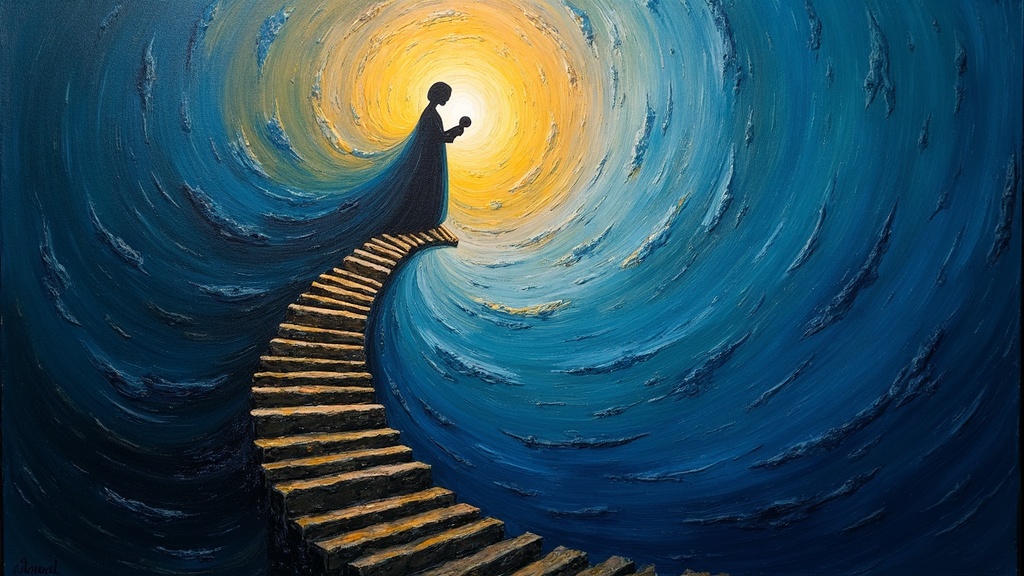
The spiral staircase doesn't announce itself. It simply is, and when you enter it, you understand immediately that you're traveling toward something ancient and true. Lorna Byrne.
She wasn't afraid. There was no pain, no anxiety, only peace and a calmness so complete it seemed to erase every worry she'd ever carried. The staircase was lined with angels, their light forming the very walls of the passage. Other souls traveled alongside her, each on their own journey. "I can only say there is such peace and calmness, you know, there's such love. There's no fear or no anxiety in any way," she recalls.
This wasn't Lorna's first encounter with death. But it was the one that would mark her most deeply, the one she would carry forward as both wound and gift.
A Life Shaped by Angels
Before this moment, before the birth and the death and the impossible choice, Lorna had already lived a life that defied ordinary categories. She was severely dyslexic, considered intellectually disabled as a child. "I was considered retarded. I wasn't educated humanly, but I was educated by God and the angels," she says. What the world saw as limitation, she experienced as a different kind of education entirely.
From childhood, she saw angels. Not as metaphors or comforting thoughts, but as presences as real as the people around her, sometimes more real. They taught her to love unconditionally, to see past the surface of human behavior to the soul beneath. When other children said hurtful things, the angels would whisper to her, "Lorna, they know no better," and over time, those words shaped her into someone who could love without condition, who could reach out to anyone, no matter what the rest of the world thought of them.
She learned early to keep quiet about what she saw. Her parents already thought she was different. If she'd told them about the angels standing beside them, she would have been institutionalized. So she watched and learned and waited, the angels her constant companions, preparing her for something she couldn't yet name.
The Birth That Became a Death
The angels had warned her. They told her God was going to take her baby home to heaven at birth, that the birth would come early. She carried this knowledge through her pregnancy, a terrible knowing that no mother should have to bear. And when the day came, when her baby boy was born and died, "I died that that day, because I went with my baby," she says simply.
She didn't decide to follow him. It simply happened. One moment she was in her body, in the physical world of hospitals and grief. The next, she was moving through the spiral staircase, her baby in her arms, his soul radiant and whole. "It was like I was where I was meant to be, and it was just so full of light and love," she remembers.
The staircase is always lined with angels, she explains, their light forming the passage itself. It's not a tunnel in the sense of darkness with light at the end. It's a structure of pure light, spiraling upward, and as you move through it, you understand that death isn't an ending but a returning. You're going home.
Her baby was perfect. His eyes were bright, his smile complete. He was "so perfect and so beautiful and so full of light," she says. In that place, there was no sense of tragedy, no feeling of loss. There was only love, only the rightness of being together in this realm of light.
And then the angel appeared.
The Angel Who Said No
The angel was unlike anything in our world. Lorna struggles to describe the color, settling on "Snow White, because it's not a white like our white that we have. It's a white that's whiter than snow, whiter than anything else, but it's full of light. It's full of life,". The angel stood before her, blocking her path, and delivered the message she didn't want to hear.
She couldn't go any further. She shouldn't have come with her baby. She wasn't meant to. She had to go back.
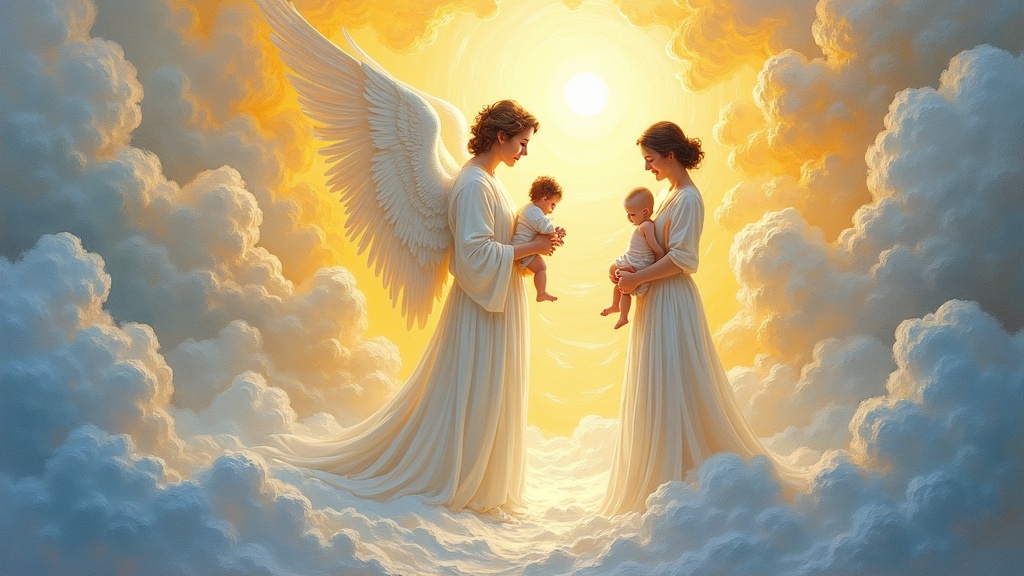
"I didn't want to go back, but yes, I knew I would have to," Lorna says. Time didn't work the way it does here. Everything seemed to happen at once: the angel speaking, her understanding, her resistance, her acceptance. The angel reached out her arms, and "she taking my baby ever so gently," Lorna recalls. The transfer was tender, careful, full of love.
And then she had to go back. Back through the spiral staircase, back to the world of pain and grief and a body that had just given birth to a baby who would never come home. Back to a life that would never be the same.
The Playground in Heaven
This wasn't Lorna's first time dying. Years earlier, when she was between twelve and fourteen, she had her appendix removed. The surgery went wrong. Her heart stopped. The doctors told her parents they had struggled to bring her back, that she had died on the operating table.
Lorna remembers it differently. She remembers being conscious even after they put her under, watching the surgery proceed. And then, "I just decided to leave," she says. Her guardian angel gently caught her, and she announced she was going to check on her parents. The angel told her they weren't there, in the hospital. She was somewhere else entirely.
She went to heaven. Specifically, she went to a playground, and not just any playground. "It literally had everything in it that you could possibly think of, and millions more," she describes. The playground existed among colors, through colors, colors that don't exist in our spectrum. She saw a swing to her left, and "the swing would turn to a particular color itself, sometimes purple, the colors I loved, mostly,".
She sat on the swing and discovered it could go as high as she wanted, could swing completely around. "It was like as if I was going around the world,". She didn't want to leave. Why would she? She was in a place of pure joy, pure possibility, where the rules of physics bent to accommodate delight.
But her guardian angel took her hand and told her she would have to go back soon. "Can you hear them calling you luck over there," the angel said. Lorna looked and could see the operating theater, could see the doctors and nurses working frantically over a child whose heart had stopped. She could see their panic, their determination.
"But can I not stay here? I'm happier here," she pleaded. The angel was gentle but firm. They moved closer to the theater, and finally, Lorna heard the voice of God itself: "No, Lorna, you've got to go back. You've got to go home,".
She protested: "I'm home," she said. But she came back anyway. She woke up in her hospital bed, her mother beside her, and closed her eyes again, adjusting once more to the weight of a body, the limitations of physical existence.
The Message She Carries
"Each time I'm sent back. And I have my full faculties, and I guess it's to give a message to the world," Lorna says. The message is simple but profound: you are loved. You have a soul. There's more to life than what you can see and touch.
"Life is incredible, no matter what you think you're alive, so you're meant to be feeling the life and you have the soul and this beautiful guardian angel that is helping you through life," she explains. She speaks of the intertwining of body and soul, how they come together in a flash, how this union is part of our evolution, another step in our journey.
She's met countless people who publicly claim not to believe in anything beyond this life, who say that when you die, you just decay and that's it. But privately, away from cameras and audiences, they confess to her that they believe everything. "Their boss told them, whoever was in charge, they were to be really negative in that way. And then they come running out after me when I leave and say, by the way, I believe everything," she recounts.
We all want to believe there's more, she says. Even those who claim otherwise are hoping, deep down, that this isn't all there is. And she can tell us with certainty: there is more. So much more.
Angels, Everywhere
Lorna's relationship with angels is intimate and ongoing. They're not distant, ethereal beings. They're present, active, engaged. Your guardian angel, she says, "loves you unconditionally. Doesn't matter what you do, it just won't give up on you whatsoever,".
She also speaks of unemployed angels, a term she coined as a child when she first saw them. She was told to look up at the sky and saw "like balls of light, tumbling down, just tumbling down, and so bright,". As they reached Earth, they unfolded into full angelic form.
These unemployed angels are waiting to help, she explains. They're dying to give you a hand with anything, from fixing a plant to solving a problem. Since she started talking about them, people around the world have been sending them to anyone they think needs help. "It doesn't matter what their faith is," she emphasizes.
Angels, in Lorna's experience, are neither male nor female. They can appear as either or both. They wear clothing, sometimes casual like ours, sometimes in styles so beautiful she wishes she could draw them for fashion designers. Their eyes are gentle. She's never seen an angel angry or complaining. They simply love, constantly and completely.
God taught her through angels, she says, because angels are more acceptable to most people than God itself. "Angels in the world are considered, would you say, friendly most of the time, and they're more acceptable than God itself, then the Creator itself," she notes. It was a wise strategy. Had she spoken directly about God as a child, she would have been institutionalized. But angels, angels were safe enough to eventually share.
What This Tells Us
Lorna Byrne's experiences, particularly her death during childbirth, offer us something rare and precious: a detailed account of what happens when a mother follows her child through death, and what it means to be called back.
The detail about the spiral staircase is significant. While many experiencers describe a tunnel, Lorna's description of a spiraling structure lined with angels matches accounts from other cultures and time periods. The spiral appears in mystical traditions worldwide as a symbol of spiritual ascent, of returning to source. That she experienced it as an actual structure, not a metaphor, suggests that the architecture of the afterlife may be more literal than we imagine.
Her description of holding her baby in soul form, of seeing him perfect and radiant, speaks to one of the most profound questions parents who've lost children carry: are they okay? Lorna's answer is unequivocal. Her baby was more than okay. He was complete, joyful, full of light. The tragedy, if there is one, isn't in his death but in her having to leave him behind.
The fact that she was told she shouldn't have followed him is also significant. It suggests there are rules, boundaries, proper times for crossing over. She went with him out of love, but it wasn't her time. The angel who stopped her wasn't cruel or harsh. The angel was gentle, loving, but firm. There's a plan, an order, and Lorna still had work to do here.
Her earlier experience during the appendectomy, particularly the playground in heaven, reveals something beautiful about the nature of the afterlife. It's not static. It's not boring. There's play, joy, discovery, colors we can't imagine, experiences that transcend our physical limitations. The swing that could go around the world, the colors that shifted and changed, the sense of infinite possibility, all of this suggests that heaven isn't rest from life but life fully realized, life without the constraints of matter and time.
And her message, delivered again and again, is one we need to hear: you are loved. You have a soul. This life is precious, but it's not all there is. When your body dies, "there is, there's no pain. There is just love," as she says in her key insight.
Lorna came back with full faculties not for herself but for us, to tell us what she's seen, to assure us that the people we've lost are safe, that we're never alone, that love is the foundation of everything. She's lived a life that the world called limited, but she's seen more than most of us will ever see. And she's spent that life trying to share it, trying to help us understand that we're not just human beings. We're spiritual beings having a human experience, and the spiritual part is eternal.
That's not wishful thinking. That's not religious dogma. That's the testimony of someone who's been there, who held her baby in the light, who played on swings in heaven, who heard the voice of God. And she came back to tell us: live life. Enjoy it. Love everyone. And know that when this part is over, you're going home.