Laura Ketchledge Died Horseback Riding: Her Life Review Changed Everything
A young woman's fatal riding accident revealed the truth about kindness, and why every small act matters more than we know
Laura Ketchledge never hit the ground. One moment she was flying off her galloping horse at high speed, face first toward the rocks. The next, she was in a pitch-black tunnel with velvet walls, completely removed from her body. She was 22 years old, living her first independent life in Northern Virginia, working at a nightclub, driving a paid-off Chevy Vega. She thought she was cool and progressive. She had no idea she was about to die, or that what happened next would strip away everything she thought mattered and replace it with a single, searing truth: how you treat people is the only thing that counts.
It was April 1979, and Laura Ketchledge was feeling good about her life. She'd just gotten her first apartment. She was working, independent, riding horses again after a few months away from it. She describes the day as innocent, a beautiful spring afternoon in Centerville, Virginia, where she used to take riding lessons. She hired a horse for a couple of hours and set out into the fields.
She was a good rider, not a great one, and a little out of shape. The horse took off faster than she expected, moving from a canter into what she calls "a really really fast hand gallop." The terrain got rough. She knew she was losing control but thought she could handle it. Then the horse stumbled.
"I remember feeling this like Dread," Laura says, "oh God this horrible rolling fear came through me as my horse stumbled and I knew I was gonna go flying."
She was wearing a helmet. As she was flung off the horse at high speed, something extraordinary happened. She never felt the impact. Instead, she went into "this velvet Limitless tunnel the walls were soft and it was completely pitch black."
She had left her body before hitting the ground. What she didn't know yet was that she'd been thrown face first into rocks, into a ditch. She'd been killed.

The Shock of Being Dead
The transition was so abrupt that Laura describes it as the biggest shock of her life up to that point. One minute, cantering down a meadow on a gorgeous April day. The next, dead. Gone from physical reality entirely.
Unlike many experiencers who report immediate peace or joy upon entering the tunnel, Laura's passage was marked by terror and grief. She felt "fear isolation dread shock grief grief that I just lost everything that was the most precious to me my identity."
She thinks the violence of the transition, the fact that it was an accident, made it different. There was no gentle fading, no preparation. Just a sudden, total severance from everything she knew.
And yet, even in that pitch-black tunnel, she noticed something remarkable. The walls were velvet but dense. She felt no physical pain, though she had the sensation of still having a body. She didn't have the courage to check if her limbs were still there. Time, she realized, had become irrelevant. "You are just there at the present," she explains.
Then her grandfather appeared.
The Man Who Died When She Was Twelve
Laura's grandfather had died of cancer when she was 12 years old. It was traumatic. She loved him dearly. He was, in her words, the most precious person in the world to her.
Now he was standing in front of her, looking exactly as she remembered him from childhood. Not young, but the older man she'd known and lost. He was there to comfort her, to be her guide.
"Seeing the person you loved and lost and hadn't seen in years," Laura says, "to know they still existed to know that the love that they felt the day they died was just as strong years later when he was Finding Me."
That reunion, the recognition that love persists unchanged across death, was intensely emotional. But what came next was harder.
The Life Review That Changed Everything
Laura's life review was not a judgment handed down by some external authority. It was something far more intimate and far more devastating. She describes it this way: "it's not a judgment the you're your own critic you re-experience things that you've done to other people let's say there's a situation and and you were hurt or rude to somebody you're going to feel their hurt feelings or you're going to feel their Joy when you've done something nice."
Every action, from childhood to the moment of death, mattered. Every casual cruelty, every moment of impatience, every time she took her bad mood out on someone else, she now experienced from the other person's perspective. She felt their pain.
And the small kindnesses? Those mattered just as much. She saw a girl she'd befriended at school who was being bullied. Laura had protected her from the bullies. She saw how important that was. She saw a lost cat she'd returned to a little girl. "Small things like that aren't small," she says, "they're huge they're enormous they're ginormous."
The life review happened all at once, yet each scene had depth. It's nearly impossible to describe in linear time because it doesn't work that way. Laura admits, "I can't really explain it you have to have it to understand it."
For her, the review was sad, stressful, upsetting. She felt anguish because she hadn't finished her life. She never got a chance to do it right. But the core lesson was unmistakable: "The worst thing you can do," she learned, "is screw up somebody's Destiny hurt some innocent person affect their life in a negative way that's the worst you can do the best you can do is don't do damage to others."
Her entire moral framework shifted in that moment. The things she thought mattered in 1979, the cool apartment, the nightclub job, the independence, all of it fell away. What remained was a single imperative: be kind. Don't damage people. Love matters. Everything else is noise.
A Thought-Responsive Reality
After the life review, Laura found herself in what she describes as a thought-responsive dimension. She says "non-physical reality is so thought responsive that you can't believe it there's you can change your just by thinking change your whole what's around you."
She thought about the tree of life, and instantly a beautiful tree appeared. It wasn't the biblical Tree of Life, she knew that, but it was striking. The implication was clear: in non-physical reality, you have to control what you're thinking. Your thoughts shape your environment.
She also learned that physical reality and non-physical reality occupy the same space, just in different dimensions. "You've got physical reality," she explains, "but in the same space in a different dimension there is non-physical reality that is very cool."
Her grandfather was still with her, trying to soothe her, trying to make her feel better. She could sense other people behind him, but they were on a different frequency. She couldn't perceive them clearly. Only her grandfather was fully present to her.
But she still wasn't ready to accept that her life was over. She was grounded in physical reality, full of hope for the future she thought she still had. And then something extraordinary happened.
The Sea of Souls
Laura was taken to what she calls Source. Many people, she notes, mistake it for heaven. But she doesn't think it's heaven. She thinks there's something way beyond it.
She describes it as bursting "into this area that was filled with Souls that I was floating in a Sea of Love that there was a sky and there was Sun but no actual Sun there was brightness and music floated through like in random waves of Music Beautiful classical soothing music."
The sea of souls she was floating in were parts of her. Different personalities, different incarnations, all connected to her. She'd never been a big believer in reincarnation before this, but now she was experiencing it directly. "I was with different personalities that were part of me," she says, "that was a tough one for me to wrap my head around."
She didn't stay long. Just a glimpse through a door or window. A feeling of intense joy and love. And then she was catapulted back to another dimension, closer to physical reality. This one was mauve in appearance, very light and airy. There was ground but no floor. Her grandfather was standing there.
No one told her she had to go back. It was simply time. She didn't have a choice.

The Stripping Away
As Laura prepared to return, she felt something being taken from her. Lessons, explanations, experiences, all being stripped away. She told her grandfather, "this has been so long," knowing there was far more that had happened than she would be allowed to remember.
She felt the memories being pulled out of her, and it made her feel sad and grief-stricken. "I wanted to you know claw them back in and push them back in," she says, "and they were being taken away from me perhaps because it was too much for me to comprehend."
There were epiphanies, interactions, a much longer experience than she can recount. She was only allowed to keep what she could handle. Her grandfather felt empathetic, but he didn't want her there. He wanted her to come back and finish her life.
And she believes he wanted her to come back with a message for his wife, Laura's grandmother. He still loved her. Laura was to be his messenger.
The heartbreak of leaving was overwhelming. "There just wouldn't be enough tears in an ocean," Laura says, "that I can tell you how bad I felt about coming back."
Then, like a swoosh, her body went backwards through the tunnel. Boom. She was back in physical reality.
The Brutal Return
When Laura opened her eyes, she was in the field, surrounded by people. Two men had resuscitated her. There was a car waiting to take her to the hospital. She was in severe pain, badly injured.
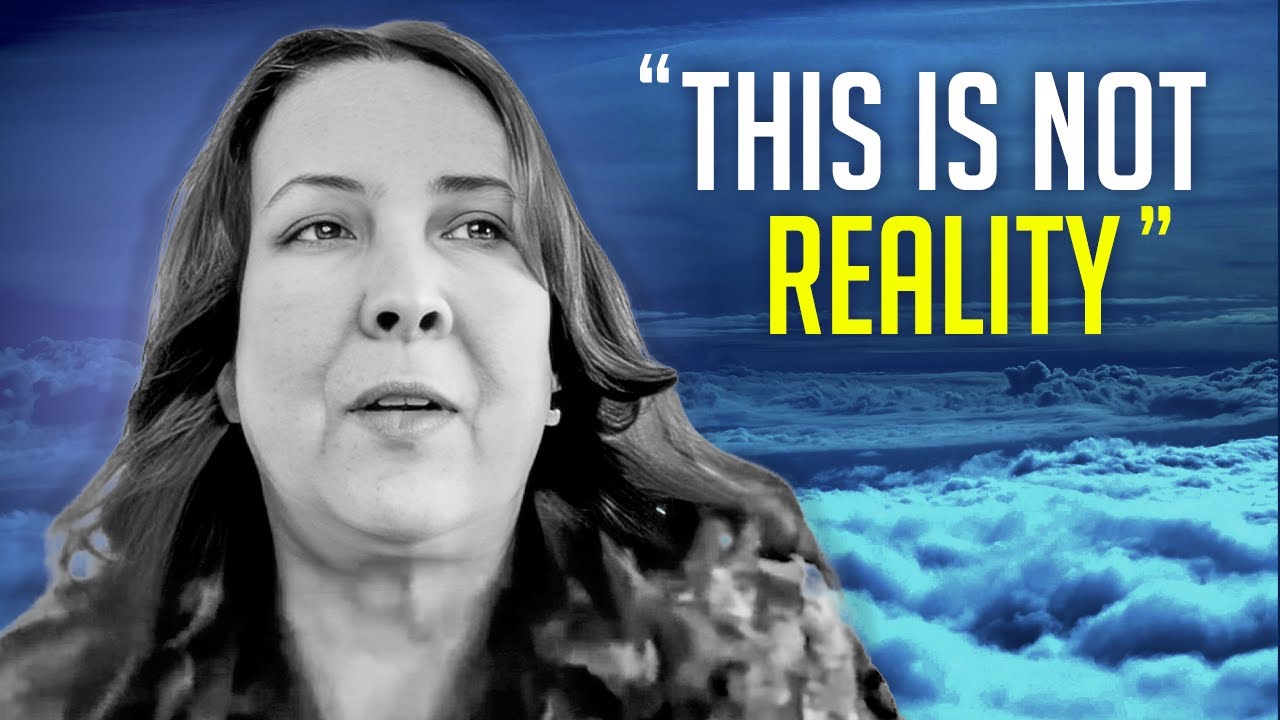
But what struck her most was this: "I looked at these guys and I looked around the field and I was hurting I was really hurt bad and I just said to myself this is not reality," she recalls. She knew where she'd been. That was the true home. This physical world was just a tour, a temporary stop.
On the way to the hospital, she passed out. Not another NDE, just a faint from the pain. She had a massive concussion, a broken nose (still broken to this day), a broken finger (still crooked), and bruises covering her entire body.
At the hospital, she tried to tell the doctor what had happened. She wanted to explain the tunnel, her grandfather, the life review. The doctor's response was swift and cruel. He folded his arms and said, "what drugs have you taken."
Laura insisted she hadn't taken any drugs. She'd had an accident. This was what happened during the accident. The doctor was disgusted, dismissive. Her mother had to intervene, insisting that Laura would be the first to admit drug use if that were the case. She had a severe head injury and needed to be admitted.
The doctor said awful things, Laura recalls, things about "kids these days." The shame was profound. After he left, Laura made a decision. She couldn't tell anybody. They'd think she was nuts. They'd think she was on drugs. This had to be her secret.
She also remembered the blonde woman who had told her she was going to have a very hard life. That prophecy came true. Shortly after the accident, Laura was diagnosed with an autoimmune disease and faced many more life-and-death struggles.
The Gift She Brought Back
But Laura also came back with something else: psychic abilities. She could see recently departed people, relatives who had just died. She learned that her great-grandmother had the same gift. People came to her great-grandmother for healing. She could put her hand on someone who was ailing and help them. She once saved her own child from a fatal bee sting.
The gift had skipped a generation, passing from Laura's great-grandmother to Laura herself. Her grandmother told her, "my mother had the gift I think it's passed through you I think it passed through my son I don't have it."
Laura did tell her grandmother about seeing her grandfather. Her grandmother believed her. And years later, when Laura's own parents were dying, she was able to give them comfort and knowledge of the afterlife before they passed. She was able to be with them as they died and take care of them.
"I was able to give my dying parents comfort and knowledge of the afterlife before they died," Laura says, "and I was able to be with them as they died and take care of them."
That gift, that ability to ease the fear of death for the people she loved most, came directly from her accident. From being thrown off a horse into the rocks. From dying and coming back.
What Laura Wants You to Know
Laura's values shifted completely after the NDE. The life review taught her that kindness isn't optional. It's the point. She says simply, "if you haven't LED such a ideal life try to be nicer try not to damage anybody that's what I say that's what I believe."
Your purpose in this physical reality, she learned, is to live the best life you can, to help people, to be a good person, to love. "We're brought here on this Earth," she explains, "to experience and to learn and to love and to try to be a nicer person I don't always get there but that's what I got from my near-death experience."
She's glad she had the fall. She's glad someone resuscitated her. The accident, she says, was "the greatest gift I've ever been given."
Her fear of death is gone. She knows love extends into the next life. She knows she'll be reunited with the people she's lost. And she knows that the small acts of kindness, the moments we think don't matter, are actually enormous.
Our Reflection
Laura Ketchledge's account is one of the most emotionally raw and instructive NDEs we've encountered. What makes it remarkable isn't just the classic elements (the tunnel, the deceased relative, the life review), but the brutal honesty with which she describes the experience's emotional impact.
Most experiencers report peace and bliss from the moment they enter the tunnel. Laura didn't. She felt terror, isolation, grief. The abruptness of the accident, the sudden severance from everything she knew, left her reeling. This suggests that the mode of death can shape the initial phase of the NDE, even if the ultimate destination is the same.
But it's the life review that carries the real weight of her story. The idea that we experience our actions from the perspective of those we've affected is one of the most consistent and morally significant features of NDEs. It's not judgment from an external God. It's something more intimate and more devastating: we become our own judges, feeling firsthand the consequences of our choices.
Laura's insight that small kindnesses are "ginormous" aligns with thousands of other accounts. Returning a lost cat to a child. Befriending someone being bullied. These aren't trivial acts. In the life review, they shine. They matter as much as, or more than, the big dramatic gestures we tend to valorize.
The stripping away of memories as she returned is also significant. Many experiencers report this, the sense that they learned far more than they were allowed to bring back. It's as if we're given a glimpse of the larger reality, but only permitted to retain what we can integrate into this physical life. The rest is held in reserve, perhaps to be remembered when we return for good.
Laura's description of Source, the sea of souls that were all parts of her, offers a profound vision of reincarnation and the nature of identity. We are not single, isolated selves. We are facets of something larger, connected across lifetimes, learning and growing through multiple incarnations. This isn't a fringe belief. It's what she experienced directly.
And the aftermath, the psychic abilities, the capacity to see the recently departed, these are common after-effects of NDEs. The experience seems to open a door that doesn't fully close. Laura came back changed not just in her values, but in her very perceptual capacities. She could now perceive dimensions of reality that had been invisible to her before.
What Laura's story tells us, ultimately, is this: love is real, it persists, and how we treat each other is the only thing that truly matters. The rest, the careers, the possessions, the status, it all falls away. What remains is whether we were kind, whether we helped, whether we loved. That's the curriculum. That's the lesson. And we'll all face our own life review one day, feeling the full weight of our choices. Laura came back to tell us we still have time to get it right.
Was this article helpful?