Jose Hernandez: The Atheist Engineer Who Met His Father in Heaven
A lifetime of pain transformed in a single moment beyond death
The shadow moved around the emergency room, weaving between the doctors and nurses who were fighting to save his life. Jose Hernandez watched it from somewhere between consciousness and oblivion, his broken ribs making every breath a battle he was losing. He'd grown up in the South Bronx, where men didn't ask for help, where toughness was the currency that bought respect. But now, suffocating in a hospital bed, he'd finally admitted something he'd never said before: it was okay to die. The shadow reached out and touched his toe. Everything changed.
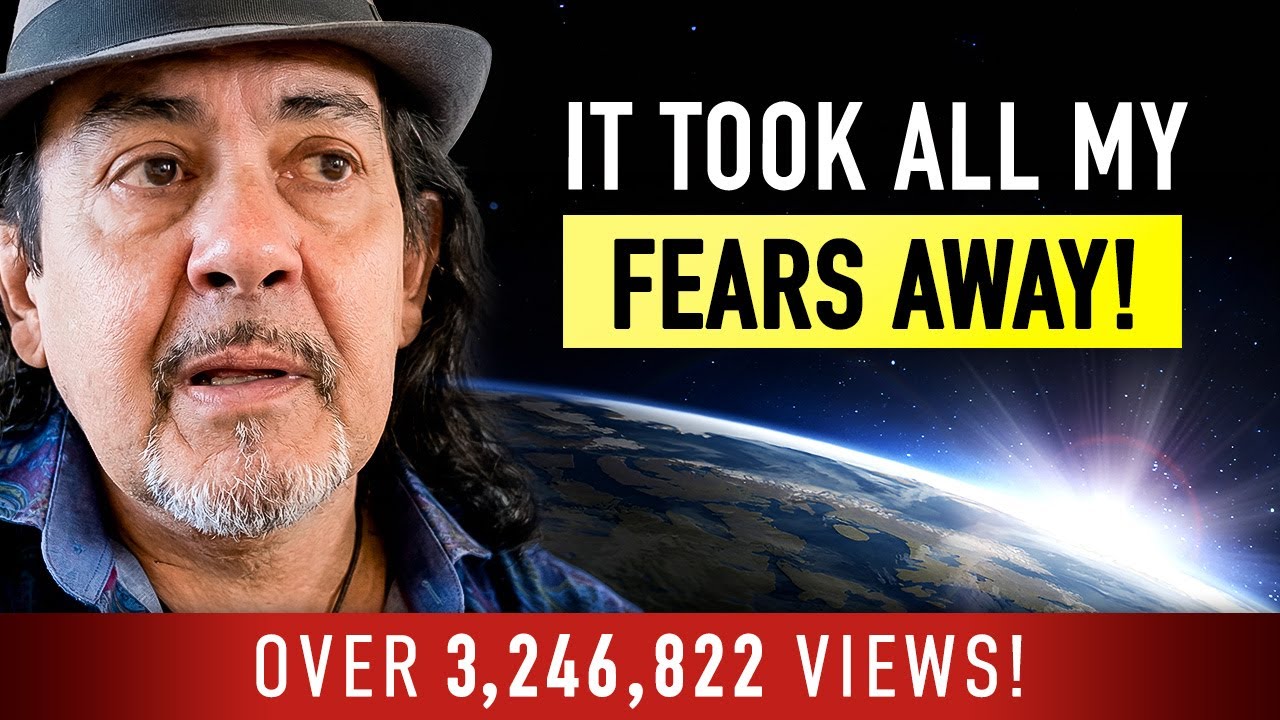
Jose Hernandez was an engineer, a problem-solver, a man who believed in what he could measure and calculate. He was a true atheist, as he puts it, someone who thought spirituality was "foo-foo." Religion didn't compute. The afterlife was a fairy tale. When you died, you simply ceased to exist, like a light bulb switched off. That's what made sense to him.
Then he died.
The Accident That Changed Everything
It started with a bucket truck and a schedule running behind. Jose was up on the platform, running electrical lines, when he and his partner made a decision that would alter the trajectory of his life. They were in a hurry. Instead of coming down and repositioning the truck properly, they decided Jose would stay up top while his partner navigated around the trees.
The guy driving was more worried about electrocuting Jose with the power lines above than the trees around them. He was looking up, being careful, when he bumped into a tree. The impact threw Jose against the bucket. He broke all his ribs on his right side.
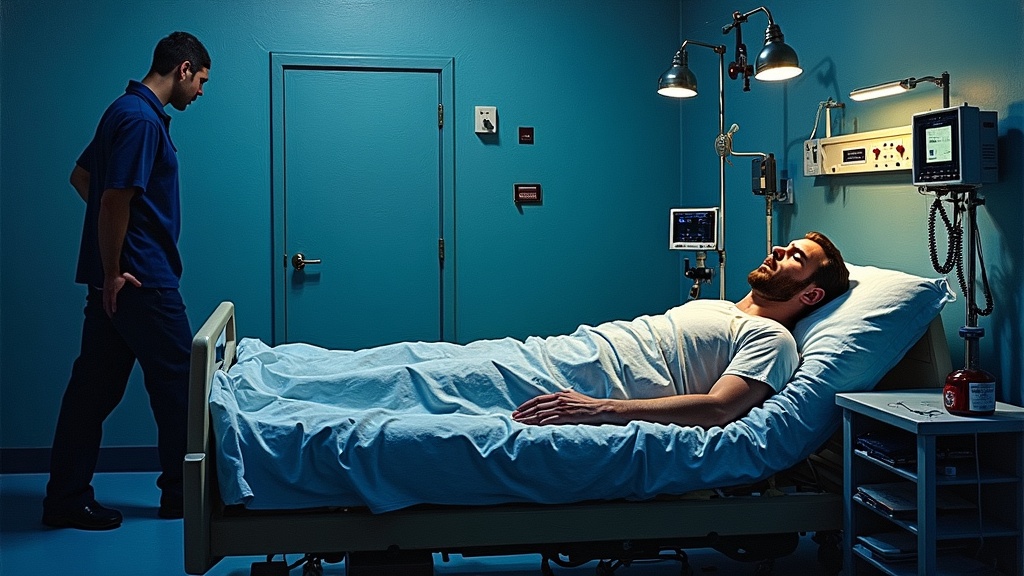
The emergency room should have been routine. Broken ribs heal. But there were complications, the ribs weren't healing properly, and Jose found himself sitting on a hospital bed, struggling to breathe. A nurse had given him a call button. "If you need anything, push this," she'd said.
He sat there for 45 minutes, fighting for air, thinking about pushing that button. But he'd been raised in the South Bronx, where men were supposed to be tough, where asking for help was weakness. "I could manage this. I could get through this. I always do," he told himself.
When he finally pressed the button, the nurse walked in, looked at him, and immediately hit the code blue. That was the beginning.
The Cascade of Dying
Jose's death was slow, a suffocation that gave him time to feel everything. When the medical team rushed into his room, his first emotion wasn't fear. It was shame. They stripped him down so quickly that he just felt shame, exposed and vulnerable in front of strangers.
Then came the bargaining. "What if something's really happening here? What's going to happen to my family?" He'd never prepared for this. His family had no plan. The thought created a tremendous lump in his chest, or maybe that was just his lungs collapsing.
He started thinking about God. "You know what, if you get me through this event, I will change. I'll change my way of being, I'll be a better person. You won't regret it." He waited. Nothing happened.
Then he felt anger. "I knew he wasn't real," Jose thought. The atheist in him had been right all along.
But anger gave way to something worse: pure, existential terror. He was afraid that when he died, there would be nowhere for him to go. No heaven, no hell, no consciousness. Just nothing. He would be "shut off like a light bulb, and just turn into nothingness."
He wanted so badly to ask someone to hold his hand, but even in his final moments, the voice of his father echoed in his head. "I can't ask for help because my father would be ashamed of me." He had to be tough. He stiffened. He waited for death.
Then his senses began to shift. The IV drip sounded like raindrops hitting a tin roof. He looked at the wallpaper and could see the grain in it with impossible clarity. There was wonder happening inside him, even as terror consumed him.
He noticed a shadow by the door. It just stood there, waiting.
Something shifted in Jose's mind. He'd had such a hard and difficult life. Maybe it was okay to let go. Maybe there was no shame in this. He wasn't quitting. He wasn't giving up. He was simply recognizing that he couldn't stop what was happening.
"It's okay," he thought. "It's okay to die."
The Touch That Changed Everything
The minute he accepted death, the shadow moved. It moved around everyone in that room, and in his mind he could see its hand reaching out, touching his toe.
The relief was instantaneous. Peace. Love. Calm. He wasn't struggling to breathe anymore. He was in bliss, and he felt a warm breeze blowing. He visualized his long hair moving in that breeze and thought, "This is amazing."
Then he felt himself being lifted, rising until he found himself in the corner of the emergency room. From there, he observed the CPR team trying to save his life. He could see the doctor pumping his chest, the stress in her face. He looked at his body on the bed.
"That's me, and I'm dead," he realized. "But if that's me, then who am I?"
This is one of the most profound questions any near-death experiencer asks, and it almost always arrives in exactly this way, not as philosophy but as immediate, undeniable recognition. The "I" that was watching was not the body. The body was an object, a thing, separate from the consciousness observing it.
A voice spoke next to him. "Think of your body as a car, and that car has like five million miles on it and there's nothing we could do to fix it anymore. So you have to now say goodbye to your body."
Jose stood there, in some form he couldn't define, looking at himself. And then something very strange happened. For the first time in his life, he loved and appreciated who he was and who he'd been. He felt gratitude for that body, for the vessel that had given him the opportunity to live the life he'd lived.
"I'm not flawed," he realized. "I'm the way I'm supposed to be." How often do we say that to ourselves? How often do we stop looking for what's wrong and simply appreciate what's good?
Memories flooded him, but not the dramatic ones. Not his achievements or his failures. Instead, he saw everyday, benign things. Someone smiling. His little brother. Holding his hand. A kiss. A child looking at him with amazing love in their eyes. Simple things that happen every day. Taking in a breath of air. How insane and amazing that is.
The Descent Through Dimensions
The voice said it was time to move on. They started walking. The presence felt feminine, though Jose never saw it.
He saw a huge hole in the ground, like a big black hole. They walked right into it. He felt like he was falling, and it was painful. Something was being ripped off of him. It felt like he was falling forever.
When he hit what he would call ground, it ended for a second. Then the voice said, "You gotta keep going." There was another hole. He fell again, feeling things being ripped away from him.
This detail, the falling through layers, the sensation of something being stripped away, appears in many NDE accounts. Experiencers often describe passing through boundaries or membranes, each one removing another layer of earthly attachment or identity. It's as if consciousness has to shed its physical and psychological clothing before it can fully perceive what lies beyond. I don't know if this is literal or metaphorical, if it's a real process or just how the mind interprets a transition it has no framework for. But the consistency is striking.
When Jose hit the bottom, the first thing he saw was massive color. The color was moving and had so much life in it that he became instantly amazed. His expectation had been nothing. Oblivion. Now he was seeing things that were mind-boggling. The color was alive. It was living, and it was moving, and it was talking to him. It sounded like millions of voices, like chatter, but somehow there was comprehension happening at a level he couldn't fully understand.
Then it opened up and he saw an amazing forest. He'd grown up in New York City, so this was quite striking. Mountains. The shadows that clouds make on mountains, so dark and contrasty. Wild herds of animals running. He found himself hovering, flying.
"Oh my gosh, I'm flying!" he thought. The voice said, "That's normal here."
Normal. In this place, the impossible was normal.

The Question That Almost Changed Everything
Jose thought about his children. This was the only painful part of his transition. "What's going to happen to my kids?" he asked.
The voice answered, "Don't worry, you could see them from here."
That was the most amazing thing he had ever heard. It took all his fears away. He could still be connected to them. Death wasn't the end of relationship. It was just a change in form.
He started flying over the landscape, feeling an amazing sense of peace, calm, tranquility, and a deep sense of love. "There's no way to really describe it," Jose says, and he's right. Every experiencer says this. The love on the other side isn't like human love. It's not conditional or limited. It's not something you earn or lose. It simply is, and it's everything.
He went over mountaintops and could see snow on top. He looked out at the horizon and saw the sun as if looking through a telescope, with flares coming out of it. He felt that the warm wind he was experiencing was given birth there, and that's what was giving him lift.
Then he looked down and saw an amazing cove, a beach, and a man in the water. The man was knee-deep, with six children holding onto his right hand in a string, in a line, and one child on his left hand.
"Let me go down and see what that's all about," Jose thought. He moved down, maybe 10 or 15 feet away. The man turned around.
The Reconciliation
Jose and his father had a very, very hard relationship. They used to bump heads tremendously. His father drank and was quite abusive. Even though Jose was the seventh of eight children, he became his mother's protector, which meant clashing with his father again and again.
Jose couldn't remember ever saying "I love you" to his father in life, or his father saying it to him. They couldn't hug. That wasn't what men do. His father had this image of men being empty, without a soul, without feelings.
But here, on this beach in whatever realm this was, Jose had an opportunity to say to his father what he could never say in life. They had an exchange that was very emotional. Jose understood that his father loved him. And his father understood that Jose loved him.
It reunited them in a strange way. Not just a meeting, but from a more spiritual perspective, they became one.
This is one of the most common and healing elements of near-death experiences: the reunion with difficult relationships, transformed by the unconditional love that permeates the other side. Grudges dissolve. Pain is understood in context. What seemed unforgivable becomes comprehensible. The person who hurt you is seen as they truly are, a soul doing their best with the wounds they carried.
The Deal in Heaven
After this amazing time, his father looked at him and said, "Look, you have to go back."
Jose looked at him and said, "I don't think so. I really like it here."
"No, you got to go back. It's not your time."
"No, I want to stay," Jose insisted.
Then he felt a tugging in his chest, but coming from his back. He was pulled back into his body. He opened his eyes. The doctor doing CPR got surprised and lifted her head back a little.
Then Jose went right back to his father. He was in that space again.
His father said, "No, you really don't get it. You have to go back." So they started to structure a deal in heaven.
"Look, when it's your time, I promise I will come and get you," his father said.
Jose looked at him, thinking, "Wow, what an amazing deal that is. How could I say no?"
He accepted. He went back.
The Return and the Knowing
When you have your experience of dying, you get this interconnectivity. You feel like you're connected to everything, so that sense of oneness is really profound. When you come back into your physical body again, you feel that sense of separation. There's something about being in body that makes us feel like we're independent of the rest of the world.
But the knowing remains. It's really soothing, eye-opening, and very calming. It's a calming feeling that permeates through you to know that everything is as it should be, in a sense. Everything's working towards a goal, and that goal is well beyond what we may ever know, but it's still doing it.
The atheist engineer who thought death was oblivion came back knowing otherwise. Not believing. Not hoping. Knowing.
Jose Hernandez and here), and each time, what comes through is not evangelism but testimony. He's not trying to convert anyone. He's simply reporting what he experienced, the way an engineer reports data.
And the data says: we continue. Consciousness is not produced by the brain. Love is real and fundamental. The people we've lost are not lost. And when our time comes, someone who loves us will be there to guide us home.
What This Experience Reveals
Jose's account contains several elements that appear again and again in near-death research. The life review focused on simple, everyday moments of connection is nearly universal. So is the encounter with deceased loved ones who appear healthy, whole, and at peace. The sense of being able to see family members from the other side addresses one of our deepest fears about death: that it severs all connection.
But what makes Jose's story particularly striking is the reconciliation with his father. This pattern, the healing of difficult relationships in the afterlife, suggests something profound about the nature of consciousness and love. In the physical world, Jose and his father were trapped in patterns of pain, masculinity, and unspoken emotion. On the other side, those patterns dissolved instantly. The love that had always existed between them, buried under years of hurt, became visible and undeniable.
This isn't wishful thinking. It's a pattern reported by thousands of experiencers across cultures, religions, and belief systems. The other side doesn't just continue consciousness. It reveals its true nature, which is fundamentally relational, fundamentally loving, and fundamentally forgiving.
Jose's description of falling through layers, of having things ripped away from him, also appears frequently in NDE literature. Many experiencers describe passing through boundaries or veils, each one removing another aspect of earthly identity. By the time they reach the deepest level, they're no longer the person they were. They're the consciousness that was always underneath that person, the eternal self that wore the temporary costume of Jose Hernandez, engineer from the South Bronx.
The living color he encountered, the color that was alive and communicating, is another commonly reported feature. Many experiencers struggle to describe the colors on the other side because they're unlike anything in our visible spectrum. They seem to have intelligence, emotion, and intention. They're not just wavelengths of light. They're expressions of consciousness itself.
And then there's the promise his father made: "When it's your time, I will come and get you." This is perhaps the most comforting element of Jose's experience and one of the most consistent findings in NDE research. Almost no one dies alone. Someone is there, someone who loves you, someone who knows the way.
For an atheist who expected oblivion, this was the ultimate reversal. Death wasn't the end of relationship. It was the restoration of it. It was coming home to love that had never actually left, only been temporarily obscured by the limitations of physical existence.
Jose returned with a mission, though he might not frame it that way. He returned with knowledge that can dissolve fear. Not everyone will have a near-death experience, but everyone will have death. And if Jose's account is accurate, if the thousands of similar accounts are accurate, then what awaits us is not darkness but light, not separation but reunion, not judgment but love.
The atheist engineer who thought this was all "foo-foo" now knows otherwise. And he's spent years since his experience trying to share that knowing with anyone who will listen. Not to prove anything. Not to convert anyone. Just to say: it's okay. It's all okay. When your time comes, someone who loves you will be there. And the love you'll feel will be beyond anything you can imagine.
That's not belief. For Jose, that's data.
Was this article helpful?