John J Davis Died During Surgery and Discovered Why We Come to Earth
A 21-year-old's allergic reaction to anesthesia led to a profound tour of the afterlife, where he learned that Earth is a classroom and love is the curriculum
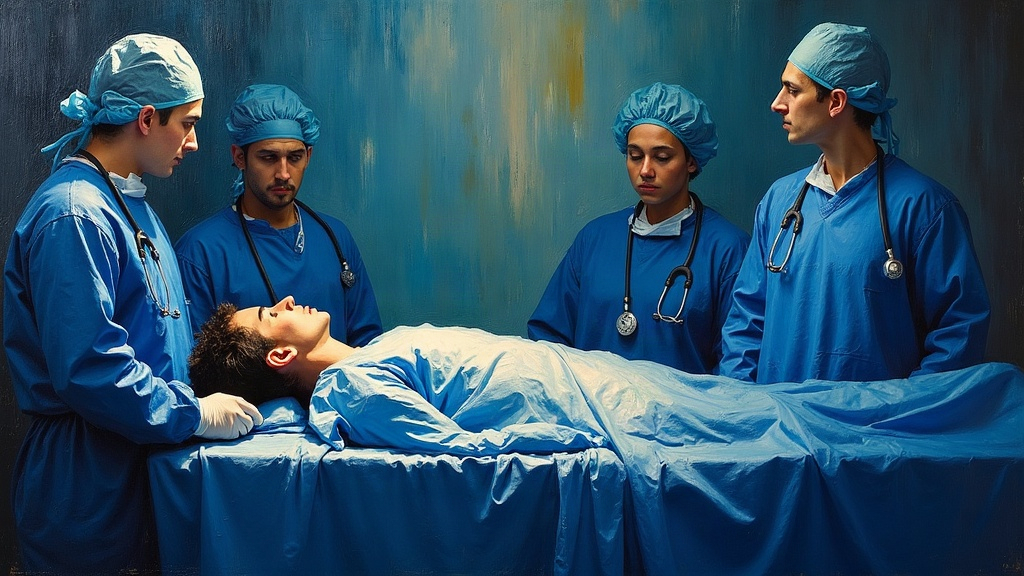
The second his heart stopped, John J Davis opened his eyes in the most beautiful building he had ever seen. White polished marble stretched as far as he could see, columns rising 30 feet high, and tunnels of pure darkness opening onto tables where counselors welcomed the newly dead. He had no idea he'd died. His first thought was simple: "Oh my god, I had no idea the hospital was this big." What followed wasn't the traditional near-death experience, the tunnel with the white light at the end. John's experience started on the other side of that light, in what his spirit guide called the orientation center, where every person who dies is welcomed home.
The Accident That Changed Everything
John J Davis was 21 years old in 1987 when a stupid accident on a moped sent him to the operating room. His father had won two scooters in a sales contest, and John and his family rode them around the neighborhood. One day, he lost control and slammed into a tree. The impact tore the tendons off his right hand. He'd never had surgery before, barely spent time in a hospital, and had no idea what to expect.
When the anesthesia entered his system, something went catastrophically wrong. John had a massive allergic reaction that stopped his heart. He physically, clinically died on that operating table. And that's when his real education began.
What makes John's account so remarkable is that his memory of the experience remains crystal clear decades later. "I usually have a really bad memory," he explains. "I can't remember what we had for dinner last night. But with my NDE story, I remember every single detail like it happened yesterday." He attributes this perfect recall to God, because the experience feels as fresh now as it did in 1987. Every time he tells it, it's like going back there on that same day to relive it again.
His experience didn't follow the pattern most people describe. There was no floating above his body, no tunnel, no gradual approach to the light. The second his heart stopped and he closed his eyes, he woke up already on the other side of the white light, standing in a building so vast and beautiful it defied comprehension.
The Orientation Center
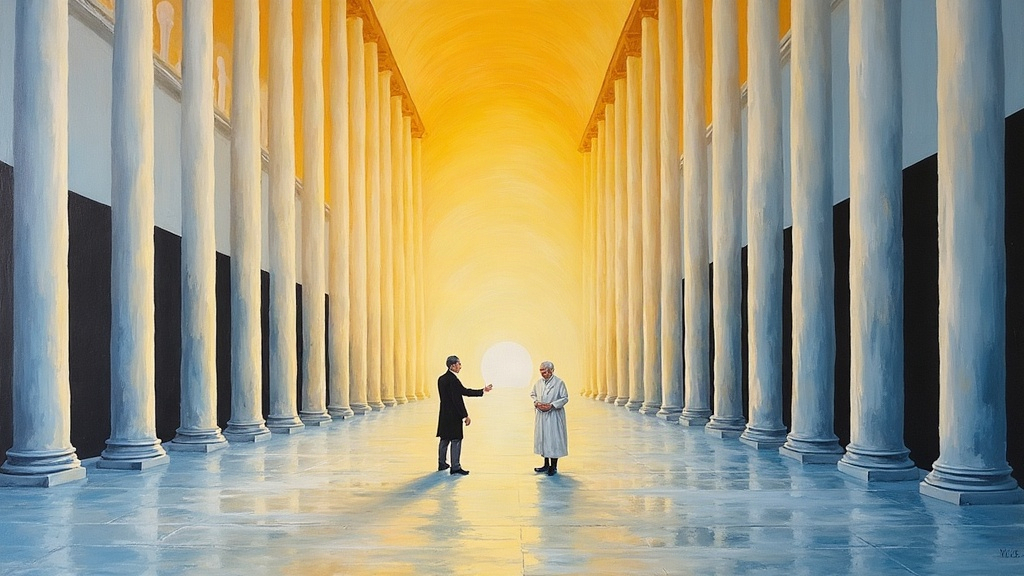
The building stretched for what could have been miles. Made of white polished marble, it had columns 20 or 30 feet high running down the right side, spaced about six feet apart. In the center were tables, each the size of an average kitchen table, also spaced six feet apart. On the left side were tunnels, perfect 90-degree openings cut into the marble, but black as space itself.
In his left ear, John heard a voice: "My name is Allan. I'm your spirit guide." John had no idea what a spirit guide was. Nobody talked about such things in the mid-1980s. But Allan explained that all of us have spirit guides who help us plan our lifetimes, create the experiences we want to have, and stay with us throughout our entire lives. Allan would narrate everything John saw, which is why he remembers it so clearly.
Allan told him the building was called the orientation center. Those black tunnels on the left? They're how people arrive from Earth. Allan said, "Look at the next tunnel," and John watched as an elderly man in his 80s or 90s emerged, his right hand on his chest. He'd just passed from a heart attack.
At each table sat two orientation counselors. A woman stood up, walked to the man, took his hands in hers, and led him to her table. She held his hands the entire time and began talking to him. Allan explained these counselors help people remember where they're from, because when we come into a lifetime, we forget. "We're not from Earth," Allan said. "None of us are actually from here because this isn't our home. We're only here temporarily."
As John watched, something extraordinary happened. The elderly man began to change from an elderly man into a young man in his early 30s. John never thought to ask why everyone appears in their 30s on the other side. He wonders if it has something to do with Jesus's age when he died, but he doesn't know. What he does know is that as the counselor talked to this man, he transformed back into who he really is, how he truly appears in his eternal form.
When the counselor finished, the man stood up, walked between two columns, descended three steps, and walked into what John calls "the gardens". It was the greenest grass John had ever seen, with flowers, trees, and plants in the most perfectly manicured arrangement imaginable. And waiting there were all the people this man knew, everyone who had crossed before him: family, friends, parents, grandparents, uncles.
Allan said, "Everybody has a reunion." And here's what still astonishes John: those counselors had no computers, no papers, nothing on their tables. Yet somehow they knew exactly who was coming through and when. Someone had told all those people in the gardens that this gentleman was about to finish his lifetime and come home. They were all waiting, clapping, applauding, hugging him, telling him what a great job he did.
Why such celebration? Because coming to Earth is a huge deal. This planet is one of the hardest of all the different planets. When we come here, we all know we're going to face difficult challenges. Every one of us faces our own Mount Everest. There are many souls who don't want to come here because it is so hard. So when someone completes an Earth lifetime, it's an achievement worth celebrating.
All of us will have that extraordinary reunion when we finish our lives, John promises.
The Life Review Theater
Allan took John to different places on the other side, a small area that felt like being on a college campus where different buildings served different purposes. Everywhere was busy, people moving between buildings with purpose and joy.
The first building Allan showed him was another massive marble structure. Inside was a round room like a theater, with 15 or 20 movie screens on the ceiling arranged in a circle. Allan said, "This is the life review."
The second he said that, every screen lit up, showing different moments from John's life at different ages. One screen showed him as a little child. Another showed his first day of kindergarten. Another showed him playing soccer. All these screens played simultaneously, different chapters of his 21 years.
But the life review isn't just watching. It's feeling. As you watch these screens, you can feel how your behavior affected somebody else. John saw an incident from elementary school. There was a kid named Troy who had something wrong with his legs and walked with crutches, maybe cerebral palsy or MS. One day Troy fell on the playground. John ran over, helped him up, helped him get his crutches back on. John never thought anything of it, just what anybody would do.
But watching the life review, John could feel how that action made Troy feel. "Oh my gosh, I had no idea," he thought. The review shows you the good things you did, the impact you had. But it also shows you anything you did that hurt somebody, because nobody gets away with anything in God's mind. If you hurt somebody, you actually have to feel how your actions made them feel.
The life review is the best teacher for the soul, John explains. A soul who isn't well-developed and hurts people has to feel how their actions made others feel. That's how they learn. That's how they know to do better.
This points to one of the primary reasons we come to Earth: to learn through experiential learning. On the other side, there are libraries and countless ways to learn everything, but Earth offers something unique: experience. It's like trying to describe what it's like to ride a bike for the first time. You can tell everyone what it's like, but until you do it, you don't really know.
On the other side, life is perfect. There's no hunger, no mental illness, no homelessness, no war, no disease, no aging, no death. It's a perfect world. So when souls want to learn something, they come to a place like Earth, because one of the best ways the soul learns is by going through something difficult. Look back 10 years in your own life. You'd never want to go back to that version of yourself because you've learned so much since then. That's the point.
Past Lifetimes and the Infinite Library
The next building Allan took John to had another huge movie screen. Allan said, "I'm going to show you past lifetimes."
This was hard for John. He was raised Catholic, attending church two or three times during the week and on Sundays. Nobody had ever talked about past lifetimes. It never occurred to him it was even possible. But what he realized during his NDE is that we have been around forever. Souls exist for billions of years, maybe longer. We have always been. And of course we can have past lifetimes. That's what God set up for us, all these different ways to learn and grow.
John thinks the primary reason is that when God created us, he gave us all this spiritual DNA to want to always learn, to continue to learn, to grow, and to develop. As humans, we just like to learn new things. That's why he set this whole system up where you can have past lifetimes.
The screen lit up. The first lifetime showed John with a shaved head, wearing a red robe or gown in a monastery somewhere in Southeast Asia. His job in that lifetime was teaching little kids how to become monks. Then that screen went blank.
The second lifetime appeared: John was what he could only call a shoe peddler, with a wooden wheelbarrow full of shoes. He fixed people's shoes in his village, then took them back. He was pushing the wheelbarrow on a cobblestone road somewhere in Eastern Europe. That memory is so distinct for him.
The third lifetime: John stood in a wooden boat on a lake or ocean, tossing nets into the water and pulling them back up, catching fish to feed his village.
Allan wanted John to tell people that we have as many lifetimes as we want to. It's totally up to the individual soul. Nobody says, "You screwed this up. You've got to go back and do it again." None of that happens. Some people like to have thousands of lives and some people don't. It's completely up to the individual.
When John watched these past lifetimes, they looked familiar, and he knew they were him, but he didn't have full memory of them yet because he hadn't fully crossed over. Allan was just showing him these different lifetimes so he would know we do have more lifetimes if we want them. It's totally up to us. And Earth is only one option. There are all kinds of other worlds we can go to.
The Building Where We Plan Our Lives
The next building was gorgeous, a huge circular structure with marble columns all around the outside and a big dome on top, like a building in Rome but bigger. John doesn't know why this is true, but anytime we want to plan a lifetime, we go to this building.
Inside, Allan walked John to a white marble table. On it was a scroll that looked like Egyptian papyrus, brown colored with a blue ribbon around it. Allan told him: "Everybody plans their lifetimes."
That means none of our lives are accidents. We actually plan what country we'll be born into, what language we'll learn, whether we'll have children, whether we'll get married, where we'll go to school, what career we'll have. On these scrolls, every one of us writes all these things down about what we want to do for a lifetime. It's like making New Year's resolutions for yourself, John says, except these are resolutions for an entire incarnation.
John took the ribbon off the scroll and unfolded it on the table. He could see black lettering that looked like calligraphy, the kind of writing done with ink wells and ink pens. Allan explained we all plan all the major events of our lifetime.
When John tried to read his scroll, it folded up again and he wasn't able to read it. He thinks the reason is that if he'd known some of the things he planned, he might not have gone through with them. We all have different reasons for coming here, different lessons to learn. If we knew the hardships ahead, we might back out.
Then John looked to his right and saw a huge wall full of scrolls. He realized that every single person having a lifetime on Earth back in 1987 had a corresponding scroll on these walls. When we finish a lifetime, we go through the reunion, go through the life review, then we can come back to this building, get our scroll off the wall, and see if we accomplished what we wanted to accomplish. That's the whole reason we write everything down.
John looked to his left and saw a huge sprawling window overlooking a walkway full of people walking back and forth, like a big city at lunchtime. They looked just like us: brown hair, blonde hair, red hair, every race, every ethnicity.
On the other side of the walkway, John saw the most beautiful lake. To this day, he's never seen anything on Earth as beautiful. It was a round lake, so still it looked like glass, so clear he could see the bottom. All around the circumference were weeping willow trees, their leaves floating on the surface. Absolutely breathtaking.
John thought this was fantastic because so many people are afraid that nothing happens when we die. But that's not true. What's interesting about life on Earth is that when you get back to the other side, it feels like you just left, because they don't experience time the same way we do. When a person plans their life, it feels like they're going to be gone for three or four months. But we might be here for 70, 80, 90 years. It feels like a really long time, but when you get back, it doesn't feel like that.
The Secret of Soulmates
Before they left the dome building, Allan took John to what looked like a huge library with books on bookshelves, all the same, all looking like encyclopedia britannicas, purplish or maroon colored. The books were about two or three inches thick with gold lettering that ran down the spine, not across.
Every single book had a name on it. Allan took John to one called Nenah, spelled N-I-N-A in gold lettering. Allan told him: "That's your soulmate."
John had never heard the term "soulmate" back in 1987. Allan explained that when God created all of us, he created all of us with a perfect mate. It's called a soulmate. That person or soul doesn't always come with you into every lifetime, but we all have a perfect mate on the other side. If you're on Earth having a lifetime, you may not have planned to meet your perfect mate because we all have different reasons for being here.
These books contain everything about who we are when we're created, what our lifetimes have been, what we've learned, what we've experienced. We all have one. We all have soulmates.
John likes to tell people that even if you didn't find what you think is your soulmate here on Earth in this lifetime, it's okay because you have that person on the other side. They're always going to be with you forever. We all come here for different reasons. We don't all come here to get married, to have children. We all have different purposes.
John's first inclination is that the soulmate doesn't come into your lifetime with you because we learn through interactions with people, through relationships. If you had your perfect mate with you in your lifetime, you'd have nothing to learn from that relationship. But when we're here on Earth, whenever we have relationships with people, we learn things about ourselves. We learn, we grow, we develop, we experience.
He knows it's possible that a soulmate can come into a lifetime with us. He just doesn't know if they do. That's the part he wishes he'd asked about.
The Planetarium and the Infinite Universe
This next part is John's all-time favorite experience. Allan took him to another building, not marble or white, but a huge sports stadium kind of building. Inside were thousands of empty chairs. Every light was on, really bright.
John looked up at a round ceiling. He realized where he was: a planetarium, just like the ones you visit on field trips as a kid.
There was a gentleman behind him. John never turned around to look at him, just as he never turned to look at Allan. Allan said on the other side, everybody has jobs or vocations, not because they have to make money to pay bills, but because people just do what they love to do. The people in the orientation center were orientation counselors because that's what they love. This gentleman behind John knew everything about astronomy: galaxies, stars, planets.
He said, "Let's begin." All the lights went off. Pitch black. John sat down. The gentleman said, "When you look at the stars, this is what you see," referring to everyone on Earth at our level of knowledge and development. He showed John our solar system: the sun, Mercury, Mars, Venus, Earth, Jupiter, Saturn, all the planets we knew about.
Then it disappeared.
"When we look at the stars, this is what we see," the gentleman said. And suddenly he started showing John planet after planet after planet. First dozens, then hundreds, then thousands and millions and millions of planets. He said, "There is far more life in the universe than you could possibly know."
John thinks there were two reasons Allan took him to this planetarium. First, to tell people that life on Earth is not the only planet with life on it. There are virtually billions of other planets. Second, to tell people that Earth is not the only planet we can have lifetimes on. There are virtually unlimited options.
John has always been a fan of astronomy. Even as a kid, he'd come home from school and watch reruns of the original Star Trek with Captain Kirk. He always believed there had to be other planets. This can't be the only one. So he got interested in studying astronomy.
He shares some context for his audience: We live in the Milky Way. Astronomers estimate our galaxy alone has 100 billion planets and 400 billion stars. That's just our galaxy. Astronomers measure distance in space by how far light travels in a year, because the speed of light, 186,000 miles a second, is the fastest speed we know.
If we had a spaceship that could travel at the speed of light and took it from one end of our galaxy to the other, it would take 99,000 years to get there. That's just our galaxy. Our nearest neighbor, the Andromeda galaxy, is so far away it would take 2.5 million light years just to get there. 2.5 million years at the speed of light to reach our nearest neighbor.
They estimate every galaxy has 100 billion planets, and they think there are two trillion galaxies in the universe. Can you imagine how many planets have to be out there? One of John's favorite quotes is from Carl Sagan, the astronomer who was the first to say there are more planets in the universe than there are grains of sand on planet Earth.
And yes, we can have lifetimes on some of those planets too. John thinks it's unlimited in terms of how many planets we can have lifetimes on. That's something God did, creating all these different worlds so we can spend eternity learning and growing and developing in all these different ways.
People always ask if he could see civilizations on these planets. He couldn't because his point of view was like looking at them from orbit. He was too high to see if there were civilizations. But he just knew these planets had life forms very similar to ours. They all have their own evolutionary schemes, their own development. Some planets are far more advanced than us, and other planets are less advanced with less technology. All different levels of advancement exist across the galaxies, all over the universe.
John finds it absolutely fascinating. Can you imagine how many worlds are out there that we can have lifetimes on? It's unlimited.
The Library of All Knowledge
Allan took John to another building, one so large he couldn't see the end of it. It didn't have columns on the sides, but marble columns in front, with steps going up, looking just like the United States Supreme Court building in Washington DC.
Inside was a huge gigantic library with bookshelves maybe 20 or 30 feet high, books as far as you could see. Allan said, "Everything you ever wanted to learn, you can learn here." The library was full of people: some visiting, some sitting at tables talking, others looking for books.
Allan took John to the left side where there were study rooms about the size of an average person's living room. They walked up to one room. A woman sat there with jet black hair down to her waist, wearing a purple robe or gown, her back to John. She was watching what today we'd call a flat-screen TV.
This was interesting because when this happened in 1987, we didn't have flat-screen TVs yet. We had big hulking televisions with components in the back that couldn't fit on a wall. What she was watching looked like a 50 or 60 inch flat-screen TV mounted on the wall.
Allan said, "Watch what she's looking at." John got closer. He thought she was watching a movie, a battle between Native American Indians on horseback fighting against United States cavalry, also on horseback. Allan said, "She's watching real history," a battle that had taken place 200 years ago.
John said, "How is that possible? We didn't have video cameras back then." Allan said, "Everything gets recorded."
That made sense because on the life review, we can see everything about our lives. Somehow, it's a God thing. John can't comprehend how it's possible, but our lifetimes are recorded and we can watch them when we get back. Anything you've ever wanted to learn about in history, you can go to this library, go to these rooms, and watch on these screens what actually happened.
The Medieval Castle and a Missed Opportunity
Here's where John had a chance to talk to someone and totally blew it. Allan took him to a castle, just like you'd see in England, France, or Scotland, big beautiful stone-made castles.
On the other side, there are all kinds of ways to learn: libraries, reading, classes, lectures, watching history. But you can also go to these areas where buildings were recreated to see what people lived in during particular times of Earth's history.
They went inside the medieval castle. The first thing John noticed was a red sprawling carpet throughout the entire castle, making you feel like royalty, by design so you could feel what people felt like during that period.
On both sides were huge walls with life-size paintings of people who were royalty in that time: King George, Queen Anne, all these people. You could see what they looked like, how they dressed. In front of every painting was a podium with a book about that person's lifetime. If you're on the other side and didn't have a life in medieval Europe but wanted to learn about it, you could go to the castle, see what they lived in, look at the walls, and read about them.
John looked to his right and saw a stairwell, one of those round castle stairwells. A woman was walking down. She was looking at him. He was looking at her. She walked up to him, stood right in front of him, and said, "Is there anything I can help you find?"
John said the stupidest thing he could ever say: "No thanks. I'm just looking." Like he was walking through a gift shop trying to buy shoes. He could have asked her who she was, where he was, what was going on. But he didn't.
Allan told him later: on the other side, what she loves to do is study the history of medieval Europe. You could come to the castle and ask her any questions about that particular period of Earth's history. She's like what we'd call a professor on Earth. That's what she does on the other side. She loves history.
The Meadow and the Being of Light
The very last part of John's NDE began when they left the castle. Allan took him to the most beautiful meadow he had ever seen. It was a perfect day: blue sky, green meadow, rolling hills. Then Allan left. John thought he was standing there by himself.
He turned around to look at the rest of the meadow, and there was a gentleman standing in front of him. He had a white robe on, a golden sash like a belt around his waist, and sandals that were gold colored and laced up his calves.
John knew this was the entity we knew as Jesus.
When John looked at his face, there was so much light coming out of him, he couldn't see his features. Everyone else John saw looked just like you and me, with their own look, their own personality. But this being was different. John just knew: this is who we call Jesus.
He spoke to John and said, "You must tell them there is no death." The very second he said that, when he was done, it was like boom, John was right back in that operating room. That was the last thing anyone said to him.
"You must tell them there is no death."
All these years, John has tried to share his story with as many people as he can because it's given him so much hope to know that nobody ever really dies. We just go to a different place. One of the things that had the biggest impact on him is helping people overcome the fear of dying, because that is humanity's number one fear.
His whole message: Your last day is going to be your happiest day because that's the day you go home. He's trying to change people's attitude about death, to help them not be afraid of dying, because that's how we get back home again.
What He Felt From Jesus
The one thing John felt was there is no sense of judgment that comes from Jesus or anybody else on the other side. That's when he learned something crucial: there is no hell. God never created a hell. That was important to him because, being raised Catholic, that was always a fear. If you don't live your life right, you're going to be sent to hell. But that wasn't invented by God. That was invented by humanity. Humanity invented religion.
What John felt from this entity, this being we call Jesus, was that he absolutely understands what we all go through while we're here. He knows the hardships we experience: losing people, relationships that end, all these different things that happen to us in life. He totally understood.
What John felt from him was that they don't care what kind of religion we follow. It doesn't matter to them as long as whatever we follow brings us closer to God. John didn't get the experience that on the other side there are Christians, Muslims, Hindus. He didn't get that impression at all. It was more like this feeling of just overwhelming spirituality, kindness, love, compassion, and non-judgment.
What he felt from Jesus was absolute compassion and absolute understanding for what we all go through while we're here.
The Feeling of God
John didn't get a deeper understanding of who or what God is while he was there. But on the other side, when we're back there, we can feel God. It is the most extraordinary feeling John has ever felt.
Because when you come to Earth, it feels like we're in a battle, in a foxhole without a radio. We feel cut off. But on the other side, when you're there, you can feel how much God loves and cherishes every single one of us. It's the most extraordinary feeling.
When John got back and realized what had happened, he did not understand how he was supposed to live the rest of his life here knowing what it's like over there, this feeling of absolute joy and peace and love. He couldn't figure out how he was supposed to do it.
Then he thought about what Jesus told him. Jesus didn't say, "When it's convenient for you, when you have time, would you mind sharing this?" It wasn't like that. He said, "You must tell them there is no death." John got it in his head that the other side just told him what he's supposed to do with his life, and he has to do what they say. "I don't think you can hide from Jesus on the other side," he jokes.
The Return and the Depression
They shocked John's heart back to life. When he came back, he opened his eyes. All these people were looking down at him. He was laying back. He said, "What just happened?" He thought they were going to be able to tell him what he saw, who his guide was, what these buildings were.
But they said, "We lost you." John said, "What do you mean?" They said, "You died. You actually died."
Driving back home with his mom, John told her everything that happened. They didn't have terminology called a near-death experience back then. It wasn't talked about. It wasn't even invented yet that John knew of.
But his mom had a book by Raymond Moody called "Life After Life," which came out in 1975. It was the first book of its kind that talked about what happens when we die. John read that book that very day. He realized: oh my gosh, he was in what we need to call heaven, or the afterlife. That's where he was.
When he realized what had actually happened, he went into a horribly dark depression for about two months because he just did not understand how he was supposed to live here knowing what he knows, what our real life is like. That's home. This isn't home for any of us because none of us are from here. We're just here temporarily. He could not understand how he was supposed to live walking with one leg here on Earth and the other leg on the other side.
Then he realized that the experience had given him so much hope that he needed to share it with other people, because the biggest fear of humanity is the fear of dying. He wanted to make sure he could help people remember where they're from and not be afraid of dying.
The whole process of dying is like taking off a jacket or stepping out of your car. That's what it feels like. And then before you know it, you're back on the other side again, and all those people are there to greet you.
You can go hiking, you can swim, you can take classes, you can take lectures, you can go listen to music. All the things you love to do, you can do over there. While we're here, we think everything is so important, that we have to have all this status and money and things and possessions, and that's what determines a person's success. But it's not. God doesn't ask anybody when they cross, "How much money did you make?" That doesn't even matter.
What really matters are two things: you came here to learn, so your own development, and the second thing is to help. There's a great quote John loves from the Dalai Lama: "Our prime purpose in this life is to help others. And if you can't help them, at least don't hurt them." John thinks if we could all do that in our lifetimes, we could make Earth a paradise also.
Animals Come Home Too
Animals make their transition just like we do. When John was over there, he saw two cats he had growing up as a child. They have souls just like we do. All our animals, all the animals we've ever loved (horses, dogs, cats, whatever animals you loved) also make the transition.
When you get to the orientation center and then go to the reunion, all your animals are there also. They're all waiting for you. John thought that was extraordinary because so many of us have had animals our whole lives. They make the transition too. They have souls just like we do. God created little companions for us that we call animals that are with us forever. We miss them, but it's just going to be great when we get back and we get to see them again. We never have to lose them again.
What This Experience Reveals
John J Davis's account stands out among near-death experiences for its comprehensive tour of the infrastructure of the afterlife. Most NDEs give us glimpses: the tunnel, the light, perhaps a brief reunion with loved ones. John's experience started where most end, on the other side of that white light, and what he found there challenges nearly every assumption our materialist culture holds about consciousness, identity, and purpose.
The orientation center alone is revelatory. The fact that there are counselors waiting, that somehow they know exactly who is coming through and when, that every person gets this personalized welcome home, suggests a level of organization and care that contradicts the notion of death as annihilation or even as a passive transition. Someone is paying attention. Someone cares deeply about each individual soul's journey.
The life review as John describes it is not the punitive judgment so many religious traditions threaten. It's education. It's the soul learning through direct experience of consequences, feeling exactly how our actions affected others. This is elegant moral instruction without the need for external punishment. The review itself is the teacher. A soul who hurt people must feel that hurt. A soul who helped people gets to feel that joy. No one needs to impose consequences because the consequences are built into the experience itself.
What strikes me most powerfully is the revelation that we plan our lives. This isn't a new idea in spiritual traditions, but John's description of those scrolls, those walls full of scrolls for everyone having a lifetime on Earth in 1987, makes it concrete. We're not victims of random circumstance. We're students who enrolled in specific courses. The hardships we face, the mountains we climb, we chose them. Not because we're masochists, but because we understood that difficulty is the crucible of growth.
This reframes suffering entirely. It doesn't make pain less painful, but it suggests pain has purpose. The soul who chose to come here knew what it was getting into and chose it anyway because the learning available on Earth is worth the cost. That's staggering when you really sit with it.
The planetarium sequence points to something even larger. We're not alone in the universe. Not even close. And Earth is just one option among billions for incarnation. This suggests God's creation is far vaster, far more diverse, far more abundant than we've imagined. We're part of an infinite educational system with unlimited opportunities to learn and grow across countless worlds and countless lifetimes.
John's encounter with Jesus is particularly moving because of what it reveals about judgment, or rather, the absence of it. What he felt was not condemnation but understanding. Not religious tribalism but universal compassion. The message wasn't "follow the right religion or else." It was "there is no death." That's what matters. That's what we need to know. We continue. Consciousness continues. Love continues.
And that message, delivered with such clarity and authority, is why John has spent decades sharing his story. He was given a mission. Not a suggestion, a mission. "You must tell them." And he has. Through interviews, through his website, through conversations with anyone who will listen, he's been faithful to that charge.
What this experience ultimately reveals is that we live in a universe of infinite love, infinite patience, infinite opportunity. We're eternal beings on an eternal journey of learning and growth. Earth is hard, yes. It's one of the hardest classrooms available. But we chose it. We planned it. And when we finish, when we finally go home, everyone we've ever loved will be there waiting to celebrate with us, to tell us what a great job we did.
That's not wishful thinking. That's not religious mythology. That's the testimony of someone who died, went there, saw it with his own eyes, and came back to tell us about it. And his account aligns with thousands of others who've had similar experiences. The consistency is remarkable. The details vary, but the core message remains the same: there is no death. We are loved. We are eternal. We are going home.
John J Davis's story is a gift to all of us who wonder what happens when we die, who fear the end, who grieve those we've lost. His message is simple and profound: they're not gone. They're home. They're waiting. And one day, when our own scroll is complete, when our own lifetime is finished, we'll walk through those tunnels, into that orientation center, and into the arms of everyone we've ever loved.
And they'll all be clapping.
You can learn more about John J Davis and his experience and explore the visual representations of what he saw on his website.
Was this article helpful?