The Pilot Who Crashed at 70 MPH and Rewrote His Future in the Afterlife
Jim Bruton died in a vintage aircraft crash and found himself in a ruined city where destiny is made of gears you can pull out and throw away
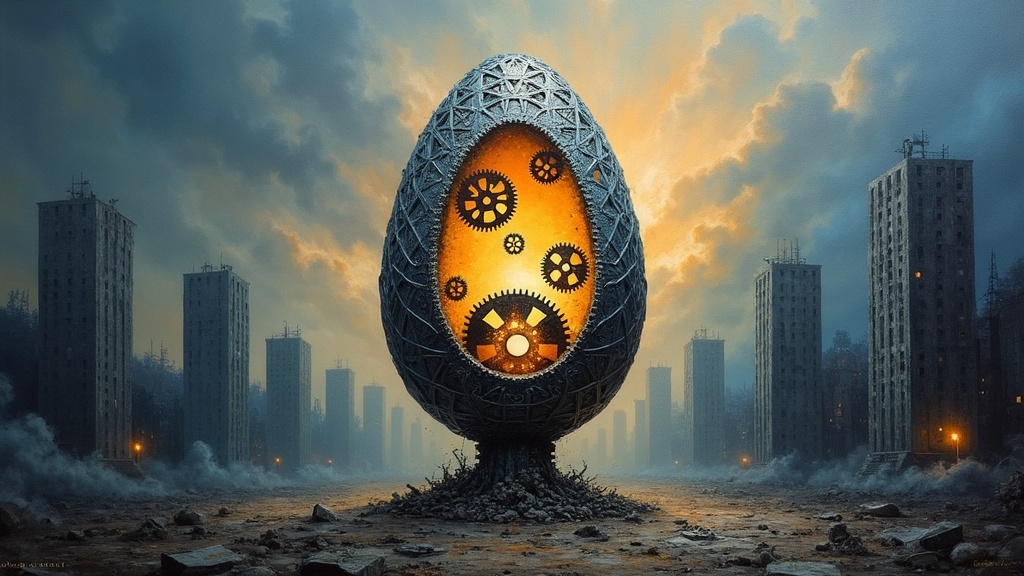
Jim Bruton reached through the metal lattice and touched one of the whirling gears. Instantly, nausea gripped his stomach. He doubled over in pain, yanked the gear out through the opening, and threw it as far as he could. All the other gears inside the egg-shaped sculpture went wild, spinning and recalibrating. A disembodied voice said: "Each gear is the probability of a thought, word, or action in your future. Your destiny is resetting itself around what you have removed." Jim looked at the growing pile of gears he'd discarded and asked if he was going to die soon from doing all this. The voice replied: "Your number of breaths are already counted. I will worry about your last one."
The Inventor Who Loved Old Airplanes
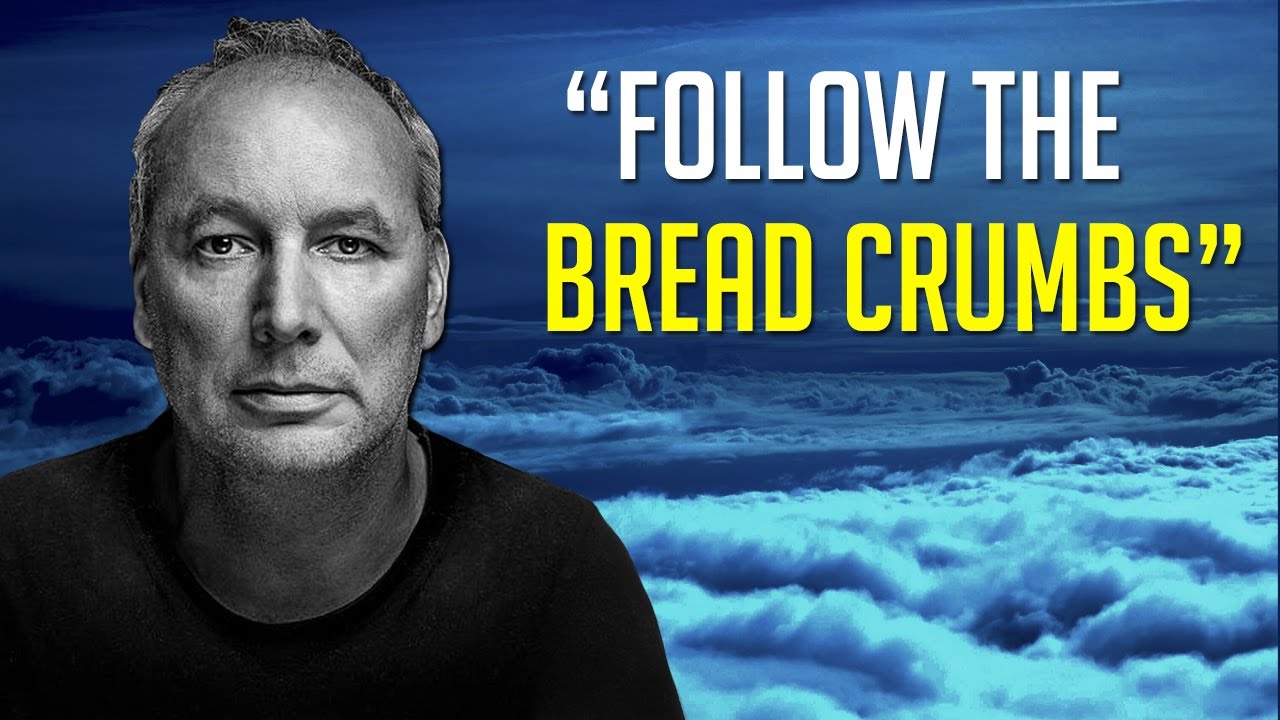
Jim Bruton grew up in Connecticut in the 1960s watching black-and-white television shows about animals and conservation. He was a boy with an imagination aimed at the future, at Moon tourism and flying saucers in every garage. He didn't want to wait 30 or 40 years to be part of that utopian vision, so he started drawing what he called inventions. They looked like something a fourth grader would draw, but they got his mind churning in ways to think outside the box.
He kept thinking outside boxes. He redesigned the way video and data could be transmitted by shrinking a satellite TV truck into a backpack. He was the first person in the world to do it. Bell Laboratories, the people who invented the dial tone, first said it wouldn't work. Jim said he had a prototype in the car. It worked. Later he integrated his system with biometrics destined for the International Space Station, wearable sensors you could even swallow. They tested them twice on Mount Everest.
But what Jim really loved was building old airplanes. In high school he built his own hang glider from bamboo. Later he built and flew a World War One reproduction aircraft. He loved that age of discovery and flight when things were new, when you would land and take it back into the barn or hangar and tweak something, keep changing the model to improve the experience of flying.
His second aircraft almost looked like something out of a Disney cartoon. It was called a Flying Flea, from 1933 France. Basically like a Soapbox Derby car with two big wings and a big motorcycle engine right in front of his face spinning a huge propeller. It was really cute. Jim loved it. He'd already built his World War One fighter and done his macho thing. Now he could build something more whimsical.

The Crash
On October 6, 2016, Jim took the Flying Flea up for its second test flight. He did one round across the airfield, and then on his second trip he lost his engine. There wasn't a lot of time to react. Vintage aircraft don't glide as well as modern ones. When you cut power, they come down quickly.
He couldn't make it back to his airfield. He was in a very forested, hilly, rocky area. The only place he could hope to get to was a small lake in a nearby Boy Scout camp. He aimed for it, overshot the bank, and crashed into all the tree trunks in the equivalent of a Soapbox Derby cart around 70 miles an hour. Jim can still find where he crashed because of all the scratch marks on the tree trunks from his wings breaking off. When he stopped crashing, it was pretty much just all matchsticks around him. The only part of the airplane still intact was what was behind him, what he was still seat-belted to.
Luckily, there was a retired police officer fishing in the Boy Scout camp. Luckily, he was the kind of guy who wouldn't freak out. He called 9-1-1 and kept Jim propped up. Jim had broken all his ribs. He'd ruptured both lungs. His right leg had multiple fractures. He had a hole in his lower back from the engine battery breaking loose and hitting him, again probably at 70 miles an hour. He was really beat up. He couldn't breathe because he didn't really have functioning lungs. It was more gasping for air.
The helicopter came maybe 30 or 45 minutes later. They pulled him out of what was left of the aircraft and flew him to Hartford, Connecticut's trauma center. A few hours later, his family arrived at the hospital and found him on a breathing machine because his lungs didn't work. He was intubated with other tubes coming in and going out of his body, all these keeping him alive. He'd already escaped the restraints that limited his efforts to remove the tubing.
The medical team advised his family that with a week's worth of day-long operations scheduled, some with only a two percent chance of success, the best course of action would be to place Jim into a medically induced coma. They readily agreed. That's when Jim's near-death experience began. As far as how long it lasted, he can't say. But he was in the coma for a week. And while he was on the other side, he was very, very busy.
The In-Between
This isn't your usual near-death experience where people may see themselves on an operating table and then go through a tunnel of light, see dead loved ones, go to a beautiful landscape, maybe have a life review. Jim's was quite different.
For him, it was more like he teleported to the terrace of a tall building. It was very open and everything was gray, as if made out of concrete and in ruins. Buildings stretched out into the distance, each partially destroyed but weaving together to create a post-apocalyptic skyline. Imagine New York or L.A. a thousand years after a meteor strike or an asteroid blew it up. There was no sound of any sort. It was just that quiet.
As he looked up in the sky, he could see clouds, really dark and heavy, with the mother of all storms ready to unload everything. Suddenly a wave of nausea ran through his stomach. He doubled over in pain and grabbed his gut. He remembered whispering aloud: "I don't think I could stand this."
With those words, he sensed something to his left. What he saw was one of the strangest sculptures he'd ever seen. Standing out against the darkest parts of the brooding sky was a large egg-shaped sculpture made out of latticework of metal. He could see within it these small whirling patterns, and he could hear their whispering movements slow down. This interruption of the place's absolute stillness, he knew, was due to his spoken words. And somehow he knew this thing and he were connected.
Still feeling his stomach gripped in pain, he rose to his feet and did his best to walk over to this monolith. As he looked through that open latticework, he could see gears inside. They were suspended freely in space but anchored and pivoting around an invisible unique pivot point that defined their sweeping arcs of movement. He noticed that these were what they call sector gears, the kind you see in clock-like mechanisms. A sector gear is a part of a gear, usually meant to just move back and forth. It has a beginning and middle and an end to its movement. That's significant in the story.
As he watched the gears just sort of idly moving for a moment, he could see that some were very real and definite, and others were more ghostlike, and they would pass through each other in a physically impossible manner.
He remembered saying: "What is this thing?" He said that out loud. A disembodied voice responded within his consciousness and stayed with him throughout the entire experience. It said: "This is the future birthing into the now."
The Gears of Destiny
That otherworldly dance of the gears was very complex, like a multi-dimensional model of time. They came to rest. Jim reached through a gap in the side of the egg. As he did so, the voice said: "This is the process of becoming". As he looked at the gears, within his mind he could see something like a video feed of what were future events. He might see himself as older. He might see his kids with their children. Things like this that hadn't happened yet.
As he reached his hand through to see if he could touch them (because some were very definite and some were very ghostlike), he just wanted to see if he could feel them. One brushed by his hand and instantly he doubled over in pain again, that nausea in his stomach. With a reflex, he ripped it out, pulling it through the latticework, and threw it away.
As he did that, all the gears went crazy, spinning around, spinning around. Basically they were recalibrating for the loss of one.
He said: "What's happening now?"
Jim said: "How did I know I could do that, pull that gear out, removing that future moment?"
The voice said: "Why else are you here?"
"I have no idea. I don't even know what this place is."
"In between what?"
"Everything. The impossible now between the past and the future."
"Something like that makes no sense whatsoever."
"It's impossible and it's short duration, yet here you are standing inside the eternity of the single moment". "Do you remember who you are in the world to which you belong?"
Jim promises you, if somebody would have come up to him at that moment and said, "Do you remember the world to which your body belongs? If you stay any longer, you can't go back," he would have said, "Go back where? To your family. What family?" He really had no idea. He was so present and actually so depersonalized. Everything was stripped away of who he thought he was.
He said: "I have no idea."
The voice said: "You see then the truth in how the past is dust."
"Okay. Why do some of these gears, these futures that I touch, make me sick and not others?"
"Where are the gears that feel good?"
"You're not here to feel good."
A new gear then swung into view. On this one Jim saw a Ferris wheel with happy grandchildren who aren't born yet, whizzing by, their fingers holding onto the car. They smiled at him or through him, looking off into their own world. Obviously, he let that gear pass by. He didn't remove it.
More gears then emerged within view, some passing through others. Several were clear and definite. Many less so and hard to focus on. But each one that he looked at had clear images, that video feed of their meaning. And each time they came to rest, he would reach around and pull out a gear that he could feel by his pain to be to his future detriment. These unintended consequences, the pain of bad decisions, not wrong because you can make a mistake and it's not a sin, but these wrong decisions were what were causing the pain.
At one point he looked at the growing pile of gears behind him and asked: "It's starting to look like if I don't have a bad future, I have no future at all". "Even though I now feel less pain because I'm cleaning up my future, stacking the deck if you will, am I going to die soon from doing all this?"
"I don't know how comforting that is."
"Eliminating bad choices doesn't mean you won't make wrong ones. You won't know they are wrong until after they pass, since right and wrong are variable over which you have no control". "The answers to what come tomorrow are a waste. Better is understanding the beauty of how everything fits and refits together."
It was basically telling Jim to have faith in the grand design.
"What am I missing here in my lack of understanding?" It was quite obvious that he was only perceiving or understanding a tenth, if that, of what was there.
"Well, this fixing my future is painful, and I feel ashamed of not doing it with some moral compass. I'm only guided by, I don't even know where or when these futures happen."
"It's as if this place were made so I can do one thing and one thing only with no chance to screw it up."
"If those with choice make poor use of them, than offering fewer possibilities could be called mercy". "You can't change the past, but you can make better choices in the future. Everything is interconnected. Pay more attention to your relationships. Be gentle with everyone as I am gentle with you."
Jim thought about his pain. "Gentle? What's gentle about all this?"
With that, Jim looked up at the stone gray sky and then out across the seemingly dead and abandoned city. He looked back to the egg and, reaching out, placed his hand on it. "I think I can live with this now".
With that, it pretty much booted him out.
Waking Up Changed
Jim woke up in the hospital. He was told by the doctors he was in a plane crash. They ran down the list of all his injuries. He discovered he'd been put into a coma on his arrival and that it was for one week. For that entire time, he believes he was in the in-between and didn't stop yanking out gears until he left.
One thing that's interesting: as he lay there, it was as if the memory of what he'd just experienced was cycling through his mind. He thought, "What is this?" He figured, okay, he'd had an out-of-body experience. He was somewhat conversant with Eastern ways, but he still really didn't have a name for it. He didn't think he knew that this was what a near-death experience was. So it just went over and over in his head. He would say at this point: "What does this mean for me? What does this mean for everything?"
The best thing he could do was distill it down into five of the most fundamental truths.
The Five Truths
1. The Best Version of Yourself
Jim woke up and saw a photo of himself taped to the wall. It was obviously put there by someone who wanted him to remember who he was, an effort of encouragement and healing. It was kind of like a Match.com photo. It was him in northern Afghanistan smoking cigars with the tribesmen. For a lot of people, yeah, that's Jim the badass. That's the best version of Jim.
He looked at the photo and thought: "Who's that?" He thought about how many lifetimes ago that already was. To those who knew him, yeah, that would be the best version of himself because that's how the world would measure it. But over the next few days, he began to feel differently about that man in the picture. Instinctively he was coming to see that his best version was not that badass, but was the depersonalized conscious being in the in-between, stripped of everything, knowing neither joy nor sorrow but flowing in the now, that impossible now beyond time, in that state of letting go.
Laying there in the hospital coming to grips with his NDE, his mind suddenly began conversing with the in-between. The representation of alcohol was removed from him and held up for consideration. The in-between literally asked him if he wanted to take it with him into his future or leave it behind. It said if he wanted to keep it as part of his life, then it, the in-between, would carry it for him. If he wanted to leave it in his past, then it would remove all attachment and it would have no pull on him.
Jim immediately said without hesitation he'd leave it behind. The voice said, "All right." The representation simply evaporated from sight.
Jim has not had a drink since, nor is he inclined to. He can sit in a bar with people drinking. He can go to a wine store on the way to someone's house to take something, but it never occurs to him to do it. That was his first real taste in the power of letting go.
2. The Art of Letting Go
Whatever answer Jim could give, putting it in context, he'd say: while the world chases the next big thing, what if we tried a different approach? If we don't like it, we can always ditch it and go back to scratching the dirt like everyone else, swapping stories of how we know someone who knows someone who heard of someone else who made it.
To Jim, life isn't about chasing the next big thing. It's about letting go. It's totally the opposite. It's about the attachment of owning your power to make good choices moment by moment that reduce the number of bad potential choices and their outcomes. It's an understanding that has no context. It's simply a state of knowing that gives rise to meaning, and meaning backs into our individual lives to give us some sense of our unique purpose.
You're not the center of any particular universe. Once you understand this, you see that little of what anyone is doing has much to do with you personally.
A dual mind is where something is simplistically only this or that, in these binary polarities: it's us or them, it's good or bad, you're vaccinated or unvaccinated, whatever. We argue and struggle to resolve those polarities. Meditation and open-mindedness can lead to a non-dual state of mind where we think in terms of "and" instead of "or." That simple change of perspective changes the world. Us and them, not us or them.
To let go, start by allowing choices to unfold naturally. Wait as long as you can before choosing to allow other possibilities to fully mature.
3. Linear and Non-Linear Thinking
Another way of calling it dual and non-dual thinking is also calling it linear and non-linear thinking. Linear being we think in steps, and non-linear means we think more broadly.
For example, the usual question would be: who robbed the bank? Linear thinking would pursue answers through a step-by-step process that have go/no-go gates at each conclusion of a step, deciding whether to move on or go around again. Thinking this way is pretty much about the black and white of things. What happens to your problem-solving journey if your primary assumptions or procedures break down? And yet this is how most of the world thinks.
The better question would be: why do people rob banks? Non-linear thinking brings understanding by promoting thinking and problem-solving that extends in an outward expansion spiral versus that linear approach. It provides multiple starting points from which you can study or enter a problem, and you start to see different ways through it. Rather than trying to solve that surface symptom, you start looking at causes.
It's also a more evolved way of thinking. It's natural to think this way when being present. Instead of following the breadcrumbs, you can see the loaf. Your awareness of this emerges when you realize you aren't using your memory to understand things. You don't need memory to perceive a complex and dynamic pattern moving in front of you when you're really present. It's with no memory of the past or anticipation of the future. It's with your intuition. It's like flying without a net.
4. Being Authentic
Jim has come to believe that even if you're an atheist but you live your life authentically, then you can be living it spiritually, or at least laying the foundation to do so. There are many people who say they believe in God but don't live a life that demonstrates the choices or sacrifices you would expect if you were making the same declarations. You don't have to look far to find examples.
But what about the people who do own their shortcomings, who don't justify them or dismiss their bad choices offhandedly but totally own who they are, warts and all? Isn't there humility there that makes such a person worth learning from?
Jim is thinking generally about people who may be different or even quirky but aren't dangerous to our physical safety or mental health. How unusual is it for us to challenge them about something in their behavior and, with a disarming authenticity, they acknowledge it, confirming it needs further work? Jim would rather know where you stand and hear you own your own faults than hide the issues behind our love for a shared goal or dislike of a common enemy. At least then he knows where you stand.
Think about this: if you're setting an example for countless people who have the courage to address their own shortcomings and get to work on their growth, there are people watching you more than you know. You're actually helping more than you can imagine.
Living authentically goes back to Socrates: know thyself. This is why Jim has told his kids not to ask where is my perfect girlfriend or boyfriend, but they should ask themselves: how do I need to be loved? Don't ask what you should do for a living, but ask what makes me happy and feel engaged. Don't ask what is my purpose in life. Ask what the meaning of life is as you see it, and then back that into the question of what your unique purpose is given your unique interests and abilities.
What resonates with you? Are there consistent patterns of self-sabotage you engage in? What brings out the best or worse in you? Honest self-reflection reveals ways in which we can do better. That is thinking authentically.
A good test of authenticity is when people talk about saving the world. Some say peace. Some say war. Some say force compliance. If you say communicate, but saving the world starts at home, at the kitchen table, on the knee of a parent or at the feet of a grandparent, then it grows into living a life in the spirit of service to others no matter your job or career. It's the spirit that counts.
Doing the things that make you feel connected to other people, perhaps helping those less fortunate. Sometimes leading from behind, allowing others to think it was their idea. Sharing the spotlight whenever possible, for no one arrived where they are alone.
Jim's not saying to become passive and let people walk all over you. Some fights are worth fighting, if not for yourself than for others. But see the world for what it is. See relationships for the temporary comforts or distractions they are. Remember that all of us are just passing through.
5. Connection Beyond This World
One of the things Jim discovered in going to his first near-death experience conference in 2019 was that when two NDErs meet, they don't usually need an introduction. It's like they recognize something within each other immediately. In a moment they're deep in personal conversation comparing notes of their lives here on Earth. If they don't see each other for a long time, they still have a sense of connection that connects them. Sometimes they feel the emotional state of each other from very far away. No effort is needed to establish that connection or to maintain it. Like two vibrating tuning forks mutually resonating, the two works keep each other going no matter where they are.
If you asked Jim what is the meaning of life, he has no answer because you are life. What else can he add? Just walk it. Discover it. Realize that you are nothing you were told you are. And when you die, everything you think you are is left at the door. You are more. You are everything. And when you've asked all your questions and when there's nothing left, where all roads end, God begins.
What This Experience Reveals
Jim Bruton's NDE is one of the most unusual accounts I've encountered in more than 5,000 cases. Most near-death experiences follow recognizable patterns: the tunnel, the light, the deceased relatives, the life review, the beautiful landscape. Jim's was radically different, and that difference tells us something important about the nature of these experiences.
The in-between he describes, that impossible now between past and future, is a concept that appears in mystical traditions across cultures but rarely in NDE accounts with such clarity. Jim was shown something most experiencers are not: the mechanics of how our choices create our futures. The gears weren't metaphorical. They were as real to him as anything he'd ever touched. Some were solid. Some were ghostlike. Each represented a probability, a potential thought, word, or action that would ripple forward into his life.
What strikes me most is the pain. Jim wasn't shown his bad choices and gently counseled to avoid them. He felt them viscerally in his gut, a nausea so strong it doubled him over. And he was given the extraordinary gift of being able to remove them, to literally pull those futures out of the mechanism and throw them away. The voice told him this was mercy. If those with choice make poor use of them, offering fewer possibilities could be called mercy.
That's a challenging idea. It suggests that free will isn't absolute, that our futures aren't wide-open fields of infinite possibility but something more constrained, more shaped by what we've already chosen and who we've already become. And yet within those constraints, we still have real power. Jim pulled out gear after gear, and each time he did, the entire mechanism recalibrated. His destiny reset itself around what he'd removed.
The voice's statement that "right and wrong are variable over which you have no control" is one of the most philosophically sophisticated ideas I've heard in an NDE account. It suggests that morality isn't fixed, that what's right or wrong depends on context, on consequences we can't foresee, on factors beyond our understanding. What we can control is our intention, our presence, our willingness to let go of attachment to outcomes.
Jim's experience also demonstrates something I've seen in many NDEs but rarely articulated so clearly: the depersonalization that occurs on the other side. He had no memory of his past, no anticipation of his future. He didn't remember his family. He was stripped of everything he thought he was and existed only in the eternal present moment. That's not a bug. That's a feature. It's in that state of complete presence, free from the weight of identity and story, that we can see clearly and make the best choices.
The fact that Jim was able to quit drinking immediately upon waking, with no cravings, no struggle, no white-knuckling it through recovery, is powerful evidence that something real happened to him on the other side. The in-between didn't just show him the representation of alcohol. It offered to remove all attachment to it. He said yes. It was gone. That's not how addiction works in our ordinary understanding. But it's exactly how transformation works when consciousness is freed from the constraints of the physical brain.
Jim's five truths, distilled from his experience, are practical wisdom for anyone, whether you've had an NDE or not. The idea that our best self isn't the badass adventurer but the depersonalized conscious being flowing in the now. The practice of letting go, of allowing choices to unfold naturally rather than forcing outcomes. The shift from linear to non-linear thinking, from asking "who" to asking "why." The commitment to authenticity, to owning our faults and living in alignment with our values. And the recognition that we're all connected in ways that transcend space and time.
What Jim experienced in that ruined city under the stormy sky wasn't a preview of some post-apocalyptic future. It was a symbolic representation of the state of his consciousness at that moment: broken, in ruins, about to be overwhelmed by the storm of consequences from choices he hadn't yet made. The egg-shaped sculpture was his lifeline, his chance to clean up his future before living it. He took it. He pulled out gear after gear until he could say, "I think I can live with this now."
And then he came back. Not to the life he'd left, but to a new life shaped by what he'd learned and what he'd removed. The man who fell from the sky was not the same who flew into it. That's the promise held out to all of us, whether we have an NDE or not. We can change. We can let go. We can choose differently. Our number of breaths are already counted, but how we use them, the quality of presence we bring to each moment, that's up to us.
Jim's story is a reminder that consciousness doesn't end at death. It expands. It sees more clearly. It's given opportunities to heal and grow that aren't available in the physical world. And when we return, we bring that expanded awareness back with us. We see the world differently. We see ourselves differently. We know, with a certainty that can't be shaken, that we are more than these bodies, more than these stories, more than anything we were told we are. We are eternal beings having a temporary human experience, and the point of that experience isn't to accumulate stuff or status or even good deeds. It's to learn. It's to grow. It's to become more loving, more present, more awake.
That's what Jim learned in the in-between. That's what he's sharing with us now. And it's a gift.
Was this article helpful?