Jeff Olsen's Near-Death Experience: Finding Divine Love in Tragedy
After losing his wife and son in a car crash, a father's journey to the other side revealed unconditional love and the perfection hidden in our deepest pain
The car rolled six to eight times down the interstate at 75 miles per hour, metal shrieking against concrete. When it finally stopped, Jeff Olsen couldn't move. He was pinned, struggling to breathe through excruciating pain. His seven-year-old son Spencer was crying hysterically in the backseat. But no one else was crying. In that moment, Jeff knew: his wife Tamara and infant son Griffin were gone. The guilt hit him like a second collision. He'd dozed off at the wheel. Five seconds. That's all it took to destroy half his family. But then, in that darkest moment, something extraordinary happened. Light came.
The Life Before
Jeff Olsen he recalls. They worked hard, played hard, did a lot of sports. His mother was a devout Christian, and though his parents had split up, Jeff carried that conservative background with him. But there was always something else stirring in him, a question about what was real, what was true. As a boy, he'd go out into the dark fields at night and look up at the stars, wondering.
He went to college on a football scholarship, studying art on the side, trying to balance the athlete and the artist. That's when it happened. He was 19 or 20 when he met Tamara. "She walked in the room and it was like lightning hit me," Jeff says. "It's like, there she is." They became friends, then partners, then husband and wife. Tamara taught high school. Jeff worked in marketing. They had their first son, Spencer, and he was pure joy. Six years later, despite complications, came Griffin. Suddenly they had two boys, a beautiful family, a normal American life.
But everything was about to change.
Easter Monday
It was Easter weekend, 20 years ago now, though Jeff can recall the details like it was yesterday. They'd been visiting Tamara's parents down in southern Utah, in the Red Rock Country. Monday came. Time to get back to work. They loaded everyone in the car for the four or five hour drive north.
Jeff remembers certain moments with an almost supernatural clarity, as if time stood still. They were just pulling away when Tamara reached over and said, "Oh, wait, wait, just a minute. I want to go say goodbye to Mom and Dad one more time," which seemed odd at the time. They'd already said goodbye. But Jeff put the car in park and watched her go back to the porch. She not only hugged her mother and father, but she also kissed them both. Then she came back, happy, buckled her seatbelt.
Jeff got on the interstate, set the cruise control to 75 miles per hour, the legal limit. He was hurrying, thinking about all the things he had to do at work. Tamara laid her seat back to nap, holding his hand. He glanced in the rearview mirror at Griffin, just barely learning to walk and talk, and thought, "What a miracle. We were told we may not have any more children. And there he is, beautiful." He looked back at Spencer, seven years old, playing with action figures and making noise, and thought what a joyful little boy. Then he glanced at Tamara sleeping beside him and felt a wave of absolute gratitude. "I thought, Wow, I'm so lucky," he says.
An hour later, everything went wrong.
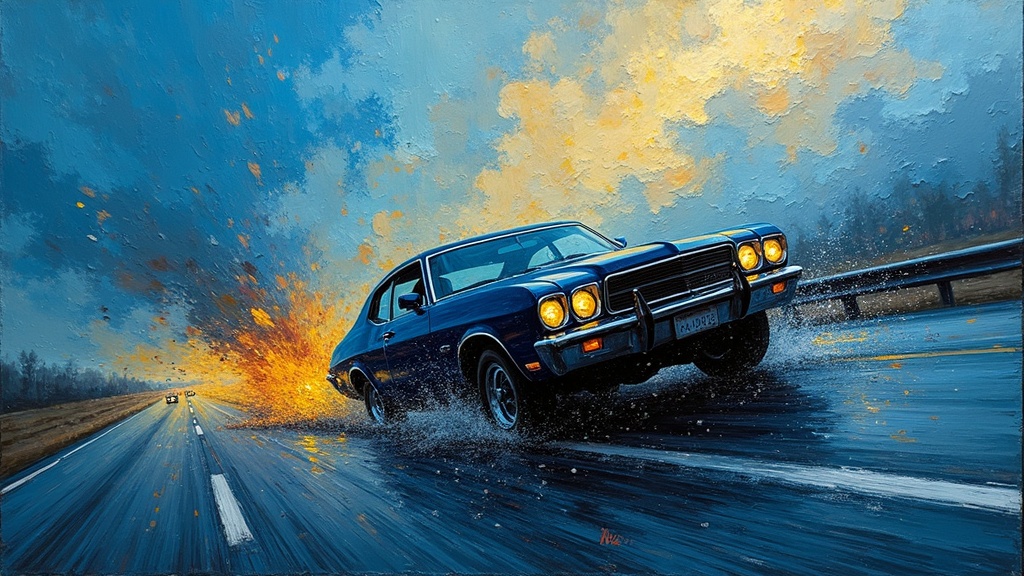
There were heavy winds. Reports of an erratic pickup truck on the highway. And Jeff believes he dozed off. "I think I maybe just nodded off at the wheel for a minute," he says. The car swerved right. He overcorrected left. Lost control. The car began to roll, not off the road but down the concrete at 75 miles per hour. The police report said it probably rolled six to eight times. Jeff blacked out for most of it. He doesn't recall the rolling itself.
But when the car stopped, he was incredibly conscious. The first thing he heard was Spencer crying hysterically in the backseat. As a father, his thought was immediate: "Okay, well, he's okay. I've got to get to my son, I've got to get to my boy." But he couldn't move. He was pinned. Disoriented. Struggling to breathe. Excruciating pain. He had no idea of his injuries.
Both legs had been crushed and shattered. The left leg was amputated above the knee. His back was injured, his rib cage, his lungs collapsing. His right arm had almost been torn off, severed badly, all the muscles ripped from the socket. The seatbelt had cut through his midsection, rupturing his intestines. He knew none of this. All he knew was that Spencer was crying and no one else was.
"That's when I thought, Oh my gosh. And I knew, I knew Tamara is gone," Jeff says. Tamara had laid her seat back and wasn't restrained properly. She'd suffered severe head trauma. Griffin's car seat had broken. He'd been ejected from the car. "It's like I knew in my heart, I just, it was the darkest, most awful feeling of... they're gone, they're gone," he recalls.
The guilt and regret were immediate and crushing. "I just kept thinking, can't I just take back that 5 seconds? What happened? How did I crash!?"
The Light That Came
Jeff was losing consciousness. He tried to speak to Spencer. "I said, it's going to be okay," he remembers. "And I thought, that's a lie. It's not okay. I mean, half the family's gone. I'm losing consciousness. Nothing will ever be the same."
But it was in that darkest moment, in that horror, that something happened. "I felt... well, the best word is light," Jeff says. "It's like light came. It's like I felt light coming to circle around me. Almost like it was a blanket, like it was comforting me in this horrific moment."
He felt himself rising above the accident scene, "maybe like in this bubble of light." Suddenly he could breathe. The pain was gone. "Am I okay?" he wondered.
Then he realized Tamara was there with him. The woman he knew was dead at the scene was suddenly "very much alive and... and gorgeous," he says. "All of a sudden she was there and there were no injuries, there was no head trauma. She was radiant and beautiful and glorious."
But she was upset, frantic. "'Jeff, Jeff, you've got to go back! You've got to go back! You can't come. You can't be here!'" There he was, looking at the woman he loved more than life, but he also had a little boy crying in the back seat of that car. He had to make a choice.
"It was so real," Jeff emphasizes. "I mean, it wasn't like a dream at all. It's almost like my senses were multiplied." In this state, everything was super sensory. "It was so real that it makes this life feel like the foggy dream. It's like this feels like the weird, strange, dreamy state. That was reality."
He looked at Tamara and knew: "I've got to go back. I can't leave our little boy orphaned." He got to say goodbye. He made the choice to return. And the moment he had the intention, "I found myself wandering around a hospital," with no concept of how much time had passed.
Knowing Everyone
While Jeff was out of body, people had arrived at the accident scene. One happened to be a doctor who performed emergency procedures. They rushed Spencer and Jeff to a local hospital. Spencer was banged up but basically walked away physically, though emotionally he thought his whole family was gone. Jeff's injuries were too severe for that hospital. They flew him to a level one trauma center in the nearest city.
Jeff knew none of this. "All I knew was I had wrecked the car. I had said the most profound goodbye I would ever say," he says. And there he was, wandering through a hospital in this bubble of light, looking at nurses and doctors and patients and families.
"But the incredible thing is that everybody I saw, I knew them," Jeff recalls. "Like, they were strangers, but I would look at them and I knew everything about them. I knew their love, their hate, their joy, their decisions, their pain, their motivations. I knew them as if they were me."
He felt intense things. There was a nurse, and "I knew that she had been abused as a child physically, sexually, emotionally. And I thought, well, I could feel it as if it had happened to me," he says. "But in feeling it, I had this profound compassion for her. It's like, Oh, wow, look what she has overcome. Look what she endured. And then I had this intense feeling of, look who she is now because of that, this compassionate, medical staff, literally healing people."
This wasn't abstract philosophy. This was direct experience. "I had this intense connection to everyone, and there was this sense of love for everyone," Jeff says. "And it didn't matter who they were or what they had done or what they hadn't done. And I saw them as this incredible soul. All those judgments from religion just went away. It was like, aren't they incredible? Aren't they beautiful?"
A Bible verse came to mind, one attributed to Jesus: "'In as much as you've done it unto the least of these, you've done it unto me,'" Jeff recalls. "I used to think was a really nice passage about being nice to people, which I suppose it is. But I was feeling it at such an intense level I realized, Wow, so what Jesus was saying is, I am them and they are me. And that's what I was experiencing. I was them and they were me."
He was marveling at this until he came up to a body on a gurney that he didn't feel anything from, which seemed odd. He stepped closer and looked. "And that's when I realized, oh my goodness, that's... that's me," he says. "But, but it wasn't me. I was having this incredible connected experience. But there was my body. There was, you know, that skin suit that I had been wearing around life."
Seeing his broken body was sad. He'd taken for granted being healthy, athletic, able to run. "And yet there was my body so broken," he recalls. Two things became huge for him in that moment: "I'm not my body. I was something far greater," and "I had peace, even in the trauma of everything that had happened, by being out of this situation."
He also realized that "passing, I mean, dying, was very natural. It was very beautiful," he says. "Many might say that I suffered a very violent, traumatic death in the car accident and all the injuries and everything that had happened. But I wasn't even aware of the injuries."
But he knew he had to get back in that body and live for his son. Once again, there was no figuring it out. "It was intention. I'm going back in and then boom, I was back in the body," he recalls. "But when I went back in the body, the heaviness and the regret, the guilt, the pain, the trauma, all of that."
Six Months in Hell
Jeff spent almost six months in the hospital, and "it was awful to be back in the body," he says. He was ventilated, a big tube down his throat doing the breathing since his lungs had collapsed. His legs were immobile, his right arm immobile. They'd tied down his left arm because he kept grabbing at the medical equipment.
"It was almost like I had one foot in this realm and one foot in that realm," Jeff recalls, "because I would find myself leaving the body every now and then. I would feel like, gosh, I need a break. And there were times I felt like I was over in the corner watching it all, just taking a break from it all, knowing I've got to get back in the body again, and I would go in and out of the body."
He also had continued communication with Tamara. "I recall having a very intense conversation with her when I was out of the body again and she was letting me know what she wanted done at the funeral services, and she wanted her sister in law's to have her fancy dresses and she wanted her cousin and her niece to have those special rings and the jewelry," he says. Trivial things, maybe, but she was communicating clearly.
He was in ICU for months, then surgical recovery. He had horrible infections, pneumonia in his lungs, kept throwing pulmonary embolisms (blood clots that lodge in the lungs). He was very sick for a very long time.
Home
By the end of his hospital stay, Jeff was in the rehabilitation unit, only weeks from going home. He was finally able to roll and sleep on his side. He remembers falling asleep one night, weighed down by "the guilt, the grief, the pain, the trauma, everything that I'd been dealing with," he says.
While he was sleeping, "I felt that light come again. Just like at the scene of the accident. Suddenly I felt this blanket of light," he recalls. He'd lost half his family, half his body. He was worried about Spencer and how they'd both deal with this. There was constant worry, but he was peaceful in his sleep when the light came and embraced him, comforting him just like at the accident.
"And again, I felt a lift and then the light seemed to disperse light like a fog or a mist that goes away. The light was gone and I was in the most incredibly beautiful place," Jeff says. "And it was so real once again. It was so sensory."
What happened next still fills him with wonder. "That might seem odd that it felt physical, but I was running!" he says. "I could feel the ground beneath my feet. I could feel the warmth and the energy from the ground beneath my feet. And I began to run and it felt as if I was running. I could feel, you know, the muscles in my calves and thighs. And I was joyfully, joyfully running."
The thought that came to him was striking: "Wow, it's good to be home! I was home," he says. "I mean, people say heaven or the other side. To me, I was home. It was so familiar. It was so welcoming. I was so joyful to be there."
Everything was super sensory. "I could taste the colors, I could smell what I was seeing," Jeff recalls. He was elated. Then he got a message, "like a knowledge, like a knowing, that you're not here to stay," he says. His immediate thought: "Oh, I just want to stay!"
But there was a corridor off to his left, and he knew intuitively he was to go down there. As he made his way down, he could see something at the end. When he got there, it was a crib, much like the one Griffin had been sleeping in because he was still just a baby.
"I raced to the crib and I looked in the crib and there, there was Griffin. There was my little boy," Jeff says. "And he was sleeping as peacefully and as beautifully as when I had peeked in the rearview mirror on the ride home and I swept him up in my arms."
He'd worried and had pain over this because he knew Griffin had been thrown from the car and killed. "But there he was, perfect," Jeff says. "When I swept him up, and again it was so physical what I could feel, I could feel the heat from his body. And I thought, he's okay. And I could feel him breathing. I could feel his ribcage expanding, I could feel his breath on my neck. And I thought, he's okay! He's just fine!"
Then he did something that still moves him to describe: "I smelled his hair, you know, I smelled his hair and thought, It's my little boy, he's perfect, he's okay!" he says. "And I could feel him solid against me. I was even marveling then, if I'm out of the body, how does it feel so physical? But it did. I could feel and smell and taste and touch everything."
He began to weep. "Oh, he's okay!" he thought, holding the son he'd longed for over those months.

In the Arms of God
As Jeff was holding Griffin, "I felt an intense feeling behind me. There was a presence, that felt so cosmic, so big, so wise, so powerful," he recalls. "I began to become fearful. In fact, my thoughts were... That's God. I am in the presence of God!"
The guilt feelings came flooding back. "I was holding my little boy thinking he died because I crashed the car. He's here because I messed up and lost control," Jeff says. His thought was, "I hope I'm forgiven. I hope someway I can be forgiven. I mean, did I take the life of my little boy? That was the guilt, it was very deep."
But then something happened that changed everything. "As I was weeping, holding him and feeling this presence come behind, and as I had that thought, suddenly this presence came so close, and this felt physical too, I felt these loving arms wrap around and hold us," Jeff says.
The message came as powerfully as anything he'd ever experienced: "'There's nothing to forgive. Everything is in pure, divine order. Everything is okay,'" he recalls. "It was almost like there was a download of truth and knowledge and love and peace, and all those misconceptions I had about God, that I was being tested, that I was probably failing, that I was going to be judged. Those were swept away in pure, unconditional love."
"There are not even words for the love that I felt," Jeff says. "As I was wrapped in those arms, it was almost like me and my little boy became part of that, like we became God."
Suddenly he was seeing everything differently. He saw his whole life: his parents' divorce and the insecurities it created, his relationship with his brothers, things that happened. "And I saw things that I thought, well, that was a mistake. That was a mistake. But in those loving arms, it was just flowing, 'There are no mistakes. Everything's in perfect order,'" he recalls.
He saw things he knew were wrong but did anyway. "And I was thinking, Oh, don't, don't, you know? And there was so much love. All that was flowing through me was, 'Look how much we love you. Look how much we honor your choices. Look how much we honor your life,'" Jeff says.
He was being told, though it wasn't just words but pure energy, that "everything was perfect. Even that my life was perfect, that everything happened for a reason, that I was learning in every instance, that actually I was perfect and that would blow my mind," he recalls. "I thought, well, how could I be perfect? But there was also this oneness in that, that if I was perfect then everyone else was perfect too, and everything was in divine order."
He also felt something profound about his own nature. "It felt like I'm a divine soul, I'm a divine being of light, having this crazy life experience that my soul might expand. And yet none of it is real. This is real. That's just the stage of a play or something I'm going through. It's an experience I'm having," Jeff says.
He learned about choice again. "I was told that I could be angry at God my whole life and think that he took my family away or that, you know, somehow life was not fair and that was okay. There was no judgment whatsoever. I could do that," he recalls.
But he was given another choice. "It was that I could exercise my will, I could give Griffin, I could give my son back to God, back to the universe, and then my will would be part of it, that I could make a choice in that," Jeff says. "And I could literally let go, in all that love and in all that peace and in all that beauty. I was able to kiss my little boy and give him back."
"And then I woke up back in the hospital bed, back to the amputation, the injuries, you know, all that had happened," he says. "But I had a little bit different perspective, realizing everything is a choice and realizing that everything is in divine order and that if I'm perfect, then everyone's perfect. There's no need to judge anyone for anything and that life's actually perfect. If I could literally reach out and embrace it that way."
The Long Road Back
Jeff wants no misconceptions about what followed. "It wasn't like I wrecked the car, then had these incredible experiences and then I was okay. I was a wreck for almost ten years," he says. "I was grieving. I was hurt. I missed my family. I missed my leg. I missed all of it."
Spencer, his seven-year-old, lost everything Jeff did. "He didn't lose his leg, but he lost his mother. He lost his brother. He in many ways lost his father," Jeff says. Coming home was very difficult. He was in a wheelchair, his left leg amputated, his right leg in a big brace holding it straight, his right arm in a sling, driving a little electric wheelchair with his one good hand.
His brothers were incredible, almost losing their jobs to be at the hospital with him. They came to get him when it was time to go home, lifting him into the wheelchair and car. There was a ramp installed so he could get in the front door.
"And I saw Spencer, my seven year old, watching from the window as my brothers, his uncles, were lifting me out of the car and putting me in the wheelchair," Jeff recalls. "And I thought, how is he going to deal with this? Then he did run out and finally threw himself on my lap, which just about killed me because I still had all the sutures down from when they put my insides together, and he threw his arms around me."
In that moment, Jeff had a huge epiphany. "I realized that sitting in a wheelchair and holding my surviving son in this realm was no less divine than being in the other realm and holding my son who had passed there," he says. "Suddenly heaven, if you will, was right here. There was nowhere to go. There was nothing to be. There are these divine moments and it's never gone away, for 20 years now."
He had to get back to work, make a life, and they did. "But there are those little moments in life that... they're divine. It's like something opens up and your heart comprehends it," Jeff says. He felt angels showed up, sometimes his brothers or his mom, sometimes neighbors. "But I felt as if there were always angels from the other side. It's almost like Griffin and Tamara never really were gone."
Love Again
Jeff eventually fell in love again, which felt crazy and brought more guilt. A woman named Tanya came into his life. "And I wasn't dating. I was still bereaved. I was still heartbroken. But I began to have feelings for her and I felt awful," he says.
He went to the graveyard and lay on his wife's grave, sobbing. At one point he was angry. "I'm like, How could you leave me like this? I don't I don't even walk right. I'm trying to raise our son. And you're in that beautiful place and how dare you! How dare you leave me!" he recalls.
But as he was pouring out his heart, "I felt her. Now, I didn't see. But I felt her, I felt as if she came and put her hands on my shoulders behind me," Jeff says. "And then she communicated so clearly, she was like, 'Don't berate me for leaving.' And she said to me, she said, 'I loved you enough to leave.'"
This didn't make sense at first. But Tamara communicated more: "'You would not be learning what you're learning. Life would be so different, I would have loved nothing more than to grow old with you and be with you. But that was not the plan,'" Jeff recalls. "And she laid it out like this was a big plan. 'We made this deal that you were going to come, you were going to have this experience and that I was going to love you enough to go so that you would have those feelings and have your soul expand in such a way.'"
Jeff told her about his feelings for another woman. "And she laughed at me. She said, 'Of course you are. Of course you are. I want you to be happy. I want you to have love. I want you to be with someone. I am not jealous. I'm not upset. I'm not hurt. In fact, she communicated, I sent her your way. You can do whatever you want. You have the choice. But she will teach you unconditional love,'" he says. "And it was so real, once again, that was so real to me. I could hear the voice in my head, but I could feel it in my heart. I mean, the communication was so clear and and I could feel her there, even though I didn't feel her physically, I could feel her right there with me."
Jeff eventually remarried. "Tanya's the hero of the story," he says. "She came in and continued to heal a broken man, because I was broken. And she took Spencer on as her son and put all the pieces back together for us." They adopted two boys, brothers who came as a package deal. Jeff doesn't even say adopted boys. "I just call them my sons," he says. They rebuilt this family, though it looked different.
But it was still hard. "It took me ten years to really get over the grief, to really embrace love," Jeff says. The key for him was realizing that even though he'd had those profound experiences, "I was still looking for joy and peace out there somewhere. Who can bring this to me? Tanya? If she could just love me enough to make me feel okay, or if the boys could just love me enough to make me feel okay. Or in my job, or whatever else I was grasping at to feel like I was wanted and I was loved and I was okay," he recalls.
"Even though I had been in the arms of God and felt perfect. But I was still looking for it from an outside source," Jeff says. "In fact, I was wandering around thinking, Where's all that love I felt here? Where will I ever find it?"
The breakthrough came when he finally looked within himself instead of out there. "When I finally realized, Oh, to love unconditionally, I get to love myself unconditionally. And when that happened, the healing began because I was never going to find it out there. It had to be felt within," he says.
He remembered something from his Christian upbringing, a verse attributed to Jesus: "'The Kingdom of God is within you.' Don't look out there for it, and I begin to maybe grasp what that meant a little more, that it is within us. We are divine beings. We do have the power to create our own situations, if we embrace ourselves that way and do so," Jeff says.
Sharing the Story
For many years, Jeff didn't talk about his experience at all. "I didn't want people to think I was crazy. And also I felt it was just for me. It's like, this is sacred stuff. It's not lunchtime conversation to say, Hey, by the way, I went to the other side and saw God, you know?" he recalls. "And so I just held it to my own self. I didn't share about it. I didn't talk about it. Very few people even knew that I had had an experience."
But one day he was teaching a Sunday school class on the love of God. "I begin to get emotional saying, Oh, I have felt the love of God... I couldn't hold back the emotions because I was thinking of being in those arms," he says. A woman in the back, a neighbor, came up afterward and said there was more to his experience he didn't talk about. She insisted he meet with someone she knew at the university who studied near-death and out-of-body experiences.
Jeff sat down with him and shared what had happened. "Of course, I'm just weeping. I hadn't talked of it much, and he was crying too," he recalls. Someone from a publishing company was there and said he had to write a book. Jeff's initial response was no, he didn't even talk about this, let alone write a book.
But "there were so many things falling into place and there was this little whisper. I call it a whisper, that was saying, 'Maybe that's why you're still here,'" Jeff says. "So it's really not about me, it's about healing. And if I can do something that makes a difference in the world with the catastrophe that happened, then that makes it worth it. Then that makes it in some ways okay, or at least a little bit better."
You can hear Jeff tell more of his story in several other interviews, including his conversation with Shaman Oaks and his talk at Findhorn in 2015.
What Jeff Knows Now
"There's so much division in the world. Everything teaches us that we're separate," Jeff says. "You're of that political party, I'm of this one. You're a woman and I'm a man, or you're gay and I'm straight, or you're black and I'm white or... There's all this segregation, all this division."
"The one thing that was so profound in my experience was the oneness, realizing that we are connected, that I am you and you are me, and that we're really here together. We're all in this together. There's no stepchildren in this family of God," he says. "And also the love, the love I felt. I have embraced that love is the most powerful force in the universe. Love can heal everything and it can heal anything, if we can simply come together."
Jeff used to live in fear that the world was going to end or God was going to come fix it. "Now I'm a firm believer that it's up to us, that we're divine, powerful beings, and that if we can embrace that love that is within each of us by loving ourselves and then loving others, that's the ripple effect. That's what creates heaven right here," he says. "There's nowhere to go or anything to be. It's to really embrace and love each other here. And suddenly that beautiful place becomes the ground under our own feet, the oneness, the connection that we have."
He doesn't care which spiritual teacher said it. "There's been many masters, Buddha, Jesus, Muhammad. I don't care which one, Gandhi, Mother Teresa, it doesn't matter. The homeless guy on the street, I mean, we are all masters," Jeff says. "You will never encounter someone that's not a magnificent, glorious, divine being."
He loves the word universe. "Uni-Verse. I love that because Uni means one, and Verse main song. There's this one big song and each and every one of us have a part to play in that. A part to sing," he says. "I sing at a tone that's far different than yours and every tone comes together in the perfect melody, the perfect harmony. And it's already happening. We don't see it because we see ourselves as separate. But if we realized and stepped into the oneness that we already are and sing our song so brightly and shine as we do. It's like the stars. Everyone has a different twinkle. When you look at that Milky Way in that galaxy, you say, Wow, look how beautiful it is collectively. Look how beautiful the stars are individually. And that's how we are. We are already that, there's nothing to become."
Jeff deals with a lot of people who struggle with suicide or who have lost children to suicide. "I have no judgment of that. There were many times during my struggles that I thought I'd rather just go. Of course I had a son here that was keeping me pretty grounded," he says.
"But I think this is the big game. We can't experience what we want to experience when everything's light and beauty and peace. It's almost like we wanted to have the opposite. We wanted to experience what we're not so we could finally embrace what we truly are," Jeff says. He goes back to his old football days where "they would draw on the chalkboard and all the X's and O's and everything looked perfect. And yet you never knew until you got on the field and smelled the grass and had someone hit into you that you know what it was like," he recalls. "I believe life is like that. We wanted to come and have the experience because our soul would expand. And while we're here, we just think, Oh, my gosh, I can't do this, this is too hard. But our higher self, our higher knowledge sings, Yeah, but that's why you came."
There are things in the world that are heart wrenching. Jeff works with people fighting human trafficking, kids being taken into the sex trade. "And so how do we look at those and say it's all in divine order? How does this make sense?" he asks. "I embrace it as a perfect opportunity to be love. How can I shine light in dark places? How can I embrace things and make a difference? And I realize I'm just one, I'm just one guy. But can I make life better for somebody today? Can I do something for someone? And by doing it for the one, you're doing it for the all."
"Even when I raise my own vibration, if I can go meditate for a minute and get at peace or forgive something, even if it's forgiving myself. I forgive others very easily. The hard one to forgive, for me, is myself. That ripples out. It ripples out and affects the consciousness of all of humanity," Jeff says. "But it comes down to choice. We live in fear. We're so conditioned with judgment or religion, or even our parents or whoever said, Well, you've been a bad boy, you don't deserve that, that's not coming, you've got to earn that. All these things that we have conditioned in our mind when in reality we are deserving, we are worthy always. We are of great worth."
A wise indigenous elder once told him a story when Jeff asked about control and fixing and making things happen. "He said, 'When you get in the river, when you fight the current, the harder you try to swim, you sink.' He said, 'When you relax, when you let go, or when you go with the flow, the current will take you exactly where you're meant to be,'" Jeff recalls. "It's interesting. I've been in the water. Swimming is one of the only things I can do anymore where I move my body. But it's true. The harder you fight the water, the faster you sink. And if you just let go and relax and float, it's peaceful, it's easy. There is order in the universe, we'll be exactly where we're meant to be."
What This Tells Us
Jeff Olsen's experience is one of the most detailed and emotionally raw accounts in the modern NDE literature. What makes it particularly significant is the combination of profound tragedy with equally profound revelation. He didn't go looking for spiritual enlightenment. It found him in the wreckage of the worst moment of his life.
Several elements of his account appear repeatedly across thousands of NDEs. The immediate transition from excruciating physical pain to complete peace and expanded awareness. The recognition of deceased loved ones as radiant and whole, not diminished by their manner of death. The experience of unconditional love so powerful it reframes every human concept of judgment and worthiness. The realization that consciousness is not only independent of the body but vastly more expansive outside it.
But what stands out most in Jeff's story is his description of oneness, of knowing strangers as intimately as himself, of feeling their pain and joy as his own. This isn't metaphor or philosophy for him. It was direct, sensory experience. When he looked at that nurse in the hospital and knew her childhood abuse as if it had happened to him, when he felt profound compassion rather than pity, he was experiencing what mystics across traditions have tried to describe for millennia: the fundamental interconnection of all consciousness.
The life review element in his second experience, while he was held in what he calls the arms of God, also matches a core pattern. But notice what didn't happen. There was no judgment. No cosmic scorecard. No punishment or condemnation. Instead, there was this overwhelming message: everything is in divine order, there are no mistakes, you are perfect, everyone is perfect. The review wasn't about shame. It was about understanding, about seeing his choices from a perspective of infinite compassion.
Jeff's ten-year struggle after the experience is also instructive. These experiences don't erase grief or trauma. They don't make the human journey easy. What they do is provide a framework for understanding suffering that can, eventually, transform it. Jeff had to learn to find within himself the love he'd felt in those arms, to stop looking for external validation and instead recognize his own divine nature. That's the real work of integration.
His account also speaks to something we see again and again: the experiencer becomes convinced that this physical life is the classroom, that we're here to learn and grow through challenge, and that love is both the curriculum and the ultimate reality. Jeff doesn't dismiss the horrors of the world. He works to alleviate them. But he's also found a way to hold both truths: that suffering is real and painful in this realm, and that from a larger perspective, everything serves the expansion of the soul.
What awaits us, if Jeff's experience is any guide, is not judgment but embrace. Not punishment but understanding. Not separation but reunion and recognition. We'll be asked what we learned, what it was like to be us, and we'll realize we were always connected, always part of the one song. That's not a platitude for Jeff. It's lived knowledge, bought at the highest price and held with unshakable certainty.
Twenty years later, he can still smell his son's hair, still feel those loving arms, still taste the colors of home. The experience hasn't faded. If anything, it's become more real over time, while the hospital stay has dissolved into fog. That persistence, that crystal clarity across decades, is itself evidence of something profound. These aren't hallucinations or dreams. They're encounters with a reality more fundamental than the one we navigate daily, glimpses of what we truly are beneath the costume of flesh and personality.
Jeff's message is ultimately one of hope. We're not victims of a random, meaningless universe. We're divine beings having a temporary human experience, learning through contrast what we could never learn in eternal light. And when this brief, intense classroom session ends, we'll return home to a love beyond description, carrying everything we've learned, reunited with everyone we've loved, recognized at last for the magnificent, eternal beings we've always been. The stars are already singing. We just have to remember we're part of the song.
Was this article helpful?