Professor Spent 30 Years Studying NDEs: What She Found Changes Everything
Three decades of research into 5,000 near-death accounts reveals a hidden architecture of consciousness that transcends culture, religion, and the limits of the brain
Janice Miner Holden never died. She never floated above an operating table or moved through a tunnel of light. She never met deceased relatives in a realm beyond space and time. But over three decades as a professor of counseling at the University of North Texas, she did something equally transformative: she listened to thousands of people who had. What she discovered in those accounts, in the patterns that emerged across cultures and continents, in the profound transformations that followed, is a map of human consciousness that refuses to fit inside the skull. It's a map that suggests we are far more than biology, that death is a doorway rather than a wall, and that the purpose of this life is simpler and more urgent than most of us realize.
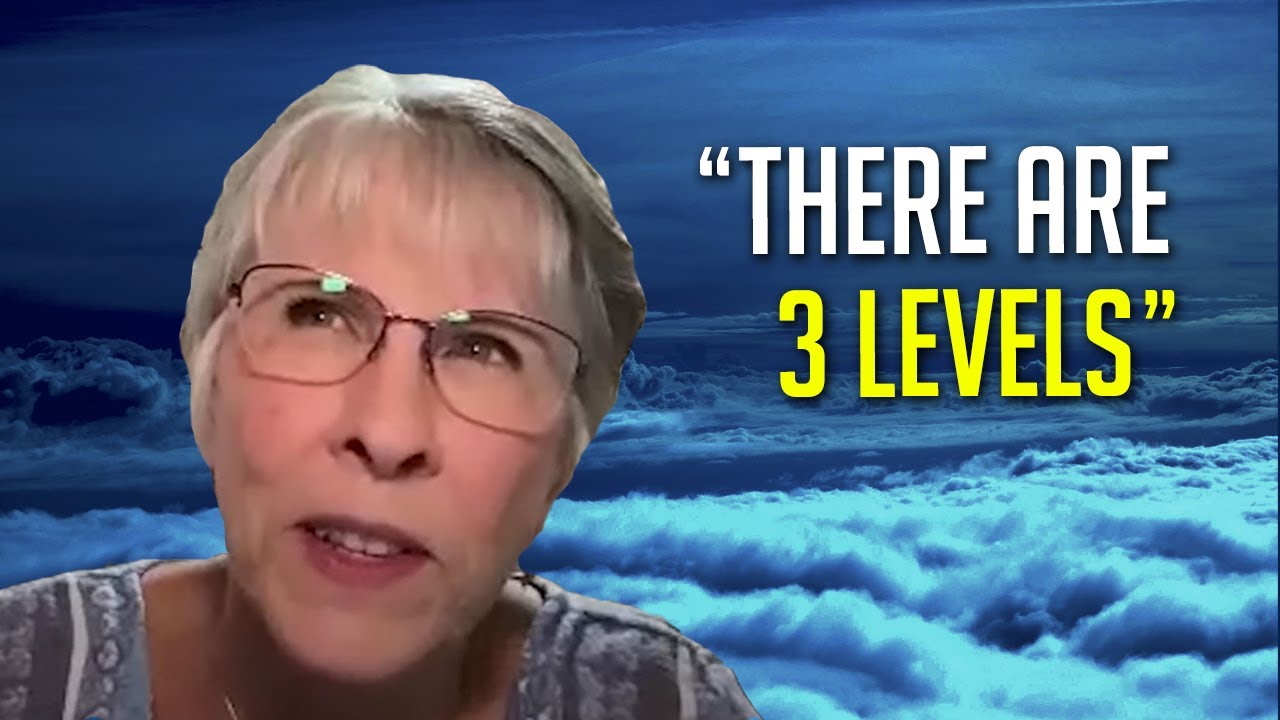
The Researcher Who Listened
Janice Miner Holden didn't set out to become one of the world's leading authorities on what happens when we die. She was a counseling professor, training therapists and school counselors, doing the work that academics do. But about a third of a professor's job is research, and her research area became near-death experiences. For 31 years, she studied "everything that is typical about near-death experiences" and their connection to counseling and consciousness.
She wasn't the first. The field of near-death studies formally began in 1975 with Raymond Moody's book Life After Life, the book that gave us the term "near-death experience." Moody had interviewed about a hundred people who'd survived clinical death and noticed striking similarities in what they reported. As Holden explains, "there were these similarities in their experiences and there were After Effects". Scientists who wanted to do rigorous, controlled research jumped on the topic.
But Holden went deeper. She didn't just catalog the experiences. She studied the aftermath, the disclosure dynamics, the grief counseling implications, the veridical perceptions (accurate observations made while clinically dead), and the phenomenon of after-death communication. She became interested in "the aspect of near-death experiences where the experiencer meets deceased loved ones and the whole phenomenon of afterdeath communication" that happens both during NDEs and outside them.
Over three decades, she examined thousands of accounts. And in those accounts, a hidden structure emerged.

The Three Levels of the Experience
Holden has come to see near-death experiences as having three distinct layers, like geological strata that reveal the deep history of consciousness itself.
The deepest layer contains features that appear across all cultures. Meeting deceased loved ones. Perceiving the material world from outside the physical body. Moving rapidly through space. Light. These aren't just common, they're nearly universal. As she puts it, "if you look at a hundred near-death experiences or a thousand of them you see that these themes recur very commonly among people".
The second layer is cultural. Because near-death experiencers are encountering "a different reality than this material reality", what they perceive doesn't always translate directly into earthly language. People interpret what they're seeing through their cultural lens, because it's the only framework they have. Sometimes culture even influences the form the experience takes.
Take the universal theme of rapid movement through space. In the West, people commonly report moving through a tunnel. In New Zealand, a Maori experiencer might find themselves "moving rapidly over the island of New Zealand toward what they call the jumping off place of souls". Same theme. Different cultural form.
The third layer is individual. "No two near-death experiences are exactly alike", Holden says. Even among Westerners who report moving through a tunnel, the descriptions vary wildly. Some describe a dark tunnel with light at the end. Others say "it's a light tunnel that is even brighter at the end". Still others report "this undulating with all these colors and things". Some perceive other spirits in the tunnel. Others don't.
This three-level structure matters because it answers a question skeptics often raise: if NDEs were real, wouldn't everyone describe the same thing? The answer is no, and here's why. The deepest truths are universal. The cultural translation varies. The personal details are unique. It's exactly what you'd expect if consciousness were encountering an objective reality beyond the brain but filtering it through individual and cultural perception.
When Jesus Appears in Seventeen Different Forms
Holden did a small study that illuminates this beautifully. She found all the NDE accounts on the Near-Death Experience Research Foundation website that mentioned Jesus and described his physical appearance. She found 17 cases. Then she compared the details.
One person said "his voice was like lilting music". Another said "his voice was like a powerful freight train". One reported blue eyes. Another, brown. A third said "his eyes weren't a color but they emanated light". Holden found no two descriptions of Jesus that were identical.
But here's where it gets interesting. In two of those cases, the experiencer reported being greeted by a spiritual entity who said, "you're about to meet Jesus". The experiencer was ready. Then the entity asked: "how would you like him to appear because he's very happy to appear in whatever way is easiest for you to perceive".
This suggests something profound about the nature of these encounters. The beings or forces on the other side are adapting to our capacity to perceive them. We influence how things appear based on what we're prepared to see. It's not that the experience is hallucination. It's that ultimate reality is being translated into forms our limited human consciousness can grasp.
Some experiencers encounter a being of light, an all-knowing, all-loving force, and immediately label it God. Others hesitate. As Holden describes, they'll say, "I don't know what that was maybe that was God but it's certainly not God the way that I learned about God so I'm hesitant to put that label on it".
Culture influences the experience. It doesn't dictate it. And we know this because people often have experiences that flatly contradict their religious upbringing. One of the most common aftereffects? "People leaving organized religion not because they're rejecting it but just because they find that it's too small to explain what they experienced". Their religion doesn't account for what they now know to be true about death, consciousness, and the universe.
The Mystery of Who Has Them
Here's a puzzle that has haunted NDE researchers since the beginning. Of all the people who survive a close brush with death through serious injury or illness, "80 to 90% of them will come out the other side and say that they don't remember anything unusual at all". Only 10 to 20% report a near-death experience.
Why? Is there something different about the people who have NDEs? Researchers have looked for patterns. Age, gender, religious background, personality type, circumstances of the near-death event. And the answer, after decades of study, is no. "There is no reliable difference between people who do and don't remember ndes".
Even stranger: some people have more than one close brush with death. Sometimes they'll have an NDE in one but not another. As Holden says, "we truly have no idea I like to say that heaven only knows why some people have ndes".
She's careful with her language here. She says "recall and report" rather than "have" because there are cases where people recalled an NDE years later, triggered by some event. And there are cases where people had one but never spoke about it until much later. But for most people who don't report one, "they just truly didn't have one".
We know this because of the aftereffects. People who report NDEs show significantly greater life changes than people who survived a close brush with death without one. The transformations are measurable, consistent, and profound.
The Transformations That Follow
Almost universally, people who've had a near-death experience report that "they absolutely lost their fear of death as a result of the experience because they now know from experience what the first moments of death are like". They feel confident that what they experienced is what death will continue to be like if they had stayed dead.
But that's just the beginning. Holden breaks the aftereffects into four categories: psychological, spiritual, physical, and social.
Psychologically, people become more compassionate, more emotionally sensitive, more committed to being helpful and kind. A lot of this stems from the life review, that panoramic replay of one's life where experiencers feel the emotional impact of their actions on others. It's not judgment from an external source. It's empathy at a cosmic scale.
Spiritually, people become more interested in spiritual matters and tend to become "more spiritual rather than religious although some people do become more religious but it's a minority". Most leave organized religion but become deeply spiritual. Many develop what are sometimes called spiritual gifts: the ability to see the future, to know what another person is thinking, clairvoyance, precognition. What we call paranormal abilities.
Physically, things get weird. Metabolism changes. People need to eat less food or develop aversions to certain foods. They become "more sensitive to medication to pollutants and allergens". And then there are the electromagnetic effects. Watches stop working. Streetlights flicker. Electronics malfunction in their presence.
Socially, all these changes add up to a fundamental shift in identity. The person is "essentially not the same person they were before their near-death experience", and that can have serious repercussions in relationships, marriages, careers.
Holden has studied the disclosure process extensively. When someone has an NDE and tells another person about it, that first disclosure has enormous impact. If the confidant responds helpfully by identifying it as an NDE, avoiding pathologizing it, not demonizing it, and "acknowledging at least the potential reality if not the reality of the experience", the person integrates it well. If the confidant does the opposite, "the person goes on to have problematic process they kind of get psychospiritual stuck" until they find an accepting atmosphere.
This matters for counselors, for family members, for anyone who might hear someone's NDE account. How you respond can either facilitate healing or cause harm.
The Question of Reality
Holden is deeply interested in what's called veridical perception: accurate observations made during an NDE that can be verified. Near-death experiencers "almost always say that the experience itself was absolutely real and often they'll say it's realer than here".
She recalls reading a questionnaire response in her dissertation study. She'd asked a participant if he would have been willing to talk about the extent to which the experience felt real. Rather than answer the question, he wrote: "that experience was realer than sitting here writing this response to you".
That always stuck with her. Subjectively, it's absolutely real to the experiencers. But for humanity to hear the message these experiences carry, the reality of NDEs needs to be established beyond subjective testimony. As Holden says, "if humanity is to hear this message then the reality of ndes needs to be established".
This is why veridical perception research matters. When someone accurately describes events they witnessed while clinically dead, while their brain showed no activity, while they were across the room or even in another building, that's evidence. Not proof in the mathematical sense, but evidence that consciousness can function independently of the brain.
The Message They Bring Back
Near-death experiencers come back with lessons. And those lessons are remarkably consistent. As Holden describes, "they tend to say is that our purpose in physical existence is to advance in our capacity to love to become more loving to each other and to ourselves".
That's it. That's the message from the other side, distilled from thousands of accounts across decades of research. Our purpose is to learn to love more deeply. To become more compassionate. To treat each other and ourselves with greater kindness.
It's a simple message. Almost embarrassingly simple. But it's also the hardest thing in the world to do consistently, especially in a culture that often rewards the opposite.
For Holden, "that's kind of my most important intention in doing near-death related research": to establish the reality of these experiences so humanity can hear this message. Because if NDEs are genuine glimpses of what awaits us, if consciousness truly continues beyond death, if we are accountable for how we treat each other not through external judgment but through direct empathic experience, then everything changes.
How we live matters. How we love matters. The small kindnesses and the daily cruelties all matter because we will eventually experience their full impact from the other side.
What This Means for All of Us
Janice Holden's three decades of research point to something that challenges the materialist assumptions most of us carry without even realizing it. We assume consciousness is produced by the brain. We assume death is the end. We assume the material world is all there is.
But the consistent patterns in NDE accounts, the cross-cultural similarities at the deepest level, the profound and measurable aftereffects, the veridical perceptions that shouldn't be possible if consciousness were confined to the brain, all of this suggests otherwise.
It suggests we are more than our bodies. That consciousness can and does function independently of the brain. That physical death is a transition rather than an ending. That we are part of something vastly larger and more loving than we typically imagine.
The experiencers who've been to the edge and come back tell us this life is the classroom. Love is both the curriculum and the teacher. We're here to learn compassion, to grow in our capacity to love, to experience the full range of what it means to be human so that when we return to that realm of light and love, we bring back what we've learned.
Holden's work gives us a framework for understanding these experiences not as random hallucinations or cultural artifacts but as genuine encounters with a reality that transcends the physical. The three-level structure (universal, cultural, individual) explains why the accounts vary in details while remaining remarkably consistent in their core elements. The aftereffects demonstrate that something real and transformative has occurred. The veridical perceptions challenge the assumption that consciousness is confined to the brain.
For those of us who haven't had a near-death experience, this research offers something precious: a window into what awaits us all. It suggests death is not something to fear but something to prepare for by learning to love more fully right now, in this life, in these bodies, with the people around us.
That's the gift of Holden's three decades of listening. She's given us a map drawn by thousands of travelers who've been to the far shore and returned. The map is consistent. The message is clear. And the invitation is urgent: love more, fear less, and know that this life is not all there is.
Was this article helpful?