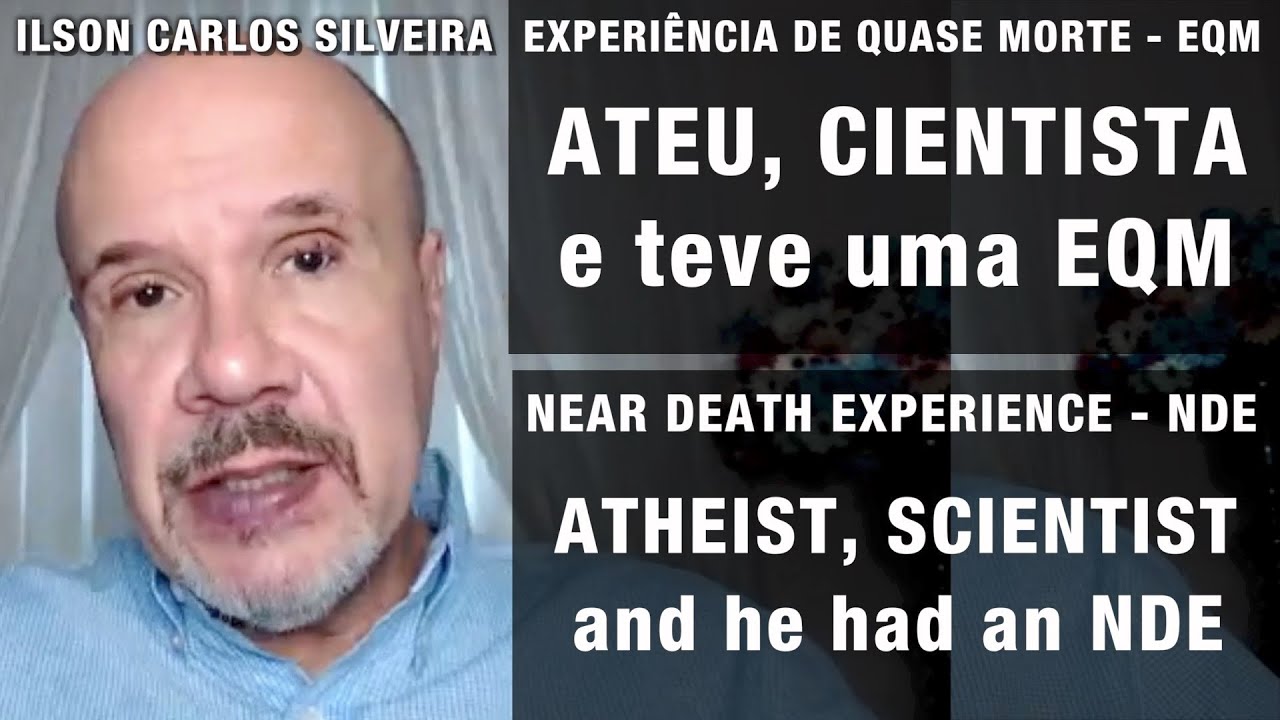
Ilson Silveira's Near-Death Experience: The Atheist Scientist Who Heard His Father's Voice
A full professor's car accident in Portugal opened a door he spent years trying to rationalize shut
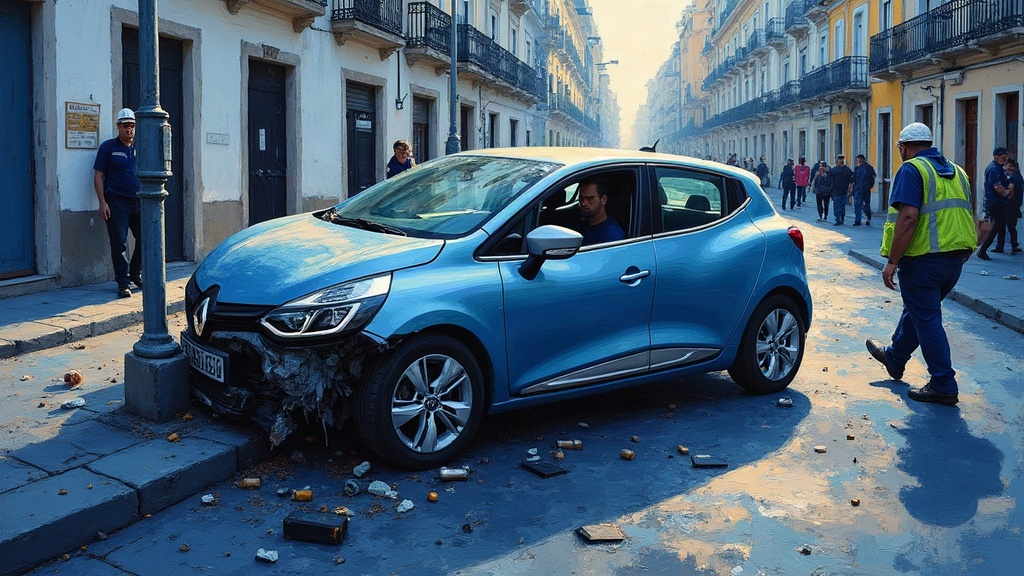
The map was open across his lap, blocking his view. Ilson Silveira, a 49-year-old oceanographer and full professor at the University of São Paulo, sat in the passenger seat of a rented Clio, helping his doctoral student navigate the streets of Lisbon. They were close to the hotel. They could see it across the wide avenue. Between them and their destination was a flower bed dividing the two directions of traffic, and a gap between the planters. His student, Leandro, said he was going to cross through the passage. Neither of them knew about the Portuguese traffic rule. Neither of them saw the BMW running the red light. The last thing Ilson remembers before the impact is moving the map aside slightly to see Leandro's face.
When Ilson woke, he wasn't in the crumpled Clio anymore. He was somewhere else entirely.
The Dark Place
Ilson describes what happened next with the precision of a scientist recounting an experiment: "I found myself suddenly awake, fully awake, in a very dark place. It was all very dark. Very, very dark."
But he wasn't alone. He could sense other people there, more than one person, though he couldn't see them clearly in the darkness. Then one of them moved closer. Close enough that Ilson could hear the voice clearly. Close enough that the tone was unmistakable.
Ilson didn't understand what these tests were. He wasn't feeling anything wrong. Quite the opposite. "What I felt was a very agreeable sensation, as if I was being cherished all the time," he recalls. It was a feeling of profound peace, of being held, of unconditional love.
The voice continued, making a strangely specific promise: "But rest assured, this return will take place in such a way that you will have no sequel. You will not have a sequel, you will walk normally, you will not have any problems with your bone marrow."
Bone marrow? Ilson found this oddly technical. He wasn't feeling any pain. Why would someone mention his spinal cord? But then the voice asked him to do something: tap his foot three times on the floor to see that he had no problem with it, that he had not lost any nervous connection with his legs.
Ilson tapped his right foot three times. The foot that was closest to where the BMW's front end had crushed into the Clio's door.
The Voice He Recognized
Ilson wondered if the voice belonged to his father, who had died exactly three years earlier. He was still grieving that loss deeply. The tone, the cadence, the familiar way of speaking, it all felt like home. Like Rio, where he was from, even though he'd lived in São Paulo for 25 years. "I wanted to believe that it was my father," he says, though he acknowledges it might have been his grandfather, whom he barely knew.
What strikes me about this moment is the specificity of the medical language. The voice didn't say "you'll be fine" or "you won't be paralyzed." It said "bone marrow" and "spinal cord." Ilson had no medical relatives. His father was an economist. His grandfather was a prosthetist without a college degree. Where did this technical precision come from?
This is one of those details that haunts me about near-death experiences. The information people receive often exceeds what they should know, what they could fabricate, what makes narrative sense. It's as if the experience itself is trying to leave breadcrumbs, little proofs that can't be explained away.
The Return
After the voice finished speaking, Ilson felt as if the person moved him, put an arm on his back, and they moved on together. Then he woke up.
Leandro was kissing his hand and crying. "Uncle, thank God you are alive, uncle, you are alive, uncle, you are alive," the student kept saying. Most of Ilson's students called him "uncle" affectionately.
Ilson, groggy and confused, asked: "I am... why, wasn't I supposed to be?"
"Uncle, the accident was very ugly, we got screwed," Leandro said.
"What accident?" Ilson asked. Then he blacked out again.
The next time he woke, they were sawing the roof off the Clio to extract him. They put a cervical collar on him and lifted him onto a stretcher. In the ambulance, he held Leandro's hand. A paramedic with a strong Portuguese accent said something that made Ilson's ears prick up: "Look, this is the first time that I have seen such a serious side collision accident, and that the person gets out the car moving the legs, usually the spinal cord, there are problems with the spinal cord."
There it was again. The spinal cord. The bone marrow. The exact thing the voice had promised him.
The Scientist Confronts the Inexplicable
Before the accident, Ilson Silveira was an atheist. Totally atheist, as he puts it. He worked with mathematical modeling of deep ocean currents. His world was equations, observations, empirical data. He had just become a full professor at USP, the youngest in his field to achieve that distinction. His life, as the voice had said, had been everything he wanted.
At the hospital, they told him he had a brain concussion and small contusions visible on the CT scan. They said he had a hip fracture that was out of alignment. They put him in a semi-ICU for observation.
But here's what they couldn't explain: Ilson never felt pain. Not once. The doctors said it was impossible. They kept asking if he needed painkillers. He kept saying no. "The doctors said it was absolutely impossible for me not to feel pain," he recalls. He has the medical records to prove it.
And that feeling, that sensation of being cherished, of being accompanied, of someone caressing him? It continued. In the semi-ICU, with people suffering and dying around him, Ilson found himself calm, reassuring other patients. "I can not imagine myself, even nowadays, acting that way," he says.
Five days later, another CT scan showed that his hip had realigned itself. The doctors said this was also very unusual. He wouldn't need surgery after all.
When his wife finally arrived from Brazil on the sixth or seventh day and rushed into his hotel room, Ilson felt something shift. "The impression I had is that something left me, did like this," he says, making a whooshing sound, "and left. And then I obviously, from then on I just felt the love of my wife, and it was a lot."
That protective presence, that companion who had been with him since the dark place, was gone.

The Rational Explanation
Ilson is a scientist. He did what scientists do: he researched. He studied what NDEs were supposed to be, the classic stages people report. He realized he hadn't experienced most of them. No tunnel of light. No life review. No out-of-body experience watching the accident from above.
Then he found something that seemed to explain everything: the Third Man Factor. It's a documented phenomenon where people in extreme survival situations, climbers on Everest, explorers in Antarctica, report feeling the presence of an unseen companion who guides and comforts them. Neuroscientists have even reproduced aspects of this sensation by stimulating certain brain regions.
Ilson read a book about it by John Geiger. The scientific explanation was that the dying brain creates this protective figure as a kind of jumpstart, a last-ditch survival mechanism. "It is explained, this is what happened to me, I remained an atheist, very well, thank you," Ilson thought. He closed the book. Case solved.
That was in 2012.
The Tests Begin
In late 2013, Ilson's life started to unravel. Serious problems began, including legal ones, that hurt him deeply and threw him into a severe depression that lasted two years. He had to medicate himself heavily just to get to the university each day. He still takes controlled medication because of it.
Many of his achievements, his respect, his renown, started to be taken from him, started to be reversed. Things that had seemed secure in his life were stripped away. The pain was profound.
One day in 2016, he was talking to a friend, Paulo Alcarpe, about what he was going through. Paulo said something that stopped Ilson cold: "Ilson, it makes sense, maybe if you were warned about it, you received something premonitory."
Ilson started thinking. The voice in the dark place had said he still needed to go through tests. The impression he had was really in a tone of regret. His life until then had been, as they used to say in the eighties, a piece of cake. And now he was facing difficulty. Real, grinding, soul-crushing difficulty.
The Third Man Factor didn't account for accurate prediction. It didn't explain why the voice had been right.
Ilson began a spiritualization process that he's still in, still questioning, still exploring. He started attending a group of spiritualist scientists at USP, physicists and astronomers and biologists who meet to discuss these phenomena. He's the skeptic in the room, always playing devil's advocate, always questioning.
But he can't deny what happened. He started to come out of depression in mid-2017. When he turned 53, he threw a party to celebrate, because after almost three years of darkness, he was alive again.
What the Experience Changed
Ilson will tell you he's not sure he had a classic NDE. He didn't see his body. He didn't acquire psychic abilities. He didn't lose his fear of death entirely, though he's become curious about what comes next.
What did change is harder to quantify but more profound. He became much less afraid of change. He opened new paths in his research. He became, in his own words, much less meritocratic and much more passionate. In an unequal country like Brazil, he realized that being meritocratic made him "a perfect idiot".
He fell off his pedestal of arrogance. He opened his mind.
"There is much more, in my opinion, there is much more between heaven and earth than vain human philosophy can understand," he says, quoting Shakespeare's Hamlet. Coming from a man who spent his career modeling ocean currents with mathematics, this is not a small admission.
He'll tell you that strange things happen to him now. Moments of knowing things he shouldn't know, like when he predicted his daughter would mention Oscar Wilde's "The Picture of Dorian Gray" in a conversation about psychology, a subject he knows nothing about. His daughter looked at him and said, "Your friend is back here."
But he won't claim certainty. "If you ask me if I believe in God, I would say to you, I tend to say yes, but not the anthropocentric God that we created," he explains. He's a scientist. He knows they don't have all the answers. "It would be very presumptuous to think that we know everything and that everything can be explained by the scientific knowledge generated by mankind so far," he says.
What Ilson's Story Reveals
I keep coming back to three things about Ilson's experience.
First, the medical specificity. A voice that uses technical anatomical terms, that predicts with precision what doctors will later confirm is unusual (walking after such a severe side collision, the hip realigning on its own, the absence of pain). This isn't the language of wish fulfillment or dream logic. It's targeted, accurate information.
Second, the timeline. The warning about tests came years before the tests began. Ilson had closed the book on his experience, filed it under "brain phenomenon," and moved on with his life. He had no expectation of trouble. When the trouble came, it came hard and specific, exactly as foretold.
Third, the transformation. Not instant enlightenment, but a slow, resistant, scientifically rigorous opening to possibilities he'd spent his career dismissing. Ilson didn't want to believe. He fought it. He's still fighting it, still questioning, still demanding evidence. And yet something in him has fundamentally shifted.
This is what makes accounts like Ilson's so compelling. They don't fit neat categories. They resist easy explanations. They come from people who have every reason to dismiss them, who tried to dismiss them, who are embarrassed by them.
And they keep happening.
Ilson's experience suggests something I've seen across thousands of accounts: consciousness is not produced by the brain. It interfaces with the brain, uses the brain, but it is not the brain. When the brain is compromised, when it's concussed and contused and barely functioning, consciousness can still be crystal clear, still receive information, still make predictions about the future.
The voice that spoke to Ilson in the darkness knew things. It knew about his spinal cord before the doctors examined it. It knew about tests he would face years later. It spoke with the cadence and care of someone who loved him.
Was it his father? His grandfather? A guide? God? Ilson doesn't know. He's not sure it matters. What matters is that in his darkest moment, quite literally, he was not alone. He was cherished. He was held. He was promised that his suffering would have meaning, and that promise has been kept.
This is what awaits us, I think. Not certainty, but presence. Not answers, but love. Not an end, but a continuation we can barely imagine and certainly can't prove, until we experience it ourselves.
Ilson tapped his foot three times in the darkness, and woke to find himself still here, still breathing, still walking, still questioning. Still accompanied by something he can't quite name but can no longer deny.
That's enough. That has to be enough. Until we know more, it's everything.
Was this article helpful?