Donna Rebadow's Near-Death Experience: Drowning, Divine Love, and the Power of Choice
A college professor's lake accident led to an encounter with the Creator and a radical understanding of choice
Donna Rebadow was laughing, spinning on an inflatable raft behind her brother-in-law's boat in the Adirondacks, when she heard him yell that the boat was sinking. She glanced down. The tow rope had wrapped around her leg. The engine roared. She thought, 'This is gonna hurt.' What happened next was a drowning that shouldn't have been survivable and an encounter with the Creator of the universe that rewrote everything she thought she knew about consciousness, love, and the choices we make in every single moment of our lives.
The Lake Toy and the Impossible Rope
Donna Rebadow spent three decades as a college professor in Phoenix, teaching with two master's degrees behind her name: one in physical education, one in Oriental medicine and acupuncture. She'd fought her way into those credentials because she saw the discrimination women faced and figured she'd need twice the qualifications to land half the opportunities. By 1998, she'd built a solid career, an acupuncture clinic, and a rhythm to her life that felt normal and predictable.
Every summer, her family claimed a week at her brother-in-law's company cabin in the Adirondacks. They fished in the early mornings, water-skied when the lake was calm, and dragged an inflatable raft with pontoons (what they called a lake toy) around the water for pure, simple fun. Donna describes the scene: "My brother-in-law was spinning us around, we were laughing, fell off into the water, we'd get back on the boat, you'd go back out, so everything was normal."
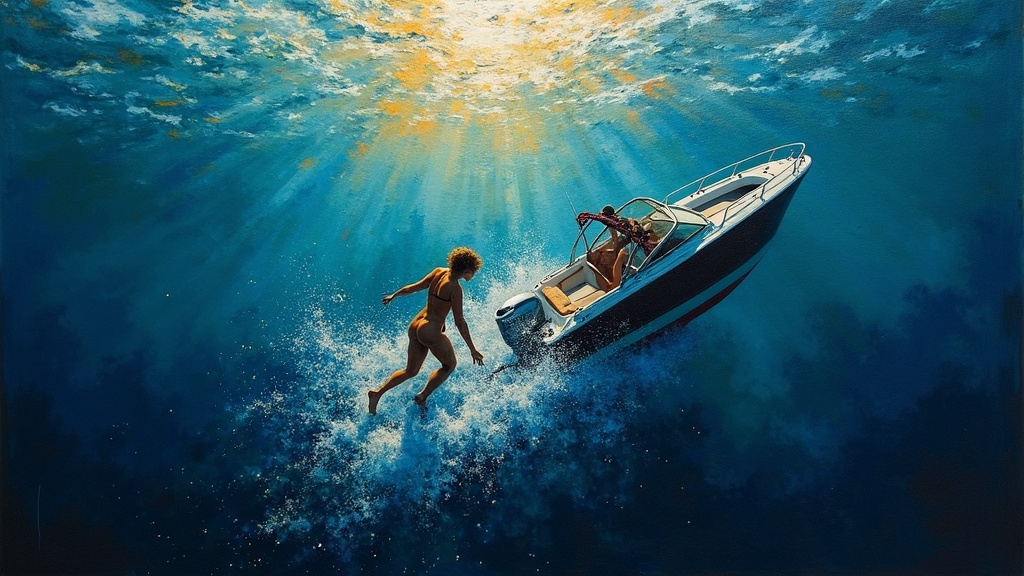
That morning, she and her older sister climbed onto the raft. Her brother-in-law, his nephew, and the nephew's baby were in the boat. They'd just been dumped off and climbed back on when Donna heard her brother-in-law yell, "Get off the bullet, the boat is sinking." She looked behind her. Her sister threw the tow rope to the left. Donna and her sister went into the water to the right.
Then Donna looked down and saw something that shouldn't have been possible. She says, "The tow rope's wrapped around my leg, and I said that's impossible, there's no way this rope can be, I wonder if it's an optical illusion, is it around my leg?" Nylon tow ropes float. They don't sink. They don't wrap around legs. But this one had.
Her brother-in-law couldn't see her because the inflatable raft blocked his view. Donna heard the twin-powered engine start and thought, "Oh, this is gonna hurt." He took off. The rope strangled her leg to the bone. There was an explosion of pain in her head. Then she was being dragged underwater, the force of the water hitting her chest, air bubbles streaming out of her mouth.
She remembers thinking, "I really could use the air, I really could use that, oh my God, the next thing because I'm being told like this is all that college education and I can't get out of this." She started swallowing water. The power of the boat made it impossible to stop. Donna says, "I knew I was going to die. There was a, I wouldn't say a piece in it, but there was no sense in being angry, it just was. I knew there was a knowing that there's nothing I can do."
So she started thinking about logistics. Where would they have the funeral? Arizona or New York? How would they handle this?
The Veil and the Vibrating Cells
While she was thinking about funeral arrangements, Donna separated from her body. She went through "this Saran Wrap kind of veil, it was very thin but it was something there." As she popped through, she thought, "Oh, I'm dead. Oh, I brought my Consciousness with me. Wow, that's pretty cool."
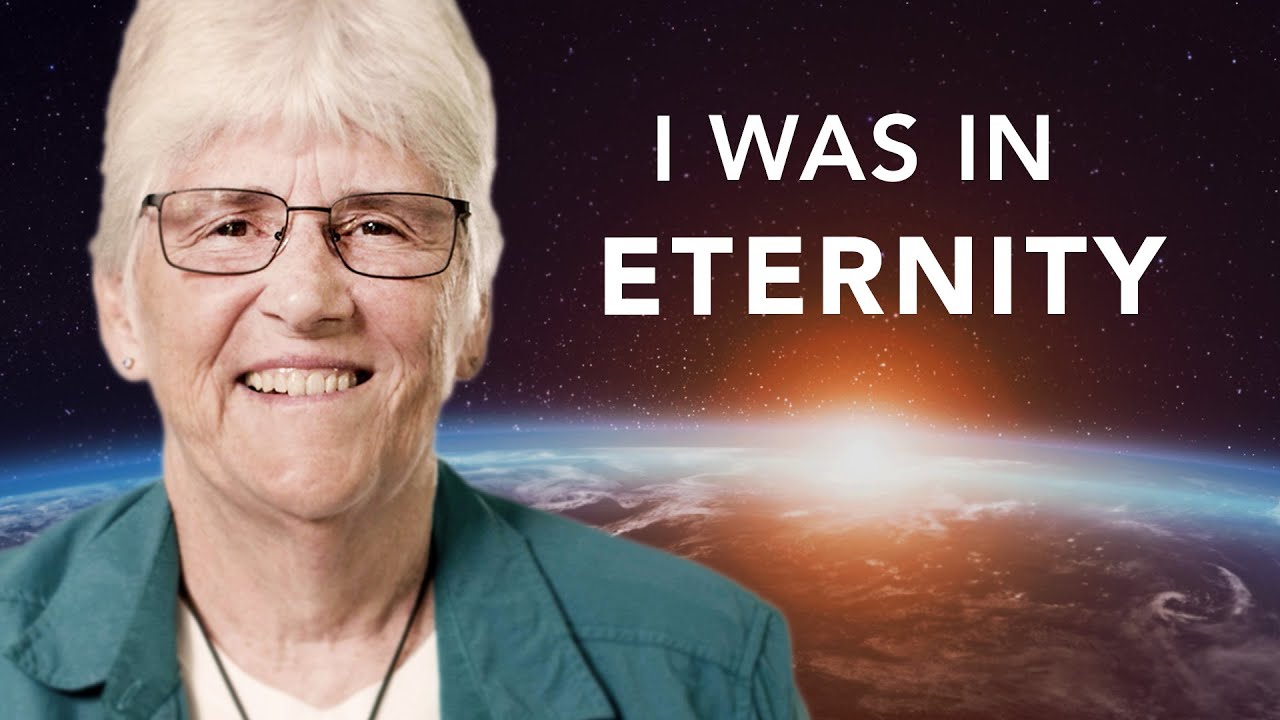
Then came the realization that changed everything. Donna describes the moment: "It was like oh my God, there's a difference between time and no time. I knew I was in eternity."
Her body, or what she perceived as her body, started vibrating. She saw "each cell, trillions of cells that look like a happy face, like they're like, and they start giggling, they're just everything's funny." She looked down at them and asked what they were doing. The cells answered, "He's coming, he's coming, he's coming."
Donna felt something rising up from below, as if from beneath the earth. She says, "As it's coming up I'm going oh my God, it's the creator of the universe, oh my God, and I'm going to my cells and I know why you were excited, this is so exciting, and so boom, face to face with the creator of the universe."
The Creator Without a Face
The Creator "doesn't have a face, he doesn't have a pro, it's no pronoun, it's not a he, it's not a she, it's not an it, it is the creator of the universe." Donna struggled to describe what she saw. The best she could manage was "like the Aurora Borealis, it was this wavy different colors electric being."
Communication happened through telepathy, but not the vague sense of knowing that people sometimes describe. Donna explains it like this: "You know when you go to the bank, you go to a driving bank that teller, and you put your money in that little tube and it proof it goes out? It's like that. It's like a tube of knowledge that is being sent into your brain this way, and when it gets into your brain it unpacks."
She had a thought. The Creator had the exact same thought at the exact same moment. She thought, "I am the creator of the universe," and heard back, "I am the creator of the universe." She thought, "Oh my God, you know everything," and heard, "I know everything."
The conversation continued, this beautiful synchronized exchange where Donna realized she was in the presence of something that knew the full expanse of eternity, the meaning of multi-dimensional existence, the reality beyond anything she'd ever imagined.
She started looking back toward Earth, worried about how her family would handle her death. Then she heard a telepathic voice (not God's voice, she clarifies) say, "Don't worry." As soon as she heard that and turned back, Donna says, "Everything on Earth disappeared, all 3D people I know, just it's existence no longer occurred to me because I was so focused in the present moment of what was happening here."
Grains of Sand and the Number of Hairs
God told Donna, "I even know the number of grains of sand on a beach in New Zealand." Before she could process why God would say that specific thing, she was rocketed down to a beach in New Zealand. Her eye was "right up against the grain and I knew immediately how many grains of sand were on that beach, and then I rocketed back up in front of God."
God said, "I even know the number of hairs on your head." Up until that moment, information had been coming through Donna's head (or what felt like her head) in that tube-like telepathic way. But then, "All of a sudden love, what you, the concept of Love became palatable and was shooting through my body this way, so I don't have a body but it's like I had a body."
She understood, "Oh, now I know Bliss, love and Bliss." The Creator called her by her name. Not Donna. Her real name, "a name that God knew me as through the Millennium, millennial, however long that is."
She was in a space she never wanted to leave. She moved through the universe, receiving knowledge about how things work, until they came to what felt like a stop.
The Choice She Gave Away
God asked her, "So, Donna, what would you like to do here?"
Donna had never expected to be asked this question. She'd heard other people say they'd ask God specific things when they died. That's not what happened. She looked at God and said, "Well God, since you made me, I give the choice to you."
Immediately, she realized what she'd done. She'd given away "knowing what was going to happen next." Some people told her later that giving the choice to God was itself a choice. Donna insists, "No, I said I gave away knowing what was going to happen next."
She thought, "Oh." Then, "Oh, I just swore in front of God." Then, "Look, he's gotta go, oh no, I'm sorry."
While she waited for God to answer, she heard another being say, "When you go back, you will tell people how important choice is in their lives." This wasn't about choosing what to have for dinner. The message was, "Every moment of your life you are making choices in your thinking, how you think about people, how you think about the story someone tells you, something that goes against your belief system and you go I don't I don't really believe that, even if you don't say that's a choice."
Donna explains that even when you're sitting in a coffee shop and you look at someone and think their coat doesn't match their shoes, "You think just because you don't say it that it doesn't have an impact, but that's not true, there's an energy associated with that."
While she was getting this lesson in surrender and choice, she felt herself "falling back to Earth." As she fell, she heard, "Good answer."
The Hand on the Shoulder
Donna snapped back into her body and realized her lungs were full of water. What happened next shouldn't have been possible.
Her brother-in-law was driving the boat when he felt "a hand on his shoulder." No one was there. He turned around. The sensation made him stop the boat. He saw the inflatable raft acting strangely and realized Donna was on the end of the tow rope.
Donna started swimming toward the surface. She put her hands up "like this" and "felt human hands under my armpits." She thought it was her sister. She looked down at the rope wrapped around her leg and thought there was no way they'd get it out. As soon as she thought that, "The Rope comes undone." She got to the surface. No one was there.
She felt "like pounding on my back" and started vomiting gallons of water. Her sister swam across the lake like superwoman. Donna looked down at her leg. It was "in half." She held onto it and yelled at her sister not to look. Her sister looked and started screaming.
Donna went into instructor mode, telling her sister how to handle shock, to keep her legs elevated, to hold onto her leg. Her brother-in-law came out with another boat. Donna told him, "No, if you get me on the boat my leg won't fall off, so just drag me back in."
They dragged her back to the dock. The ambulance came. The lake was full of giardia, so she'd swallowed all of that along with the water. The emergency room gave her antibiotics for the leg and the water, pain pills, and sent her back to the cabin with instructions to ice it.
Donna reflects on the impossibility of what happened: "The fact that the boat was sinking when water can't get on it, that the tow rope that can't sink isn't supposed to float didn't, and how it ripped on my leg, how it got out of my leg, that that was a series of impossible things."
The New Normal
For the first year, Donna only told her circle of friends. She didn't tell her family. She didn't know "there was such a thing as a near-death, I didn't know what nde meant, I didn't know there were nde groups, I didn't know there was anybody I could talk to about it." So she kept talking to the other side, setting intentions before sleep, asking questions about what was happening.
The first six months were about dealing with the wound itself. She had no feeling in her calf, no feeling in her toes. She dragged her leg around, which wasn't ideal for a teacher used to walking around the classroom. She sat instead, not wanting her students to see her drag her leg.
One day, she went to make a deposit at the bank next to her acupuncture clinic. As her nerves started to regenerate, she experienced "an explosion of pain, you can't not yell no matter you know what you do." She shoved her deposit slip to the teller and yelled. The teller thought Donna was robbing the bank and yelled back. Everyone in the bank got on the ground or called the police. Donna tried to explain it was just her leg, pulling up her pants to show the bandages. She had to explain to the police that she wasn't robbing the bank.
That became "a new normal of you know being careful of where I am went and I you can't predict when you're going to have nerve pain."
Years later, someone told her about IANDS (the International Association for Near-Death Studies) and the Monroe Institute. When people asked what her experience was like, she said, "Here's how I feel about it, it was a designer death. We each get a designer death because God knows you so well to the nth degree."
It blew up "my whole belief system of what I was taught, what I grew up with, and what I saw." It took her years to assimilate the spirituality she'd encountered. If someone said, "Well you know this is how God works," she'd think, "That's not how I, that's not what I saw, that's not what I heard."
It changed "my life, it changed everything I think about, everything so different, every moment."
The Love That's a Hundred Times Better
Donna says, "I've Loved deeply here, I know what that love is, and it's the most powerful force on Earth." But the love over there is different. It's "a pure love." She struggles with the concepts, trying to explain that the love of a husband or wife or child, seeing the birth of your child and thinking it's such bliss that it can't get better? "It's a hundred times better."
She asks the skeptics who think NDEs are products of the brain, "How do you explain that? How do you explain to me because I know love here and I know love there?"
Every cell, "every part of you that makes you who you are is bathed in this pure Bliss of safety and security and love and that you never want to leave." This is why some people who are given the choice say, "I'm not coming back, if you listen to near death stories, I was given a choice and there's no way I'm going back there."
Life here "is hard. This isn't heaven. It's a working planet." You have to figure out how to assimilate suffering into your belief system. Some people call it a school, a hospital, a working plan. Whatever you call it, "This is not that."
What you bring there "is what you're able to work through and work out in your own heart. You bring your heart there, you bring the essence of your heart and love there."
Awareness, Search, and the Present Moment
Donna's advice is simple: "Be aware of every moment if you can." She knows that for most people, that's not possible. Most people have what she calls "an eight-track brain, you know eight things are going on, I got a grocery list, I have trying to resolve this issue, I have these things to do, I have these decisions to make."
She sees her students living an eight-track life, and it's difficult "to get that down to the present moment." So it becomes about awareness first. You have to be aware "of where you are in your spiritual, in your life. I saw that with my students, where are you in your belief system, where are you in your life, where are you and your goals?"
The second thing is search. "I want to search for what I think is the truth." Some people search in Catholicism, Judaism, Christianity, Hinduism. The truth is "wherever you land and over time does it serve you, because you begin to assimilate other information."
We're on an education journey, a life journey, a work journey. Donna tells people, "You're a human being, not a human doing, so take a deep breath, work through this, can you look at a different way?"
Her goal is simple: "Is there anything that I can say to change your perspective one degree? That's what I'm here for. Can I change your perspective one degree and let that Bubble Up Inside you?"
She asks people to be aware of possibilities. Are you aware "of the possibility that there's an afterlife? No, no, there's no afterlife, you guys are making it up." But if she can get someone to set aside their belief for a moment, just listen, be open to possibilities, then they can pick up their old belief system or begin to assimilate something new.
There's nothing "I'm going to say to you to convince you of an afterlife. This was my experience of afterlife. This was my designer death. But it wasn't what I thought it was going to be and it radically changed my entire life."
Don't Wait
After her NDE, Donna made sure she was living a full life. She brought laptops to Mayan students in Chiapas, humanitarian aid to war-torn Croatia. She was in China studying during the 2008 earthquake and did relief work there. She's been a humanitarian, a poet, a writer. It wasn't "so much human doing as much as I was experiencing the planet."
People asked her questions about her travels, and every single person said, "I'm waiting, waiting till I retired, I waited until the kids come out of the house, I'm waiting for this check to come in." Donna's response? "Don't wait."
She understands you can't just drop everything. But "you should never say to yourself I'm gonna wait." She has a podcast. She's learning metal smithing, making jewelry. She wants "to experience this, none of that's on the other side, you know, none of that, so that's here."
She set up her house with different rooms: a podcast room, a music room, spaces to explore and create and enjoy this physical existence that won't be available on the other side.
What This Experience Reveals
Donna Rebadow's account sits at the intersection of several patterns we see repeatedly in near-death research. The separation from the body, the passage through a boundary (her "Saran Wrap veil"), the encounter with a being of light, the telepathic communication, the life review elements, the choice to return (or in her case, the surrender of choice) are all well-documented features of the NDE phenomenon.
But what makes Donna's story particularly striking is her description of the nature of choice and its energetic consequences. The message she received (that every thought, even unexpressed, carries energetic weight) aligns with findings from consciousness research suggesting that intention and attention shape reality in ways we're only beginning to understand. Her experience suggests that the universe is far more responsive to our inner states than materialist frameworks allow.
The detail about God knowing the number of grains of sand on a specific beach in New Zealand is fascinating. Why New Zealand? Why that level of specificity? Donna herself wondered this. It's the kind of detail that doesn't fit neat theological categories. It feels spontaneous, unscripted, real. It suggests a Creator whose knowledge is so vast and intimate that it includes not just the broad strokes of cosmic order but the granular particulars of a single beach on a distant island.
Her description of love as "a hundred times better" than the deepest human love resonates with thousands of other accounts. Experiencers consistently struggle to find language for this love. They say it's unconditional, infinite, all-encompassing, but those words feel inadequate. Donna's approach (acknowledging the difficulty of the concepts, honoring the love she's known here while insisting the love there is categorically different) is honest in a way that builds credibility.
The physical impossibilities of her rescue (the hand on her brother-in-law's shoulder when no one was there, the hands under her armpits lifting her, the rope coming undone on its own) point to something we see in many NDEs: the boundary between physical and non-physical reality becomes permeable. Consciousness seems to interact with matter in ways that shouldn't work according to our current models.
Donna's life after the NDE reflects the transformative power of these experiences. She didn't retreat into contemplation. She went to Chiapas, Croatia, China. She built a podcast, learned metal smithing, created spaces for exploration and creativity. Her message (don't wait, be aware, search for truth, change your perspective one degree) is grounded and practical. It honors the urgency of physical existence while holding the certainty of what comes after.
What Donna experienced suggests something beautiful and liberating: we are known, completely and intimately, by a consciousness that is both infinite and personal. The choices we make in every moment matter, not because we're being judged, but because we're participating in the ongoing creation of reality. And the love waiting for us on the other side is so far beyond anything we've experienced here that even our deepest joys are just shadows of what's coming.
That's not speculation. That's the testimony of someone who went there, saw it, felt it, and came back to tell us. And she's not alone. Thousands of others have brought back the same message: we are eternal, we are loved, and this life is the classroom where we learn what love really means.
For more of Donna's insights, you can watch her full interview with IANDS or explore other accounts where experiencers attempt to describe the nature of heavenly love. Each account adds another brushstroke to a picture that's been emerging for more than 50 years: consciousness is primary, love is the ground of being, and death is not the end of anything that matters.
Was this article helpful?