Dianne Sherman's Near-Death Experience: Finding Home in the Light
A former model dies during routine knee surgery and discovers the one place she'd been searching for her entire life
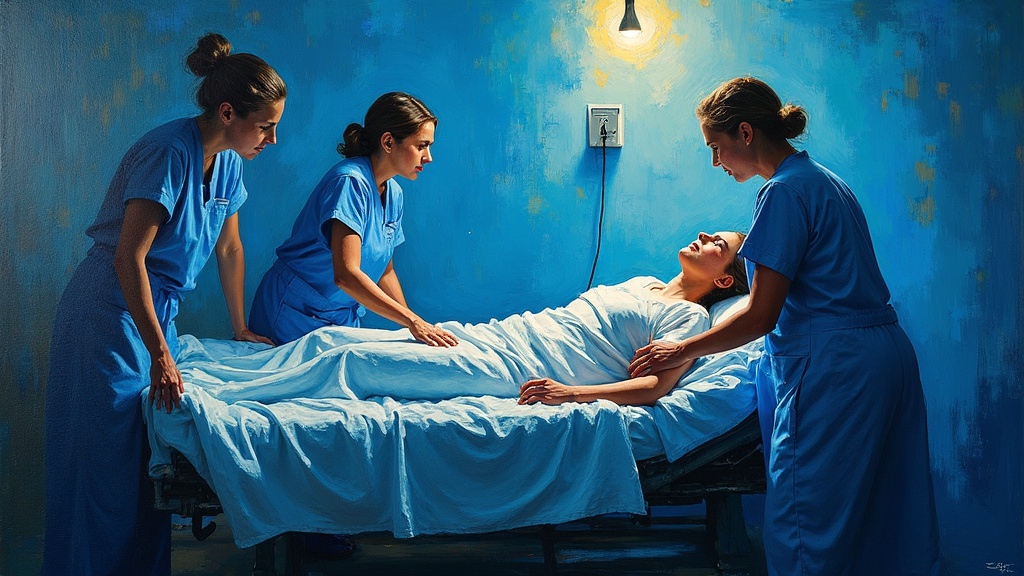
Dianne Sherman was standing at the foot of a hospital bed, watching nurses work frantically on a woman's body. She kept trying to tell them they had the wrong patient, that she was fine, right here, waving her hand. They couldn't hear her. They were too busy trying to save this woman's life. And then Dianne realized something that should have been impossible: the woman they were working on was her. She was looking at her own body from across the recovery room, and the strangest part wasn't the out-of-body perspective. It was that she felt absolutely no connection to that form on the bed. She recognized herself, but that body, she would later say, had nothing to do with who she actually was.
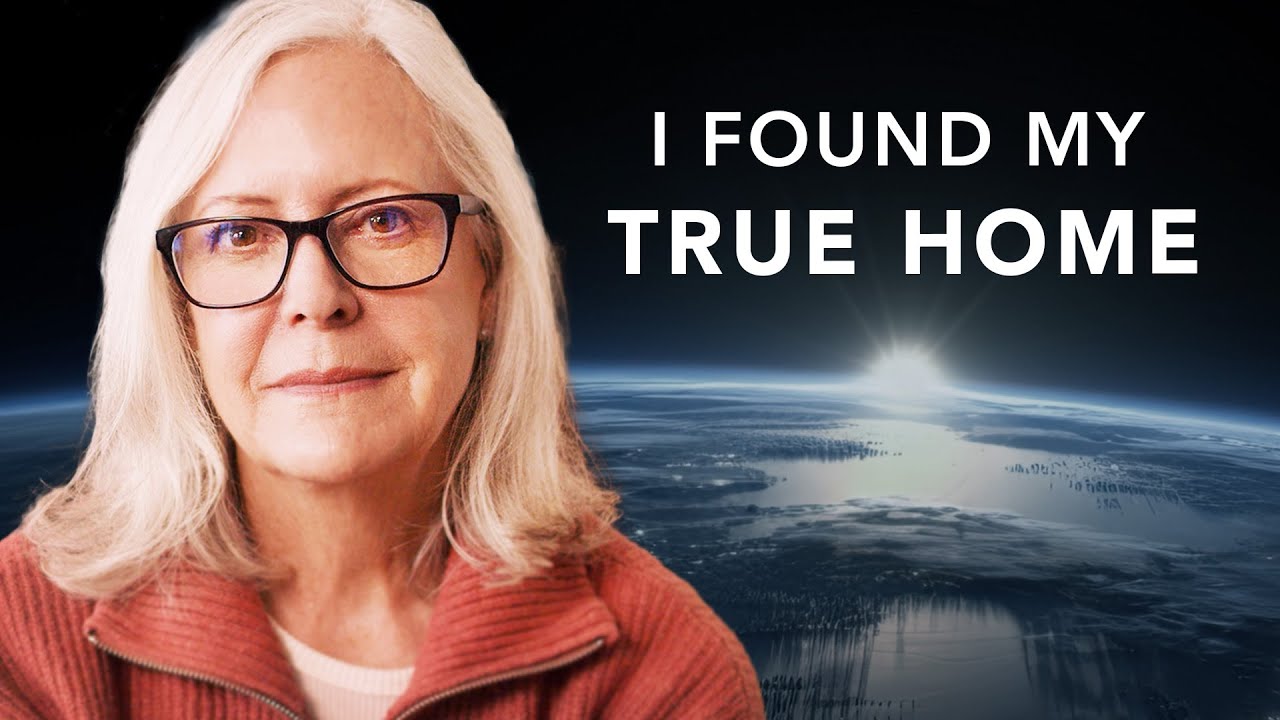
The story of what happened next, in a Los Angeles hospital in 1981, would reshape everything Dianne thought she knew about life, death, fear, and the nature of home.
The Girl Who Never Fit
Dianne Sherman grew up in a world that looked perfect from the outside. Beverly Hills. Country clubs. A month in Hawaii at age ten, the Orient at thirteen. One Christmas, her mother bought an entire children's store, had it craned into the backyard, and turned it into a dollhouse for Dianne and her sister. "My life was magical in so many wonderful ways," Dianne recalls, "and I'm so grateful for all of that."
But there was a problem. "The juxtaposition of that to what I felt and what I saw and how people were interacting made none of it worthwhile," she says, "because I never felt like I could fit in to wherever I was." The elitism and snobbery of that world wasn't who she was. She didn't understand the need for the facade people adopted in those circles.
She'd always been a misfit, quiet within herself, but also aware of things other kids weren't. She and her sister used to laugh that they had ESP with each other. They always knew intuitively when some trauma was coming in the family, and there was plenty of it. Her father was a heavy drinker and an angry man, a rager. Her mother, amazing in many ways, was deeply fearful and taught her daughters to be the same. Women didn't have much power in that era, and Dianne grew up feeling profoundly disempowered.
She became a model, working in the industry for nearly seventeen years, but it was just another form of insecurity. "I was again trying to live up to something I didn't feel I had the goods to do," she admits. She was afraid every single time she stepped onto a runway.
The Breaking Point
By her early thirties, everything had fallen apart. Both parents were dead. She was divorced with a six-year-old daughter. She didn't know what to do with herself or where she was going. "I just felt like a failure," she remembers, "because here I was divorced, little girl, not knowing where I'm going what I'm doing."
One afternoon, she went to church. What happened there felt like something out of a movie. She was almost prostrated on the floor, begging and pleading: "Please show me guide me give me some information I don't know what to do."
Three days later, she had her near-death experience.
The Surgery That Changed Everything
Dianne had waited ten years to have knee surgery. Back in her twenties, she'd been in Acapulco with her husband when a swimming accident dislocated her knee and tore everything up. She'd almost drowned. Her husband, a water polo player, pulled her out and saved her. But the only surgical option at the time was a full open patella procedure, and as a working model, she couldn't risk the scarring.
By 1981, arthroscopy had advanced enough to make the surgery feasible. She was confident going in. The procedure itself went fine, except they discovered far more damage to repair than they'd anticipated. There were no MRIs back then. Dianne was on the table an hour and twenty-five minutes longer than expected, and at that time, she was very, very thin. The anesthesia was too much for her body.
Something had been off from the start. Sitting on the gurney before surgery, her body started to shake uncontrollably. A nurse brought her a heated blanket, which seemed to calm things down. But when they put another blanket on her in the operating room, she went out before they even gave her the medication. That should have been impossible.
Standing at the Foot of Her Own Bed
"I'm in recovery and I'm hearing the sound next to me," Dianne describes, "and I'm very fuzzy and you know sort of disoriented and whatnot and I don't want to look over where the sound is coming from."
But she could hear them. Voices saying, "Diane wake up Diane wake up."
Her first thought was absurd but felt completely real in the moment: "Oh my God they've got the wrong person they've done the wrong surgery," she thought. "And I'm raising my hand and I'm saying wait that's me that's me you've got the wrong person I'm here and I'm fine."
No one paid attention. "They're too busy they're working on this person trying to save her life," she realized. And then her perspective shifted. "As I'm thinking that I'm now standing at the bottom of her bed looking up to her while they're working on her."
The funny thought, she says, was this: "I see me fully and I see me there and I had no connection to me at all." She recognized herself, but "that body had nothing to do with me."
Then she was being pulled up into the corner of the room, looking down on what they were doing. "I'm sort of notating and fascinated but not engaged in any way," she recalls. "It was like I have no business here."
Into the Darkness
The next thing she felt was being pulled back and then pushed forward into darkness.
For Dianne, this was the worst possible thing. "As a kid the worst thing that I dealt with was fear of the dark," she explains, "because I never knew what was coming in the dark." There had been abuse and trauma in her childhood home. Being fully in the dark was too vulnerable, too overwhelming, the scariest thing in the world.
But something in her shifted. "I thought if I can just find one little tiny glimmer of light one little speck of something to hold on to I'll be okay," she remembers. And she did. One little spot of light. "I'm gonna just hang in with it and it's gonna be okay and I'm gonna be okay," she told herself.
As she stared at it, "it's starting to get bigger and bigger and bigger and it's coming closer and closer and all of a sudden it's just it's everything around me."
The Light That Was Everything
What Dianne saw next defies description, but she tries. "I'm looking at the light and I'm thinking what is this," she says, "because it was like clouds the white is a color I've never seen before it almost has like all the colors of the rainbow in it but it's white you know it has this glistening effect to it."
"It wasn't just light it was substance and feeling," she emphasizes. "And it's all around me it's all I can see all I can feel all I can experience and I don't have words for it."
How do you describe unconditional love? "I don't know how to describe it," Dianne admits. "All I know is I have never felt so cared about adored cherished safe anything you'd ever wished for to have in the world in that moment is what I felt."
"Satisfied satisfied beyond my wildest dream."
She began moving through the light, and it parted.
The Monks in Brown Robes
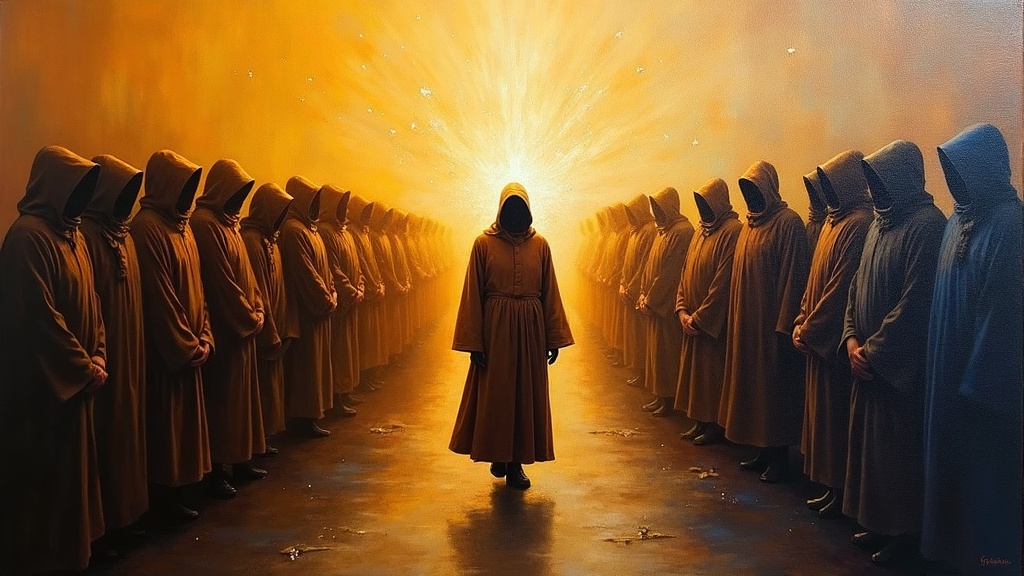
"All of a sudden I see these two rows of what look like monks to me in brown robes with the hoods up," Dianne describes. "And I'm like floating through them and it sounds so silly every time I say it that I'm floating it was like something out of a movie."
As she passed between them, "I could just feel the love they were radiating to me."
This was significant for Dianne in a way she didn't expect. "I wasn't that comfortable with men because of my childhood with my dad," she explains, "and somehow these male energies all felt so loving and supportive and it was like a healing almost for me being in their presence."
At the end of the row, one of the monks stepped out. "He says and I always say he because he felt all those good feelings of masculinity," Dianne notes. Inside the hood, there was no face, just blackness. But "it's like energy moving and they're little tiny Sparkles of color or light or whatever that you see in the energy," she describes. "It's nothing I've ever seen before but it seems so normal and natural because he's speaking this energy through me and I'm responding to him through him."
You Cannot Stay
"He's saying you cannot stay you must go back," Dianne recalls, "and I said I have finally felt what it feels like to be cherished you cannot send me back from this."
For someone who'd spent her entire life feeling like a misfit, never fitting in anywhere, this was the one place she'd been searching for. "The one place I wanted to be in my whole life was here home I'm here you cannot send me back," she pleaded.
The being's response was simple and absolute: "You have a child. You must go back."
"And in that moment I'm back in my body."
The Awakening
Dianne had no memory of the experience when she first woke up. The memory didn't surface until weeks later, when she went out to dinner with her sister. It was the first time she'd been in a restaurant or around a group of people since the surgery, she was still on crutches, and what happened shocked her.
"I'm walking into this restaurant and all of a sudden I am feeling everything and everybody all their physical pain all of their fear and anxiety all of their chatter," she describes. "It's all just like coming at me and I thought oh my God I'm becoming psychotic."
She'd never felt anything like it before. To be that aware, that open to maybe forty people in a room. "It was like what's happened to me," she wondered.
She just knew she was different. Her life was different. She felt differently about everything. She'd never heard the term "near-death experience." Raymond Moody's book had been out for only a year when this happened to her, and she had no awareness that anything like this could even occur.
At first, "it felt a little bit like a burden in the beginning only because it was so big for me," she admits. The awareness that she had died was big. The awareness of what the experience was, was big. The awareness of now having sensitivities with people was big. "It was like okay this is who I am now," she realized. "What am I going to do with it how am I going to handle this can I work with this can I live with this what's what is it that I'm supposed to do with it and for it."
Spirit-Led to Purpose
"I was led I literally was Spirit led to people who could guide me and show me and help me understand that I now had gifts and talents I didn't have before," Dianne explains. She worked with people who taught her deep meditation. She got into channeling and having visions. It took quite a long time to sort it all out.
People had always come to her with their problems, even as a kid. But now, when people started gravitating to her after the NDE, "I realized that there was something here that I was supposed to be doing some Touchstone for people that I was supposed to unlock for them to help them move forward and get out of their pain and suffering," she says. "It just felt like something I wanted to do and felt comfortable doing."
But the old insecurity was still there. "I didn't feel that I had the credentials I didn't feel like I had gone to school and gotten all the education and everything else in order to do this with people," she confesses. But her clients kept telling her: that's not what we want you to do. We want you to do something different.
"I had to trust that to step out and say I'm doing this," she recalls. "And I battled with how dare I do this work but yet I do amazing sessions with my clients and it's making differences in their lives and every time they get a healing I get a healing and so I know it's right."
It took tremendous courage for the insecure version of herself, the one who didn't know who she was or what she was going to do, "to trust to just go out and do this and say I can help you I can make your life better." Where does that kind of confidence come from? From being guided and taught "to know and to get grounded in myself to say yes you can do this," she explains.
The transformation was profound: "To go from being intimidated by what people thought of you to it's not my business what they think of me I know where I'm going has been a godsend and a life changer."
Fear's Greatest Teacher
"Fear's been my biggest teacher," Dianne reflects. She loves one particular acronym: "F-E-A-R stands for forgetting everything's all right."
"I know no matter what's happening all is well," she says, "because I know spirit's working on my behalf has my back 24/7."
Think about that journey: "From going from the scared kid who had two ulcers by the time I was 21 to being the grounded Warrior woman that I am now has been an amazing journey."
"And we can all be that," she insists. "If we trust ourselves in our connection there's nothing to be afraid of here that's what I learned."
What's Real and What Isn't
"Things are not as they're represented," Dianne explains. "This all seems like reality but once you've been on the other side this is not reality that is. This is the story."
Once you have an NDE, your sense of money changes. Your sense of what's really important changes. "For me it's connection it's that connectedness to other beings in the world that's important to me," she says. "It's not about what they do or how much money they have or any it's the connection I'm always looking for."
"The Miracles the magic I don't look for what's wrong I look for what's right," she continues. "I stay in gratitude in the Forefront it's gratitude and playfulness. I let the rest of it go it's not my business."
Dianne has also shared her insights about the dying process and the unique sensory experiences of the afterlife in other interviews, including descriptions of music and colors in heaven and the nature of the dying process that align with thousands of other accounts.
Love Yourself First
"Whoever you believe created us is benevolent not malevolent," Dianne states firmly, "would never have created the pain and suffering that we as human beings have created for ourselves."
"We have to learn to self-regulate," she continues, "and the best way is through loving ourselves. When you love yourself and you're not in Judgment of yourself you stop judging everybody else."
"And we have to have compassion and empathy for ourselves and each other."
"Our job is to be the best version of ourselves at all times so that we carry that into the world and make the vibratory frequency in the world better," she explains. "And when we learn to do that in Mass it's going to be yummy because this is supposed to be fun. This is not supposed to be painful we didn't come here to suffer that I know with all of my heart."
Invincible at 76
"All I can say is I have never been stronger than I am right now at 76 years of age," Dianne declares. She'd just turned 76 a couple weeks before this interview. "I feel I love this word I feel Invincible which is really weird because my body's not God knows I've had four knee surgeries," she laughs, "but I internally emotionally feel invincible."
She's discussed her spiritual transformation and ongoing work guiding others on their spiritual journeys and living with the gifts her NDE brought in multiple forums over the years.
The Most Important Thing
"I think the most General thing to me is for people to work on stepping out of their fears," Dianne advises. "Fears of being insecure about you know not good enough and not capable enough don't measure up all the stuff that I had."
"It's tough to get our heads around that," she admits, "but I think it's the most important thing we could learn because when you feel loved and appreciated and acknowledged you can do anything."
Going Home
"At 76 I'm now at a place where my body's going to go sooner than later and I'm thrilled," Dianne says with genuine excitement, "because I get to go home it's going home."
"It's not a loss it's it's a gain I know there's so much else on the other side for us to do," she continues. "For me I know that there are higher Realms different Realms on the other side. I want to be of service in a different way."
"It's not the end of anything," she emphasizes. "It's just we let go of the body the the vehicle that we you know kind of stepped into and maneuver around it but we let go of this we become you know Essence Spirit again."
"So I'm excited I I'm not afraid," she concludes, "and that's what I tell people there's nothing to be afraid of you're loved unconditionally there's no judgment on you in any way shape or form they don't care what you've said done or been they love you anyway they just want the best for you and what they're trying to teach us is for us to want the best for us."
What This Experience Reveals
Dianne's account carries several hallmarks that appear consistently across thousands of NDE reports. The complete disconnect from her physical body, the sense that the body is just a vehicle we inhabit temporarily, appears in account after account. The progression from darkness into light, the encounter with loving beings who communicate through direct knowing rather than words, the overwhelming sense of unconditional love and acceptance, the reluctance to return, these patterns repeat so consistently they can't be dismissed as random hallucination or oxygen deprivation.
What strikes me most powerfully about Dianne's story is the specificity of her healing. She spent her entire life terrified of the dark because of childhood trauma. And what does she encounter first on the other side? Complete darkness. But instead of re-traumatizing her, this darkness becomes the backdrop against which she discovers that even the tiniest speck of light is enough. That light then grows to surround her completely. It's almost as if the experience was tailored precisely to heal her deepest wound.
The monk-like beings radiating masculine love to a woman who'd been hurt by men, the direct communication through energy rather than words for someone who'd never felt heard, the absolute acceptance for someone who'd spent her life feeling like she didn't measure up, every element of Dianne's NDE seems designed to give her exactly what she needed most.
And then there's the aftermath. The heightened sensitivity to others' emotions and pain is one of the most commonly reported aftereffects of NDEs. Researchers have documented this pattern extensively. What's less common is Dianne's willingness to lean into those gifts despite having no credentials, no formal training, no external validation. She trusted the internal knowing that came from the experience itself. That takes remarkable courage.
Her description of the light as having substance and feeling, not just being visual, aligns with what experiencers consistently report. This isn't metaphorical language. They're describing something that exists in a way our everyday vocabulary can't quite capture. The light is simultaneously a place, a presence, a feeling, and an intelligence. It's everything at once.
What Dianne discovered on the other side is what thousands of others have discovered: we are loved unconditionally, we are eternal beings temporarily inhabiting physical forms, and physical death is not an ending but a homecoming. The fear we carry about death, the anxiety about not being good enough, the desperate striving to prove our worth, all of it dissolves in the presence of that light.
At 76, Dianne is excited to go home. Not in a morbid way, not because life is terrible, but because she knows what awaits. She's been there. She remembers. And she wants everyone to know: there's nothing to be afraid of. We're loved unconditionally. We're going home. And home is more beautiful, more loving, more real than anything we experience here.
That's the gift of these accounts. They're not asking us to believe something on faith. They're testimony from people who've seen the other side and come back to tell us: it's okay. It's more than okay. It's magnificent. And we're all going there eventually. We might as well stop being afraid and start living from that knowing right now.
Was this article helpful?