Deborah King's Cardiac Arrest: The ICU Nurse Who Died and Saw the Web of Light
A critical care nurse discovers what her patients had been trying to tell her all along
Deborah King pulled her oxygen mask away from her face and stared at the woman standing in the doorway of his ICU room. He leaned forward in the bed. "It's you, you're the one," he said. The young nurse froze. She'd just walked in to check on the patient whose heart had stopped two days earlier, the man the team had almost given up on. She had no idea what he was about to tell her. "They were working on me," he said, pointing to the corner of the room. "I was watching the entire resuscitation from right up there." He described the blood on the resident's shirt, the trouble with the breathing tube, the tall anesthesiologist in the blue hat. Then he said the words that would haunt her for decades: "I heard you clearly say to the guy in the blue scrubs, 'Let's go one more round.'" That was 1977. Deborah King was 25 years old, working the evening shift at Johns Hopkins Hospital. She told no one about what happened that night. Not her colleagues, not her mother, not even herself, really. She filed it away in some quiet corner of her mind and kept working. But thirty years later, when her own heart stopped and she found herself floating above her body in a different ICU bed, she finally understood why that patient had been waiting for her in the corner of the room.
The Accident That Started Everything
Before Deborah King became a critical care nurse, before she earned her doctorate in clinical psychology, before she died and came back with a message she didn't want to carry, she was an 18-year-old passenger in her father's car on a January afternoon in 1972.
She was sitting at a red light, waiting for it to turn. That's the last thing she remembers before the impact.
The next thing she knew, she was floating above the wreckage, looking down at what appeared to be a horrific accident scene. She was trying to make sense of it, and then she noticed her body. She recognized herself in the twisted metal. The passenger door had been flattened almost to the ground. She'd been thrown into the back seat.
There were no airbags in 1972. No passive restraint systems. Just a teenage girl's body crumpled in the wreckage and her father running frantically around the car, holding his head, trying to wake her up.
She felt no fear or concern about her body. Her concern was for her father. She wanted to tell him she was okay, that she was fine, that he shouldn't worry. But she couldn't. She was somewhere else, watching from above, feeling a tremendous sense of peace she didn't understand.
Then, just as the rescue workers arrived, she was back in her body. She opened her eyes and felt glass on her face. She was bleeding, in pain, aware of multiple injuries. She heard her father's voice: "Thank God, thank God, Debbie, you're going to be okay".
She was about to start nursing school at Hunter Bellevue. She didn't tell anyone what had happened. Not even her mother. She knew it had happened, knew it was real, but she also knew she couldn't afford to be seen as crazy. So she kept it to herself and went to nursing school.
The Patient Who Saw Everything
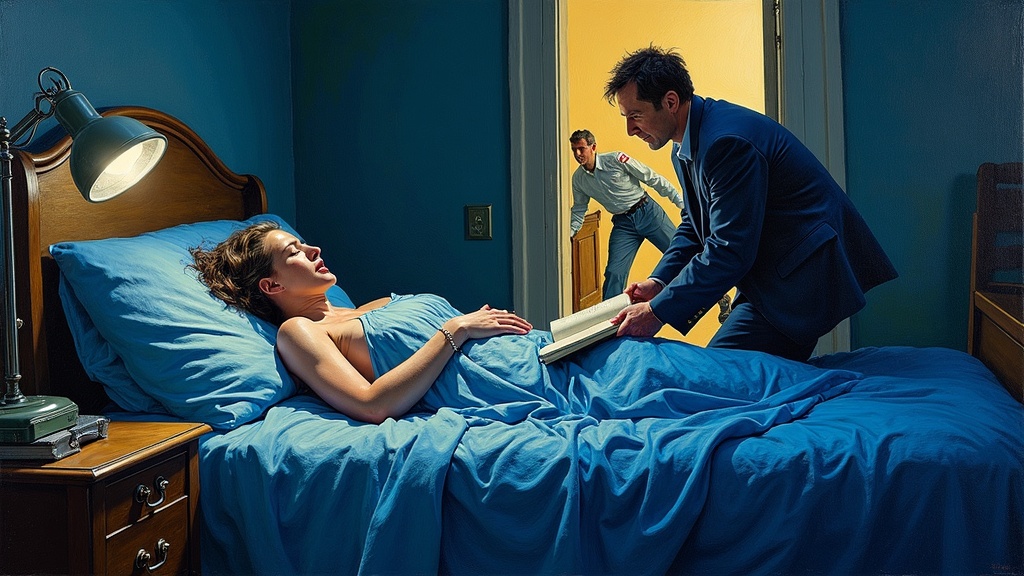
By 1977, Deborah was working as an ICU nurse at Johns Hopkins Hospital in Baltimore. She was in the medical intensive care unit, working the evening shift, when a man in his forties came in. He was in shock, not doing well. The team was trying to figure out what had happened to him when he had a sudden cardiac arrest.
They weren't prepared for it. The team went into full resuscitation mode. Drugs, oxygen, intubation. Everything. They worked on him for quite a long time, and things weren't looking good. They couldn't get a rhythm back that would hold.
Deborah watched the discouragement settle on the faces of the team. The chief resident looked at her. "You know, Deb, I don't think we're getting anywhere, we have to call for the time of death and just let go".
But when he said that, something came over her. An intuitive kind of knowing that they needed to keep going, that their efforts would be rewarded. She looked at the chief resident and said, "Why don't we go one more round?"
He agreed. They gave another round of drugs, another round of defibrillations. After that, they got a rhythm back. Applause broke out in the resuscitation room. They were shocked, actually. They considered it a success.
But the man wasn't waking up. They adopted a wait-and-see attitude, supporting him with a ventilator and medications, hoping he'd regain consciousness.
Two days later, when Deborah returned to the ICU, the patient had woken up. She walked into his room, and before she could say anything, he leaned forward in the bed and pulled his oxygen mask away from his face. "It's you, you're the one!" he said.
She froze. What had she done?
"They were working on me. I was watching the entire resuscitation from right up there", he said, pointing to the corner of the ICU room. "I was up there. I was watching the whole thing. I saw everything".
He told her the lead resident had blood on his shirt. Which was true. He'd just come from a trauma resuscitation in the emergency room. The patient described details of the resuscitation that there was no way anybody with a flatline on their EKG monitor could have known.
He told her how her hair was falling down. She had very long hair in the seventies, and it was the end of her shift. He described the trouble they'd had with his breathing tube. He described the tall man with glasses and a blue hat and blue scrubs who'd come to help, the anesthesiologist they'd called when they couldn't ventilate him.
Deborah got chills. This wasn't terminology an ICU patient would know. This was how the team referred to rounds of resuscitation drugs and interventions.
The man smiled. "You know, in my day when people said, 'Let's go one more round,' it was usually the last call at the bar".
She almost lost her voice. She remembers thinking to herself: "I have no idea how this happened. I just know that there's no way this patient could have known these details unless he did exactly what he said".
A striking knowing came over her, and she said to herself: "This changes everything".
But she told no one. This was the seventies. She was at Hopkins, in what she calls "the Mecca of medicine and science". She wasn't about to tell her colleagues what had happened.
She continued her work in critical care, then earned her doctorate in clinical psychology and moved into private practice. But the experience acted kind of like a magnet in her professional life. The more she thought about it, the more patients told her about their own experiences. When she transitioned into home care and hospice, it accelerated even more.
Patients started telling her about seeing loved ones around the time of death. Sometimes they'd look at her and ask, "Debbie, you don't think I'm crazy, do you?"
She would always say: "No, I know that you're not".
She never told them about her own experiences. But it was beyond an interest at that point. It was a pull, a very strong pull in her own life.
The Night Her Heart Stopped
By 2008, Deborah was 54 years old. She'd just finished her doctoral research. Her father, who she'd been incredibly close to her entire life, had died six months earlier from pancreatic cancer. She was working as a nursing supervisor at a local hospital. She felt like she was pouring from an empty cup.
Her primary care physician told her at her annual physical: "You know, Deb, everything looks normal, but you don't look so great. You need to take better care of yourself".
As the holidays approached, she was heavily grieving the loss of her father. She felt lost. She felt like she had really lost her rudder in life. Her father was like her lighthouse. She didn't know how to be in the world without him.
She told her husband Bob she wanted to drive up to her father's gravesite, about two and a half hours away. When she pulled into the driveway that evening, Bob came out and told her she looked very tired. She doesn't remember ever feeling so exhausted in her life.
What happened next, she doesn't remember. Bob recalled it later. She robotically put down her purse and hung up her coat and started walking upstairs. Bob told her afterwards that something very intuitive came over him and he got a sense that she wasn't all right. He followed his intuition and stayed close.
She got ready for bed and sat up reading. Then, she started to sit bolt upright all of a sudden in the bed, put her hands up to her head, and said: "Oh my God, Bob, I am so dizzy. I'm just so incredibly dizzy".
With that, she instantly fell over, slumped over the book, and she was not breathing. Bob checked for a pulse. She had none.
He'd learned CPR from a video Deborah had used to teach him, in case something happened to her father. He quickly went into action, began CPR, at the same time called 911, and continued CPR until the rescue squad arrived.
She was without a pulse for at least 10 minutes. It was probably 10 or 15 minutes before the rescue squad arrived. They gave her multiple defibrillations, shocking her again and again. They were not able to get her back.
Bob kept thinking: "They're going to stop. This isn't working. I'm losing her".
But somewhere around the sixth or seventh shock, maybe more, they got a pulse back. In the ambulance, she arrested several more times. When she arrived at the hospital, more of the same.
After a long period, the physician came out and told Bob: "Look, things are just not going well for your wife. I don't think she's going to survive this. And if she does, I'm not quite sure she's going to survive it with neurological function intact".
Bob was able to see her in one of the ER bays. She started having something called decerebrate posturing, an abnormal body posture that happens when there's severe and often irreversible brain damage. Deborah had seen it many times as a critical care nurse.
Two physicians came out. "We got her back", they said. But the posturing was "often really not a good prognostic sign for somebody to have neurological function return after a cardiac arrest, especially one that happened at home".
They offered one option: therapeutic hypothermia, a fairly new protocol. They would lower her body temperature to try to protect her neurological system from damage. They didn't know if it would work, but they didn't think they had anything to lose.
Bob agreed. Deborah was brought up to the ICU unconscious and remained in a coma.
The Black Void and the Web of Light
Deborah's NDE began in the middle of her cardiac arrest, her resuscitation, her coma. She really can't tell when it began. She just knows that the first thing she remembers was being in what she would call a black void.
She says void because she didn't see any boundaries, but yet somehow she sensed that this was kind of a holding place. She knew quickly that she was out of her body, and she wasn't afraid at all, actually.
There was no fear. It was almost like a very soothing, soft, kind of velvety blackness, she says. It was comforting, and she kind of knew that she would not be here for long.
She thought: "Well, where am I anyway?"
Then the thought occurred to her that she was probably dead. And what do all good nurses do when there's something they want to investigate? They do an assessment.
She actually quickly did the body check. She kind of felt for her arms and her legs and her body and her head, and she was like: "Okay, no arms, no legs, check. No head. You're definitely out of your body".
She remembers being totally fascinated by that, thinking: "Okay, you really have died. I don't know how this happened, and I really didn't care, actually".
She was feeling pretty great and she still felt like herself out of her body. She was just pure awareness.
She was slightly aware at that point that there was sort of a light body, that there was some light coming from her, although it wasn't very prominent yet.
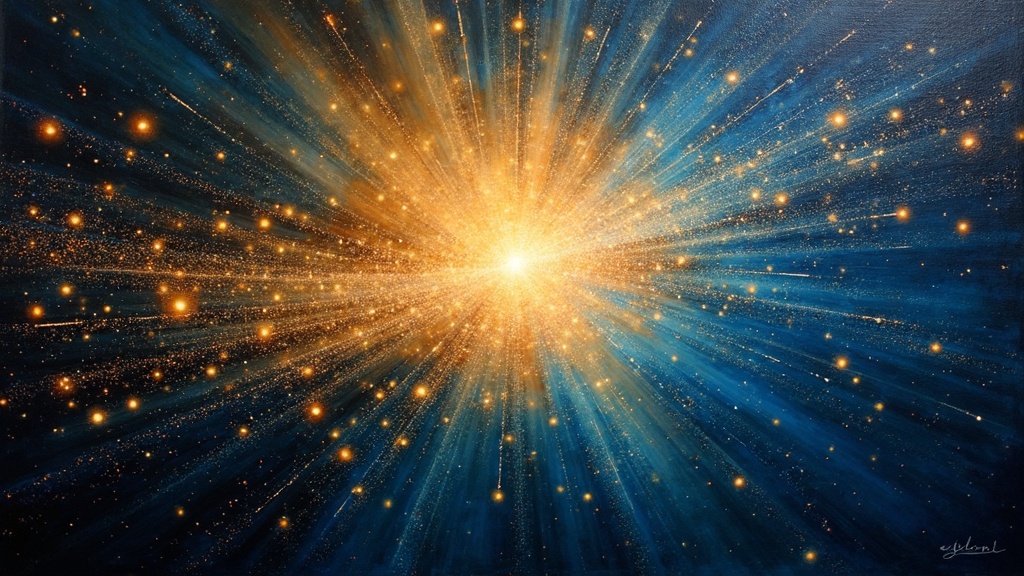
And when she felt that anticipation of what's next, as soon as that thought occurred to her, she felt her consciousness being propelled out of that black void into what she would only describe as an amazingly beautiful night sky with bright lights and beautiful stars.
Colors she had never seen. Vivid rays of light, and what appeared to be almost a very intricately woven spiderweb of light.
It was almost like she was looking at constellations. She was a bit of a science nerd, so part of her was looking to see if she could recognize them. She didn't. They were completely different formations. But none of them seemed haphazard. They all seemed purposeful.
It was just so beautiful, almost as if you were looking through the most powerful telescope you could ever look through.
She remembers feeling that she was just suspended in this web, and somehow also she was aware that she was part of it, which was really interesting.
She felt separate at first and then very quickly felt that not only was she a part of this web of light and purpose, but she was an important part of that web, and this kind of blew her away.
She was amazed. She was like, "Wow, I'm part of this!"
She really couldn't make sense of it, but she was okay with not understanding how she got there, what this was. She just really allowed herself to feel suspended in that and to just be.
There was no place for her to go, no place she wanted to be. She had no sense of her past or her future. In fact, there was no sense of time whatsoever. Everything was happening in the now and all at once, which was a little bit mind boggling. But she just loved it.
She became very aware that her five senses really did not apply to this place. She says she was seeing these lights and this matrix and web, but she really wasn't seeing it with her eyes.
When that thought occurred, something pulled her, actually, to look directly at them. And she did. It's almost like she was able to join with them. She looked at them and she kind of looked through them and she got the sense that they were also looking through her into almost the deepest part of her.
She also felt and heard these harmonic vibrations. She would say it was like a most beautiful choir she certainly had ever heard. But not human voices. Just incredibly beautiful harmonic sounds, and also dissonant sounds. But somehow they all worked together in an amazing, purposeful and beautiful way.
The Life Review That Wasn't About Her
At that moment of surrendering that desire to figure it out and understand it, she started to feel that she was moving at a pretty high rate of speed through this light matrix.
She became aware very quickly that these light energies were all souls. Some of them she recognized, some she didn't, but she still felt she knew them. She knew she had been there before and she knew that every orb of light was unique.
But yet there is absolutely no separation. They are connected to each other in a way that is just magnificent and she's connected to them.
She continued moving, felt no fear at all, and was shown something unusual. In front of the lights, there were very rapid images of different events from the life of those souls, from the physical and earthly life.
She had seen some of her own in what she might call a life review, but actually the focus was not really on her own. The focus was on these frames of experience that were connected to the souls.
But she kept thinking, "Oh, it's going too fast. I can't really see". It was almost like she was watching a PowerPoint slideshow that was just going too quickly and you want to tell the speaker, "Hey, slow down, I want to take notes".
But she received the message that it really was not about the events. The important message was to watch how those events affected the souls.
She started focusing on the orbs of light and the souls, and the message was given to her that nothing could harm the souls. No matter what these events were, the soul remained immortal and intact.
She was shown a lot of things. Births, deaths and some pretty frightening images. Conflict, war, people who had been traumatized in different ways.
Again, she focused on watching the light and she was told repeatedly: "You see, none of these things can affect the soul. This is who you are. Nothing that's happened to you in your own life can really affect this".
She thought: "Well, what is that? What is that one thing?"
Then she was shown slower images of events from both her life and from the life of the other orbs in the matrix. The commonality of these events were all events where people had shown love or tremendous compassion to people who were suffering.
When those events were shown to her, and they were very clear that they were events of love and compassion, the lights became intensely brighter. Their vibration became quicker. It was kind of a vibration of energy and light that became so intensely bright.
And the message that she received was: "You see, this is who we are. This is who we were created to be. We are loving beings. Love and compassion is what makes us. This is where we came from. This is where we're going to return to. And this is really all that matters. This is really all that can impact the soul".
She can only describe it as unearthly love. It was nothing like any love she had experienced.
The closest she can describe it was remembering when her first child was born and holding him and just locking eyes with him, feeling a love overtake her that she really had never felt for anybody before, and knowing that they would be connected forever on a spiritual level.
That's the closest she can come but, it really doesn't even describe it. It was just so wonderful.
The Patient Returns
When that thought occurred to her, she began moving again. She kind of sensed that she was moving away from the larger matrix.
And she became aware of two light energies. As they came closer to her, she recognized instantly who they were.
When she says that, of course they weren't in their physical form, in a human body. Of course neither was she at that point, but she recognized them by their energy.
And the first one that started communicating with her, there was no speech, it was all telepathic, she recognized instantly as her ICU patient that had had the out-of-body experience and had returned to his body and told her about his resuscitation.
She was surprised. But she was so overjoyed to see him and she was like: "Wow, it's really you!"
She was very, very happy to hear that from him. All of a sudden, it made sense. It didn't make any sense back in the seventies. But at this moment, in this place, it made total sense to her.
She was like, "Wow, I'll take that assignment. Yeah, I'll do it. That's who I am".
But really, pretty quickly, she also realized that if she did accept that assignment that he was telling her, she had to go back. She had to go back to Earth and she had to go back into her body.
She did not like this awareness at all.
And she shared it with him. She said: "Well, it sounds very worthy, but really, can't you give that job to somebody else? Let me just pass that on".
And he said: "Well, no, actually, I've already agreed to go back".
She was: "No, not me. I don't know where you got that one from, but I certainly didn't agree".
And he said: "Well, no, you actually agreed to go back before you even came here".
This really confused her. She really couldn't make any sense of this. She thought: "Well, I'm not sure where he's getting his information from, but I didn't agree to this".
He said: "It's okay, it's okay, you agreed to it. You have a choice, but you've already made that choice".
As he said that to her, his light started fading and she was aware that he started moving away.
Her Father's Light
The second light that had come into her space, who she recognized instantly as her father, was now going to speak with her.
She just was so overjoyed to see her father. She just really cannot even put it into words.
And she was like: "Dad, oh my God, it's you!"
He was like: "Well, of course it's me. Where else would I be?"
She was just so overwhelmed. She would say she felt like she was crying, although she doesn't think she was because she didn't have a body, but she was just so thankful to be with him.
She somehow accepted this. She trusted that even if she didn't understand it, if her father told her this, that he would not steer her wrong.
And she accepted this. She said: "Okay, Dad, if we're not going to be separated, okay, I'll I'll go back".
The Return
She felt herself being pulled away from that place. Pretty quickly she was hovering over the ICU bed and she saw her body.
But: "Gee, this really doesn't look good".
She saw that she was hooked up to a respirator. She had multiple IV lines in. Cardiac monitors. She recognized the unit. She'd worked there as a nurse, and she knew what those pieces of equipment meant.
She also noticed two details. She noticed that her eyes were gently taped closed, which usually happens in patients who are comatose to avoid corneal injury. And she also noticed, she couldn't really see if was restrained, but there were restraints on her wrist.
She was really kind of relieved.
She looked at her body again and looked at the nurses and the doctors that were around the ICU. And she thought: "Well, there's no way I'm going to fit this expanded sense of self in that body, any way. That's not going to work. There's just no way I'm getting into that little body".
But as soon as she had that moment of sarcasm, like, "That's not happening!", then she was in her body.
She would say it felt almost like a suction. She all of a sudden felt a sense of not being able to breathe, feeling very, very confined, but somehow regained consciousness.
The next thing that she saw was her endotracheal tube, her breathing tube kind of sitting on her chest, on her abdomen. And she thought: "Uh oh, you pulled out your breathing tube. And the alarms were going off".
Nurses and physicians were running towards the bed asking: "Are you okay? Can you breathe?"
And she couldn't speak. She was thinking to herself, "Why are you looking at me like you saw a ghost? Why are you so shocked? I'm fine".
They were asking her all kinds of questions. Can you breathe? What's your name? Where are you? Typical orientation questions.
But in her consciousness, she was still back there. She was still in a spirit body. She knew she was back in her physical body, but she felt the empowerment and the expansiveness that she felt when she was out of her body.
She wasn't fine, but she felt that. She just couldn't speak, wouldn't answer them. They were getting more and more distraught.
The intensivist stepped forward, the critical care physician. Finally, he was just so exasperated and he said, "Deborah, just say something".
And she thought: "Well, you know, if I don't try to say something, they're just going to keep bothering me".
And so, her throat was very sore. It's very hard to even get the words out. But she heard coming out of her mouth: "Well, I've had better days".
She thought to herself, "Of course I'm going to be okay. Everything's okay".
She didn't at all feel like she had imagined where she was or hallucinated. It was very real to her in that moment. In fact, it was much realer than where she was.
She knew from what she could remember of her experience, that this was not good. She certainly had undergone something that was terrible, but she really didn't feel that the majority of her was back in her body. Even though she knew it, she still felt more in spirit and was still wanting on some level to find that kind of magic wand that she could wave to go back there.
And so she didn't doubt it at all for one minute. It was too real.
The only way she can describe it is like what she was experiencing in that moment felt like it was in plain black and white. The experience she had had out of her body was really in color, Technicolor, IMAX, whatever you want to describe it. That was real, and this did not seem real, even though she knew that this is where she was and she had to deal with it.
Integrating Two Worlds
She was told that what had happened to her was that she had had a cardiac arrest at home and then she had ventricular fibrillation. Her long term memory kind of kicked in, the part that was working.
And mine at that point had some challenges. But this did not make sense to her. She said: "Oh, you got it wrong. Maybe I had an atrial arrhythmia or another kind of heart rhythm disturbance".
Her recovery was challenging. She had word-finding difficulty, she had memory problems. She felt very disoriented.
It was like she had one foot there and one foot here. She didn't know how to navigate being back in the physical world.
But over time that started to improve. Her neurological problems started to get better, and she was able to return to her work as a psychotherapist at that point, in private practice.
But that set up some real dilemmas for her because at times when she was working with deeply depressed patients or patients who had suicidal thoughts and were saying to her: "I can't live in this world anymore. I believe there's an afterlife, there's a peaceful place waiting for me. I think I should just end my life".
And this just set up such a dilemma for her. Of course, all her training had rightfully prepared her to preserve life under any circumstances, to help people out of depression and out of discouragement.
And yet she had come from this amazing place of love and peace and certainly did not want to disclose any of those experiences that wouldn't have been appropriate. But yet there was something that told her, "Gee, if I could just tell part of this to people, perhaps somehow they would be helped".
It was very, very confusing for her. She tried to be as authentic as she could, which was the most important thing to her as a therapist. But this is not something she knew what to do with.
But it became more and more confusing for her. So she gradually decreased her caseload, started working with people who were not as fragile, not as deeply depressed, and gradually left private practice and increased her academic load where she was a professor of nursing and did that almost exclusively.
Because really, we're here to heal body, mind and spirit. We're holistic beings.
What Science Can't Explain
What does Deborah say to people who argue her experience was just oxygen deprivation, just a hallucination? She understands where that skepticism comes from. She's trained in science. She's trained to be the ultimate skeptic.
But she thinks for her, the answer is very simple. Her patient back in the seventies was in full cardiac arrest. He had no blood pressure, no pulse. There was no perfusion to his brain and therefore, accessing what she knows of science, he was not able to have a conscious experience. His brain was not working.
In her own experience she had no pulse, no blood pressure. She was clinically dead for probably over 20 minutes, maybe longer. She had arrested at home. It took a while the resuscitation crew to arrive. Then she had repeated arrests.
So it's pretty clear that under those circumstances, no oxygen going to the brain. She remembers learning in nursing school, "Oh, you know, 4 to 6 minutes without oxygen to the brain. And the brain doesn't function. There's no more brain activity".
And so, before this experience, she believed in an afterlife. She believed her patients, what they were telling her. She had no choice but to believe her ICU patient because what he reported to her was not a hallucination. He reported what the chief resident looked like. The blood on his shirt, where she was standing. There's no way, with no pulse or blood pressure, he could have told her those details.
So now it's not a belief. It's a knowing. She knows that this is true.
She thinks one of the ways that we can understand this through science is really to shift the paradigm and the understanding that we have about what the brain is. She certainly was taught in science that the brain generates consciousness, that it is the creator of consciousness, and that when the heart stops and blood perfusion stops and there's no perfusion to the brain, there's no consciousness, because the brain is not working.
She thinks if we step out of that and embrace what she did during her experience, which is the clear awareness that the brain does not generate consciousness. The brain is really a receptacle for consciousness, an antenna of sorts that filters our conscious experience.
She's read the books by Eben Alexander, who she has tremendous respect for as a former neurosurgeon. He can articulate this at a much higher level of sophistication than she can. But this is really where she thinks the paradigm needs to shift in science so that we understand that consciousness is not anything we create. We are part of it and we will return to it.
A Life Transformed
Since this experience, Deborah knows that we are first and foremost spiritual beings and that we have a very temporary physical experience.
She believes that probably happens to us more than once. We probably make choices to return to the physical world more than once.
This is something that she really holds on to and lives with every day. She wakes up every morning and pinches herself.
Even sitting here doing this interview, it's still on some level very unreal to her and a gift. Every moment is precious. Her children, her family, her friends have never been as precious to her.
She believes that we are having a spiritual awakening, that this is happening, that science and spirituality, once seen as different approaches to life that could not be integrated, she really believes we're at a very exciting and important place of integrating both of those, which has tremendous implications for health care professionals and for healers.
After all, she's here because of science. Western medicine at its finest saved her life. But intuition also played an extremely important role.
She thinks she's a living example of the best combination of both science and spirituality. She believes that is now what her life's work is about. It's about bringing that message to health care professionals.
There's so much wonderful work about near-death experiences. That term didn't even exist when she had the experience in the seventies. But the pioneering work and ongoing work of Dr. Raymond Moody, the work of Dr. Bruce Greyson and so many others like him.
We have the International Association of Near-Death Studies, which produces such incredible work for the public to access this. The Near-Death Experience Research Foundation.
We really have so much now to work with. None of this is accidental. This is happening for a reason. And she believes it's really to help humanity.
Light in the Darkness
There is a lot of despair in our world, a lot of darkness, tremendous mental health crisis. If we were not careful as a matrix of light beings, if you will, and were not aware of our ultimate responsibility, which is to have tremendous compassion and love for everybody and everything that we share this planet with, including the planet itself, that we run the very real risk of being overrun by that darkness.
There is light. That is the message. There is always light. We are never separated from it.
She loves those words because we do have a lot of darkness in our world right now. But not only can we all bring light, but we all need to bring light. This is what we need to do, with the light of love and compassion. And she believes that that will penetrate the darkness that we are living in and living through.
What Makes This Account So Compelling
Deborah King's experience offers something rare in the NDE literature: a trained observer who witnessed both sides of the veil. As a critical care nurse, she spent years in ICUs watching patients die and, occasionally, come back. She knew the protocols, the equipment, the rhythms of resuscitation. When her own patient told her in 1977 that he'd watched his entire resuscitation from the corner of the room, she couldn't dismiss it. The details were too specific. The terminology was too precise. He'd seen things a flatlined patient shouldn't be able to see.
But she kept it to herself for three decades. She filed it away and kept working. Then her own heart stopped, and she found herself in the same impossible position as that patient, looking down at her body, watching the team work.
The consistency between what her patient described and what she experienced is striking. Both left their bodies during cardiac arrest. Both watched their resuscitations from above. Both returned with detailed, verifiable observations. Both knew, without question, that consciousness continues when the brain stops.
What sets Deborah's account apart is the life review she describes. Unlike many NDEs where the experiencer sees their own life flash before them, Deborah saw the lives of other souls in the web of light. She watched events from their earthly existence play out in rapid succession. But the message wasn't about the events themselves. It was about how those events affected the souls. She was shown, again and again, that nothing can harm the immortal soul except one thing: the absence of love and compassion.
When acts of love and compassion appeared in the review, the souls' lights became intensely brighter. Their vibration quickened. This wasn't judgment. It was revelation. Love is what we're made of. Love is what we came here to learn. Love is the only thing that changes us at the deepest level.
Deborah also describes meeting her ICU patient from 1977 in the light. He told her there are no accidents, that their encounter three decades earlier had been purposeful. He urged her to share what she knows. Then her father appeared, assuring her they'd never really been separated and never would be. These reunions are among the most commonly reported features of NDEs, and they consistently emphasize the same truth: death doesn't end relationships. It transforms them.
For those of us who study these accounts, Deborah's story is a gift. She's a scientist who became a witness. She's a skeptic who became a believer, not through faith, but through direct experience. She knows what the brain does and doesn't do. She knows what happens when blood stops flowing to the cortex. And she knows, with absolute certainty, that consciousness doesn't need the brain to exist. The brain is the receiver, not the source.
Her experience also offers hope for a world that desperately needs it. We're living through what she calls a mental health crisis, a time of tremendous darkness. But Deborah came back with a message: we're all part of a web of light. We're all connected. We're all eternal. And the light of love and compassion can penetrate any darkness, no matter how deep.
That's not wishful thinking. That's what she saw. That's what she knows. And now, finally, she's sharing it.
You can learn more about Deborah King and explore her other interviews, including her conversation on Coming Home and The Other Side NDE.
Was this article helpful?