David Williamson's Heart Attack NDE: Releasing 400 Years of Rage
A Black activist dies in the ER and discovers the hate that killed him was never real
David Williamson was ready for war. He'd spent his entire life in Yanceyville, North Carolina, a small town where the Klan marched openly down Main Street, where racial hatred was as common as the red clay dirt, where every interaction felt like a battlefield. His nervous system stayed on high alert, his blood pressure climbed to 224 over 190, his digestive system collapsed. He told himself the anger was justified. The disparity was real. The enemy was clear. And then, on February 1, 2021, his heart stopped in an emergency room, and everything he thought he knew about enemies and identity and what he was supposed to fight for simply fell away. What he found on the other side wasn't what he expected. It was the most alive he'd ever felt.
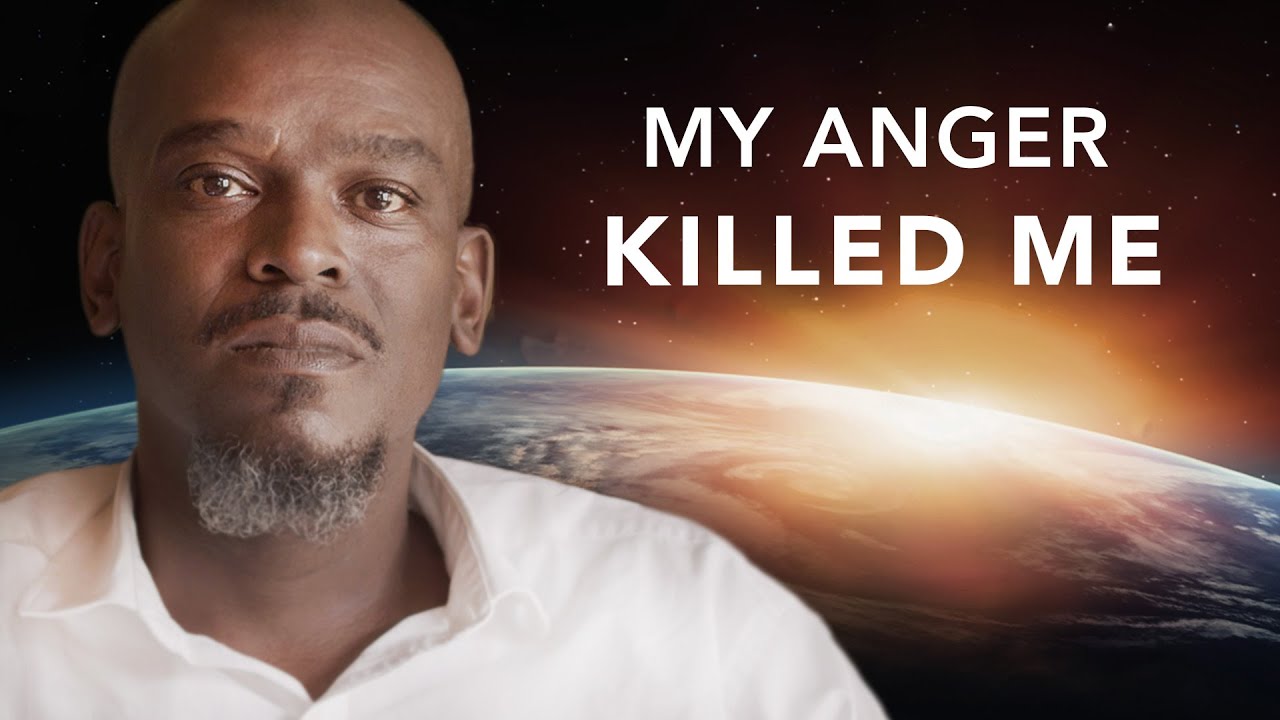
The Town That Taught Him to Hate
David Williamson he recalls. The natural world felt like home.
But Caswell County, where Yanceyville sits, is one of the poorest counties in North Carolina. It's also one of the places with the highest active Ku Klux Klan activity in the country. David's biological grandfather was a sharecropper. His uncles grew up on that farm. "When you couple all those things together it creates a lot of Dynamics where people get traumatized and it goes unresolved and unaddressed," David explains.
The hatred wasn't abstract. "I've literally seen the Klux Clan March up and down Main Street the most busy street of the Town multiple times," he says. He watched his aunts, his mother, all of them feeling so much pain, so much anger. "It's in me it's you know it's um it's affecting me you know and um and it just makes you more Angry it makes you more angry and it justifies every negative thought that you have."
He started hating back. The hate felt righteous. It felt like the only sane response to an insane world. "You start hearing people around you kind of um echoing the the same hate that they've received from white people around us you hear it being echoed in the houses and like like they're this way they're that way it gets reiterated and recycled," David remembers. The narrative became all-consuming. Every interaction confirmed it. Every slight, every disparity, every statistic became ammunition for a story that felt unshakeable.
But there were outliers. Miss Mueller, a white preschool teacher at Graves Chapel Church, held him in her lap during story time. He felt her love for him. There were other white people who took genuine interest in him, who tried to open doors. "When you have this narrative that you're just recycling in your head over and over and over you ignore the the good stuff and you only Center the bad," he admits. The outliers didn't matter. Only the narrative mattered.
The Body Keeps Score
By the time David reached college, he'd found ways to spiritualize his hatred. "There are gods of Rage there are gods of Ang I can metaphysical IE spiritualize my hatred and still make room for it as if it's real," he says. Nothing in his spiritual seeking, his philosophical reckoning, made the hate dysfunctional. Not even when his body started screaming.
His digestive system collapsed. He'd go days without eating because anything he put in his stomach created disruption. His blood pressure climbed to dangerous levels. "I would check my blood pressure sometimes and it would be 224 over 190 I'm just going about my day didn't pay attention to the signs that my body was giving me," David recalls. He had seven herniated discs, two torn, two bulging. His nervous system was always on edge. "I'm always ready to fight I'm always ready for war hypertension is a given it's a given when you always operating in an energy where you're waiting for him to say something offensive so that you can explode 400 years of rage on this person,".
He saw himself as the black savior, the one who would fix the racial disparity. The Messiah complex justified everything. The pain, the isolation, the constant state of war. "Everything just Justified the this rigid position and identity as this person that had to fix this racial disparity and it's on me I'm the Messiah I'm the black savior I'm going to fix all of this for all of us," he says.
It was killing him. Literally.
The Moment Everything Stopped
February 1, 2021. David was sitting in his garage with two friends. "I felt this uh pain that didn't initially I didn't feel anything in my chest at all it it was like a rip that happened in the in my back in the area behind my heart and and then my shoulder felt like it was about to just fall off," he describes. He thought it was his back. Back pain was normal for him.
But this was different. After leaving work, "I feel this like a tingle like a a sting and I knew that this isn't this isn't right," David says. He sat in his car, trying to decide if it would pass. It didn't. He drove home. His son's mother, Trish, was working from home. He told her he needed to go to the emergency room.
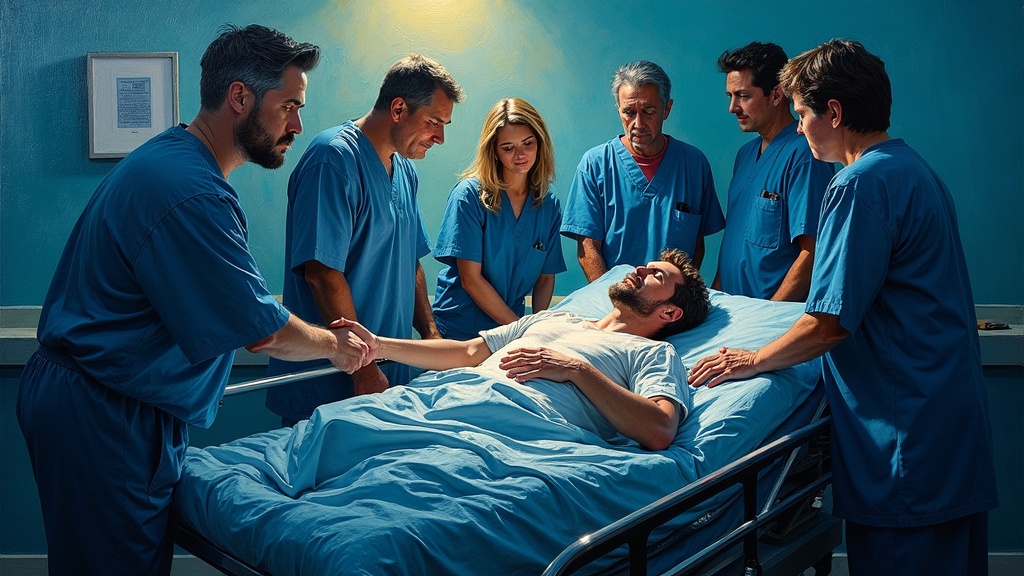
In the car, "I'm losing my breath it just feels like I'm suffocating you know I'm just losing my breath and I'm breathing really deep to try to stay conscious," David recalls. They got to the emergency room. He was lethargic, walking up to the entrance. They got him on the gurney and almost immediately, he passed out.
Here's what matters: "I passed out before I went into the area area where they were working on me but I'm not dead I don't think because my perspective is on the bed like I'm looking that way but I'm not seeing anything but where the people were that were dots that almost look like a nighttime sky," David explains. He's emphatic about this detail because people say near-death experiences are hallucinations. But he was unconscious before he entered the room where they worked on him. He couldn't have seen what he saw.
The Perspective Shift
He saw a woman in the corner of the room. She was holding her face, devastated that he was dying. "That was one of the initially when I left my body that was one of the things that Disturbed me the most was like what in the world is she sad for this is so beautiful this is so perfect I'm not hurting them I'm not confused that guy is dead but I'm I'm alive this is beautiful," he says.
This wasn't a hallucination. When he opened his eyes later, everything continued in real time. "There was no separation in my awareness uh gapping between what I was experiencing whether I was in the body or out of the body it was a continual flow of experience," David explains. He learned while out of his body what was happening to him, and when he returned, the scene picked up exactly where his out-of-body perspective left off.
Looking down at his body on the gurney, a series of realizations flooded in: "He's dead his body's dead the mind is dead the ego's dead and uh and after that kind of series of kind of realizations it was like well then what's left like what am I," David recalls. The answer came immediately, audibly, like a flood of voices all saying the same things at once: "The words flooded in very clearly it was audible these words were light energy Soul Spirit uh awareness it's just a flood of words they weren't in a line like mechanical it was like a bunch of voices just say these words like but it felt like it was me explaining this to myself."
The Space Between
"I just kind of casually take my attention up and when I do that instantly I'm in space," David says. No tunnel. No gradual transition. Just instant shift. "There was no tunnel there was no anything."
He became aware of what people call the light, up and to the right of him. The emergency room was down and to the left. He was suspended in the angle between them, looking forward out into space. In front of him: the star-forming region. Beneath him: what people call the void.
"I felt like I was in the Blackness and it was enveloped me like velvet it felt like love," David describes. Everything in that disembodied state felt like love. "It felt like everything every possibility every past experience everything that everything was in the void was in that black space."
The void wasn't empty. It was everything. When he looked into it, "it reacted it responded and if there was any kind of thought that wasn't complete it was complete instantly if there was a a notion of missing something that the satisfaction of having that I I felt it already before the missing was even fully felt the satisfaction of already having that was there," David explains.
This is one of the most striking descriptions of the void I've encountered in thousands of NDE accounts. The void as responsive, as anticipatory, as the place where every incompleteness is already resolved before you even finish feeling the lack. It's not emptiness. It's infinite possibility.
David later tried to explain this to someone who worried about forgetting loved ones after death. "That's a human thought it comes from a brain that comes from memory that comes from life that comes from you know but you're not going to be when you leave this body a human body with a brain that has memory that you're going to be a energy that's so connected to this experience and this this whole thing that you that experience is integrated in you," he told her. There is no missing. "Every part of this experience that you have is etched in Infinity there is no something disappearing and never and never being experienceable again like it's always there so you don't miss anything."
Your experiences are never lost. You're more integrated with the system outside the body than you are in it. "You're an individual node accumulating a perspective that ultimately gets fed back into the system and becomes a possibility an option for everybody else in the system forever," David says.
The Orb of Light
David's attention moved around in space. He was interested in everything. At one point he looked up at the light, considering whether to even engage with it. He looked back down at the emergency room. "When my attention went from the upper angle down back to the left I went it went through me and I was just a glowing orb of light that's what I appeared to be," David describes.
"I had never felt more alive than when I was that glowing orb of light I had never felt more aware of what was happening on this planet," he says. In that state, he understood everything. "The pain the confusion the identity stuff was gone."
"We are all orbs of light we're not these bodies," David says simply. The orb was perfect, not confused, not contextualized in human terms. "It was disconnected somewhat from the the specifics of The Human Experience it was just aware ah you were in that body oh that body's dead it wasn't like oh you were a black activist and you need to go back and hop in that body and get to the fight more fighting that fight stuff was done," he explains.
The black activist identity, the savior complex, the 400 years of rage he'd been ready to unleash, all of it was simply gone. Not suppressed. Not transcended through effort. Just irrelevant. The orb didn't care about the fight. The fight was a human story, and the human was dead.
The Return
David watched them continuing to defibrillate his body. The woman holding her face, devastated by his death, remained his strongest visual memory. "If there's any small part of this experience that I was disappointed about was that in that moment of me trying to figure out how to communicate with it I couldn't I couldn't tell her lik no don't be sad this is beautiful I'm I'm my back's not hurting I'm not confused about what's happening this is beautiful this is the most most alive that I've ever felt," he says.
He could feel the emotional states of everyone in the room. Some were mechanical, just doing their jobs. But one person in front, at an angle, was really going through it. "In his mind it was almost like it's he's responsible for making sure that I don't die and he didn't want he didn't want to to feel that he didn't want to be responsible for that," David describes.
When David opened his eyes, "the first thing I blurted out was are you okay and I was looking for the woman you know and uh and uh and then after that blur I blurted that out I I looked up at the person that was up in front of me to the right I said are you okay and he cut me off he said no are you okay," David recalls. Someone from the right asked if he felt that. He looked down and saw the rubber pad on his chest, the indentions from the defibrillator pads still visible.
"I was like oh you really were dead like that's when it all flooded into my mind and my human awareness because like I saw the pad where they were defibrillating me and I saw them defibrillating me from above and it all connected in that moment," David says. They asked if he felt the defibrillation. "I didn't feel anything I didn't feel anything there was no pain no trauma at all in the process of me dying," he told them.
The deepest pain of his death was catching his breath on the way to the hospital. That was it. "It just made me you know it's like I have no fear of dying I have no fear of what's next," David says.
The Aftermath: A Different Kind of Alive
When David came back, "I was so painfully aware of everything around me people's pain and confusion I already kind of felt like I had these empathic kind of Tendencies even before but it was times 5,000 when I came back from the near-death experience," he describes. The heightened awareness made integration difficult. He didn't get to sit and heal. As soon as he could stand, he had to go back to work.
But something fundamental had shifted. "I'm at work and I'm like I feel a little different I'm interacting differently I'm seeing better results because I'm not really playing the kind of the politics game you know because I don't have any identity stuff that's influencing my decisions and my performance," David says. He was looking at work in a lighter way. "I don't have to go to work and fight over politics I don't have to go to work and deal with white black stuff I just have to go to work and perform the heaviness and the anger and the hate I'm not carrying that around me anymore," he explains.
People received him differently. His interactions became more graceful. "I don't feel like there's somebody trying to block my prog progress you know none of that stuff is real none of those stories are are in me influencing the outcome," David says.
The experience gave him what he calls "an extremely radical sense of accountability all the way down to the thoughts that you've had," David explains. Even thoughts you don't speak out loud matter. "Sometimes we think that because we didn't actually say something that we still have a position of uh just like we feel righteous I didn't call you that but you thought it so if you thought it own that you got to own that thought," he says. That thought contributed to the tension in the moment.
Processing Emotion Without Becoming It
"What my experience showed me is that we tend to become the emotions versus just fing them and letting them pass," David explains. He became hate instead of just feeling it and letting it move through. "It's like I be came hate instead of just saying oh damn that was hateful do I want to respond and kind of you know we don't pause and be like and think about the impact of feeling hate on your physical being," he says.
When you're already on edge, already primed with biases, "you're ready to jump as soon as the invitation is presented to you you're ready to respond to it you may very well be justified in your anger but and you're definitely going to feel justified in your anger right but my anger killed me," David says bluntly.
That's the kicker. His anger was justified. The disparity was real. The Klan did march down Main Street. The trauma was generational and unresolved. And his anger still killed him.
He still revisits the same frustrations, the same moments of hopelessness. "But now I just like am I going to choose to stay in that emotion am I going to become hopelessness am I going to become frustration am I going to become hate no I'm going to process it let it do what it's going to do in that moment and then leave it alone let it go and move on to the next thought the next choice," David says.
The further removed he gets from that pain, the clearer he becomes about how much damage it did. "The only way I was able to shake the connection to those stories and those narratives is through having that reset you know and having those narratives kind of shook shook off of me," David says.
The Opportunity to Choose Differently
He's clear-eyed about what we are. "We just having an experience here and because of the narratives and the stories that we choose it becomes a negative experience a positive experience but it's all just stories and you don't have to choose those stories," David says.
We come here already equipped with a function, but "we're not taught to honor that in any way whatsoever we're taught who to be what to be what we are what our name is how we you know what's important who we supposed to like who we supposed to hate," David explains. We're given prepackaged identities by people who love us, who think they're helping us survive. "But it doesn't work look at the world around us this thinking and these orientations that we have towards each other and his planet and this life doesn't work it doesn't work," David says.
The soul that leaves this place is perfect. "It doesn't hold on to human trauma it doesn't hold on to this stuff it doesn't but it's permanent and it's what you leave here as that's what you are," David says. Understanding this changes everything about how you move through life.
"We are creating our next life right now in this moment with our attention," David explains. If you focus on misery, you compound misery. If you focus on hope, "you're increasing the probability that other things can happen outside of the negative possibilities and if we collectively start understanding how to Galvanize our attention in different ways then we can magnify our creative capacity," he says.
If an individual can focus their attention on what they want and manifest it, "imagine if 20,000 30,000 a million individuals can focus their attention on unified and what they can create," David says.
What This Experience Reveals
David's account sits at the intersection of several profound NDE patterns. The immediate shift from physical death to expanded awareness, the experience of being a luminous orb, the void as responsive and loving rather than empty, these are consistent features across thousands of reports. But what makes David's story particularly striking is the specificity of what dissolved when his body died.
The black activist identity, the savior complex, the generational trauma, the righteous anger that felt like the only sane response to an insane world, all of it simply wasn't there when he became the orb. Not because he transcended it through spiritual practice or therapy or forgiveness work. It just wasn't relevant anymore. The orb didn't care about the fight because the orb understood something the human couldn't: we're all the same light.
This doesn't diminish the reality of racial injustice or the legitimacy of anger in response to systemic oppression. What it reveals is something more fundamental about the nature of identity itself. The stories we tell ourselves about who we are and who our enemies are, these stories are real in their effects. They shape our nervous systems, our blood pressure, our digestive systems, our capacity to receive love from people who don't fit the narrative. David's anger was killing him in the most literal sense possible.
The void as David describes it, responsive, anticipatory, completing thoughts before they're finished, resolving lack before it's fully felt, this is one of the most beautiful descriptions of what awaits us I've encountered. It's not a place. It's a state of total integration where every experience you've ever had is accessible, where nothing is lost, where your individual perspective becomes a permanent option in the infinite menu of possibilities.
And the practical application, the instruction David brings back, isn't to suppress emotion or pretend injustice doesn't exist. It's to feel the emotion without becoming it, to process it and let it move through, to own even the thoughts you don't speak because those thoughts are creating tension in the field around you. This is radical accountability. This is what it looks like to live from the perspective of the orb while still inhabiting a human body.
David's story also offers something rare in NDE literature: a detailed account of how the experience continues to inform daily choices years later. He still feels frustration. He still encounters the same systemic problems. But now he has a choice about whether to become the frustration or to process it and move on. The opportunity exists. Whether he takes it is up to him.
This is what every NDE ultimately reveals: we are eternal beings having a temporary human experience, and the quality of that experience is shaped far more by the stories we choose than by the external circumstances we face. The orb of light that David became for those moments in the emergency room, that's what he is. That's what we all are. The rest is just software, prepackaged identities handed down by people who loved us but didn't know any better.
The most hopeful part of David's account is his vision of collective attention. If one person can focus their awareness and shift their reality, imagine what millions could do together. We're not separate nodes competing for scarce resources in a hostile universe. We're individuated expressions of one infinite consciousness, accumulating perspectives that feed back into the system and become available to everyone forever.
Nothing is lost. No experience disappears. Every moment of this life is etched in infinity. And when we leave these bodies, we return to the void that isn't empty at all, but is everything, responding to us, completing us, holding us in love that feels like velvet.
David died hating. He came back knowing we're all the same light. That's not a metaphor. That's what he saw. And if you want to hear more of his insights about life after the experience, check out his follow-up interview about living after his NDE.
Was this article helpful?