David Williamson's Heart Attack Death Revealed We Are All Light
A Black activist died carrying the weight of generational rage. What he saw in the void changed everything.
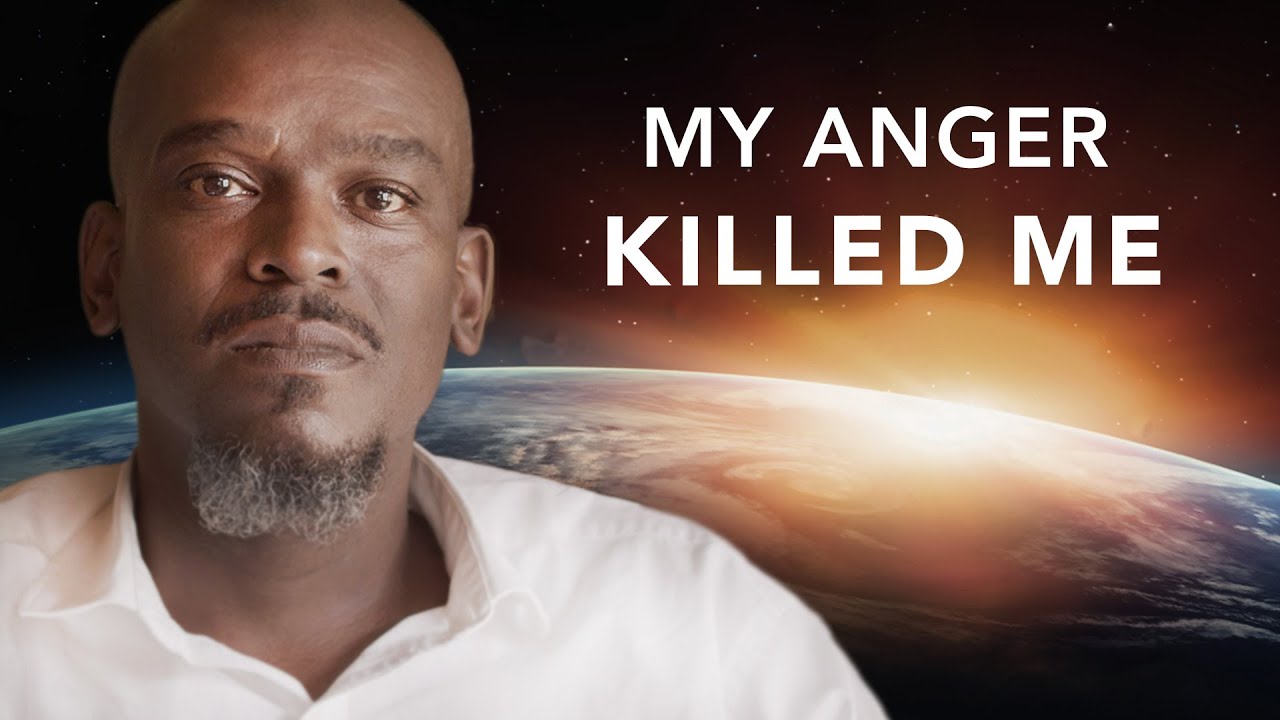
David Williamson's body was dying on a gurney in a North Carolina emergency room. His blood pressure had been dangerously high for years, sometimes 224 over 190, a ticking time bomb he'd ignored. The anger he'd carried since childhood, the rage against racial injustice he'd witnessed in his small town, had literally destroyed his digestive system and ravaged his heart. On February 1, 2021, that anger finally killed him. But when his heart stopped and the medical team began defibrillation, Williamson found himself floating above the scene, watching a woman in the corner holding her face in grief. He wanted to tell her not to be sad. Because for the first time in his life, he wasn't confused. He wasn't in pain. He was a glowing orb of light, and he finally understood what he really was.
The Weight of Generational Hate
Yanceyville, North Carolina is a town of about 3,000 people in Caswell County, one of the poorest counties in the state. It's also one of the areas with the highest active Ku Klux Klan activity in the country. ["I've literally seen the Klux Klan March up and down Main Street multiple times,"](/video/V6DKsqTs9M8?t=0" class="text-blue-600 dark:text-blue-400 hover:underline">David Williamson David recalls. He watched his mother, his aunts, his entire community absorb the pain and rage of that hatred. The trauma was everywhere: in his biological grandfather's history as a sharecropper, in the unresolved pain that echoed through family conversations, in the way people around him began to hate back.
As a child, David had experienced the world as magical. He spent his days in the woods, climbing trees, digging for fossils, treating every piece of broken glass like treasure. He had early memories of genuine love from white people, like Miss Mueller, a preschool teacher at Graves Chapel Church who held him in her lap during story time. "I remember her holding me in her lap while she did Story Time and feeling her love for me," he says.
But those memories became outliers, drowned out by a narrative that grew more rigid with each passing year. "When you have this narrative that you're just recycling in your head over and over and over you ignore the good stuff and you only Center the bad," David explains. The disparity was real. The injustice was real. And in his mind, that meant the hate was justified.
He carried that hate through college, even spiritualizing it. "There are gods of Rage there are gods of Anger. I can metaphysically spiritualize my hatred and still make room for it as if it's real," he says. He saw himself as a messianic figure, the one who would fix the racial disparity, the black savior who would make everything right.
The cost was his body. "My nervous system was always on edge. I'm always ready to fight. I'm always ready for war. Hypertension is a given when you always operating in an energy where you're waiting for him to say something offensive so that you can explode 400 years of rage on this person," David recalls. His digestive system was destroyed. He sometimes stopped eating entirely because food created too much disruption. His blood pressure reached catastrophic levels, but he didn't pay attention to the signs.
The Moment Everything Stopped
On February 1, 2021, David was sitting in his garage with two friends when he felt something unusual. Not chest pain. A rip in his back, behind his heart, and then his shoulder felt like it was about to fall off. He had seven herniated discs, two torn, two bulging, so back pain was normal. "I looked at him and my eyes were big and I said man this back pain just shifted gears," he told his friend.
Leaving work later, he felt a tingle, a sting. "I knew that this isn't right," he says. He sat in his car, waiting to see if it would pass, found a level of stability he could tolerate, and drove home. His son's mother, Trish, was working from home. He called up to her: I think I need to go to the emergency room.
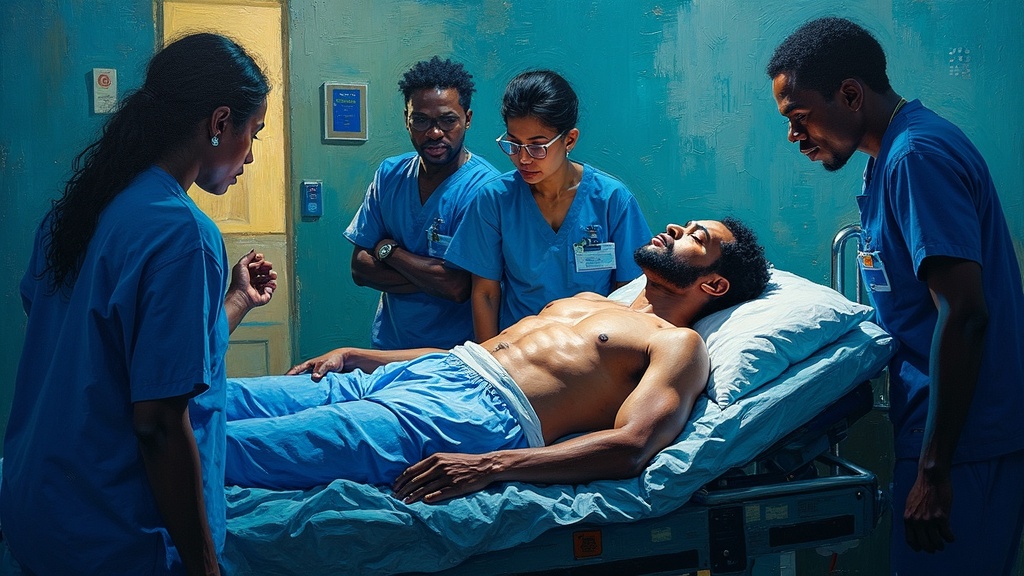
In the car, "I'm losing my breath. It just feels like I'm suffocating," David recalls. He was breathing deeply, trying to stay conscious. At the emergency room, they got him on a gurney. Almost immediately, he passed out.
He makes a point of emphasizing this detail because people often dismiss near-death experiences as hallucinations. "I passed out before I went into the area where they were working on me but I'm not dead I don't think because my perspective is on the bed," he says. He wasn't seeing anything clearly, but where the medical staff stood, he saw dots, almost like a nighttime sky.
Then his perspective shifted. "I was above myself looking down and I saw the whole setup of the room. I saw where the people were," David explains. He could see everyone's positions, including a woman in the corner holding her face. "She was really sad that I was dying and that was one of the initially when I left my body that was one of the things that Disturbed me the most was like what in the world is she sad for. This is so beautiful. This is so perfect. I'm not hurting. I'm not confused. That guy is dead but I'm alive. This is beautiful," he recalls.
This wasn't a hallucination. When he opened his eyes later, everything continued in real time. "There was no separation in my awareness gapping between what I was experiencing whether I was in the body or out of the body. It was a continual flow of experience," David says.
The Realization of What Remains
Looking down at his body, David came to understand something profound. "He's dead. His body's dead. The mind is dead. The ego's dead," he realized. And then the question: what's left? What am I?
He casually took his attention upward. "When I do that instantly I'm in space," he says. No tunnel. No gradual transition. Just instant displacement into the cosmos.
The Geometry of Infinity
David found himself at a specific angle in space. "The light was up and to the right of me. The emergency room was down and to the left of me and I was in that angle looking forward out into space," he explains. In front of him: the star-forming region. Beneath him: what people call the void.
But the void wasn't empty or frightening. "I felt like I was in the Blackness and it was enveloped me like velvet. It felt like love," David recalls. "It felt like everything. Every possibility. Every past experience. Everything that everything was in the void was in that black space,".
The void responded to him. "When I looked into it it reacted. It responded. And if there was any kind of thought that wasn't complete it was complete instantly," he says. If there was a notion of missing something, the satisfaction of having it was already there before the missing was even fully felt.
This is one of the most remarkable descriptions of the void I've encountered in thousands of NDE accounts. David experienced it not as absence but as infinite presence, not as nothing but as everything compressed into a responsive, loving intelligence. The void didn't just contain all possibilities. It anticipated needs before they fully formed and satisfied them instantly.
David tries to explain this to people who worry about losing their loved ones after death. "You're not going to be when you leave this body a human body with a brain that has memory. You're going to be an energy that's so connected to this experience and this whole thing that you that experience is integrated in you. There is no missing or something missing from that experience," he says. "Every part of this experience that you have is etched in Infinity. There is no something disappearing and never being experienceable again. It's always there,".
We are not human beings accumulating spiritual experiences. We are spiritual beings accumulating human experiences. And those experiences don't vanish. They become part of the infinite system, accessible forever. "You're an individual node accumulating a perspective that ultimately gets fed back into the system and becomes a possibility, an option for everybody else in the system forever. So your experiences are never lost," David explains.
The Orb of Light
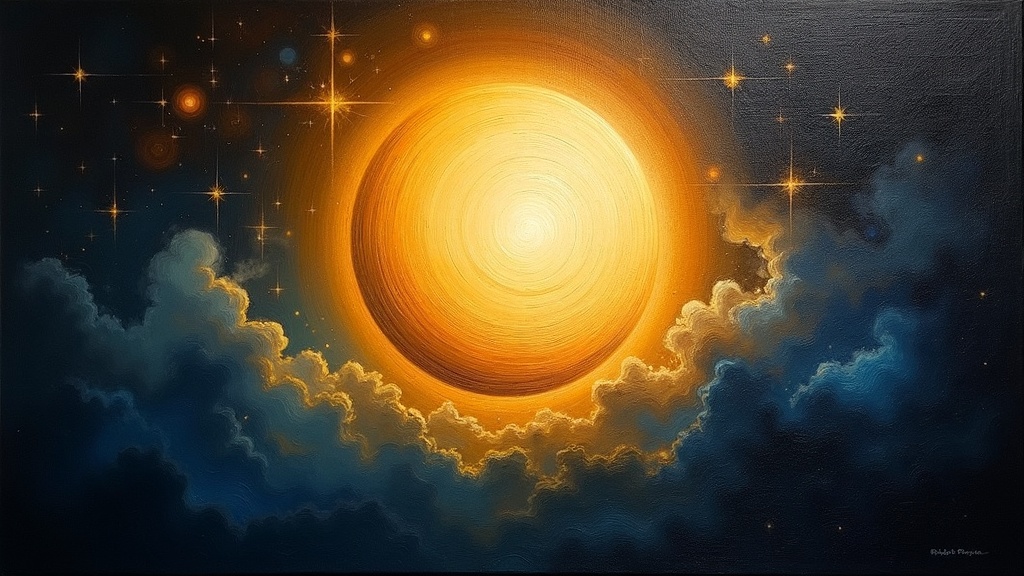
David's attention moved around space. He was interested in everything. At one point, he looked up at the light, almost deciding whether to engage with it. Then he looked back down at the emergency room. "When my attention went from the upper angle down back to the left I went. It went through me and I was just a glowing orb of light. That's what I appeared to be," he recalls.
"I had never felt more alive than when I was that glowing orb of light. I had never felt more aware of what was happening on this planet," David says. In that state, he understood everything. "The pain, the confusion, the identity stuff was gone,".
"We are all orbs of light. We're not these bodies," he realized. The orb was perfect, not confused, not contextualized in human terms. "It wasn't like oh you were a black activist and you need to go back and hop in that body and get to the fight more fighting that fight stuff was done," David explains.
The anger that had defined his life, the racial identity that had consumed him, the mission to be a savior: all of it was irrelevant from this perspective. Not wrong. Not shameful. Just not what he actually was.
Watching His Own Resuscitation
David watched the medical team continue to defibrillate him. The image that sticks with him most is the woman holding her face, bothered by his dying. "If there's any small part of this experience that I was disappointed about was that in that moment of me trying to figure out how to communicate with her I couldn't. I couldn't tell her no don't be sad. This is beautiful. I'm my back's not hurting. I'm not confused about what's happening. This is beautiful. This is the most alive that I've ever felt," he recalls.
He could feel the emotional state of everyone in the room. Some were mechanical, just doing their jobs without emotional investment. But one person in front, at an angle, was really going through it. "In his mind it was almost like he's responsible for making sure that I don't die and he didn't want to feel that. He didn't want to be responsible for that," David says.
When David opened his eyes, the first thing he blurted out was "are you okay," looking for the woman. Then he looked at the person in front to the right and asked again: are you okay. The person cut him off: "No, are you okay." Someone from the right said, "You didn't feel that," and David looked down to see the rubber pad on his chest where the defibrillator had been. "I was like oh you really were dead. That's when it all flooded into my mind and my human awareness because I saw the pad where they were defibrillating me and I saw them defibrillating me from above and it all connected in that moment," he recalls.
"I didn't feel anything. I didn't feel anything," David told them. No pain. No trauma. "Catching my breath on the way to the hospital was as deep as the pain of my death got," he says. "I have no fear of dying. I have no fear of what's next,".
The Painful Return to Human Awareness
Coming back was harder than dying. "When I came back from my near-death experience I was so painfully aware of everything around me. People's pain and confusion," David recalls. He'd had empathic tendencies before, but "it was times 5,000 when I came back from the near-death experience," he says.
He didn't have time to integrate. As soon as he could stand, he had to go back to work. But something fundamental had shifted. "I'm at work and I'm like I feel a little different. I'm interacting differently. I'm seeing better results because I'm not really playing the politics game," David explains. He wasn't carrying identity stuff that influenced his decisions. "The heaviness and the anger and the hate I'm not carrying that around me anymore so I'm received differently. I have more graceful interactions with people. I don't feel like there's somebody trying to block my progress. None of that stuff is real. None of those stories are in me influencing the outcome," he says.
The Radical Accountability of Knowing
"What having that experience does to you is it gives you this extremely radical sense of accountability all the way down to the thoughts that you've had," David explains. We think that because we didn't say something out loud, we're somehow innocent. "But you thought it. So if you thought it own that. You got to own that thought because that thought contributed to the tension that was created in that moment," he says.
This is uncomfortable territory. We like to believe our private thoughts don't matter, that only our actions count. But David's experience suggests otherwise. The thoughts we cultivate, the narratives we rehearse in our heads, the biases we feed: they shape the energy we bring into every interaction. They compound over time.
He learned the hard way. "What my experience showed me is that we tend to become the emotions versus just feeling them and letting them pass. I became hate instead of just saying oh damn that was hateful do I want to respond," he explains. We don't pause. We don't think about the impact of feeling hate on our physical being. We don't ask if we have to internalize what someone said.
"When you're already on edge and you already have these biases you're already ready. You're ready to jump as soon as the invitation is presented to you," David says. You may be justified in your anger. You'll definitely feel justified. "But my anger killed me," he states simply.
If he'd been able to see what he was in differently, to respond with responsibility instead of anger, to respond with hope that he could help change things instead of using all his energy hating the people creating the dynamic, he might still have his health. The injustice was real. The disparity was real. But the hate he chose in response to it destroyed him from the inside.
The Stories We Choose
David still revisits the same frustrations. He still encounters moments of hopelessness. "But now I just like am I going to choose to stay in that emotion. Am I going to become hopelessness. Am I going to become frustration. Am I going to become hate. No I'm going to process it. Let it do what it's going to do in that moment and then leave it alone. Let it go and move on to the next thought, the next choice," he says.
We come here already equipped with a function, but we're not taught to honor it. "We're taught who to be, what to be, what we are, what our name is, who we're supposed to like, who we're supposed to hate," David says. We're given prepackaged identities by people who love us, people who think their advice worked for them. "But it doesn't work. Look at the world around us. This thinking and these orientations that we have towards each other and this planet and this life doesn't work. It doesn't work," he says.
What We Really Are
"We are creating our next life right now in this moment with our attention," he says. As long as we can own our attention and not allow it to be manipulated, injected with software that doesn't originate inside us, we have power. "If you focus on misery you're compounding misery. If you focus on hope you're increasing the probability that other things can happen outside of the negative possibilities," David explains.
And if we collectively understand how to use our attention differently, we can magnify our creative capacity. "If an individual can focus their attention on what they want and get it, imagine if 20,000, 30,000, a million individuals can focus their attention unified on what they can create," David says.
David has shared his experience in multiple interviews, including detailed accounts with T&H Afterlife, Life After Life NDE, and Crossing Over NDE, each time offering slightly different angles on the same profound truth he encountered.
What This Experience Reveals
David Williamson's near-death experience offers something rare: a before-and-after portrait of consciousness itself. He went into that emergency room carrying the accumulated rage of generations, the weight of systemic injustice, the identity of a black activist who believed his anger was not only justified but necessary. He came back as something else entirely.
The detail that strikes me most is the void responding to him before his thoughts were fully formed. This isn't a passive afterlife realm. It's an active, intelligent, loving system that anticipates and fulfills. The satisfaction of having something arrived before the feeling of missing it was complete. That's not metaphor. That's David describing the actual mechanics of how consciousness operates outside the constraints of linear time and biological processing.
His description of being a glowing orb of light, more alive and aware than he'd ever been in his body, aligns with thousands of other NDE accounts. But what makes David's story particularly significant is his clarity about what fell away: the pain, the confusion, the identity structures. Not because they were wrong or shameful, but because they simply weren't what he actually was. The orb didn't care about racial justice activism. It wasn't cheering for one side or another. It was just aware, just present, just perfectly itself.
This doesn't diminish the reality of injustice. The disparity David experienced was real. The Klan marches were real. The generational trauma was real. But his experience suggests that our response to injustice, the stories we tell ourselves about it, the identities we build around it, can become prisons of their own. His anger was so justified it killed him. And when he died, he discovered that the anger wasn't him at all.
What we are, according to David's experience, is light. Energy. Awareness. Soul. Spirit. We are individual nodes in an infinite system, accumulating perspectives that get fed back into the whole and become accessible to everyone forever. Nothing is lost. No experience vanishes. We are more integrated with the system outside the body than we ever are inside it.
That's the good news David brought back. We don't lose the people we love. We don't lose the experiences that shaped us. They're etched in infinity, always accessible. And we are creating our next life right now with our attention, our choices, our willingness to process emotions without becoming them. The world David returned to is the same world he left. But he's not the same person experiencing it. And that changes everything about what's possible.
Was this article helpful?