Danielle Slupesky's Near-Death Experience: A Life Review Without Judgment
A nurse's clinical death revealed that every interaction matters, and consciousness extends far beyond the body
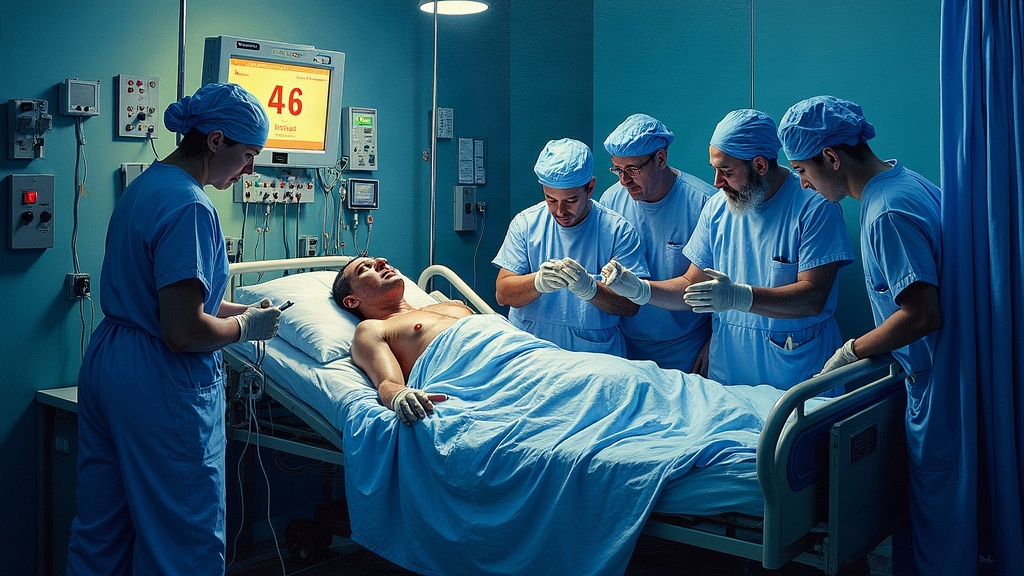
The monitor read 46 over question mark. Danielle Slupesky, an ER nurse, had seen plenty of patients in shock during her years at a level one trauma center, but she'd never seen a blood pressure that low. She was shaking so violently the whole bed rattled. Blood poured from her surgical incision as fast as the team could pump it in. Then, suddenly, the cold stopped. The pain vanished. A sense of welcoming washed over her even as doctors worked frantically around her body. Her first conscious thought when she left: oh yeah, this is dying. It felt like something she'd done before.
The Nurse Who Couldn't Save Herself
Danielle Slupesky grew up in the San Francisco Bay area, moving constantly. By eighth grade, she'd attended three different schools. The instability at home, the drinking, the fighting, the money problems, taught her early to construct a flawless exterior. She became MVP of three sports. She pulled straight A's. She developed what she now calls "this duplicitous life", stuffing down everything painful while projecting total control.
She also learned young that prescription opioids could make the pain disappear. After her first major surgery at 11, she brought the codeine bottle back to her mother asking for more, and her mom said, "Whoa, whoa, you're not supposed to be done yet". The pattern was set.
By 18, she was working as an EMT at concerts and nightclubs in San Francisco, hanging out in venues before she was legally old enough to enter them. She loved emergency medicine. When seizure history blocked her path to becoming a paramedic, she pivoted to nursing school, graduating from Cal State Hayward and landing in the ER at Eden Medical Center, a level one trauma center.
"It was intense to say the least," she recalls. Gunshot wounds. Stabbings. The kind of trauma humans inflict on each other. She was good at her job. You wanted to be in her room if something big was going down. But she "wasn't handling it well". The minute her shift ended at 7:30 a.m., it was either a drink or multiple prescription pills. Many of her coworkers did the same thing, rationalizing it: "Everybody else has happy hour. Why shouldn't we?"
She was, in her own words, "a very functional addict and alcoholic".
The Fracture That Started Everything
In April 2013, Danielle went out with a group of fellow nurses. They rented a limo for what she calls "a booze cruise of our own". Somewhere during the night, blacked out drunk, her heel caught on the limo door and she came down on her knee on the curb, fracturing her femur.
The fracture didn't require surgery, but she was immobilized for eight weeks. During that time, unnoticed, a blood clot formed in her leg.
When she returned to work in June, she immediately picked up overtime shifts to make up lost money and PTO. Her leg was red and sore. She did what nurses do: grabbed an Ace wrap, wrapped it tightly, and powered through a 16-hour shift.
That morning, she came home intending to sleep in the backyard. It was warm, nice June weather in California. She went to the bathroom to put on sunscreen. Before going outside, she took what she calls "a handful of pills": a sleeping pill, pain pills, Benadryl for the itching the pain pill caused.
Then she passed out. The blood clot had moved from her leg into her lungs.
She stayed down for somewhere around 8 to 10 hours, her head inside the bathtub, her legs outside, the edge of the tub pressing across her lower abdomen and hips. Without blood flow, her muscles began to die, releasing protein into her bloodstream that would clog her kidneys.
When her husband found her, her legs didn't work. They called 911. The ER found the large clot in her lungs. Her kidneys were failing. She was admitted to the ICU.
142 Pounds of Fluid
She entered the hospital at 67 pounds. Ten days later, she weighed 209.
The palms of her hands and soles of her feet split open. Blisters on her legs wept fluid. A resident decided to relieve the pressure in her abdomen by doing a paracentesis, draining fluid with a needle. The resident did the procedure inappropriately, without ultrasound guidance, and perforated Danielle's bowels.
Over the next two days, stool leaked into her abdomen. She became septic.
It was somewhere around 10 or 11 p.m. when she had "this sense of impending doom". She looked at her husband and told him, "Clear as day, I'm going to die".
They rushed her to surgery. They were unable to complete the first surgery and sent her back upstairs opened up. In the first 36 hours, they went in three different times. Because she was so swollen, they used retention sutures, the kind used in open heart surgery.
Then they had to restart the blood thinner because of the clot still in her lungs.
The incision bled out.
46 Over Question Mark
Doctors and nurses surrounded her bed. They were dumping blood products into her as fast as she was pouring blood out. She was "so cold" and "in so much pain". Her whole bed was shaking from her shaking. She was in shock.
She glanced up at her monitor. It said 46 over question mark. One of her last conscious thoughts was, "Wow, I didn't know it could read that low".
Then all of a sudden there was no pain. She was no longer cold.
There was "a sense of welcoming and nurturing" even while she was still present in the hospital room. At some point she became unconscious, and her first thought was "oh yeah, this is dying".
"It was a remembrance," she says. "It very much felt like something I had done before. It was not the least bit scary".
From that point forward, she was "no longer in physical reality". She didn't have a moment of floating above her body watching the resuscitation. "It's like once I was out, I was elsewhere".
She was "completely outside of our constructs of space and time". Everything felt like it happened all at once.
The Light That Felt Like Home
At some point, she found herself without a body. She could "see 360 but not just in one plane", more like spherical vision where "I could see everything everywhere".
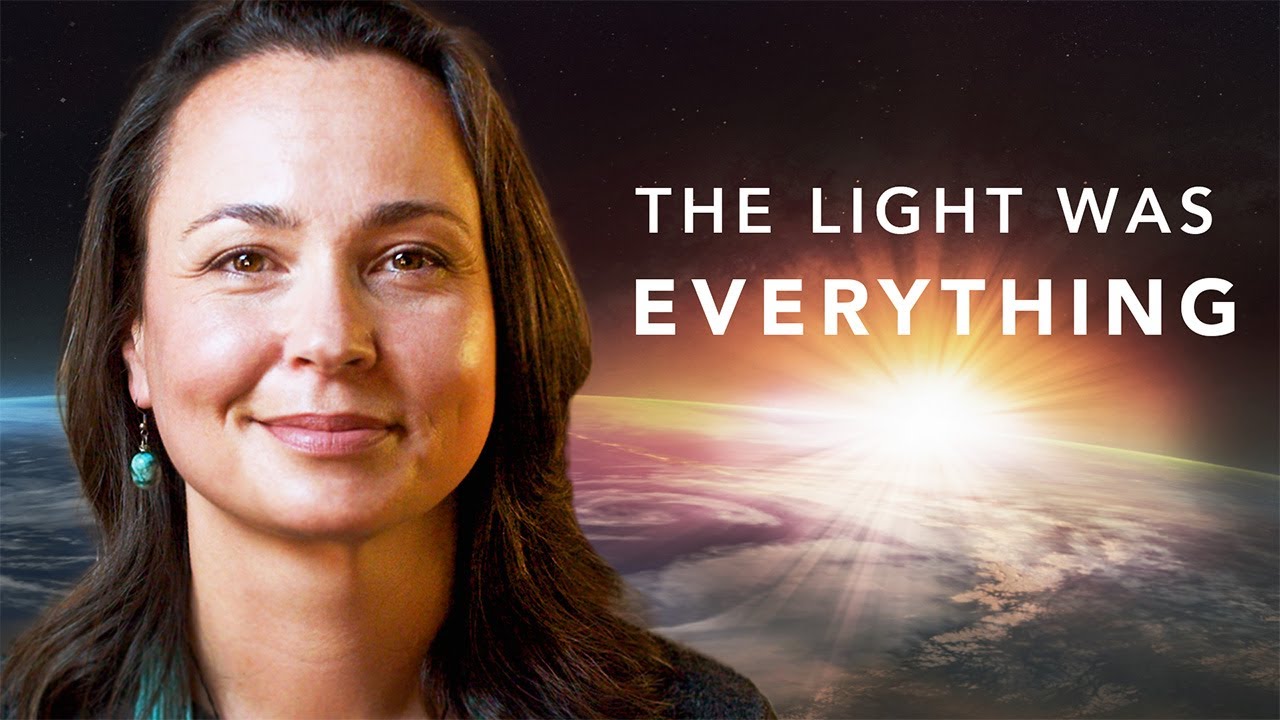
The light was directly above her. "It was everything," she says.
"It was God, source, universe," she says. "That light felt like the totality of everything". "And I knew that I was a part of it. I came from it. I belonged in it".
She'd never felt homesick for anywhere on Earth. They'd moved so much as a kid. But this "felt like home on a level that I'd never experienced here".
Yet she had no way of getting to it. "I had no propulsion method," she says. It felt "very similar to a dream where like if you're trying to run and you can't".
"It felt to me in that moment it was a sense of desperation and it felt like drowning. Not because it was painful or because I was scared but because I needed that light just as much as I need oxygen now". "I needed to be in the light part of it just as much as I have to breathe now".
The Room Where Every Moment Mattered
At some other point, or at the same time (linear time had ceased to exist), she found herself in "this big huge expansive space" that felt mechanical, "similar to the way that a revolving door is arranged" or "an old Kodak slide carousel".
Each section was "somehow both a still shot that I could look at like a photograph" and also "a movie or a 3D holographic sort of rendering of this experience". She could look at it from third person, "but I was also somehow in the experience as myself, but I wasn't just experiencing it from my perspective. It was from the perspective of everyone else also in the room".
"It's like my perception split in all of these different ways in this one moment," she says.
At first, she "had time to really sit with and be in each one of these experiences". She was "able to know exactly what other people were thinking and feeling". She could experience "in very real time the effect and impact of not just my words and my actions, not just the external parts of me, but also my thoughts and my energy".
She had access to what happened to a person before their interaction, "that gave them the perspective that they held in that moment". And she could see "how this interaction changed them".
There were moments where she did something great and people felt good. There were moments where she did wrong things, and those didn't feel good. But here's what struck her most: "It wasn't like I was judging, but I was analyzing". "And I was doing it with the same sort of energy you might teach a kid how to tie their shoes with, right? Where if they get it wrong, you know, you don't necessarily scold them and and punish them. You're just like, 'Nope, let's undo it and try again'".
This wasn't judgment. This was education. This was love showing her, gently, what worked and what didn't.
The Girl Against the Wall
One memory stood out above all others. First or second grade. There was "one girl in our class that was kind of always bullied". Looking back with adult eyes, she "was clearly being neglected and likely abused at home".
Three popular girls had cornered her against a wall in the courtyard. Danielle was playing on the monkey bars. She saw it happening, jumped down, and ran over "full steam ahead". She got between them. Tiny Danielle, "literally hand on my hip finger out shaming these girls", letting them know what they were doing wasn't okay.
"In that moment I felt what it felt like to be shamed right that that these girls knew that what they were doing was wrong," she says. "But I also felt like what it this other girl felt to be stood up for".
And here's where it gets profound. "This was one of the first times anybody made her feel worth standing up for, that she understood her own value," Danielle says. "And I was able to see how that that one little moment shifted things for her".
"If that moment gave her this opportunity to view herself in a new way, where did she then take that, right? Who else was she then able to help and heal?" Danielle asks. "It very much feels like kind of flinging pebbles into a clear smooth lake where you watch all of these little ripples and they all bounce off of each other and it just keeps going".
Every single interaction we have sends ripples outward in ways we can't begin to track from this side.

The Vortex and the Choice
Eventually, the clicking between scenes started to happen "faster and faster" until "it all felt like it was all happening all at once where I was experiencing my entire life from the perspective of every human I'd ever come in contact with all at once".
As this thing was spinning, "it seemed to create like a suction force or like a vortex where I started to be pulled upwards". There was no ceiling or floor in this apparatus, but "somehow I knew with everything in me that if I crossed this invisible threshold above me that I would not be able to come back". That was the end of it.
When she had that realization, her husband "was the next thing that popped into my mind". "And I knew that he would not be okay if I left under those conditions," she says.
As she was being pulled up, getting closer to the threshold, she laughs now because "I literally feel like I kind of put my finger up at God and was like, 'Hold on a second. Give me a minute'".
She had every intention of continuing on. She had every intention of going home. "But I had to come back and say goodbye," she says.
Her thought was: "I'm going to go back. I'm going to say goodbye and I'll be right back".
She knew that meant getting back in her body, which was really broken. She knew "how painful that was going to be and was not looking forward to it", but she felt compelled.
The way she thought she could get out of the spinning room was to "jam the gears or break it". She punched (which still doesn't make sense because at that point she didn't have a body), and "it's like I found my husband's hand on the other side and we did this like cliffhanger moment where almost by fingernails it felt like he pulled me".
She had to "flatten out" ("it felt very cartoonish") and was "pulled back into my body".
The Squeeze
From the 3D perspective, she'd been reintubated and was back on the ventilator. They'd pumped enough blood into her that she'd stopped bleeding, but she "hadn't responded to staff or doctors or nurses".
When her husband got to her bedside "and was holding my hand and kind of, you know, squeeze my hand, squeeze my hand in my ear", she believes "that's when I had this kind of I have to go back moment cuz I sensed him in the physical world".
She squeezed his hand. "It was clear I was still in there," she says.
She doesn't know how long after that before she became fully conscious, but her total hospitalization was 3 and a half months. It was a long time before she was working through the physical ramifications of everything.
The Folder in the Stack
All their friends at that point were doctors and nurses. When she mentioned parts of the story to a couple people, they were "very logical about it". "Well, that makes sense, right? You were hypoxic. You were low on oxygen. You were bleeding. The brain probably releases DMT when it dies," they said.
She "just kind of shut down with it and did not talk about it any further". She "discounted it myself. I did everything I could to discount it because the implications of it being real were far more than I was ready to deal with".
She'd been raised Lutheran, and "the God that I was taught about was not at all the things that I had experienced". She "didn't have a framework for this loving nurturing non-judgmental open creator".
She also didn't have space for the aftereffects. She was "empathic and sensitive to people before, but this is on a whole different level". In a crowd, she would "all of the sudden be really angry or be really sad or be really anxious and it would almost come and go as quickly as we were walking through the crowd". At times she would "actually hear things, you know, that no one else heard".
She told her husband, "I'm pretty sure I'm schizophrenic. I need to go see somebody". She "had no place to put this other than pathology". She pathologized all of it.
The minute she was medically cleared, she and her husband moved to the Virgin Islands. They sold everything. They quit their jobs. She started a small house cleaning and property management business.
One of her clients was a hoarder with "stacks and stacks of paper everywhere". His wife brought Danielle in to clean his office while he was having a medical procedure. While cleaning around the piles, about a third of the way down in a huge stack, she "went right to this folder" that was old and yellowed, "like an old '80s looking report, you know, actually done on a typewriter".
She pulled it out and sat on his bed and "instantly started reading it". She was scolding herself ("this is highly inappropriate"), but as she read, she "realized that it was a thesis paper that a college student had written on near-death experiences".
This gentleman was one of three people interviewed. He was a diver whose scuba tank had blown up on the dock next to him. "The way he described the light was exactly the way I do," Danielle says. "And he described this kind of circular sort of setup that he was in where he was reviewing his own memories".
"I just started balling. I lost it," she says. "Because in that moment I knew, well, if someone else has experienced this, it can't be just a hallucination or misfirings in my anatomical brain". There was something here.
She went downstairs and sat on their couch holding the folder, waiting for them to come home. When they walked in, "his eyes got huge when he saw what I was holding". He could see she'd been crying. He looked at her and said, "You've seen".
He'd never even told his wife about his experience. "That was the first time that I for sure knew that this was a very real experience. It wasn't something that I had just made up," Danielle says.
The Voice That Wouldn't Let Her Hide
In 2017, hurricanes Irma and Maria hit the Caribbean back to back. Everything grew mold afterwards. The mold "got me really sick again". She got down to 104 pounds.
Part of the healing process was getting "really quiet". Her voice came to her "clear as day": "Well, you're not doing what you said you were going to do when you came back. No wonder you're sick".
She told her husband, "Well, I'm supposed to be a death coach". He looked at her like she was crazy. "Not a life coach, but a death coach," she explained.
She sat down and Googled "death coach". That's when "death doula" popped up. She'd never heard the term before. She immediately found her training school.
"All of this was just kind of this remembrance of not only the experience itself but kind of who we are, right, as as humans", she says. "We're just pretending, right? We're just kind of playing these roles for a while and like, okay, I've taken on the role of Danielle this goround". "It very much feels like this is a thing I've done before. I will do again in some other iteration".
What She Learned About Being Human
"For me, the the point of this goaround is compassion and connection," Danielle says. "And how do I find it? How do I foster it? How do I cultivate it?"
Working at end of life, she says, "is the most humbling and rewarding thing I've ever done". "It kind of pulls together all of the experiences I had prior to becoming a nurse, right? the challenging things of childhood, the some of the traumatic events, the nursing experience itself, the medical care experience, the near-death experience, like all of the sudden it's like it all makes sense".
She's now deeply aware of "the impact of our interactions as people". "Sometimes an interaction can be as simple as you're driving down the road and you have a judgmental thought about somebody walking on the sidewalk. We may not think that that has an effect, but it does".
"This idea of leading this duplicitous life like I used to just doesn't work anymore," she says, "because it's so clear that you can be doing all of the right things and saying all of the right things on the outside, but if the intention behind those things isn't pure, it's almost just as bad as doing bad things".
She also realized something painful: "Treating myself internally that poorly again felt just as bad as when I had actually done something to another human or said something bad to another person". "It had the same effect in the same feel to me. And so it it's changed not only how I interact with the outside world, but how I my internal dialogue and how I treat myself".
She went through what felt like "every single moment of my life" during the review, including memories she would have considered inconsequential.
"I now view all experience as an opportunity to learn," she says. "And even when I am in the midst of really challenging experiences, I try in those moments to to kind of get into my future self of what is here for me. There's always something here for me".
"I don't believe life happens to us, right? Life happens for us," she says. "Even the most horrific things. And there's there's value in even those experiences if we choose to kind of digest the experience and alchemize it into a meaning of some sort".
She thinks a lot of these things happen "maybe because we're not on our path, right? We're not where we should be at at a certain stage". "I think that that's exactly why I had the medical experience I did, right? I was living, like I said, extremely unconsciously really um negatively to myself. And I think it was it was I needed the 2x4 upside the head".
When her biological father and grandfather were killed by homicide in Oakland when she was 11, even that experience, she says, "I wouldn't give back, right? It opened up so many opportunities for learning and loving and forgiving, right? To choose to forgive the man that took their lives. Like that's a that's a big ask for a human to do. And what a beautiful opportunity".
Why We're Here
"I think the purpose of life incarnating in a human body is experience. Just experience," Danielle says.
"The one mind God, right? Your source universe. It's very similar to like a fish doesn't know that it's in water, right? Because it's surrounded by water". "Pure white light and love energy that I believe source is is the culmination of all things. It's all emotions. It's all experience. It's all frequencies".
"And therefore, it can't actually experience anything. It had to develop a system with which to feel, right, and sense and be and do". "And I think that that's what incarnating into a physical realm and a physical body is".
She quotes Edgar Cayce: "Birth in the physical is death in the spiritual, right? And death in the spiritual is birth in the physical". "It's again that idea, this continuous ebb and flow of the universe".
"It's almost now I think that the whole cycle is almost just like God taking a breath," she says. "Every breath is a a new beginning and an ending, a new birthing and a death".
"It's almost like the universe is just breathing us into and out of existence," she says.
What This Reveals
Danielle Slupesky's account is one of the most detailed life reviews we've encountered at Project Profound. What makes it remarkable isn't just the vividness of her recall, but the precision of what she learned.
The life review is one of the most commonly reported features of NDEs, appearing in roughly 20-25% of accounts. But Danielle's description captures something essential that many experiencers struggle to articulate: the review isn't about judgment. It's about education. It's about seeing, with perfect clarity and zero shame, the actual impact of our lives.
She experienced her entire existence from the perspective of everyone she'd ever encountered. Not sequentially. Simultaneously. She felt what the bullied girl felt when tiny Danielle stood up for her. She felt what the bullies felt when they were shamed. She saw the ripples extending outward from that one playground moment, changing the trajectory of a life.
And here's what matters most: the presence reviewing these moments with her wasn't punitive. It was nurturing. Motherly. Teaching a child to tie their shoes. When you get it wrong, you don't get punished. You try again.
This aligns perfectly with what we see across thousands of NDE accounts. The beings of light, the presence, the source (whatever language people use) never condemns. It shows. It reveals. It helps the experiencer understand.
Danielle also describes something we see repeatedly but is often misunderstood: the life review includes not just actions and words, but thoughts and energy. She learned that "you can be doing all of the right things and saying all of the right things on the outside, but if the intention behind those things isn't pure, it's almost just as bad as doing bad things".
This isn't New Age moralizing. This is direct observation. She experienced it. She felt the difference. And she learned that how she treated herself internally had the same weight as how she treated others.
What does this suggest? That consciousness is relational at its core. That we exist in a web of connection so intricate that our private thoughts ripple outward. That love isn't a nice idea, it's the fundamental structure of reality, and we're here to learn how to embody it more fully.
Danielle came back with a mission: to help people understand that death isn't the end. That it's a transition, not a termination. That the love waiting on the other side is real, immediate, and unconditional.
She's living that mission now as a death doula, sitting with people at the threshold, helping them cross consciously. And in doing so, she's helping them live more consciously too. Because when you know that every interaction matters, that every thought sends ripples, that you'll one day review all of this from the perspective of everyone you touched, you start paying attention.
You start choosing love. Not because you're supposed to. Because you've seen what love actually is, and you can't unsee it.
That's the gift Danielle brought back. And that's the gift she's giving forward, one conversation, one client, one ripple at a time.
Was this article helpful?