Doctor's Near-Death Experience Reveals Two Realms and a Future Earth
An anesthesiologist's stroke led to a journey through time and dimensions, where love proved to be the only currency that matters
Daniel was standing in his living room, walking from the couch to his computer, when he suddenly stopped being a body. One moment he was a physician recovering from a stroke, the next he was a sphere of yellow energy floating above a world he didn't recognize. Below him, skyscrapers stood silent and empty, their concrete facades split open by vegetation reclaiming what humanity had abandoned. He wasn't dreaming. He wasn't hallucinating. He was awake, unmedicated, and more alive than he'd ever been in his physical form. For what felt like days or weeks, he drifted through this future landscape with another ball of light following close behind, experiencing a feeling so profound that eight years later, sitting across from an interviewer, he still can't find words adequate to describe it. This wasn't his first brush with the other side, but it was the one that changed everything he thought he knew about consciousness, time, and what we're really doing here.
The Physician Who Died Twice
Daniel didn't go looking for proof that consciousness survives death. He was an anesthesiologist, trained at UNICAMP in Brazil, with additional specialization in pain treatment at Memorial Hospital in New York. His world was built on protocols, evidence, and the materialist assumptions that underpin modern medicine. Then, on December 14, 2011, his basilar artery clogged, triggering a brainstem stroke that left him unable to speak or walk.
For six days, he lay in the ICU in a coma. During that time, somewhere in the darkness of unconsciousness, something opened. Daniel describes it as "a sort of lamp... opened... and I saw a white light. A light... in a portal." He found himself facing a choice he didn't understand but felt with absolute clarity: should he pass through or not?
"I was in that doubt," he recalls, "then I thought... 'I will not pass.' Then I didn't pass... and it closed... right after that." The portal vanished. The light disappeared. He returned to the blackness of coma, with no memory of anything else around that moment, no sense of what lay beyond the threshold he'd refused to cross.
When he emerged from the coma two weeks later, he had no recollection of the hospital room, the visitors, or the conversations he'd apparently had while awake. The portal experience felt trivial, a brief flicker compared to what was coming.
One Month Later: The Real Journey Begins
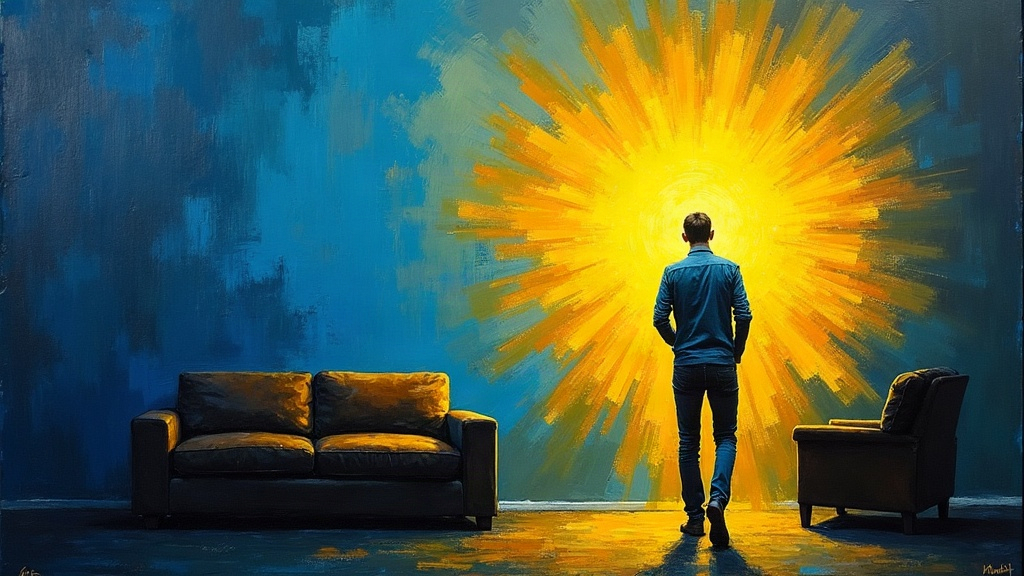
A month after the stroke, Daniel was home, recovering. The medications had been stopped. He was standing, fully conscious, moving from his couch toward the computer when reality shifted without warning.
"I was moving from the couch to the computer in the living room," Daniel explains. "I was standing... and suddenly I turned on energy." There was no transition, no gradual dissolution of his physical form. "It is... immediate," he says. One instant he was a body. The next, he was something else entirely.
He describes himself as "a ball of energy. The size of a golf ball... a bowling ball, let's say so." The energy was yellow, intensely bright, and completely defined, not diffuse or merging with everything around it. And he wasn't alone. "There was the ball that was following me," another sphere of the same yellow light, silent but present.
What happened next defies every conventional understanding of consciousness, perception, and time. "I had no body," Daniel says, "but I saw... I heard... I chewed... without any physique." He was perceiving, experiencing, thinking, all without neurons or sensory organs. The communication between him and the other energy wasn't spoken. "The voice spoke to me... through... telepathy," he explains. "It wasn't vocalization, nothing. It was telepathy."
A Future Earth, Abandoned and Reclaimed
As Daniel floated, he looked down. What he saw below him wasn't the world he'd left behind.
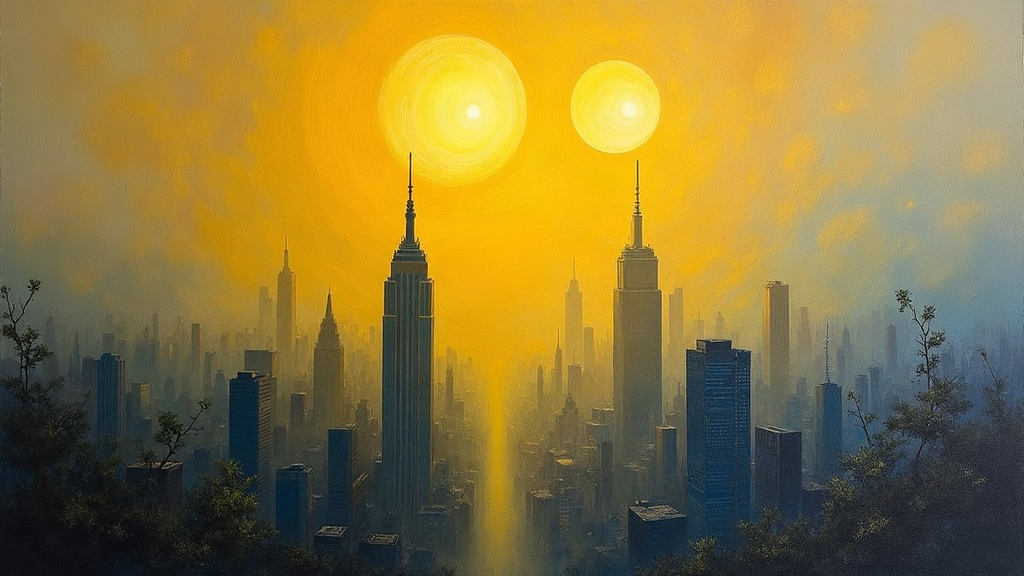
"I saw the buildings... the skyscrapers," he describes, "and the vegetation sprouting from the skyscrapers." When pressed to clarify what he meant, he referenced a Will Smith film, the opening scenes showing a post-apocalyptic Manhattan overtaken by nature. "The beginning of that film describes well what I was seeing down there," he says.
The buildings were old, crumbling, with plants bursting through concrete and steel. There were no people. "There was no one," Daniel states clearly. When asked if it was a city, he corrects: "I would say it was destroyed land. Destroyed land."
But here's what doesn't make sense, at least not by earthly logic: despite floating above this desolate, abandoned world, Daniel felt extraordinary. "The feeling I had was the best feeling ever lived, experienced... in the realm," he says. "It was a fantastic feeling... I never felt something like that before."
The landscape below him, he believes, was a glimpse of Earth's distant future. "I believe that a lot of Earth time... has passed," he explains. "Seeing the future." But the ruins weren't what mattered. "That energy was driving me... but it was... down there was in a second degree of importance. It didn't really matter," Daniel clarifies. "What was important then? The feelings were important. The feeling of good and bad."
The Lesson of Detachment
As Daniel drifted through this realm, the telepathic voice delivered information to him, not all at once, but as he needed it. "The information is delivered to me as I need it," he explains. One message came through with particular clarity.
"Here there is no sex, there is no male, there is no female... there is nothing like that," the voice told him. Daniel was puzzled by this at the time. Later, he found the same concept in Matthew's Gospel, a passage he'd never read before his experience.
But the deeper teaching was about detachment. Not detachment from material things (that's easy, Daniel insists) but from people. "From a relative, a father, a mother, a wife, a son, a daughter... everything. Total and unrestrained detachment," he says. The sensation accompanying this realization was "very good... so... indescribable."
When asked to explain what this detachment means, Daniel becomes emphatic. "Attachment... makes us stuck in this planet. In Earth, let's say so. Detachment frees you from this prison," he states. "You... get free you and you get... you become light. Become light."
He floated through this realm for what felt like "hours... if not days" in that state of weightless joy. "I think the best definition is... I floated," he says. No weight, no body, no pain, just pure awareness and an indescribable feeling of freedom.
The Other Side: Desolation Without Fire
Then, without warning, everything changed.
"It was instantaneous," Daniel says. "Just like a click." He found himself in a different place, still floating with the other energy ball behind him, but the feeling had inverted completely.
"There was no moaning, there was no fire, there was none of that," he clarifies, dismantling the medieval imagery we associate with hell. "But it was a feeling... of desolation... and of depression, very intense." The sensation was so overwhelming that "I wanted to run out of there."
Unlike the first realm, where he could see the abandoned cityscape below, this place had no visual features that captured his attention. It was pure feeling, pure emotional atmosphere. And though he saw nothing, "I knew that there were people," Daniel says, "but I did not see, did not listen, did not come into contact with them."
Why was he shown both? "It's for me to tell about it," Daniel explains. "For me to tell that there is not only the good side, that there is also the bad side. And, also, that there is not only the bad side, that there is also the good side."
Five Minutes on Earth, Days in Eternity
Eventually, Daniel returned. "I went back to Earth. I came back... and it had only been five minutes here. Five minutes," he says, still sounding amazed years later.
He tried to hold onto the feeling, that indescribable sensation of freedom and joy. "I tried to keep that feeling... like... 'Ohh... I will keep it, I will keep it, I will keep it...' 'It's over.' The sensation ended, no way," he recalls.
The return to his body was jarring. "It may seem childish but... the smell... it was something... 'Oh, no... I'm going back to that body there...' 'that body is rotting,'" Daniel describes. "And... a weight... and... and pain. Pain... physical pain... in the knee... in the hip... everywhere."
When asked about time, Daniel is unequivocal. "You don't have time there. Time is something from Earth. It is an earthly property, ours," he states. The interviewer pushes back, noting that Daniel described a sequence of events, which is how we define time. Daniel acknowledges this but insists: "The definition of time is a purely earthly definition. So much so that I... took hours... took days... took weeks walking... floating... in the form of energy, and here only five minutes passed."
He even checked his watch when he returned, confirming the impossibility. "I remember seeing it on my watch, because I felt like I had been traveling for days," he says.
The Meticulous Plan
Daniel is convinced his experience wasn't random. "Everything is meticulously planned," he says multiple times throughout the interview. The timing of the second experience, a month after the stroke when medications had cleared his system, while he was standing and fully conscious, all of it was designed to eliminate doubt.
"I think it happened that way so that anyone who is going to criticize should think about this criticism," Daniel explains. "'But he was standing... he wasn't sleeping... he wasn't dreaming...' 'he was before under medication...' 'but the medication had already stopped.' It was all meticulously planned for me to have this experience."
The knowledge he received was also carefully controlled. "God delivers to me... makes me understand... this experience was much greater than what we are talking here. But this... God says like this... 'It's enough for you to know.' So, that's all I can know," Daniel explains. When asked if he felt he had access to greater knowledge while out of body, he's clear: "No, I didn't, because everything is meticulously planned. 'You will know only that... you need to know only that...' I could know many other things but that for me was meticulously planned."
Not Faith, But Reality
For eight years, Daniel kept this experience mostly to himself, sharing only with close family. Then he felt compelled to speak publicly. "A force... made me search the channel," he says, referring to the YouTube channel where he eventually shared his story.
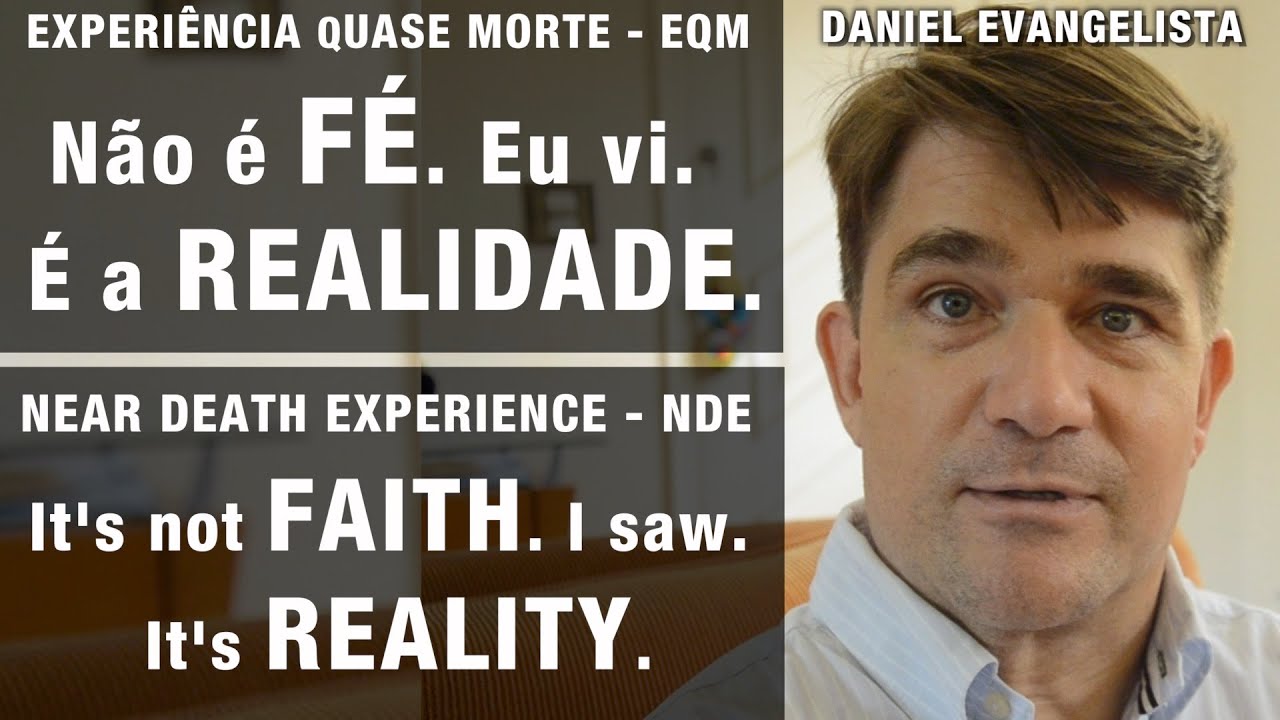
When asked what he wants people to understand, Daniel's answer is unambiguous. "I don't need to have faith... in the realm," he states. "Faith is about what the eyes have not seen and the fingers have not touched, but even so you believe. I don't need to have faith. I believe in the realm. I saw it."
This distinction matters deeply to him. "You know... faith... is about what the eyes did not see, and the fingers did not touch. This is faith. It is to believe in the invisible. But I saw. So, that thing was not faith to me, it became reality," he explains.
As a physician, Daniel recognizes his testimony carries particular weight. "The fact that I am a doctor makes me to have credibility regarding the general public," he acknowledges. But his message to his fellow physicians isn't about convincing them of anything. It's simpler: "We should live the love. Live the love," he says. "Money doesn't bring happiness, power... fame... sex... drinking, none of this is worth it. Only love."
Daniel's message, repeated throughout the interview, is stark in its simplicity. "What I saw from up there is that life on Earth is very fleeting... it is a breath... but we think it is a lot... being here on Earth," he says. "We think we have... experiences to accumulate... it's not that... it's just love. It's just love that will make you grow... and it will make you... go to bright side."
What This Experience Reveals
Daniel's account sits at an unusual intersection in the NDE literature. His first experience, the portal of white light during his coma, is textbook, matching thousands of other reports from people at the edge of death. But his second experience, a month later while fully conscious and unmedicated, is something else entirely. It's what researchers sometimes call a spiritually transformative experience (STE), but it contains elements specific to NDEs: the out-of-body state, the encounter with another presence, the journey through different realms, the profound shift in values afterward.
The detail about time is particularly significant. Daniel's subjective experience of days or weeks compressed into five minutes of clock time echoes reports from experiencers across cultures and decades. This isn't just a feeling of time moving differently, it's a fundamental disconnect between consciousness and temporal measurement. If consciousness can operate independently of the brain's time-binding mechanisms, that alone suggests something profound about its nature.
The vision of a future Earth, abandoned and overgrown, is harder to categorize. Some experiencers report prophetic visions or glimpses of possible futures. Daniel is careful not to claim certainty about what he saw, but he's clear that it felt like a real place, a real time, not a symbol or metaphor. Whether this was a literal future, a possible timeline, or something else entirely, we can't know. What matters is that Daniel experienced it as utterly real while simultaneously feeling better than he'd ever felt in his life.
The two realms, one of indescribable joy and one of profound desolation, align with centuries of testimony about the afterlife. But Daniel's description strips away the religious imagery. No flames, no angels with wings, no thrones or harps. Just feelings, pure and overwhelming. The good place wasn't good because of what was there, it was good because of how it felt to be there. The difficult place wasn't difficult because of external torment, it was difficult because of the internal state it represented.
Daniel's emphasis on detachment deserves attention. He's not talking about becoming cold or uncaring. He's describing a state where love exists without the desperate clinging we call attachment. This distinction appears in contemplative traditions worldwide, the recognition that genuine love and possessive attachment are different things, that we can care deeply for people without needing to own or control them. Daniel experienced this as a felt reality, not a philosophical concept, and he's convinced it's essential to our spiritual development.
As a physician, Daniel's testimony matters. He can't be easily dismissed as someone unfamiliar with medical science or prone to magical thinking. He knows what hallucinations look like, he knows how drugs affect consciousness, he knows the difference between dreams and waking awareness. His second experience happened under conditions that eliminate the usual explanations: no hypoxia, no medications, no sleep, no altered states induced by trauma or illness. Just a man walking across his living room who suddenly found himself somewhere else entirely.
What Daniel wants us to understand is simple but radical: this isn't about belief, it's about reality. He's not asking anyone to have faith. He's reporting what he experienced, and he's convinced that what awaits all of us is both more wonderful and more serious than most people imagine. Love isn't just a nice idea, it's the fundamental currency of existence. Everything else, all the things we chase and worry about, won't matter when we find ourselves floating as spheres of yellow light above a world we no longer need.
Daniel has also shared other experiences, including an NDE as a child where he was saved by an angel, and prophetic visions he received after being struck by lightning. Each experience has reinforced his conviction that consciousness is far more than brain activity, that we are eternal beings having a temporary physical experience, and that how we live and love here determines what comes next.
Eight years after his journey, Daniel finally felt compelled to share his story publicly. His hope is simple: that as many people as possible will hear it and think about what it means. Not to convert anyone to a particular religion, not to prove anything to skeptics, just to plant a seed. Because if even a fraction of what he experienced is true, it changes everything about how we should be living right now.
Was this article helpful?