Bridgette's Terrifying Journey to Hell and Back
A nurse's repeated near-death experiences revealed the reality of hell and transformed her understanding of faith, authority, and eternal consequences
Bridgette was lying on her living room floor, a piece of paper clutched in her hand with four desperate sentences scrawled across it. She'd felt the vitamin lodge in her airway. She knew what was coming. She wrote: I've aspirated. There's something stuck in my airway. I'm going to stop breathing. I need you to turn me on my side and call 911. And I'm really sorry. Then she heard her mother scream, and everything went dark. What followed wasn't the peaceful light so many near-death experiencers describe. Bridgette found herself in a van with other souls, black coverings over their heads, being transported to a place of organized, relentless horror. This wasn't her first visit to hell, and it wouldn't be her last.
The Nurse Who Couldn't Breathe
Bridgette had been fighting for her life for months. As an ER nurse in California, she'd seen death up close countless times, had joked through codes with colleagues, had become desensitized to suffering the way medical professionals often do. She never imagined she'd become the patient on the other side of those frantic resuscitation attempts.
It started with a twinge in her throat after the second shot in 2020. Within weeks, she couldn't breathe properly. "Something's wrong, something's wrong. I feel like I can't breathe," she told people repeatedly. They kept telling her it was anxiety. It wasn't anxiety.
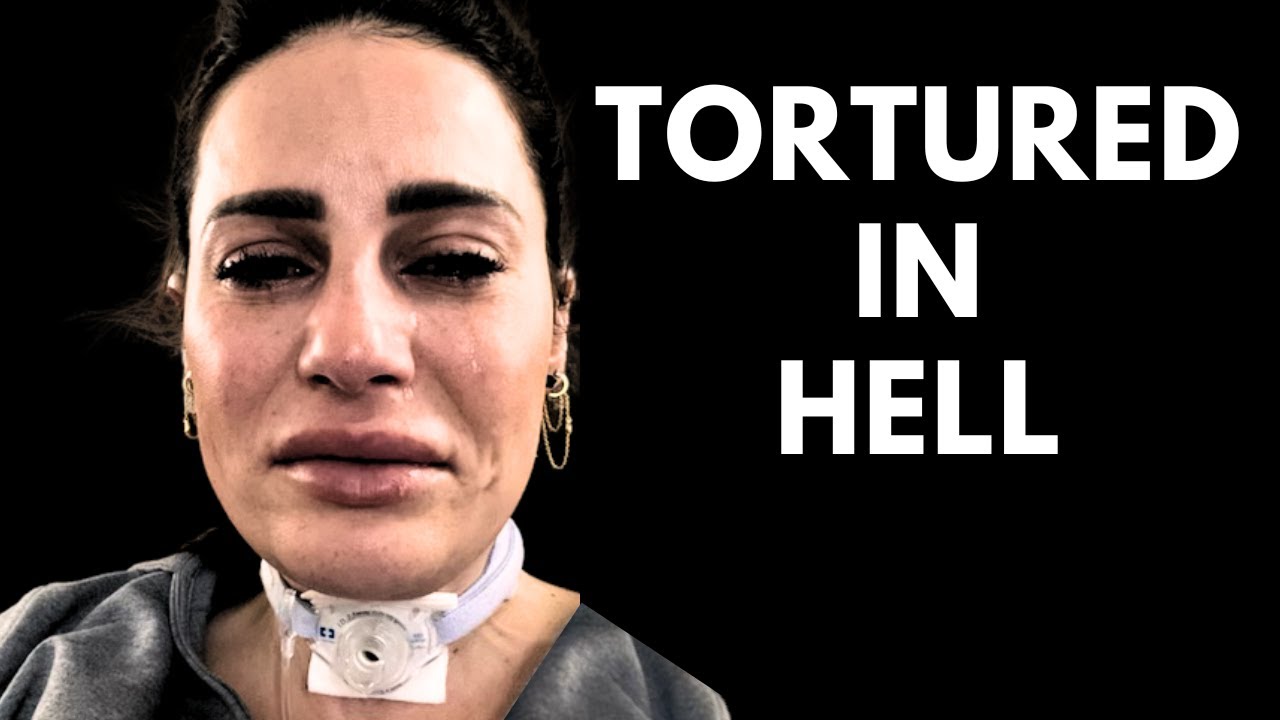
What Bridgette had acquired was a rare neurological airway disorder called adult-onset laryngomalacia, something typically seen only in premature infants whose brains haven't developed the pathway to keep their airways open. Her brain was telling her body she wasn't born yet, that she didn't need to breathe. Her larynx was collapsing. Her vocal cords were slamming shut when she tried to speak. And nobody believed her.
She went to the ER 28 times. She was hospitalized repeatedly. Doctors scoped her airway and saw it was one centimeter open, the size of a pencil lead, and sent her home anyway. They labeled her drug-seeking, crazy, faking seizures. She was put on 17 medications. Her hair fell out in patches. She had to eat a gallon of ice cream and a bucket of Nutella daily just to stay at 90 pounds because she was burning so much energy trying to breathe.
But the physical crisis was only part of her torment. Bridgette wasn't walking with the Lord. She'd grown up seeing demons crawl down her hallway as a child, feeling them choke her in bed while her agnostic father sprayed "monster spray" in her closet. She'd been in a bank robbery, a car accident with a drunk driver going 120 miles per hour, had opened herself to dark forces through drugs and toxic relationships. She believed in God, but as she would later realize, "even Satan believes in God, but if you don't obey him, you are just free game."
Her coping mechanism was drinking. When the breathing got worse, she drank more. When the anxiety medications didn't work, she drank more. She was spiraling, and she knew it.
The First Descent
The first time Bridgette went to hell, she was at a pain management appointment with her mother. She walked into the examination room, and before the doctor even arrived, she started having one of those seizures the medical staff thought she was faking. Fire came. She was intubated. She doesn't remember anything after that because she was on life support for days.
What she does remember is being in hell.
"I knew I had been I was in hell," she says. This experience was different from the later ones, more organized, more methodical. Her family, her brother, her children, her ex-husband, they were all in their homes. Red roses were delivered to each house. She knew if they accepted those roses, if they thought it was a gift and brought them inside, someone would enter their home. She would watch, unable to speak, unable to warn them. "They would be decapitated and murdered like horrifically."
She was intubated for four or five days. When she finally woke up, she was hysterical. "My brother's dead. These people are dead," she told her mother through tears. Her mother tried to calm her down, but Bridgette thought she was being tricked. She'd just watched her entire family get decapitated. She'd watched her children murdered. It took a FaceTime call with her brother to convince her it hadn't happened.
But here's what struck her most: "That side of seeing things was more real than what we see now and it's forever."
Easter and the Vitamin
The second time was worse.
It was a couple days after Easter. Bridgette's mother had stopped by and offered to make her some food. Bridgette was taking handfuls of vitamins, desperate to stop her hair from falling out, desperate to stay alive. She was on oxygen, in a walker, couldn't walk five feet without collapsing. She was being told by doctors she was crazy while being put on 17 medications.
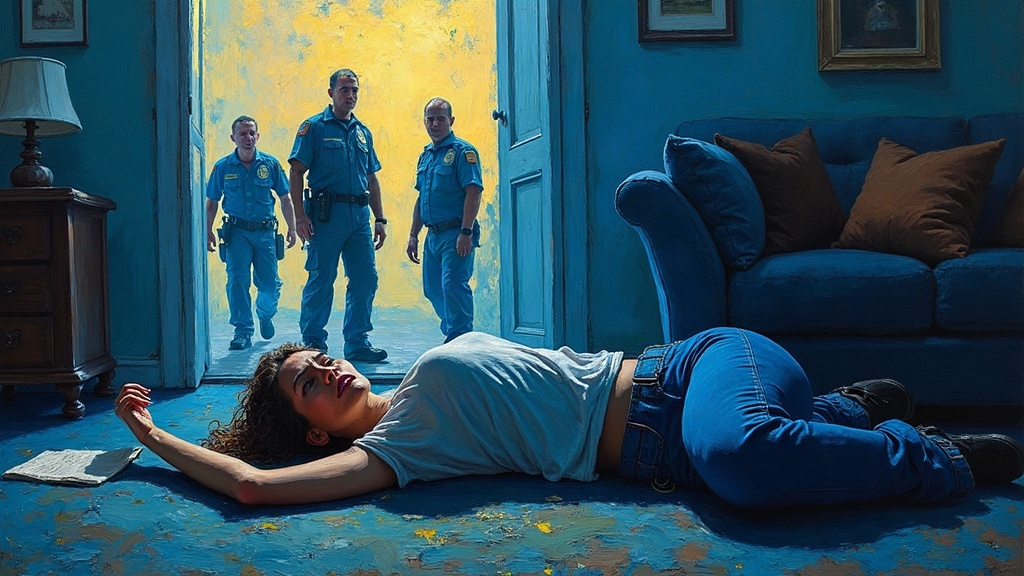
She took a vitamin with her food. "I remember thinking I felt it go in my airway," she says. She knew immediately what was happening. Her mother had already been so traumatized, had already watched her daughter intubated multiple times. How could she tell her this was it, that she was about to die right in front of her?
She grabbed a piece of paper. She had to be efficient because she was running out of oxygen. "I've aspirated. There's something stuck in my airway. I'm going to stop breathing. I need you to turn me on my side and call 911. And I wrote, 'And I'm really sorry.'"
"And I just heard my mom scream and that was it," Bridgette recalls.
Fire came. They bagged her, gave her air. She was brought to the closest hospital, not the one she needed. She was put on life support for seven days. The hospital staff didn't turn her properly. She developed ruptured discs down her back. She acquired staph and MRSA in her lungs from the hospital itself. Her fever spiked to 106. She was septic. Doctors told her mother she wasn't going to make it.
She was transported to Loma Linda while still intubated. She coded during this time. And for nine, almost ten days on life support, Bridgette was in hell.
The Intake Process
This time, the experience was visceral, detailed, organized in a way that still haunts her.
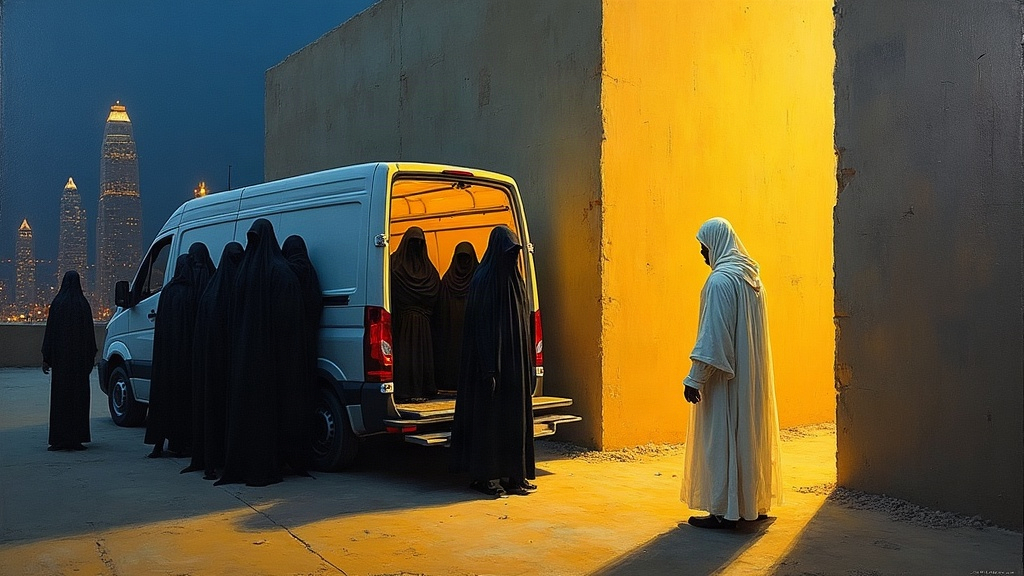
"I woke up and I was in a van and we all had coverings over our head like black like um you can't see," she describes. There were other people with her, souls she didn't know. They were being transported. When the coverings came off, she realized where she was.
The demons who met them were low-level grunts in a hierarchy of principalities. Bridgette noticed something crucial about this hierarchy: "The higher up they were it was like the more beautiful they were," she explains. The low-level demons spoke in ugly, discordant sounds. The higher ones spoke beautifully. It was a perverse inversion of what you'd expect.
The intake was methodical. "They would check in 17 people at a time and then 13 and it was almost like a triage. It was the weirdest thing," Bridgette recalls. This wasn't chaos. This was organized.
There was a man with her, someone she understood to be an angel, a spiritual guide. She asked him why he was in this horrible place. "He said, 'There's darkness everywhere honey,'" but the darkness couldn't harm him. He was there with her, somehow.
After check-in, souls were strapped to beds. And then came the judgment.
The Scribe Who Weighs Lives
Bridgette saw a very tall being, almost white in appearance, with what looked like bunny ears behind him. Later, after her experience, she researched and realized it resembled an Egyptian deity, a scribe. "He's supposed to weigh your life in the balance," she explains. This being sat on a bench in front of a wall covered in thin sand.
Demons would line up the souls. Using a tool that looked like those tennis ball throwers for dogs, they would extract people's spirits from their bodies. "They would go like that over somebody's head and they would pull it out and their soul would leave and they set it next to this creature," Bridgette describes.
The creature would write in the sand, and the sand would disappear like quicksand as he wrote. "He would continually write out everything about that person's life," she says. This judgment determined where in hell each person would go. What torment they would endure. Forever.
Bridgette looked around while waiting for her turn. She saw buildings that looked like skyscrapers in LA or Chicago. It was dark outside, always dark. "There isn't light," she emphasizes. But she could see dim lights in the buildings, like office lights at night, and through those windows, she could see what was happening inside.
The Eternal Torments
In one room, Bridgette saw a family: a mom, a dad, two kids. They were playing together. Then someone would come in and execute their children in front of them. The parents would scream. Then either the mom or the dad would be executed. "And then it would they would come back and it would happen again," Bridgette says. Over and over. The same horror. The same screams. Forever.
In another room, she saw something that still makes her voice crack when she describes it. There was a baby in a jumper, the kind you put infants to sleep in. The baby was tacked to a wall and being tortured. A man, the father, was given a sniper rifle. "They told him, 'You need to basically execute your own child or we'll continue to torture this baby,'" she recalls.
The father was crying. He finally got the courage to try, but he kept missing, hitting parts of the child. "The child was screaming and then finally, you know, he shot him in the head and he just broke down after that," Bridgette says. Then the father would be executed. Then it would start again. The father wouldn't remember he'd just done it, like holding a hand to a flame over and over, never learning, never escaping.
She saw another building where people were lined up like in gas chambers. Men, women, older children. "They would line them up in the building all around the edge and duct tape their hands and feet in their eyes and then they would walk around and execute them and everybody would scream over their lives and then they drag them out and bring them back and do it again," she describes.
Bridgette emphasizes something important about the children she saw: "I don't know if it's because they wanted the parents to suffer," she says. She doesn't believe actual children were in hell. It was a simulation, designed to torture the adults with their worst nightmares. But the people experiencing it didn't know it wasn't real.
"Satan's not going to torture you one way," Bridgette explains. "There are so many ways to be tortured."
The Witches and the Burning Dots
While waiting for her judgment, Bridgette was dragged into another room and put on a large circular table shaped like a pentagram. Seven figures she describes as witches surrounded her. "They tacked me down to it, my hands and my legs," she says.
They put large black dots all over her body. The dots would spread. "It was like burning my flesh but it was trying to suffocate me at the same time but I wouldn't die," she recalls. The beings spoke to each other in tongues, looking at each other as if asking why she wouldn't die.
Bridgette tried to say the name of Jesus. They kept covering her mouth. She couldn't get the words out. "Then they just started clawing at my body and ripping at me and I was screaming," she says. But she still wouldn't die. So they dragged her back to the bed to wait for judgment.
The Yoga Room
On the way back, Bridgette saw something that revealed hell's twisted logic. On the fifth floor of a building, she saw people doing yoga, but they were all upside down, standing on their heads with their legs wrapped around themselves. They were stuck in these positions. And they were on fire.
"It's because they were worshiping a Hindu god," Bridgette explains. "The God's like, 'Okay, well, you get to you get to do it like this for the rest of your life.'" The inside of that fifth-floor room looked like desert land, everything on fire. "They were screaming in agony and they couldn't get out of that like pose. Like their bodies were like cracking, deformed, and they would just like go back," she says.
This is hell's economy: you worship a false god, you get to worship it forever in the most agonizing way possible.
The Name That Saved Her
Bridgette was strapped back to the bed, waiting for the scribe to judge her life. She watched demons collect bodies, line them up for their eternal torments. "You are just fear like you know this is your life now forever," she says.
But then something shifted. "I just remember like screaming out. I finally got the name of Jesus out," Bridgette says.
And then she woke up.
It was the ninth or tenth day. The doctors had told her mother that if Bridgette didn't cough after they suctioned almost two liters of fluid from her lungs, this was it. Her mother said no, she'll cough. "And I coughed and I survived that," Bridgette recalls.
The Choice to Return
But Bridgette's ordeal wasn't over. The next day, while her sons were visiting, a nurse slammed a cardiac medication into her IV way too fast. "I remember feeling my heart pause," she says. She knew she was about to code. She was in a chair, not a bed. She needed to get to the bed for CPR.
She told her older son to pick her up, throw her on the bed, and run to get help. He did. She coded. They started CPR. She could hear everything. The person bagging her was only giving her two or three respirations a minute. The doctor yelled at her. The team was laughing and joking. Bridgette thought about how she used to do the same thing in the ER, desensitized to death, "not really considering what's going on with this person."
She was counting the time in her head during CPR, thinking that if she died, at least the torture would be over. "And then I heard the Lord's voice like, 'Do you want to come back?'"
God gave her a choice. She hesitated. She didn't know. Then she remembered hell. "I thought I don't know. And then I remembered the hell experience and I said yes," she says.
She woke up. She had a seizure. They stabilized her.
The Tracheostomy and the Breaking Point
Months of surgeries followed. The doctors still hadn't properly diagnosed her laryngomalacia. They kept intubating her, kept misdiagnosing her, kept adding medications. Finally, after yet another failed bronchoscopy where her larynx collapsed and she stopped breathing, they found it. But by then, the damage was done.
They told her they'd have to give her a tracheostomy. Because they'd messed up so many times, it would have to be pediatric-sized, "which is like breathing through a straw constantly." They also told her they'd eventually have to crack her chest open, remove the damaged part of her trachea, stitch it back together, and stitch her chin to her chest for a month.
Bridgette was on 17 medications, taking close to 60 pills four times a day. She carried them in a lunch pail. She was on oxygen, in a walker, had Raynaud's syndrome turning her fingers black, had seizures that looked fake to doctors, had a bleeding ulcer from the stress and medications. She felt defeated in every area of her life.
One night, alone at home, she decided to end it. She drank some mini bottles of alcohol, took out her tracheostomy, dialed 911, unlocked the door, and laid on the ground to die.
She woke up intubated in the hospital where she used to work. They didn't have pediatric tracheostomy tubes. They had to use an adult-sized one. "It bypassed it actually bypassed cuz they're longer the part where they said they're going to have to crack my chest open," she says. The doctors at Loma Linda said, "Whoops. Well, I guess that worked. We don't have to do all that."
Thank you, Jesus, indeed.
The Revelation That Changed Everything
But even after surviving, Bridgette was still hopeless. She was on so many medications she couldn't get revelation from reading the Bible. She was being tormented daily by the enemy. She felt like the worst mother in the world, traumatizing her children, traumatizing her mother who kept saying if Bridgette died, she'd go with her.
Her mother had a vision during the worst of it. She kept seeing Bridgette in a suit with a briefcase, going to Congress, telling her story. The nurses and doctors kept saying they were sorry Bridgette was so young because "basically she's a vegetable for life." But her mother held onto that vision.
Bridgette started going to church, got some deliverance, but still didn't understand her authority in Christ. She was learning tactical skills to fight the enemy, which exhausted her because "he's already defeated."
Then a friend told her about Pastor Jonathan Shuttlesworth. Bridgette started watching his sermons constantly on YouTube. She was coming off all her medications, riding out seizures on the couch, thinking if she died at least she was trying.
On October 17th of last year, while driving home from a speech pathology appointment, she was watching one of his sermons. "I just felt the Lord speaking to me and I could feel his presence," she says. When he gave the call for repentance, something clicked.
"I knew that I knew that I knew that I was saved and to keep my salvation now and not lose it," Bridgette says. She also knew she needed to tell people her story. "So many people are going to hell and they think they're okay. Like I did," she explains.
She'd thought she was fine. She had a cross necklace, a sticker on her car. She thought maybe her rewards in heaven would be a little less, but she'd be okay. "I was so deceived," she says now.
The Screen of Rejected Witnesses
One detail from hell haunts Bridgette particularly. She saw something like a screen, "like how you've seen in movies like AI but it has like the little um what are what are they is it a hologen or a something of a person," she describes. It showed all the people who had come up to her in life and wanted to talk to her about the Lord, everyone she'd rejected.
Then she heard the Lord say, "'You will be without excuse.'"
That's when she knew. She had to tell people. She had to warn them.
The Transformation
In November, Jonathan Shuttlesworth came to LA for a meeting. Bridgette spiked a fever that morning, got really sick, but she didn't care. "I don't care if I have to like ride a donkey there. Like, I'm getting there," she thought. That night, she got called out of the crowd. He prayed over her. And that night, he announced he was starting Revival Today LA, the exact church Bridgette had been praying for.
"Since then something broke. Like something broke. Like the scales came off my eyes. I knew my authority," she says. She started speaking out her authority in Christ. She got stronger and stronger.
Then the Lord started prompting her to tell people her story. She resisted. She was trying to look normal, not crazy. She was trying to lay low. But God told her, "'You will answer for your testimony. Like, you will answer for this. Like, yes, you're coming to heaven, but you're going to answer for all the people you didn't tell that needed to hear this. And and it would have saved their life,'" she recalls.
So she started slowly on TikTok, not knowing how to edit, just saying, "Lord, I'm going to use me, refine me."
Today, Bridgette is off all 17 medications. She no longer has the tracheostomy. She took it out herself one day, put a band-aid over the hole, and that was it. She's had a few surgeries since to re-dilate her airway, but she's breathing. She's alive. She wakes up every day, reads her word, gets her assignment from the Lord, and serves him fully.
"I'm confronted with things. Yes, that's that's normal. But I'm never defeated ever anymore," she says.
What Hell Reveals About Heaven's Urgency
Bridgette's account is one of the most detailed and harrowing descriptions of hell in the modern NDE literature. What makes it particularly significant is not just the vividness of the torment she witnessed, but the organizational structure she describes. This wasn't chaos. This was a system. An intake process. A hierarchy of principalities. A scribe who weighs lives. Buildings full of souls living out their worst fears on an eternal loop.
The detail about the Hindu practitioners stuck upside down in yoga poses, on fire, unable to escape, reveals something crucial about the nature of judgment in these experiences. It wasn't arbitrary. It was directly connected to what they had worshiped in life. The false god they served became their eternal torment. This mirrors accounts throughout NDE literature where the afterlife reflects and amplifies the spiritual choices made during earthly life.
What's also striking is Bridgette's insistence that she wasn't a bad person by worldly standards. She was a nurse. She believed in God. She had a cross necklace. She thought she was saved. "I thought I was fine. I just thought, well, maybe my gifts will be a little less in heaven and I can like work with that if the streets are cold," she says. But belief without relationship, faith without obedience, wasn't enough. As she puts it, "Even Satan believes in God, but if you don't obey him, you are just free game."
The screen showing all the people who had tried to witness to her, whom she'd rejected, is particularly powerful. "You will be without excuse," the Lord told her. Every opportunity to choose differently had been recorded. Every witness had been sent. The choice had always been hers.
Bridgette's experience also reveals the protective power of the name of Jesus. Twice, when she cried out that name, she was pulled back from hell. The witches couldn't make her die. The torments couldn't claim her fully. There was still a thread connecting her to heaven, a choice still available.
And when she coded in the hospital, the Lord asked her directly: "Do you want to come back?" Even at the edge of death, even after everything, the choice was still hers. God doesn't force anyone into heaven. He offers. He invites. He asks.
What Bridgette describes isn't a God of arbitrary wrath, but a God of relentless mercy who gives chance after chance, who sends witnesses, who asks even at the moment of death if we want to return. The tragedy isn't that God sends people to hell. The tragedy is that people choose it by rejecting relationship with him, by serving false gods, by thinking belief alone is enough.
Today, Bridgette lives with an urgency born of having seen what awaits those who die without truly knowing the Lord. She's not trying to be famous. She's not trying to force anything down anyone's throat. She's simply doing what she was told to do: tell people the truth. Warn them. Give them the information she wishes she'd had.
"It's forever. It's forever," she emphasizes. That's the weight of it. Not a temporary punishment. Not a metaphor. Forever.
And the beautiful truth hidden in this terrifying account is that it doesn't have to be anyone's destination. The Lord asked Bridgette if she wanted to come back. He's asking everyone, every day, in a thousand different ways: Do you want to come home? Do you want to know me? Do you want to be saved?
The answer is always ours to give.
Was this article helpful?