Barbara Bartolome's NDE: The Wrong Button, the Flatline, and God's Question
A medical error during a routine procedure sent her to the ceiling, where a being she'd known forever asked: What will you do?
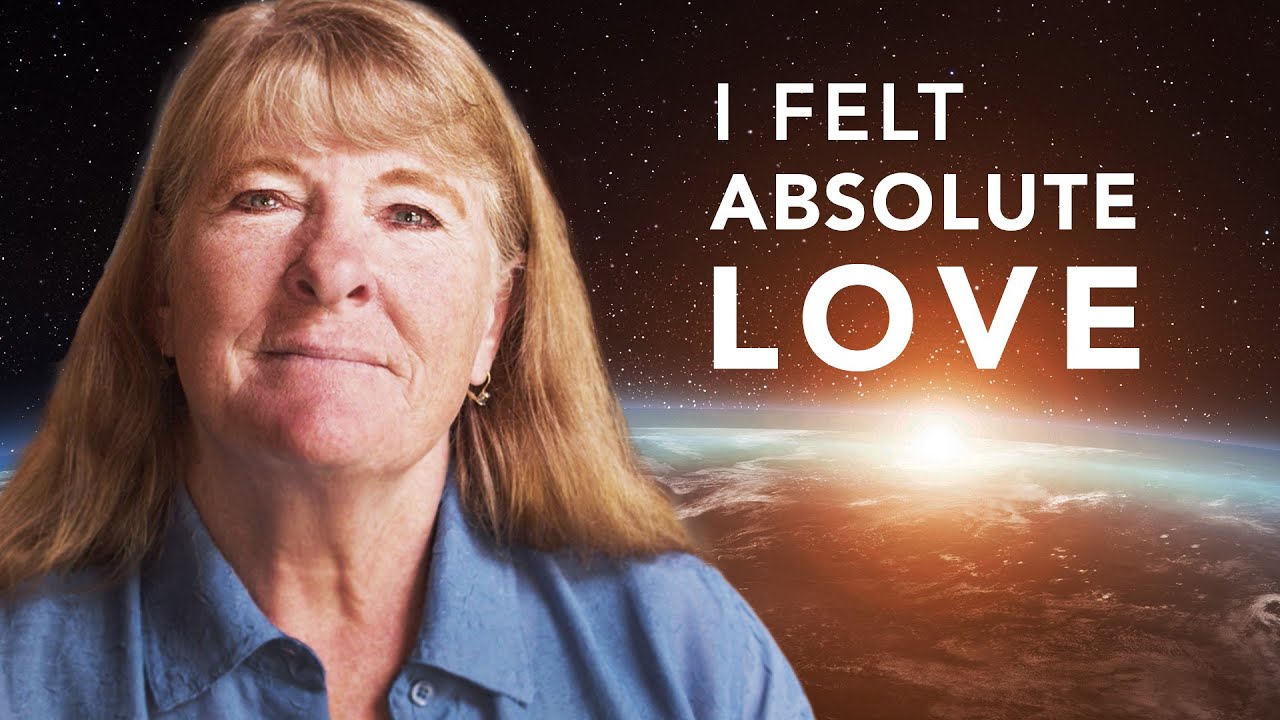
Barbara Bartolome was 31 years old, lying on an X-ray table in a hospital in Santa Barbara, California, preparing for back surgery. The technician's finger hovered over a button. The table began to tilt. She felt strange, like she was going to faint, but nobody was watching her. The doctors were talking to each other. The nurse was by the door. The technician was pushing the wrong button. And then Barbara was gone, floating near the ceiling, wrapped in something she can only describe as a blanket of love, watching her own body convulse below as someone yelled code blue.
The Life Before the Table
Barbara grew up in West Salem, Oregon, one of five siblings. She remembers riding bikes everywhere with her little sister, wild and happy, camping with her parents. After high school, she moved to Santa Barbara at 27, away from her family and support system. She married someone there. It was a mistake that would nearly cost her everything.
The man she married had what she carefully calls "abuse issues." His anger with his job, with anything that occurred, made him controlling. If Barbara and her son didn't do exactly as he asked, they were in trouble. She knew it was dangerous for both of them. She tried everything: counseling, a pastor, an eight-page letter about leaving if the abuse continued. Nothing worked.
One day, he called her outside to the patio. He had a 2x4 underneath bags of cement, his shoulder holding it up. He told her to come over. When she asked what he was doing, he pulled her left arm, dragging her under the 2x4, then removed his shoulder. The weight of the cement bags came down on her shoulder. It felt like she'd been shot in her lower back. The disc burst. She crumpled to the ground.
The first doctor told her she had sciatica, that the blown disc couldn't be fixed, that she probably wouldn't walk anymore. She was 31 years old with an eight-year-old son and a five-month-old daughter. A friend at work told her to see a neurosurgeon. The neurosurgeon looked at the X-rays and said, "Oh I can fix this". Barbara wanted to believe him. She really wanted to have her life.
The Wrong Button
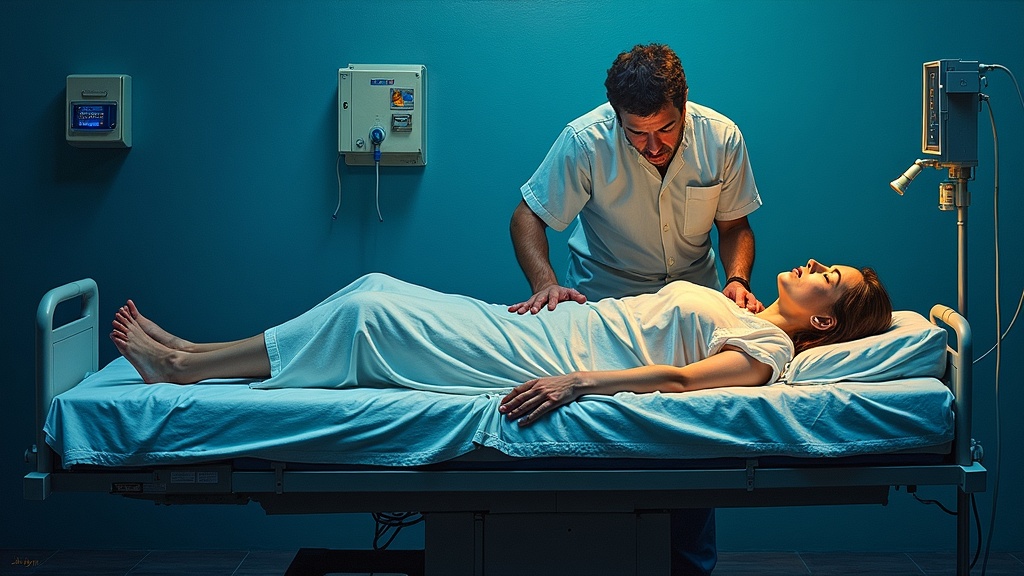
In December 1987, before the surgery, the doctors decided Barbara needed a myelogram. They would inject iodine dye into her spinal cord, then tip the X-ray table with her head up and feet down so the dye would run down and reveal if the spinal cord had been chipped. If it had, the surgery would be much more complicated.
They told her: if you move at all during this process, you could have headaches for months afterward, so make sure you hold very still. Both doctors were in the room, the neurosurgeon and the orthopedic surgeon, along with two X-ray techs and a nurse. They numbed the area behind her neck. No other anesthesia. They injected the dye and started the table moving, very slowly, making this sound.
Barbara started feeling somewhat funny. She thought, what's going on here? I feel like I'm going to faint. She was laying on the table and nobody was really watching her. The nurse was over by the door. The two doctors were talking to each other. The X-ray techs were talking to each other. This was just a normal myelogram for them, no big deal.
But the X-ray tech pushing the button on the table was pushing the wrong button. He didn't realize it.
As Barbara felt like she was going to faint, she started hyperventilating. She couldn't control her breathing. The two X-ray techs heard her going "huh huh huh" and stopped talking. The tech with his finger on the button leaned over her face, looked at her, and saw that her eyes were rolling back. The last thing Barbara saw was him leaning back to look at where his thumb was, making this face like "oh no".
And then that was it.
The Ceiling
Barbara was out of her body, looking down at the whole scene. The panic she'd been feeling in her body was gone. Up there on the ceiling, it was this feeling of being wrapped in this beautiful blanket of love and acceptance. She just felt absolutely wonderful.
She looked down at what was happening below. The tech had started calling code blue. Barbara said, calmly, "Huh, if I'm up here and my body is down there and he's calling code blue, I think I just died".
Right when she said that, there was this feeling of a being that was right next to her. The being felt to her like she had known him forever. It felt like it was God. She felt the absolute acceptance and the absolute love and the absolute comfort. She felt like when he was next to her that she was a pure being, a pure spirit, and he loved her so much. It was just incredible. It was life-changing to have that feeling of him being right there.
Below, the room was chaos. The doctors were yelling orders. The nurse was calling for a defibrillator. The two X-ray techs had gone into CPR. Barbara said to the being, "I really need to go back," because she knew that if her husband had full control over her children, those children would be abused. She'd already seen the abuse to her older son. She knew her five-month-old daughter would encounter it too. "I need to go back, I need to go back to protect them," she said, while watching everything down below.
They'd brought in an oxygen cart. They had a mask on her face. The two techs were switching off every two minutes doing chest compressions. Then a man brought in a box, put it on a ledge next to the table, and started peeling off white circles, putting them on her chest. Barbara stopped saying she wanted to go back and for a moment she watched, then said, "What is that he's doing?"
She was moved from the ceiling right in front of the box. She watched as the man's hand went between where her consciousness was and the box, flipped a toggle switch, and a little light lit up in the screen and started going across the screen in a straight line. She watched it go all the way across and all of a sudden it came to her what it was: "Oh, it's a heart monitor. That's my flatline". The second she thought that, she was immediately back up on the ceiling again next to the being. She realized she'd asked a question and he'd put her down there to answer it for her.
The neurosurgeon said "too much time has passed, she's going to be brain dead, we need to do something". The orthopedic surgeon said "stand clear," and the two X-ray techs stepped back away from the table. The orthopedic surgeon took two steps forward, took his fist from behind his back, arced it over his head, and pounded it into her chest. Barbara watched her body jerk from the hit. She didn't go back into her body.
But up on the ceiling, the being finally spoke to her in this beautiful voice that was just so amazing: "But if you go back, you'll still be in your marriage. What will you do?"
The Flashes
Then Barbara saw all these little film clips that just went flash flash flash flash flash flash. They were all incidents that had been happening in the years she'd been married to this person, all of the abuse she had been enduring. After each event where he would hurt her, he would apologize. He would try to bribe her with taking her out to dinner or bringing her flowers, and he would always say that it was not going to happen again, but of course they would happen again. She was reminded of all the incidents with all these little flashes.
Then she was given time to think about all the things she had done to try to help him change. She thought about the eight-page letter she'd written saying she couldn't take any more abuse and would leave if it continued. The marriage therapist. The pastor. The times she'd told him, "I'm not doing this, this is not going to be who I am."
She saw it all, and she realized after she watched it all: it wasn't him that needed to change. It was her. She needed to stop trying to change him. She needed to get away.
She said, "If you let me go back, I promise you I'll get strong enough to leave him". The second she said the word "him," the doctor did the second precordial thump and it restarted her heart. She opened her eyes and was back in her body with the oxygen mask on her face.
The Return
They were all astonished that she'd opened her eyes. Barbara looked at them and said, "What just happened?". The nurse leaned over her and said, "Stop, don't talk, we need to stabilize you". For 20 minutes they did whatever they had to do. Then they took the oxygen mask off.
Barbara said to all of them, "What just happened? I was up on the ceiling and I could see and hear everything". The neurosurgeon, standing next to the table, went "Oh, brother".
That made Barbara completely recount what had just happened. She said, "No, I'm telling the truth. She was calling on the phone for the defib unit and that lady brought in the oxygen cart and that man brought in the heart monitor. I watched my flatline. And these two guys were doing CPR. And then when she brought in the oxygen cart they just switched to every two minutes switching off the chest compressions. And you said to him too much time had passed that I was going to be brain dead and then he did two strikes to my chest and then I came back".
That just freaked the neurosurgeon out completely. As she was talking, he clenched his fists, pulled them up next to his body, and went, "I am not going to stand here and listen to this," and he stormed out of the room. Which was really good, because then the orthopedic surgeon took her hand and, with everybody else listening, said, "Tell me again, what did you see? How did it feel? What was it like?" He was interested in it and understood what had just happened.
They put Barbara on a gurney and took her to her room. They would do the surgery the next day. Anybody who came into her room, she would say, "What was that that happened when I was having my myelogram?" and everybody would look at their chart and go, "I'm sorry, I don't see anything, I don't know what you're talking about".
The next day they did the surgery, a laminectomy discectomy on her L5-S1 vertebrae. When the doctors came to the recovery area afterward, Barbara immediately said, "What happened last night during the myelogram?" The neurosurgeon went, "I am not here to talk about that, I'm here to talk about your surgery".
For four days in the hospital, no one would talk to her about it. Barbara had no idea it was called a near-death experience. She'd never heard of anything about that. She'd never meditated. She wasn't looking at her life that way.
Barbara's mom was a police officer. Barbara never did drugs. She didn't drink. She still doesn't. She never did anything. She was a clean kid and she'd never had hallucinations. That would be very weird. She knew that wasn't the truth. So she just zipped her lips and didn't talk about it. She didn't know who to talk to that would believe her.
It was as real every time she thought about it as if it was just happening. Like when she talks about it now, if she were to shut her eyes, she would see where the table is, where the people were. She can see the whole room. But there wasn't anybody to talk to. So she kept it inside her for about 12 years.

The Promise Kept
Barbara went on with her life. She got away from the husband. It took her a while because he had really highly insured her and she was afraid he was going to kill her. She waited until it was the right time: he was on a business trip to Canada. She realized that for a week he wouldn't have access to her. She got a restraining order against him and let the police department know that she was in a dangerous situation. That was what helped. She got through a divorce and moved on.
She spent two years working and supporting her children. She thought, "I'm not sure I ever want anybody else in my life. I'm scared. I don't know if there are any nice people out there, nice guys". So she started a little book next to her bed that she would look at at night, and she would write character traits, positives only, that she would want if she ever let anybody else into her life, if she ever trusted anybody again. Every night when she would look at that book and read through the character traits, she would say, "God, I don't know who this person is, but I know that you do".
One day her son, who was in 8th grade, brought home a girl from the neighborhood. They wanted Barbara to take them to a movie. They asked her to come over to the girl's house to pick them up. When Barbara knocked on the door, it opened, and it was a seven-foot-tall guy. She said, "Hi, I'm here to take your daughter and my son to the movie." He said, "Well, that's weird, because they asked me to take them to the movie". Barbara immediately knew what they were doing: putting their two parents together. She was very embarrassed.
They went to the movie. They went to dinner afterward with the kids. Since they both had two children each, they got a chance to go out and do fun things with their kids. After about four months, Barbara realized she'd been writing all those character traits about him. Six months after their meeting, they got married. Now it's been 30 years and he is still the person she wrote about.
The Gift
The reality of Barbara's near-death experience and how it helped her change her life was really clear to her by then. How she looked at death and how she looked at consciousness had all changed. She'd never been taught anything. She'd never read anything. But that NDE helped change who she was in major ways and helped her to understand much more than she'd ever understood before it happened.
Then, when her daughter was about 12 years old and in a gymnastics program, Barbara was sitting next to a friend of hers who was a nurse at a hospital in Santa Barbara. Barbara ended up talking to her and telling her about it. The nurse ended up telling her it was called a near-death experience, and that was the first time Barbara had heard that term. The nurse said, "Oh, Barbara, the internet's come up, there's lots of information online, look it up, there's information for you".
Barbara has told her story many times since then. You can hear her recount it on Anthony Chene's production, on Prioritize Your Life, on NDE Diary, on NDE Video, on The Other Side NDE, on Pegi Robinson's NDE TV, and in interviews with IANDS Northern Virginia and NDE Radio with Lee Witting. Each telling is consistent. Each telling carries the same conviction.
Barbara says: "When you open the door to the other side, it's amazing how they'll come through for you in so many instances. I think that the other side is listening all the time". Reaching out to them and asking for help, she thinks that's what brings it to you. "Understanding that they're all here and they're all ready to help everybody, but a lot of people close their doors. And when they get an intuitive hit, they think it's their intuitive hit instead of a message from the other side helping them". She really wishes everybody understood: "It's not someplace far away. They're here. They're with us".
She sees in many ways the other side was teaching her all along, planting her in places where she could grow, where she could get to the point where she could talk about this without worrying about anybody's judgment of it or anybody's non-belief. "I can talk to anybody about this, so that's what I do every day, trying to find anybody, everybody, and trying to give that gift away".
What Barbara Wants You to Know
What Barbara wants to see, what she hopes everybody wants to see, is positive things at the end of their life. "And they can say, 'I did a lot of good stuff, I touched a lot of lives, I helped a lot of people.' Feeling that joy that you get from helping somebody else is super positive in your own life". Even just smiling at a little baby in a shopping cart and helping somebody with groceries or volunteering. She would pull her children and they'd pick up trash off the beach. She tries to find ways every day that can be something that will help somebody else.
Barbara calls her near-death experience "the most beautiful gift in my life". Understanding what it tells us about death, consciousness, life itself, she says, "is so valuable".
She's really hoping that people understand the gift of not worrying about death. "Understanding that yes, we're going to miss the person that passed away, but you can still talk to them and love them. You think of them and you say to them, 'I love you still and you're still with me. I adore you and I hope you're having fun'".
"Understanding that our consciousness survives death", Barbara says. "Who we are and all the experiences that we have, our precious soul is being grown with every time we come here".
She feels that we choose to come down here and that we set different challenges and aspects in our life that are going to grow us. "And how we behave and how we act, we see at the end of our life and we see how we did well or we didn't do well. And then we come back down again and we set more challenges and we grow our souls. I think that's what all of us are doing here".
Our Reflection
What strikes me about Barbara Bartolome's, though those are compelling. It's the question the being asked her.
"But if you go back, you'll still be in your marriage. What will you do?"
That's not a rescue. That's not a get-out-of-jail-free card. That's a mirror held up to her life, asking her to see what she'd been refusing to see. The being didn't tell her to leave. He showed her the pattern, the flashes of abuse followed by apologies and flowers, and let her arrive at the truth herself: it wasn't him that needed to change. It was her. She needed to stop trying to fix him and start protecting herself and her children.
This is one of the most consistent patterns in near-death experiences: the life review isn't punitive. It's clarifying. It's not about shame. It's about seeing. Barbara saw what she'd been enduring, what she'd been tolerating, what she'd been hoping would change if she just tried hard enough. And she saw that hope was killing her.
The being gave her a choice. He didn't force her back. He didn't demand she return. He asked her what she would do. And she made a promise: "If you let me go back, I promise you I'll get strong enough to leave him." The second she said the word "him," her heart restarted. That timing feels significant. Not coincidental. Like the universe was saying, "Okay, we have a deal."
Barbara kept that promise. It took time. It took fear. It took a restraining order and a police escort and waiting until he was out of the country. But she kept it. And then she did something even harder: she trusted again. She wrote down the character traits she wanted in a partner and prayed to the same being she'd met on the ceiling, saying, "I don't know who this person is, but I know that you do." Six months later, she was married to a seven-foot-tall man her son's friend's father who is still, 30 years later, the person she wrote about.
That's not a fairy tale. That's what happens when you listen to what you learned on the other side and bring it back here. Barbara's NDE wasn't an escape from her life. It was a blueprint for how to live it. She came back with instructions: get strong enough to leave, trust that love exists, help other people see what you saw.
And she's been doing that ever since. Telling her story. Answering questions. Reassuring people that consciousness survives, that the other side is listening, that the being who wrapped her in love on that ceiling is still here, still with all of us, waiting for us to open the door.
Barbara's experience is a reminder that near-death experiences aren't just about what happens when we die. They're about what happens when we come back. They're about the promises we make on the other side and whether we have the courage to keep them. Barbara did. And because she did, she's been able to give that gift away, as she puts it, to anyone who will listen. To tell them: you're not alone. You're loved. And when your time comes, you'll be wrapped in that same blanket of acceptance she felt on the ceiling, watching her flatline, hearing the most beautiful voice she'd ever heard ask her the question that changed everything: What will you do?
Was this article helpful?